PVC Composite Textile Packaging Board
CN → US| HS Code | Tariff Rate | Origin | Destination | Doc |
|---|---|---|---|---|
| 3921125000 | 41.5% | CN | US | Official Doc |
| 3923900080 | 38.0% | CN | US | Official Doc |
| 3921121950 | 40.3% | CN | US | Official Doc |
| 3925900000 | 40.3% | CN | US | Official Doc |
| 3925200091 | 22.8% | CN | US | Official Doc |
| 3921121100 | 39.2% | CN | US | Official Doc |
Product Images
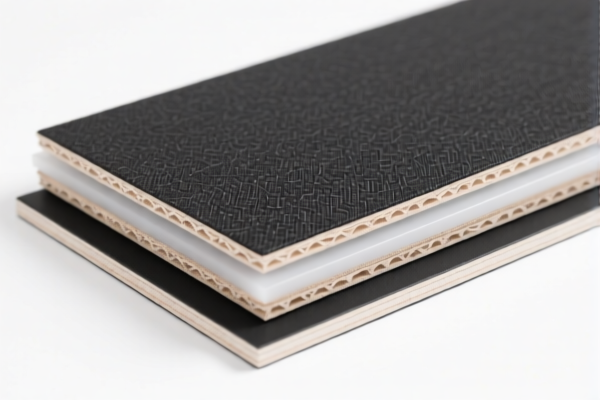
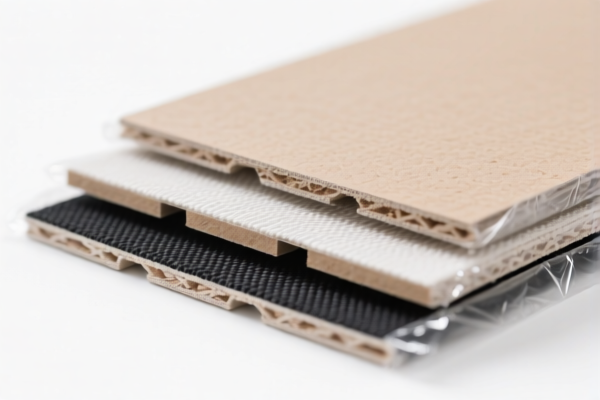
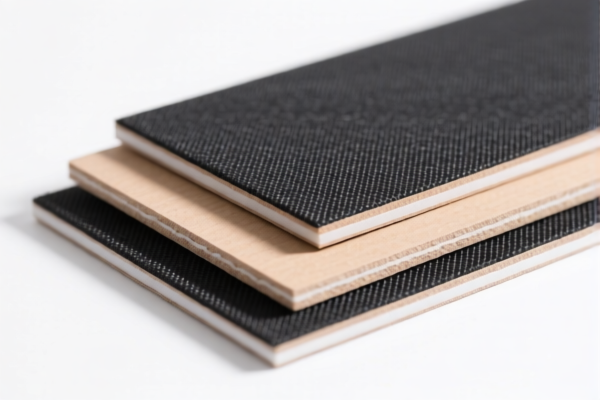
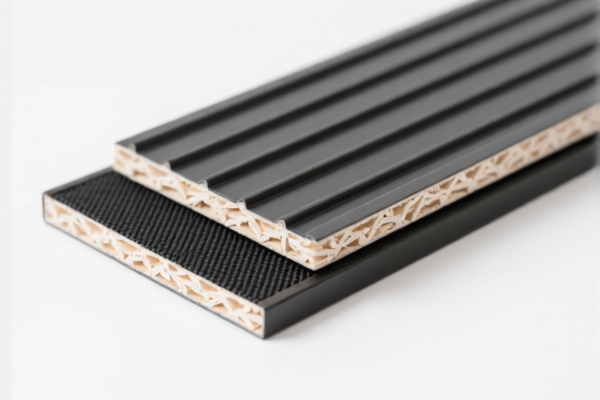
AI Analysis
📦 PVC Composite Textile Packaging Board (PVC Composite Textile Packaging Board)
🌐 HS Code Reference & Customs Clearance Guide | 2026 Latest Tariff Analysis | Professional Clearance Strategy
📌 I. Product Definition & Classification: What is "PVC Composite Textile Packaging Board"?
This product is a specialized material primarily composed of Polyvinyl Chloride (PVC), often combined with textile materials or used in structural forms for packaging or construction. In international trade, its classification depends heavily on its physical form (sheet, board, structure) and primary use (packaging vs. construction).
Key Distinctions: - PVC Sheets/Boards (3921): If the product is a flat sheet/board made of PVC, possibly composite with textiles, it generally falls under Chapter 39 (Plastics). - Packaging Materials (3923): If specifically designed and used for packaging (e.g., rigid boxes, protective covers), it may fall under 3923. - Construction Components (3925): If used as structural boards for buildings (e.g., wall cladding, flooring), it may fall under 3925.
⚠️ Critical Classification Point:
- If it is a composite of PVC and textile fibers (e.g., reinforced PVC fabric or board), it strongly points to 3921.12.11.00.
- If it is a pure PVC board for general use, it falls under 3921.12.50.00.
- If it is strictly for packaging purposes, consider 3923.90.00.80.
- If it is a construction board, consider 3925.90.00.00 or 3925.20.00.91.
📦 II. HS Code Classification Details (2026 Latest Tariff Authority Comparison)
| HS Code | Product Description | Application Scenario | Key Feature | Total Tax Rate (US Import from CN) |
|---|---|---|---|---|
3921.12.50.00 |
PVC (Polyvinyl Chloride) Sheets/Boards, not reinforced, not composite | General PVC boards, signage, industrial sheets | Pure PVC board/sheet | 41.5% |
3923.90.00.80 |
Plastic Packaging Articles (Other) | Rigid packaging boxes, protective containers | Primary use: Packaging | 38.0% |
3921.12.19.50 |
PVC Sheets/Boards, Other (Catch-all for PVC boards) | Generic PVC boards without specific composite | PVC board, unspecified type | 40.3% |
3925.90.00.00 |
Plastic Building Construction Articles (Other) | Structural PVC boards for construction | Used in building construction | 40.3% |
3925.20.00.91 |
Plastic Shutters, Blinds, etc. (Construction) | PVC boards used for shutters/blinds or similar structural components | Construction use, specific subtype | 22.8% |
3921.12.11.00 |
PVC Composite with Textile Materials | PVC reinforced with textiles, composite boards | PVC + Textile Composite | 39.2% |
🔍 Key Reminder:
- 3921.12.11.00 is the most accurate for "Composite Textile Packaging Board" if it contains textile reinforcement.
- 3923.90.00.80 is the most accurate if the primary function is packaging, regardless of slight composite elements.
- 3921.12.50.00 is the default for standard PVC sheets/boards without specific textile composite or construction use.
- 3925 codes apply only if the board is structurally used in construction (e.g., wall panels, flooring).
💰 III. 2026 Latest Tariff Rate Breakdown (Including Additional Duties, Policy Surcharges)
✅ Applicable Country: United States (US)
✅ Origin: China (CN)
✅ Effective Date: November 10, 2025 (and subsequent imports)
🎯 1. 3921.12.50.00 — PVC Sheets/Boards (Pure PVC)
| Item | Content |
|---|---|
| Base Duty Rate | 6.5% (ad valorem) |
| Section 301 Additional Duty | +25.0% (from USITC Footnote 9903.88.01) |
| Section 122 Duty | +10.0% (against China, per specific executive orders) |
| Total Tax Rate | 41.5% |
| Tax Calculation | CIF Value × 41.5% |
| De Minimis Eligibility | ❌ No (deny_de_minimis) |
| Legal Basis Path | USITC:3921.12.50.00 → FOOTNOTE:9903.88.01 → Section 122: 10% |
📌 Explanation:
- 6.5% is the standard Most Favored Nation (MFN) duty for PVC sheets.
- +25% is the Section 301 tariff on Chinese plastics.
- +10% is the Section 122 tariff, recently applied to various Chinese goods.
- Total: 41.5%, a very high duty rate.
🎯 2. 3923.90.00.80 — Plastic Packaging Articles
| Item | Content |
|---|---|
| Base Duty Rate | 3.0% |
| Section 301 Additional Duty | +25.0% |
| Section 122 Duty | +10.0% |
| Total Tax Rate | 38.0% |
| Tax Calculation | CIF Value × 38.0% |
| De Minimis Eligibility | ❌ No |
| Legal Basis Path | USITC:3923.90.00.80 → FOOTNOTE:9903.88.01 → Section 122: 10% |
📌 Note:
- Slightly lower total tax than pure PVC boards due to a lower base rate (3.0% vs. 6.5%).
- Suitable if the product is explicitly for packaging.
🎯 3. 3921.12.19.50 — PVC Sheets/Boards (Other)
| Item | Content |
|---|---|
| Base Duty Rate | 5.3% |
| Section 301 Additional Duty | +25.0% |
| Section 122 Duty | +10.0% |
| Total Tax Rate | 40.3% |
| Tax Calculation | CIF Value × 40.3% |
| De Minimis Eligibility | ❌ No |
| Legal Basis Path | USITC:3921.12.19.50 → FOOTNOTE:9903.88.01 → Section 122: 10% |
📌 Note:
- A catch-all for PVC boards not otherwise specified.
- Higher base rate than packaging, but lower than pure PVC sheets.
🎯 4. 3925.90.00.00 — Plastic Building Construction Articles (Other)
| Item | Content |
|---|---|
| Base Duty Rate | 5.3% |
| Section 301 Additional Duty | +25.0% |
| Section 122 Duty | +10.0% |
| Total Tax Rate | 40.3% |
| Tax Calculation | CIF Value × 40.3% |
| De Minimis Eligibility | ❌ No |
| Legal Basis Path | USITC:3925.90.00.00 → FOOTNOTE:9903.88.01 → Section 122: 10% |
📌 Note:
- Applies if the board is used in construction (e.g., siding, fencing).
- Same total tax as3921.12.19.50.
🎯 5. 3925.20.00.91 — Plastic Shutters, Blinds, etc. (Construction)
| Item | Content |
|---|---|
| Base Duty Rate | 5.3% |
| Section 301 Additional Duty | +7.5% (Reduced Section 301 rate for some construction materials) |
| Section 122 Duty | +10.0% |
| Total Tax Rate | 22.8% |
| Tax Calculation | CIF Value × 22.8% |
| De Minimis Eligibility | ❌ No |
| Legal Basis Path | USITC:3925.20.00.91 → FOOTNOTE:9903.88.01 (reduced rate) → Section 122: 10% |
📌 Important:
- Lowest total tax rate (22.8%) among all options.
- Only applies if the board is specifically shutters, blinds, or similar construction components.
- Verify eligibility with Customs to ensure this specific subheading applies.
🎯 6. 3921.12.11.00 — PVC Composite with Textile Materials
| Item | Content |
|---|---|
| Base Duty Rate | 4.2% |
| Section 301 Additional Duty | +25.0% |
| Section 122 Duty | +10.0% |
| Total Tax Rate | 39.2% |
| Tax Calculation | CIF Value × 39.2% |
| De Minimis Eligibility | ❌ No |
| Legal Basis Path | USITC:3921.12.11.00 → FOOTNOTE:9903.88.01 → Section 122: 10% |
📌 Note:
- Most accurate for "PVC Composite Textile" products.
- Slightly lower total tax than pure PVC boards due to a lower base rate (4.2%).
- Must prove textile composite to claim this rate.
🛠️ IV. Customs Clearance Practical Advice (Best Practices)
✅ 1. Required Documentation Checklist (Mandatory)
| Document | Required | Description |
|---|---|---|
| ✅ Product Specification Sheet | ✔️ | Details: Material composition (PVC %, textile %), dimensions, weight, density. |
| ✅ Product Photos | ✔️ | Clear images of front, back, edges, and any labels/markings. |
| ✅ Certificate of Origin (CO) | ✔️ | Proof of Chinese origin (required for Section 301 and 122 tariffs). |
| ✅ Commercial Invoice | ✔️ | Must clearly state: "PVC Composite Board," HS Code, CIF value. |
| ✅ Packing List | ✔️ | Include packaging details to confirm it’s not packaged as "packaging material" itself. |
| ✅ Third-Party Test Report | ✔️ | Lab report confirming PVC and textile composition (if claiming 3921.12.11.00). |
| ✅ End-Use Declaration | ✔️ | Statement of intended use (Packaging? Construction? General?). |
✅ 2. Declaration Tips (Key Mnemonics)
🔥 "Material Defines Code, Use Defines Subheading, Be Precise!"
| Scenario | Correct Declaration | Incorrect Declaration | Consequence |
|---|---|---|---|
| PVC + Textile Board | 3921.12.11.00 - "PVC Composite Board with Textile Reinforcement" |
"PVC Sheet" | Overpayment or misclassification |
| PVC Board for Packaging | 3923.90.00.80 - "Plastic Packaging Board" |
"PVC Sheet" | Potential audit for misclassification |
| PVC Board for Construction | 3925.90.00.00 or 3925.20.00.91 |
"PVC Sheet" | Higher duty if not proven construction use |
| Pure PVC Sheet | 3921.12.50.00 - "PVC Sheet, Not Composite" |
"Composite Board" | Lower duty if misclassified |
✅ 3. Special Cases & Handling
| Situation | Handling Advice |
|---|---|
| OEM Custom Board | Provide customer order + design specs to prove intended use. |
| Mixed Shipments | Do not mix packing materials with goods. Separate HS codes. |
| Textile Content < 5% | May not qualify for 3921.12.11.00. Use 3921.12.50.00. |
| Construction Use Claim | Provide architectural drawings or installation manuals to justify 3925 codes. |
| Section 122 Exemption? | Currently, no exemptions for China-origin PVC goods under Section 122. Plan accordingly. |
🌍 V. Global Customs Comparison (2026 Latest)
| Country/Region | Recommended HS Code | Duty Rate | Certification Required | Notes |
|---|---|---|---|---|
| 🇺🇸 USA | 3921.12.11.00 or 3923.90.00.80 |
22.8% – 41.5% | None specific | High tariffs due to Section 301 & 122 |
| 🇨🇳 China | 3921.12.11.00 |
~6% | CCC (if applicable) | No additional duties |
| 🇪🇺 EU | 3921.12.11.00 |
6.5% | REACH, RoHS | No Section 301 equivalent |
| 🇬🇧 UK | 3921.12.11.00 |
6.5% | UKCA, REACH | Post-Brexit rules apply |
| 🇯🇵 Japan | 3921.12.11.00 |
0-6% | PSE (if electrical) | Low or no duty |
📌 Conclusion:
- USA has the highest cost due to Section 301 (25%) and Section 122 (10%).
- EU, Japan, and China have significantly lower tariff burdens.
- Strategic Sourcing: Consider sourcing from Vietnam, Thailand, or Mexico for US imports to avoid Chinese tariffs (if feasible).
📌 VI. Common Errors & Pitfalls (Lessons Learned)
❌ Error 1: Declaring "PVC Board" without specifying composite vs. pure.
👉 Consequence: Customs may assign 3921.12.50.00 (41.5%) instead of 3921.12.11.00 (39.2%) or 3923.90.00.80 (38.0%).
❌ Error 2: Using "Packaging" for construction boards.
👉 Consequence: Misclassification, potential penalties, and delays.
❌ Error 3: Ignoring Section 122 tariffs.
👉 Consequence: Unexpected 10% cost on top of Section 301. Budget accordingly!
❌ Error 4: Assuming De Minimis applies.
👉 Consequence: All these HS codes are excluded from De Minimis (Section 321) for Chinese goods. Full duty applies.
✅ Correct Practice:
"PVC Composite Board, 5mm thick, reinforced with woven textile, for industrial packaging use, Model XYZ, HS Code 3921.12.11.00"
🎯 VII. Conclusion: Precision in Classification Saves Money!
🎯 Key Takeaways:
🔹 "Composite Textile? Use 3921.12.11.00 (39.2%)."
🔹 "Pure Packaging? Use 3923.90.00.80 (38.0%)."
🔹 "Construction Shutters? Use 3925.20.00.91 (22.8%) – Lowest Rate!"
🔹 "Default PVC? Use 3921.12.50.00 (41.5%)."
🔹 "Section 122 + 301 = High Cost. Plan Ahead!"
📌 Pro Tip:
If your product can be classified under 3925.20.00.91 (shutters/blinds), you save ~18.7% in duties compared to standard PVC boards. Explore if your product fits this category!
For US imports, consider Advance Ruling from CBP to lock in the correct HS Code and avoid surprises.
📣 Immediate Action:
📞 Consult a licensed customs broker.
📄 Provide material composition tests and end-use documentation.
🚀 Optimize your supply chain to mitigate Section 301 & 122 impacts.
✨ Precision Classification, Lower Costs, Smoother Clearance!
💼 Every percentage point of duty saved is profit earned!
Customer Reviews
About HS Code Classification
The Harmonized System (HS) is an internationally standardized nomenclature developed by the World Customs Organization (WCO) to classify traded products. Over 200 countries use the HS system as the basis for customs tariffs, trade statistics, and import/export regulations.
Each HS code follows a hierarchical structure:
- Chapter (2 digits) — Broad category of goods (e.g., Chapter 84: Machinery and Mechanical Appliances)
- Heading (4 digits) — More specific grouping within the chapter
- Subheading (6 digits) — Internationally standardized breakdown, used by all WCO member countries
- National subdivisions (8-10 digits) — Country-specific extensions for further classification, such as US HTSUS 10-digit codes
Correct HS code classification is essential for smooth customs clearance, accurate duty payment, and compliance with trade regulations. Misclassification can lead to customs delays, overpayment of duties, or penalties.
When importing from CN to US, the applicable tariff rates may include:
- Most-Favored-Nation (MFN) rate — The standard duty rate applied to WTO members
- General rate — Applied to countries without trade agreements
- Trade remedy duties — Additional tariffs such as Section 301 (anti-dumping), Section 232 (national security), or countervailing duties
The information provided on this page is for reference purposes only. For official classification, please consult with your local customs authority or a licensed customs broker.