PVC Composite Textile Plates
CN → US| HS Code | Tariff Rate | Origin | Destination | Doc |
|---|---|---|---|---|
| 5911102000 | 38.8% | CN | US | Official Doc |
| 5903102090 | 35.0% | CN | US | Official Doc |
| 5911101000 | 37.9% | CN | US | Official Doc |
| 5903102010 | 35.0% | CN | US | Official Doc |
| 3926905900 | 37.4% | CN | US | Official Doc |
Product Images
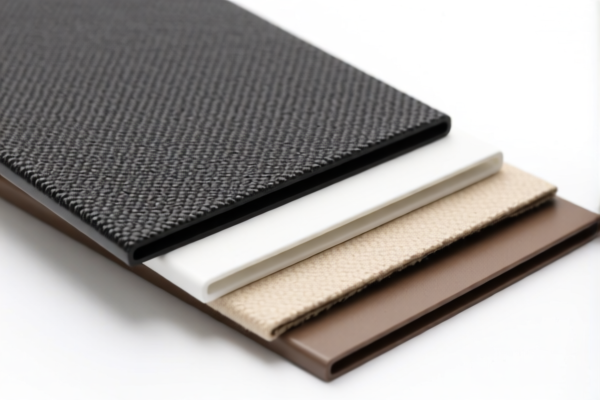
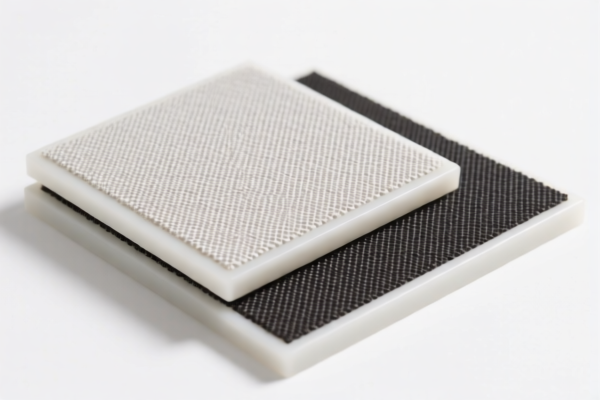

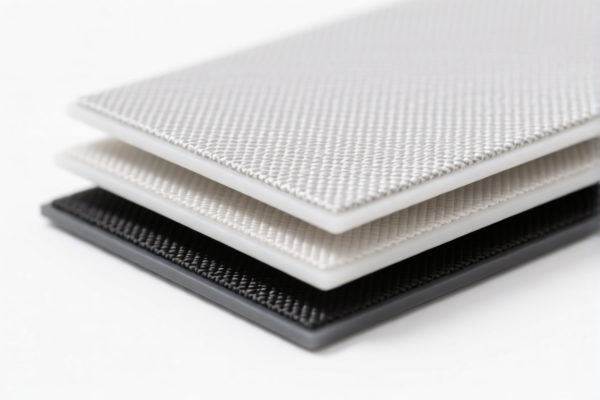
AI Analysis
🧵 PVC Composite Textile Plates (PVC复合纺织条/板)
🌐 HS Code Reference & Customs Clearance Guide | 2026 Latest Tariff Analysis | Professional Clearance Strategy
📌 I. Product Definition & Classification: What Exactly is "PVC Composite Textile"?
"PVC Composite Textile Plates" (often referred to as coated or laminated textile strips/planks in trade) are industrial materials consisting of a textile base impregnated, coated, covered, or laminated with Polyvinyl Chloride (PVC). In international trade, the classification hinges on whether the textile structure remains dominant or if it is treated primarily as a plastic product.
Key Distinction:
- If the textile fabric is the essential character, and PVC is merely a coating/lamination for technical use (e.g., filtration, insulation, reinforcement) → Likely Chapter 59.
- If the PVC plastic constitutes the essential character, and the textile is just a minor reinforcement → Likely Chapter 39.
⚠️ Critical Note:
- These goods are NOT simple "textiles" (Chapter 50-60) nor simple "plastics" (Chapter 39) alone.
- Import Destination Focus: The provided data reflects US Import Tariffs for products originating from China, including Section 301 and IEEPA additional duties.
📦 II. HS Code Classification Details (2026 Latest Tariff Matrix)
| HS Code | Product Description & Logic | Total Tax Rate | Tax Detail Breakdown |
|---|---|---|---|
| 5911.10.20.00 | Technical Textiles: Other textile products for technical uses, where the PVC coating covers the material. The textile structure is primary. | 38.8% | Base: 3.8% + Sec 301: 25.0% + IEEPA (122): 10% |
| 5903.10.20.90 | Textile Fabrics Impregnated with PVC: PVC (Polyvinyl Chloride) corresponds to "Impregnated/Coated," and the textile strip is a variant of textile fabric. | 35.0% | Base: 0.0% + Sec 301: 25.0% + IEEPA (122): 10% |
| 5911.10.10.00 | Other Technical Textiles: Textile base material with PVC coating/lamination, classified under "Other textiles for technical uses." | 37.9% | Base: 2.9% + Sec 301: 25.0% + IEEPA (122): 10% |
| 5903.10.20.10 | Textile Fabrics Coated with PVC: Specifically for textile fabrics impregnated/coated with PVC, matching the definition of PVC composite textiles. | 35.0% | Base: 0.0% + Sec 301: 25.0% + IEEPA (122): 10% |
| 3926.90.59.00 | Other Plastic Articles: Plastic products (PVC) containing textile fibers, classified primarily as a plastic article due to plastic composition. | 37.4% | Base: 2.4% + Sec 301: 25.0% + IEEPA (122): 10% |
🔍 Classification Logic Explained:
- HS 5903.10.xx: Focuses on "Fabric". If your product is a woven/knitted sheet with PVC coating, this chapter applies. The "10" subheading specifies PVC impregnation.
- HS 5911.10.xx: Focuses on "Technical Use". If the textile-PVC combo is used for industrial purposes (filtration, insulation, separation), it falls here.
- HS 3926.90.xx: Focuses on "Plastic Article". If the PVC layer is thick and the textile is merely a fiber-reinforced backing, customs may view it as a plastic article.
💰 III. 2026 Detailed Tariff Rate Breakdown (Including Surcharges)
✅ Applicable Country: United States (US)
✅ Origin: China (CN)
✅ Effective Time: Current rates apply to imports post-2025 (based on provided data)
🎯 Category A: Textile-Based Classification (HS 5903 / 5911)
1. 5903.10.20.10 & 5903.10.20.90
Best for: Standard PVC-coated textile fabrics/strips.
| Item | Content |
|---|---|
| Base Tariff | 0.0% (Free of base duty for specific PVC-coated fabrics) |
| USITC Additional Tariff | +25.0% (Section 301 Tariff on Chinese Goods) |
| IEEPA Additional Tariff | +10.0% (122 Provision/IEEPA on Chinese Goods) |
| Total Effective Rate | 35.0% |
| Calculation | CIF Value × 35.0% |
| De Minimis Exemption | ❌ Not Eligible (De Minimis does not apply to Section 301/IEEPA goods from China) |
| Legal Path | IEEPA:9903.01.25 → USITC:5903.10.20.xx → FOOTNOTE:9903.88.01 |
📌 Explanation:
- The 0% base rate is a significant saving compared to other plastic/textile categories.
- However, the 35% total burden (25% + 10%) is substantial.
- This classification requires proving the item is a "Textile Fabric" impregnated with PVC, not a rigid plastic sheet.
2. 5911.10.10.00
Best for: Technical textiles where PVC is a coating.
| Item | Content |
|---|---|
| Base Tariff | 2.9% |
| USITC Additional Tariff | +25.0% |
| IEEPA Additional Tariff | +10.0% |
| Total Effective Rate | 37.9% |
| Calculation | CIF Value × 37.9% |
| De Minimis Exemption | ❌ Not Eligible |
3. 5911.10.20.00
Best for: Other technical textile applications.
| Item | Content |
|---|---|
| Base Tariff | 3.8% |
| USITC Additional Tariff | +25.0% |
| IEEPA Additional Tariff | +10.0% |
| Total Effective Rate | 38.8% |
| Calculation | CIF Value × 38.8% |
| De Minimis Exemption | ❌ Not Eligible |
🎯 Category B: Plastic-Based Classification (HS 3926)
4. 3926.90.59.00
Best for: PVC plastic articles reinforced with textile fibers.
| Item | Content |
|---|---|
| Base Tariff | 2.4% |
| USITC Additional Tariff | +25.0% |
| IEEPA Additional Tariff | +10.0% |
| Total Effective Rate | 37.4% |
| Calculation | CIF Value × 37.4% |
| De Minimis Exemption | ❌ Not Eligible |
📌 Comparison:
- Lowest Total Rate: 35.0% (HS 5903.10.20.10/90).
- Highest Total Rate: 38.8% (HS 5911.10.20.00).
- Recommendation: If the product is a flexible sheet/fabric, HS 5903 is often the most favorable due to the 0% base duty, provided it can be accurately described as a "textile fabric impregnated with PVC."
🛠️ IV. Customs Clearance Practical Advice (Risk Mitigation)
✅ 1. Documentation Checklist (Essential)
| Document | Required? | Notes |
|---|---|---|
| ✅ Product Specification Sheet | ✔️ | Must detail: Base fabric type (woven/knit), PVC thickness, coating weight, tensile strength. |
| ✅ Composition Analysis Report | ✔️ | Proof of % PVC vs. % Textile. Crucial for deciding between Ch 59 and Ch 39. |
| ✅ High-Resolution Photos | ✔️ | Show cross-section to prove PVC penetration/coating. |
| ✅ Commercial Invoice | ✔️ | Use precise language: "PVC Coated Textile Fabric" or "PVC Laminated Technical Textile" rather than generic "Plastic Plate." |
| ✅ Bill of Lading | ✔️ | Ensure packaging marks match invoice. |
| ✅ Certificate of Origin | ✔️ | Mandatory to prove Chinese origin for tariff calculation. |
✅ 2. Declaration Strategy (Key Formulas)
🔥 "Fabric First, Plastic Second; Technical Use, Code Clearer!"
| Scenario | Correct HS Code | Reasoning |
|---|---|---|
| Flexible Sheet/Fabric with PVC coating | 5903.10.20.10/90 | Classified as "Textile Fabric impregnated with PVC." Lowest base duty (0%). |
| Technical Application (e.g., filter, insulator) | 5911.10.10.00 | Classified as "Textile for Technical Use." Slightly higher base duty. |
| Rigid Board/Plate with textile reinforcement | 3926.90.59.00 | Classified as "Plastic Article." Textile is secondary reinforcement. |
| Unknown/Confused | Avoid 5911.20.00 | Ensure it's not misclassified as "Other Technical Textiles" with higher base rates if 5903 applies. |
⚠️ Common Error:
- Mistake: Declaring as "Plastic Sheets" (HS 3921) without noting textile content.
- Risk: Customs may reclassify to 3926.90.59.00 or even 5903/5911 if textile is evident, leading to duty discrepancies and penalties.
- Mistake: Declaring as "Textiles" (HS 55/58) ignoring PVC.
- Risk: Rejected for missing PVC composition details.
✅ 3. Special Situations
| Situation | Handling Advice |
|---|---|
| OEM Custom Orders | Provide design specs showing textile weave and PVC application method. |
| "Plates" vs. "Strips" | If the product is rigid, argue for Ch 39. If flexible, argue for Ch 59. Terminology matters! |
| Preventive Ruling | Apply for an Advance Ruling (US CBP) before shipping. This locks in the HS code and duty rate, avoiding post-import audits. |
| Supply Chain Diversification | If possible, source from Vietnam/Mexico to avoid Section 301 (25%) and IEEPA (10%) tariffs. |
🌍 V. Global Market Comparison (2026 Overview)
| Region | Recommended HS Code | Est. Tariff (China Origin) | Notes |
|---|---|---|---|
| 🇺🇸 USA | 5903.10.20.10 | 35.0% | Highest barrier due to 35% total. |
| 🇺🇸 USA | 3926.90.59.00 | 37.4% | Slightly higher than 5903. |
| 🇪🇺 EU | 5903.10 | ~0-6% + VAT | No Section 301 tariffs. Standard EU duties apply. |
| 🇨🇳 China | 5903.10 | 0-10% | Import duties vary; domestic consumption lower burden. |
| 🇲🇽 Mexico | 5903.10 | 0% (under USMCA if qualified) | Check rules of origin carefully. |
📌 Conclusion:
- The US market is the most challenging due to 35-39% effective tariffs.
- HS 5903.10.20.10 offers the lowest burden at 35% if the product qualifies as a PVC-impregnated textile.
- HS 3926 is a fallback if the PVC layer dominates the product's character.
📌 VI. Common Pitfalls & How to Avoid Them
❌ Pitfall 1: Calling the product "PVC Sheet" when it is clearly a coated fabric.
👉 Result: Customs may assess 3926.90.59.00 (37.4%) instead of 5903.10 (35.0%), increasing costs.
❌ Pitfall 2: Ignoring the "Textile" component in the description.
👉 Result: Customs may classify it as a general plastic article or demand reclassification, causing delays and storage fees.
❌ Pitfall 3: Assuming "De Minimis" (Section 321) applies for small shipments.
👉 Result: No! Section 301 and IEEPA tariffs do not benefit from de minimis exemption for Chinese goods. Even $1 shipments are subject to duty.
🎯 VII. Conclusion: Precision is Profit
🎯 Key Takeaway:
🔹 "Flexible? Go 5903. Rigid? Go 3926. Technical? Check 5911."
🔹 "China Origin = 35% Minimum. Plan for the surcharge!"
🔹 "Documentation is King: Prove the PVC-Textile Bond."
📌 Pro Tip:
If you are importing large volumes, consider Advance Ruling from US Customs to lock in the 35.0% rate (HS 5903.10.20.10) and avoid disputes. If margins are thin, explore transshipment or sourcing from non-China origins to mitigate the 35% tariff burden.
📣 Immediate Action:
📞 Consult your customs broker with product samples.
📄 Prepare detailed specs highlighting PVC coating and textile base.
🚀 Apply for Advance Ruling to secure the best possible HS code (preferably 5903.10.20.10).
✨ Professional Clearance Starts with Accurate Classification!
💼 Every percentage point counts in your profit margin!
Customer Reviews
About HS Code Classification
The Harmonized System (HS) is an internationally standardized nomenclature developed by the World Customs Organization (WCO) to classify traded products. Over 200 countries use the HS system as the basis for customs tariffs, trade statistics, and import/export regulations.
Each HS code follows a hierarchical structure:
- Chapter (2 digits) — Broad category of goods (e.g., Chapter 84: Machinery and Mechanical Appliances)
- Heading (4 digits) — More specific grouping within the chapter
- Subheading (6 digits) — Internationally standardized breakdown, used by all WCO member countries
- National subdivisions (8-10 digits) — Country-specific extensions for further classification, such as US HTSUS 10-digit codes
Correct HS code classification is essential for smooth customs clearance, accurate duty payment, and compliance with trade regulations. Misclassification can lead to customs delays, overpayment of duties, or penalties.
When importing from CN to US, the applicable tariff rates may include:
- Most-Favored-Nation (MFN) rate — The standard duty rate applied to WTO members
- General rate — Applied to countries without trade agreements
- Trade remedy duties — Additional tariffs such as Section 301 (anti-dumping), Section 232 (national security), or countervailing duties
The information provided on this page is for reference purposes only. For official classification, please consult with your local customs authority or a licensed customs broker.