PVC Composite Textile Wallpaper
CN → US| HS Code | Tariff Rate | Origin | Destination | Doc |
|---|---|---|---|---|
| 3919905060 | 40.8% | CN | US | Official Doc |
| 3919905040 | 40.8% | CN | US | Official Doc |
| 4811596000 | 35.0% | CN | US | Official Doc |
| 4811516000 | 35.0% | CN | US | Official Doc |
| 5903102090 | 35.0% | CN | US | Official Doc |
Product Images
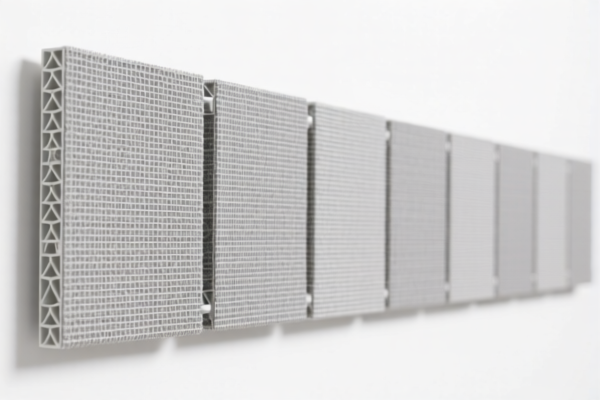
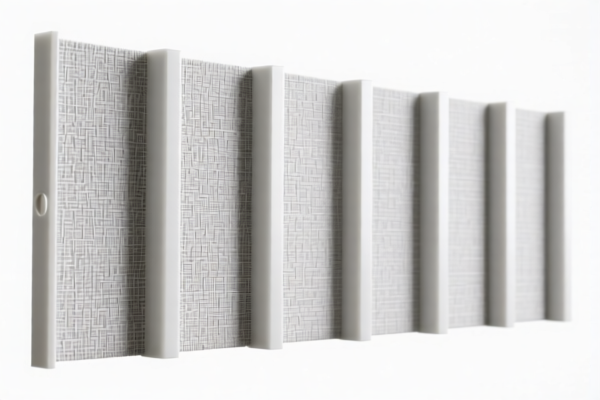
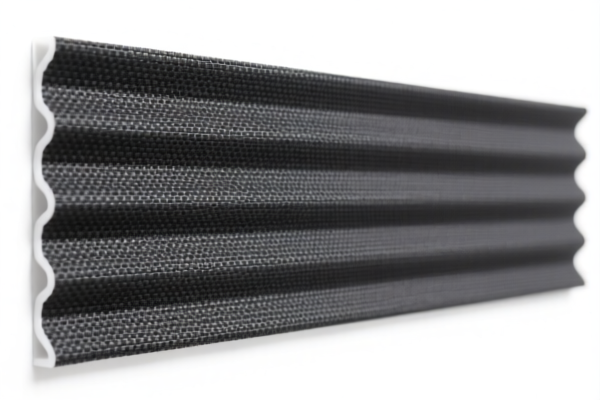
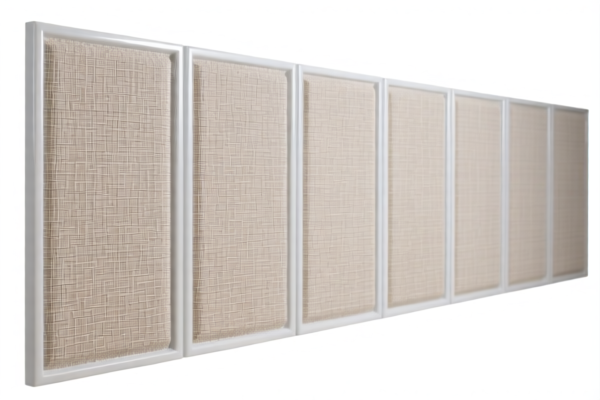
AI Analysis
🏠 PVC Composite Textile Wallpaper
🌐 HS Code Reference & Customs Clearance Guide | 2026 Latest Tariff Analysis | Professional Entry Strategy
📌 I. Product Definition & Classification: What Exactly is "PVC Composite Textile Wallpaper"?
PVC Composite Textile Wallpaper is a decorative building material widely used in interior design. It combines the durability and moisture resistance of PVC (Polyvinyl Chloride) with the texture and aesthetics of textile/fabric. In international trade, the classification depends heavily on the base material and the manufacturing process (whether it is a plastic film, a coated paper, or an impregnated textile).
There are two main classification paths based on physical structure:
Path A: Plastic-Primary Material
If the product is essentially a PVC film/sheet with adhesive backing, potentially backed by paper or fabric for stability, but fundamentally categorized as "Self-adhesive plastic sheets/films," it falls under Chapter 39.
Path B: Paper or Textile Base
If the product consists of a paper substrate coated/laminated with PVC, or a textile fabric impregnated/coated with PVC, it falls under Chapter 48 (Paper) or Chapter 59 (Textiles), respectively.
⚠️ Key Distinction Point:
- If it is a plastic film (even if self-adhesive) → Chapter 39 (3919.90)
- If it is paper coated with plastic → Chapter 48 (4811.51/4811.59)
- If it is textile fabric impregnated/coated → Chapter 59 (5903.10)
📦 II. HS Code Classification Details (2026 Latest Tariff Authority Comparison)
| HS Code | Product Description | Application Scenario | Base Material | Adhesive? |
|---|---|---|---|---|
3919.90.50.60 |
PVC material, film form, self-adhesive plastic sheet/film/fold/band | Self-adhesive PVC wallpaper, decorative plastic films | ✅ PVC (Plastic) | ✅ Yes (Self-adhesive) |
3919.90.50.40 |
PVC material, film form, self-adhesive characteristics | Self-adhesive PVC decorative sheets | ✅ PVC (Plastic) | ✅ Yes (Self-adhesive) |
4811.59.60.00 |
PVC-covered, sheet/roll form, paper/cellulose base coated with plastic | Paper-based wallpaper with PVC surface layer | ✅ Paper/Cellulose | ❌ No (Usually paste-the-wall) |
4811.51.60.00 |
PVC-covered, film form, coated plastic paper/film product | Coated paper wallpapers | ✅ Paper/Cellulose | ❌ No |
5903.10.20.90 |
PVC material, film form, impregnated/coated/laminated textile fabric | Textile-backed PVC wallpaper | ✅ Textile/Fabric | ❌ No (Fabric base) |
🔍 Important Reminder:
- Chapter 39 (3919) applies when the plastic layer is the primary functional element and it is self-adhesive. This is common for "peel-and-stick" PVC wallpapers.
- Chapter 48 (4811) applies when the paper base is structural, and PVC is just a coating.
- Chapter 59 (5903) applies when the textile base is structural, and PVC is used for waterproofing/decoration.
💰 III. 2026 Latest Tariff Rate Breakdown (Including Surtaxes & Policy Add-ons)
✅ Applicable Country: United States (US)
✅ Origin: China (CN)
✅ Effective Date: From November 10, 2025 (including subsequent imports)
🎯 1. 3919.90.50.60 & 3919.90.50.40 —— Self-Adhesive PVC Sheets/Films
| Item | Content |
|---|---|
| Base Tariff Rate | 5.8% (ad valorem) |
| Surtax (Section 301) | +25.0% (USITC Footnote 9903.88.01 / Trade Act Section 301) |
| 122 Clause Tariff | +10.0% (Specific trade measures) |
| Total Effective Rate | 40.8% |
| Tax Calculation | CIF Value × 40.8% |
| De Minimis Exemption? | ❌ NOT Eligible (deny_de_minimis) |
| Legal Basis Path | Base:5.8% → Surtax:25.0% → 122:10.0% |
📌 Explanation:
- These HS codes fall under "Self-adhesive plastic plates, sheets, film, foil, tape, strip and other forms flat shapes."
- The 40.8% total rate is a combination of the standard duty (5.8%) plus significant punitive tariffs (35% total).
- Crucial: Do not expect de minimis (Section 321) exemption for these goods if they are classified as plastic films with adhesive properties.
🎯 2. 4811.59.60.00 & 4811.51.60.00 —— PVC-Coated Paper/Cellose Products
| Item | Content |
|---|---|
| Base Tariff Rate | 0.0% |
| Surtax (Section 301) | +25.0% |
| 122 Clause Tariff | +10.0% |
| Total Effective Rate | 35.0% |
| Tax Calculation | CIF Value × 35.0% |
| De Minimis Exemption? | ❌ NOT Eligible |
| Legal Basis Path | Base:0.0% → Surtax:25.0% → 122:10.0% |
📌 Note:
- While the base tariff is 0%, the 35% combined surtax still makes this expensive.
- This classification is often used for traditional "paste-the-wall" wallpapers where paper is the main structural component.
🎯 3. 5903.10.20.90 —— Impregnated/Coated/Laminated Textile Fabrics
| Item | Content |
|---|---|
| Base Tariff Rate | 0.0% |
| Surtax (Section 301) | +25.0% |
| 122 Clause Tariff | +10.0% |
| Total Effective Rate | 35.0% |
| Tax Calculation | CIF Value × 35.0% |
| De Minimis Exemption? | ❌ NOT Eligible |
| Legal Basis Path | Base:0.0% → Surtax:25.0% → 122:10.0% |
📌 Note:
- If your product has a visible fabric texture and the PVC is coated onto a textile base, this code is more accurate.
- Similar to the paper category, the 35% rate applies due to Section 301 and 122 clause surcharges.
🛠️ IV. Customs Clearance Practical Advice (Real-World Pitfall Avoidance)
✅ 1. Documentation Checklist (Missing items cause delays)
| Document | Required? | Description |
|---|---|---|
| ✅ Product Specification Sheet | ✔️ | Must detail: Material composition (e.g., "PVC film laminated on paper"), dimensions, weight per roll. |
| ✅ Composition Breakdown | ✔️ | Crucial for distinguishing between Ch. 39 (Plastic), Ch. 48 (Paper), and Ch. 59 (Textile). |
| ✅ Product Photos | ✔️ | Close-up of surface texture (PVC film vs. woven fabric) and cross-section (layer structure). |
| ✅ Commercial Invoice | ✔️ | Must clearly state "PVC Wallpaper" and the specific HS Code. |
| ✅ Packing List | ✔️ | Net/Gross weight, number of rolls. |
| ✅ Adhesive Confirmation | ✔️ | If 3919, explicitly state "Self-Adhesive" on the invoice. |
✅ 2. Declaration Strategy (Key Mnemonic)
🔥 "Plastic Film = 40.8%, Paper/Fabric Base = 35%! Check the Core Layer!"
| Scenario | Correct HS Code | Risk of Wrong Code |
|---|---|---|
| Self-Adhesive PVC Sheet (Peel-and-stick) | 3919.90.50.60 / 50.40 |
Misclassifying as Paper (4811) → Audit Risk, potential penalty for underpayment. |
| Paper-based Wallpaper (Paste-the-wall) | 4811.51.60.00 / 59.60 |
Misclassifying as Plastic (3919) → Overpaying by 5.8% unnecessarily. |
| Fabric-based Wallpaper (Textile backing) | 5903.10.20.90 |
Misclassifying as Paper → Classification Error if textile is clearly visible. |
| Generic "Wallpaper" (No detail) | ❌ Do Not Use | CBP will likely downgrade to highest duty or hold for inspection. |
✅ 3. Special Considerations
| Situation | Handling Advice |
|---|---|
| Is it "Vinyl Wallpaper" or "Non-Woven"? | Non-woven is often treated as textile (5903) or paper. Ensure material is clearly defined. |
| Customs Inspection Triggers | CBP often inspects 3919 and 4811 due to high surtax rates. Have lab test results ready to prove material composition. |
| 122 Clause Specifics | The 10% surtax is specific to certain product categories. Ensure your description matches the scope of the "122 Clause" requirements. |
| De Minimis (Section 321) | Warning: Many PVC and paper-based wallpaper items are excluded from de minimis entry. Do not assume parcels under $800 are tax-free. |
🌍 V. Global Market Comparison (2026 Latest)
| Country/Region | Recommended HS Code | Tariff Rate (China Origin) | Certification/Remarks |
|---|---|---|---|
| 🇺🇸 USA | 3919.90 / 4811 / 5903 |
35.0% - 40.8% | High scrutiny. Section 301 + 122 apply. |
| 🇨🇳 China | 3919 / 4811 / 5903 |
0% - 5% | Low import duty for raw materials/decor. |
| 🇪🇺 EU | 3919 / 4811 / 5903 |
0% - 6.5% | No Section 301 equivalent. REACH compliance required. |
| 🇬🇧 UK | 3919 / 4811 / 5903 |
0% - 6.5% | Post-Brexit tariff schedule applies. |
| 🇦🇺 Australia | 3919 / 4811 / 5903 |
5% | Standard MFN rate. |
📌 Conclusion:
- USA is the most expensive market for PVC wallpaper due to the 35-40.8% combined duty rate.
- EU/UK/AU are significantly cheaper (5-6.5%), but require strict chemical compliance (REACH/UKCA).
📌 VI. Common Mistakes & Pitfalls (Lessons Learned)
❌ Mistake 1: Calling it "Wallpaper" without specifying material composition.
👉 Result: CBP may classify it as a generic plastic sheet (3919) or hold it for inspection, causing delays.
❌ Mistake 2: Assuming all "PVC Wallpaper" falls under one code.
👉 Result: If it's paper-based, you should use 4811 (35%), not 3919 (40.8%). Overpaying by 5.8% is a common error.
❌ Mistake 3: Ignoring the "Self-Adhesive" feature.
👉 Result: If it has adhesive, 3919 is the most likely code. Declaring it as non-adhesive (4811) is fraud/misclassification.
✅ Correct Approach:
"PVC Wallpaper, Self-Adhesive, 0.1mm PVC Film on Paper Backing, Roll Size: 10.5m x 0.53m, Model XYZ"
🎯 VII. Conclusion: Professional Declaration, Save Costs!
🎯 Remember the Mnemonic:
🔹 "Self-Adhesive PVC = 40.8% (Ch 39)"
🔹 "Paper/Fabric Base = 35.0% (Ch 48/59)"
🔹 "Check the Core Layer, Avoid the 5.8% Trap!"
📌 Tips:
- If your product is exported to the US, calculate the 35-40.8% duty into your pricing immediately.
- Consider applying for an Advance Ruling if your product composition is complex (e.g., hybrid materials).
- For small parcels, verify if your specific HS Code is subject to de minimis exclusion. Do not rely on courier estimates.
📣 Immediate Action:
📞 Contact your customs broker with product photos and material composition details.
🚀 Declare accurately to avoid penalties, delays, and unexpected costs!
✨ Professional Customs Clearance Starts with Accurate Classification!
💼 Every percentage point counts in international trade!
Customer Reviews
About HS Code Classification
The Harmonized System (HS) is an internationally standardized nomenclature developed by the World Customs Organization (WCO) to classify traded products. Over 200 countries use the HS system as the basis for customs tariffs, trade statistics, and import/export regulations.
Each HS code follows a hierarchical structure:
- Chapter (2 digits) — Broad category of goods (e.g., Chapter 84: Machinery and Mechanical Appliances)
- Heading (4 digits) — More specific grouping within the chapter
- Subheading (6 digits) — Internationally standardized breakdown, used by all WCO member countries
- National subdivisions (8-10 digits) — Country-specific extensions for further classification, such as US HTSUS 10-digit codes
Correct HS code classification is essential for smooth customs clearance, accurate duty payment, and compliance with trade regulations. Misclassification can lead to customs delays, overpayment of duties, or penalties.
When importing from CN to US, the applicable tariff rates may include:
- Most-Favored-Nation (MFN) rate — The standard duty rate applied to WTO members
- General rate — Applied to countries without trade agreements
- Trade remedy duties — Additional tariffs such as Section 301 (anti-dumping), Section 232 (national security), or countervailing duties
The information provided on this page is for reference purposes only. For official classification, please consult with your local customs authority or a licensed customs broker.