PVC Corner Guard Strip
CN → US| HS Code | Tariff Rate | Origin | Destination | Doc |
|---|---|---|---|---|
| 3925900000 | 40.3% | CN | US | Official Doc |
| 3916200091 | 40.8% | CN | US | Official Doc |
| 3916200020 | 40.8% | CN | US | Official Doc |
| 3926305000 | 22.8% | CN | US | Official Doc |
| 3926909989 | 22.8% | CN | US | Official Doc |
Product Images
AI Analysis
🛡️ PVC Corner Guard Strip (Plastic Corner Protectors)
🌐 HS Code Reference & Customs Clearance Guide | 2024-2026 Latest Tariff Analysis | Professional-Level Strategy
📌 1. Product Definition & Classification: What Exactly Are "PVC Corner Guards"?
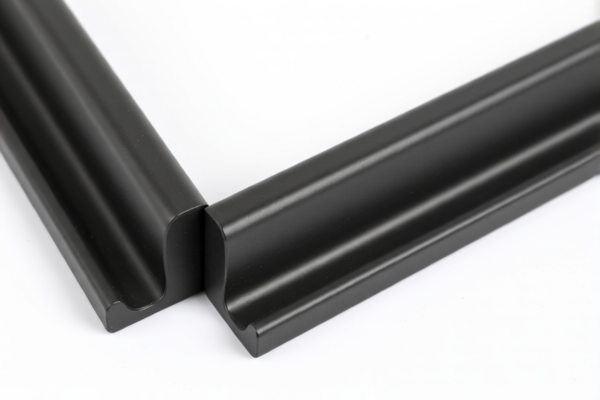
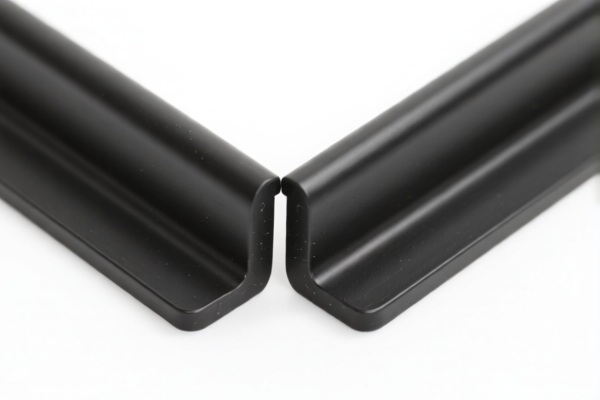
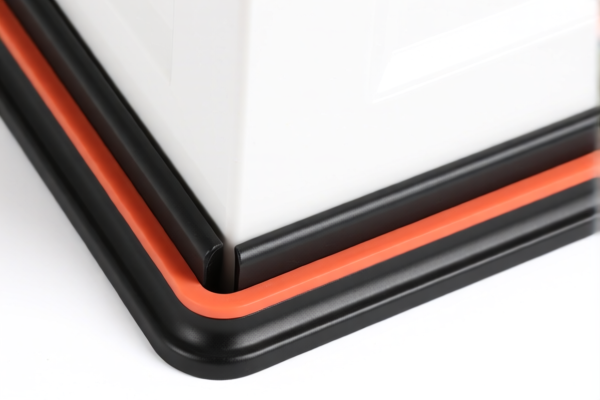
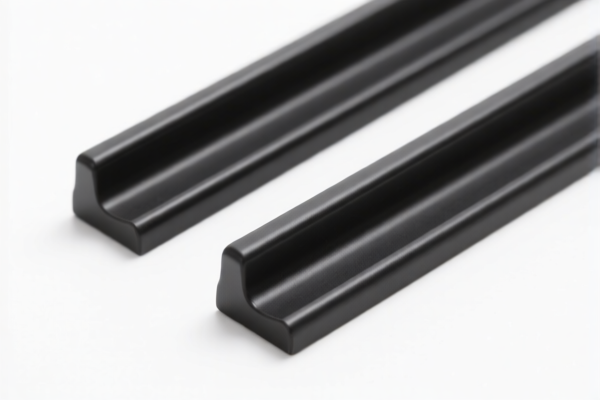
PVC Corner Guard Strips are plastic extrusions used primarily in construction and furniture manufacturing to protect vulnerable corners from impact, abrasion, and moisture. In international trade, they are categorized based on their physical form and intended use.
Two Main Categories:
-
Construction Building Components: Profiles used in walls, doors, and architectural structures.
- Key Feature: Often extruded, rigid, and designed for fixed installation.
- Typical HS Codes:
3925.90.00.00,3916.20.00.91,3916.20.00.20
-
Furniture & Industrial Accessories: Protective fittings for furniture edges, vehicle bodies, or general-purpose plastic parts.
- Key Feature: May be flexible, detachable, or serve a secondary protective function rather than being a primary building material.
- Typical HS Codes:
3926.30.50.00,3926.90.99.89
⚠️ Critical Distinction:
- If the product is a building accessory (e.g., wall corner bead, door jamb protector) → It falls under Chapter 39.25 or 39.16.
- If the product is a furniture part or general plastic article → It falls under Chapter 39.26.
- Misclassification Risk: Declaring a building profile as a "furniture part" to avoid higher tariffs is a common audit trigger.
📦 2. HS Code Classification Matrix (Detailed Breakdown)
The following table maps the specific HS Codes provided in the data to their precise product descriptions and tax liabilities.
| HS Code | Product Description (Based on Data) | Physical Form/Use | Total Tax Rate* |
|---|---|---|---|
3925.90.00.00 |
PVC Corner Guard Strip, Plastic Material, Building Component (Other) | Extruded profile for architectural use | 40.3% |
3916.20.00.91 |
PVC Corner Guard Strip, Chloropolymer, Strip Shape, Other Use | Plastic strip, not specifically for construction/furniture | 40.8% |
3916.20.00.20 |
PVC Corner Guard Strip, Chloropolymer, Profile Shape, Building/Furniture Fit | Extruded plastic profile for construction or furniture assembly | 40.8% |
3926.30.50.00 |
PVC Corner Guard Strip, Plastic, Furniture/Vehicle Connection/Protection | Protective part for furniture or vehicle bodies | 22.8% |
3926.90.99.89 |
PVC Corner Guard Strip, Plastic, Other Plastic Article | General-purpose plastic protector, not specified for furniture/building | 22.8% |
*Tax rates include Base Duty, Section 301 Additional Duty, and Section 122 Duty. See Section 3 for breakdown.
💰 3. 2026 Latest Tariff Rate Analysis (USA/China Context)
✅ Applicable Countries: United States (US)
✅ Origin: China (CN)
✅ Effective Time: Current tariffs as per provided data
The total tax burden for PVC Corner Guards is significantly influenced by Section 301 and Section 122 additional duties. Below is the detailed breakdown by HS Code category.
🎯 Category A: High Tariff (Construction & General Profiles)
HS Codes: 3925.90.00.00, 3916.20.00.91, 3916.20.00.20
| Component | Rate | Source/Notes |
|---|---|---|
| Base Duty | 5.3% - 5.8% | Standard MFN rate for plastics |
| Section 301 Add-on | 25.0% | US Trade Act Section 301 tariffs on Chinese plastics |
| Section 122 Add-on | 10.0% | Specific additional duty on certain plastic articles |
| TOTAL EFFECTIVE RATE | 40.3% - 40.8% | High Cost Category |
📌 Explanation:
- Products classified as building components (3925) or plastic profiles (3916) face the highest tariff burden due to their classification as strategic or high-volume industrial imports.
- The Section 122 duty (10%) is a notable addition on top of the standard 301 tariff, making this category exceptionally expensive for importers.
🎯 Category B: Lower Tariff (Furniture & General Plastic Parts)
HS Codes: 3926.30.50.00, 3926.90.99.89
| Component | Rate | Source/Notes |
|---|---|---|
| Base Duty | 5.3% | Standard MFN rate for plastic articles |
| Section 301 Add-on | 7.5% | Reduced Section 301 rate for certain plastic articles (e.g., furniture parts) |
| Section 122 Add-on | 10.0% | Specific additional duty on certain plastic articles |
| TOTAL EFFECTIVE RATE | 22.8% | Moderate Cost Category |
📌 Explanation:
- Products classified as furniture parts (3926.30) or other plastic articles (3926.99) benefit from a lower Section 301 rate (7.5% vs 25%).
- This represents a significant cost saving (~18% difference) compared to the construction profile classification.
🛠️ 4. Customs Clearance Practical Advice (Avoiding Pitfalls)
✅ 1. Documentation Checklist (Essential)
| Document | Required? | Description |
|---|---|---|
| Product Specifications | ✔️ | Must specify material (PVC/Chloropolymer), shape (Profile/Strip), and use (Building/Furniture). |
| Product Photos | ✔️ | Clear images showing cross-section, installation method, and packaging. |
| Commercial Invoice | ✔️ | Must accurately describe the goods as "PVC Corner Guard Strip" with material composition. |
| Bill of Lading | ✔️ | Standard shipping document. |
| Origin Certificate | ❌ | Not typically needed for tariff preference unless claiming FTA benefits (rare for PVC). |
✅ 2. Classification Strategy & Tips
🔥 "Use Defines Code; Form Defines Category; Save Money by Choosing Right Chapter!"
| Scenario | Recommended HS Code | Reasoning |
|---|---|---|
| Wall/Door Corner Protectors | 3925.90.00.00 |
Explicitly for buildings. Higher tax (40.3%). |
| Furniture Edge Protectors | 3926.30.50.00 |
Explicitly for furniture. Lower tax (22.8%). |
| Generic Plastic Corner Caps | 3926.90.99.89 |
"Other plastic articles." Lower tax (22.8%). |
| Raw Extruded PVC Strips | 3916.20.00.91 |
Raw material profile. Higher tax (40.8%). |
📌 Key Tip:
- If your PVC corner guards are used for furniture, ensure the invoice and description clearly state "Furniture Parts".
- Avoid vague terms like "Building Material" if the item is actually for furniture.
- Do not mix descriptions: If you ship both building and furniture guards, declare them separately to apply the correct tax rate.
✅ 3. Special Case Handling
| Scenario | Handling Advice |
|---|---|
| OEM Custom Profiles | Provide design drawings. If designed for a specific furniture brand, classify under 3926.30.50.00. |
| Mixed Shipment | Separate building guards and furniture guards into different line items on the invoice. |
| Recycled PVC | If made from recycled plastic, additional documentation may be required, but HS Code remains similar. |
| Section 122 Exemptions | Check if your specific product type is exempt from the 10% Section 122 duty (rare for standard PVC guards). |
🌍 5. Global Market Comparison (Brief Overview)
| Market | Recommended HS Code | Estimated Duty | Notes |
|---|---|---|---|
| 🇺🇸 USA | 3926.30.50.00 |
22.8% | Best option for furniture parts. |
| 🇺🇸 USA | 3925.90.00.00 |
40.3% | Building components are heavily taxed. |
| 🇨🇳 China (Export) | N/A | 0% | No export duty on PVC plastics. |
| 🇪🇺 EU | 3926.90.99 |
~6.5% | No Section 301/122 equivalents. |
📌 Conclusion:
- USA Market: Tariff classification is critical. Furniture-grade PVC guards (22.8%) are significantly cheaper than building-grade (40.3%).
- Strategy: If your product can be reasonably described as a "furniture part" rather than a "building component," use3926.30.50.00or3926.90.99.89.
📌 6. Common Errors & Pitfalls (Lessons Learned)
❌ Error 1: Declaring a building wall protector as a "plastic strip" without specifying use.
👉 Consequence: Customs may reclassify to 3916.20.00.91 (40.8%) or audit for misdeclaration.
❌ Error 2: Claiming furniture guard status for a heavy-duty construction profile.
👉 Consequence: Penalty for underpayment of duties.
❌ Error 3: Ignoring Section 122 Duty.
👉 Consequence: Even if Section 301 is low, the 10% Section 122 duty applies to many plastic articles, adding unexpected cost.
✅ Correct Approach:
"PVC Corner Guard Strip, 12mm x 12mm, White, For Furniture Use, Material: Rigid PVC, Model: FG-12"
🎯 7. Conclusion: Smart Classification Saves 17.5%!
🎯 Remember:
🔹 "Furniture = 22.8% | Building = 40.3%"
🔹 "17.5% Difference = Huge Profit Margin!"
🔹 "Describe Use Clearly, Pay Less Customs Duty!"
📌 Pro Tip:
If you are shipping large volumes, consider pre-classification rulings from US Customs and Border Protection (CBP) to confirm the 3926 classification for your specific product design.
📣 Action Required:
📞 Verify Product Use: Is it for furniture or building?
📝 Update Invoice Description: Align with HS Code classification.
🚀 Optimize Cost: Use3926codes where applicable to reduce tax liability by 17.5%.
✨ Accurate Classification, Lower Costs, Smoother Clearance!
💼 Every Percent Counts in International Trade!
Customer Reviews
About HS Code Classification
The Harmonized System (HS) is an internationally standardized nomenclature developed by the World Customs Organization (WCO) to classify traded products. Over 200 countries use the HS system as the basis for customs tariffs, trade statistics, and import/export regulations.
Each HS code follows a hierarchical structure:
- Chapter (2 digits) — Broad category of goods (e.g., Chapter 84: Machinery and Mechanical Appliances)
- Heading (4 digits) — More specific grouping within the chapter
- Subheading (6 digits) — Internationally standardized breakdown, used by all WCO member countries
- National subdivisions (8-10 digits) — Country-specific extensions for further classification, such as US HTSUS 10-digit codes
Correct HS code classification is essential for smooth customs clearance, accurate duty payment, and compliance with trade regulations. Misclassification can lead to customs delays, overpayment of duties, or penalties.
When importing from CN to US, the applicable tariff rates may include:
- Most-Favored-Nation (MFN) rate — The standard duty rate applied to WTO members
- General rate — Applied to countries without trade agreements
- Trade remedy duties — Additional tariffs such as Section 301 (anti-dumping), Section 232 (national security), or countervailing duties
The information provided on this page is for reference purposes only. For official classification, please consult with your local customs authority or a licensed customs broker.