PVC Corner Profile
CN → US| HS Code | Tariff Rate | Origin | Destination | Doc |
|---|---|---|---|---|
| 3925900000 | 40.3% | CN | US | Official Doc |
| 3916200091 | 40.8% | CN | US | Official Doc |
| 3916200020 | 40.8% | CN | US | Official Doc |
| 3926305000 | 22.8% | CN | US | Official Doc |
| 3926909989 | 22.8% | CN | US | Official Doc |
Product Images
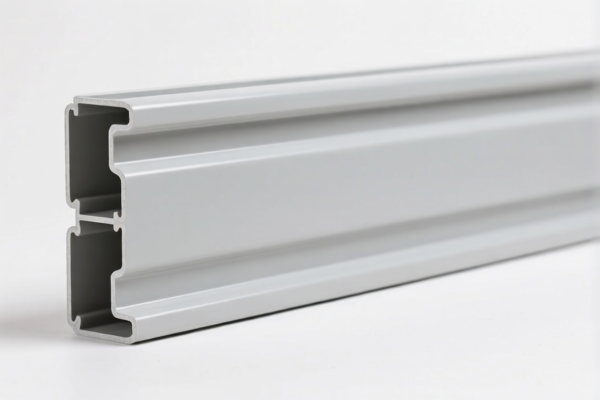
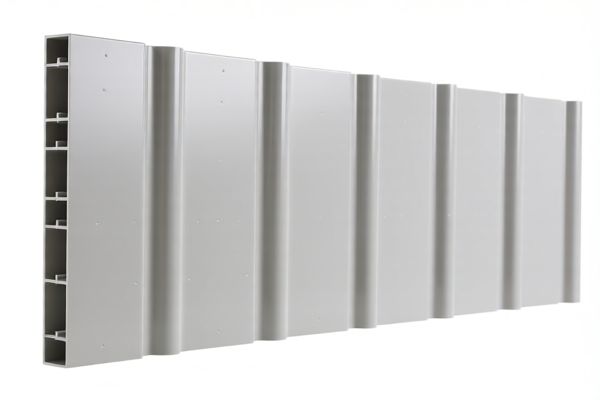
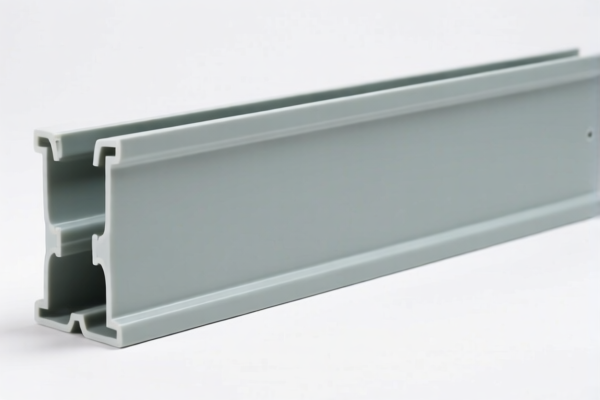
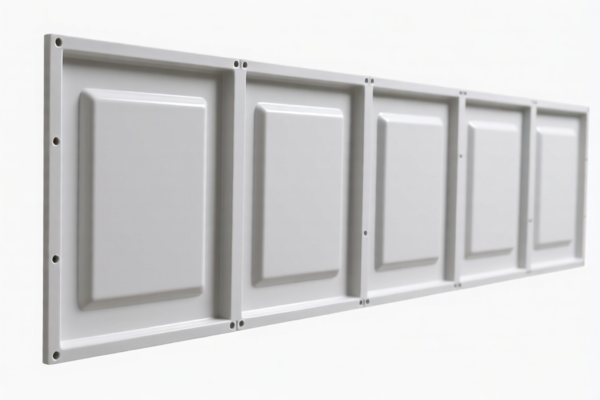
AI Analysis
🛡️ PVC Corner Profiles (PVC Corner Beads/Trims)
🌐 HS Code Reference & Customs Clearance Guide | 2026 Latest Tariff Analysis | Professional-Level Strategy
📌 I. Product Definition & Classification: Do You Really Know "PVC Corner Profiles"?
PVC Corner Profiles are essential building materials and accessory components used in construction and furniture manufacturing. They serve two primary purposes: protection (preventing damage to corners) and aesthetics (creating clean, sharp lines).
In international trade, they are classified based on their material composition, physical form, and intended use. Misclassification can lead to significant duty discrepancies, especially given the complex US-China trade tariffs.
⚠️ Key Distinction Points:
- If the product is a generic plastic profile for construction/building use → Often falls under 3925 or 3916.
- If the product is specifically a furniture accessory or vehicle body part → Falls under 3926.
- The specific HS Code depends on whether it is deemed a "Building Material" or a "General Plastic Article."
📦 II. HS Code Classification Details (2026 Latest Tariff Authority Match)
Based on the provided data, here are the 5 specific HS Codes and their corresponding tax implications for PVC Corner Profiles:
| HS Code | Product Description | Application/Usage | Key Classification Logic |
|---|---|---|---|
| 3925.90.00.00 | PVC Corner Profile, Plastic Material, Shape: Building Component / Other | Construction / Architecture | Classified as a "Building Material" or "Accessory for Buildings." |
| 3916.20.00.91 | PVC Corner Profile, Material: Vinyl Chloride Polymer, Shape: Strips, Use: Other Categories | Generic Plastic Strips | Classified as "Plastics in Primary Forms or Semi-Finished Products" (Strips). |
| 3916.20.00.20 | PVC Corner Profile, Material: Vinyl Chloride Polymer, Shape: Profiles, Use: Construction or Furniture Matching | Construction/Furniture Profiles | Specifically for "Profiles" (extruded shapes) used in building/furniture. |
| 3926.30.50.00 | PVC Corner Profile, Material: Plastic, Use: Furniture / Vehicle Body Connection / Protective Part | Furniture / Automotive Accessories | Classified as "Fittings for Furniture" or "Auto Body Parts." |
| 3926.90.99.89 | PVC Corner Profile, Material: Plastic, Shape: Other Plastic Articles | General Plastic Articles | The "Catch-all" category for plastic products not specified elsewhere. |
🔍 Important Note:
- The difference between 3916/3925 (Building Materials/Plastics) and 3926 (Finished Articles) is critical.
- 3926 codes generally carry lower additional tariffs in this dataset due to different trade policy footnotes.
💰 III. 2026 Latest Tariff Rate Breakdown (Including Surtaxes & Policy Additions)
✅ Applicable Country: United States (US)
✅ Origin: China (CN)
✅ Effective Time: Current Trade War Tariffs (Section 301 & IEEPA)
🎯 1. High-Tariff Category: Building Materials & Generic Plastics
📌 Option A: 3925.90.00.00 (Building Components)
| Item | Content |
|---|---|
| Base Tariff | 5.3% |
| Section 301 Surcharge | +25.0% |
| 122 Clause Tariff | +10.0% |
| Total Effective Rate | 40.3% |
| Calculation | CIF Value × 40.3% |
| De Minimis Exemption | ❌ Not Eligible |
| Legal Basis | Section 301 (25%) + Section 122/301 Hybrid (10%) |
📌 Explanation:
- This classification treats the corner profile as a construction material.
- It attracts the full 25% Section 301 tariff plus the 10% additional duty.
- Total Burden: 40.3%. High risk for cost-sensitive projects.
📌 Option B: 3916.20.00.91 (Plastic Strips)
| Item | Content |
|---|---|
| Base Tariff | 5.8% |
| Section 301 Surcharge | +25.0% |
| 122 Clause Tariff | +10.0% |
| Total Effective Rate | 40.8% |
| Calculation | CIF Value × 40.8% |
| De Minimis Exemption | ❌ Not Eligible |
📌 Option C: 3916.20.00.20 (Plastic Profiles for Construction/Furniture)
| Item | Content |
|---|---|
| Base Tariff | 5.8% |
| Section 301 Surcharge | +25.0% |
| 122 Clause Tariff | +10.0% |
| Total Effective Rate | 40.8% |
| Calculation | CIF Value × 40.8% |
| De Minimis Exemption | ❌ Not Eligible |
📌 Warning:
- Even if labeled as "Furniture Matching," if classified under 3916 (Plastics in semi-finished forms), it still incurs the 25% + 10% surcharge.
- 40.8% is the highest burden among the listed options.
🎯 2. Low-Tariff Category: Finished Articles & Accessories
📌 Option D: 3926.30.50.00 (Furniture/Fitments)
| Item | Content |
|---|---|
| Base Tariff | 5.3% |
| Section 301 Surcharge | +7.5% |
| 122 Clause Tariff | +10.0% |
| Total Effective Rate | 22.8% |
| Calculation | CIF Value × 22.8% |
| De Minimis Exemption | ❌ Not Eligible |
| Legal Basis | Section 301 (Reduced Footnote) + Section 122 (10%) |
📌 Strategic Advantage:
- Classified as a "Fitting for Furniture" or "Vehicle Part."
- The Section 301 surcharge is significantly lower (7.5% vs 25%).
- Savings: ~18% compared to building material classification.
📌 Option E: 3926.90.99.89 (Other Plastic Articles)
| Item | Content |
|---|---|
| Base Tariff | 5.3% |
| Section 301 Surcharge | +7.5% |
| 122 Clause Tariff | +10.0% |
| Total Effective Rate | 22.8% |
| Calculation | CIF Value × 22.8% |
| De Minimis Exemption | ❌ Not Eligible |
📌 Strategic Advantage:
- Similar to Option D, this "Other" category benefits from the lower 7.5% surcharge.
- Best used when the product does not fit neatly into "Furniture Fittings" but is clearly a finished good rather than a raw material/stripping.
🛠️ IV. Customs Clearance Practical Advice (Pitfall Avoidance Guide)
✅ 1. Critical Documentation Checklist
| Document | Required | Description |
|---|---|---|
| ✅ Product Specifications | ✔️ | Must clearly state: Material (PVC/Vinyl Chloride), Dimensions, Form (Strip/Profile), End Use (Construction vs. Furniture). |
| ✅ Product Photos | ✔️ | Show the corner shape, any adhesive backing, and installation context. |
| ✅ Bill of Materials (BOM) | ✔️ | Confirm 100% PVC content. If mixed with metal, HS may change. |
| ✅ Commercial Invoice | ✔️ | Crucial: Describe as "PVC Corner Trim for Furniture" if aiming for 3926. Avoid "Building Material" if seeking lower duty. |
| ✅ Origin Certificate | ✔️ | Proof of China origin triggers these specific tariffs. |
✅ 2. Classification Strategy (The "Goldilocks" Rule)
| Scenario | Recommended HS Code | Why? |
|---|---|---|
| Selling to Construction Companies | 3925.90.00.00 or 3916.20.00.20 |
Legally accurate for buildings, but high tax (40%+). |
| Selling to Furniture Makers/Refurbishers | 3926.30.50.00 |
Lower tax (22.8%). Justify as "Furniture Protection/Trim." |
| Selling as General Decor/Accessory | 3926.90.99.89 |
Lower tax (22.8%). Flexible classification for finished goods. |
🔥 Pro Tip:
If your corner profiles are sold in a furniture repair kit or explicitly marketed for upholstered furniture, argue for 3926.30.50.00. This saves you ~18% in duties.
✅ 3. Special Cases & Warnings
| Case | Handling Advice |
|---|---|
| Mixed Materials | If the corner has a metal core, it may no longer be purely plastic. Re-evaluate HS. |
| Adhesive Backing | Does not change HS, but must be declared as "with self-adhesive backing." |
| Sample Shipments | Even samples are subject to Section 301 duties. Do not assume de minimis for small batches. |
| Labeling | Ensure labels say "PVC" or "Polyvinyl Chloride." Avoid vague terms like "Plastic Trim" without material specification. |
🌍 V. Global Market Comparison (2026 Outlook)
| Country/Region | Recommended HS | Tariff Impact | Notes |
|---|---|---|---|
| 🇺🇸 USA | 3926.30.50.00 |
22.8% (Best) | Avoid 3916/3925 if possible to save ~18%. |
| 🇨🇳 China | 3926.90.99.89 |
~5-10% | Standard import duty. No Section 301. |
| 🇪🇺 EU | 3926.90.99 |
~6.5% | No equivalent to US Section 301. |
| 🇬🇧 UK | 3926.90.99 |
~6.5% | Post-Brexit tariffs align with EU for plastics. |
| 🇨🇦 Canada | 3926.90.99 |
~5% | CUSMA may offer 0% if origin meets rules. |
📌 Conclusion:
- The USA is the only major market with punitive tariffs on Chinese PVC goods.
- Strategic Classification is the #1 way to reduce costs.
- 3926 codes are significantly more favorable than 3916/3925.
📌 VI. Common Errors & Pitfalls (Blood & Tears Lessons)
❌ Error 1: Classifying Furniture Corner Guards as Building Materials (3925)
👉 Result: You pay 40.3% instead of 22.8%.
💡 Fix: Emphasize "Furniture Use" in invoice description.
❌ Error 2: Calling PVC Profiles "Raw Materials" (3916)
👉 Result: 40.8% tax.
💡 Fix: If the profile is finished (cut, colored, adhesive-backed), it is a "Good," not a "Semi-finished Material." Aim for 3926.
❌ Error 3: Ignoring the 10% 122 Clause Tariff
👉 Result: Unexpected bill at customs.
💡 Fix: The 10% is ADDITIONAL to the 25% or 7.5% surcharge. It applies to all Chinese plastic imports in this context.
✅ Correct Declaration Example:
"PVC Corner Beads, Finished Plastic Articles, for Use in Furniture Protection, Model XYZ, 100% Polyvinyl Chloride."
🎯 VII. Conclusion: Professional Classification Saves Money
🎯 Remember the Golden Rule:
🔹 "Finished Good = 3926 (22.8%)"; "Raw/Semi-Finished = 3916/3925 (40%+)"
🔹 "Don't let 'Construction' label cost you 18%!"
📌 Actionable Tips:
1. Audit Your Invoices: Do they say "Building Material"? Change to "Furniture Trim" if applicable.
2. Pre-Ruling: Consider filing an APA (Advance Ruling) with CBP for large volumes to lock in the 3926 classification.
3. Supplier Communication: Ensure your manufacturer provides clear product descriptions that support the 3926 classification.
📣 Immediate Action:
📞 Consult your customs broker with the 3926.30.50.00 argument.
🚀 Save 18% on every container.
🛡️ Protect your margins with precise HS Code strategy.
✨ Professional Clearance, Starts with Accurate Classification!
💼 Every Dollar Saved is Pure Profit!
Customer Reviews
About HS Code Classification
The Harmonized System (HS) is an internationally standardized nomenclature developed by the World Customs Organization (WCO) to classify traded products. Over 200 countries use the HS system as the basis for customs tariffs, trade statistics, and import/export regulations.
Each HS code follows a hierarchical structure:
- Chapter (2 digits) — Broad category of goods (e.g., Chapter 84: Machinery and Mechanical Appliances)
- Heading (4 digits) — More specific grouping within the chapter
- Subheading (6 digits) — Internationally standardized breakdown, used by all WCO member countries
- National subdivisions (8-10 digits) — Country-specific extensions for further classification, such as US HTSUS 10-digit codes
Correct HS code classification is essential for smooth customs clearance, accurate duty payment, and compliance with trade regulations. Misclassification can lead to customs delays, overpayment of duties, or penalties.
When importing from CN to US, the applicable tariff rates may include:
- Most-Favored-Nation (MFN) rate — The standard duty rate applied to WTO members
- General rate — Applied to countries without trade agreements
- Trade remedy duties — Additional tariffs such as Section 301 (anti-dumping), Section 232 (national security), or countervailing duties
The information provided on this page is for reference purposes only. For official classification, please consult with your local customs authority or a licensed customs broker.