PVC Corner Trim
CN → US| HS Code | Tariff Rate | Origin | Destination | Doc |
|---|---|---|---|---|
| 3925900000 | 40.3% | CN | US | Official Doc |
| 3916200091 | 40.8% | CN | US | Official Doc |
| 3916200020 | 40.8% | CN | US | Official Doc |
| 3926305000 | 22.8% | CN | US | Official Doc |
| 3926909989 | 22.8% | CN | US | Official Doc |
Product Images
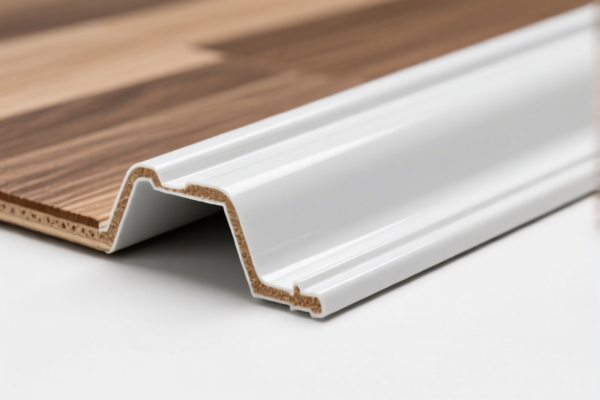

AI Analysis
📐 PVC Corner Trim: HS Code Classification & Customs Clearance Strategy
🌐 HS Code Reference & Clearance Guide | 2026 Latest Tariff Analysis | Professional Customs Strategy
📌 I. Product Definition & Classification: What Exactly is "PVC Corner Trim"?
PVC Corner Trim (also known as PVC corner beads, angle guards, or protective molding) is a construction accessory made from Polyvinyl Chloride (PVC). It is primarily used in building and interior decoration to protect corners of walls, ceilings, and doorways from damage during construction and daily use.
In international trade, its classification hinges on two key factors: 1. Material: It is made of PVC (a plastic polymer). 2. Function/Usage: Is it considered a "building construction material" or a "general plastic article/furniture accessory"?
⚠️ Key Distinction Point:
- If viewed as a building component (part of the wall structure/frame), it may fall under Chapter 39, Section 15 (Building materials).
- If viewed as a general plastic profile (extruded shape) or furniture accessory, it falls under different subheadings.
- Misclassification Risk: Confusing "building materials" with "general plastic articles" leads to massive tariff differences (up to 40.8% vs. 22.8%).
📦 II. HS Code Classification Details (2026 Latest Tariff Authority对照)
Based on the provided data, here are the 6 possible HS Codes for PVC Corner Trim, along with their logical inference and tax implications.
| HS Code | Product Description & Logical Inference | Applicable Scenario | Total Tax Rate (China Origin) |
|---|---|---|---|
3925.20.00.91 |
Other building materials, of plastics. Inference: PVC corner trim is considered an accessory for plastic door/window frames or general building construction. Fits "Other plastic building materials." |
Building construction, window frame attachments | 22.8% |
3925.90.00.00 |
Other articles of plastics for building purposes. Inference: General building use, but not specifically door/window frames. Broader "other" category. |
General construction projects, non-specific building uses | 40.3% |
3916.20.00.91 |
Other articles of polymers of vinyl chloride. Inference: Classified by shape/form (strip/profile) rather than function. Extruded PVC profiles not specified elsewhere. |
Furniture edges, general plastic strips, non-structural | 40.8% |
3916.20.00.20 |
Polymers of vinyl chloride, other forms (strips, rods, etc.). Inference: Similar to above, but a more specific subheading for extruded PVC profiles used in construction or furniture support. |
Extruded PVC profiles for structural or semi-structural use | 40.8% |
3926.30.50.00 |
Fittings and accessories for furniture. Inference: Classified by end-use as a protective/connector component for furniture or vehicle bodies. |
Furniture assembly, interior car trim, home decor | 22.8% |
3926.90.99.89 |
Other articles of plastics. Inference: A catch-all category. No specific conflict in material or form. Used when no other specific use (building/furniture) is clearly defined. |
General household items, miscellaneous plastic goods | 22.8% |
🔍 Critical Note:
-3925(Building Materials) vs.3916(Plastic Profiles): The biggest tax difference lies here.3925codes (22.8% or 40.3%) are generally more favorable than3916codes (40.8%).
-3926(Furniture/Other): Can offer lower taxes (22.8%) if the product is marketed or used specifically for furniture or as a general plastic accessory.
- Tax Discrepancy: The total tax rate ranges from 22.8% to 40.8%. Choosing the wrong code can result in overpaying ~18% in duties.
💰 III. 2026 Latest Tariff Rate Breakdown (Including Surtaxes & Policy Surcharges)
✅ Applicable Country: United States (US)
✅ Origin: China (CN)
✅ Effective Date: November 10, 2025 (and subsequent imports)
🎯 1. Low-Tax Category: 3925.20.00.91 / 3926.30.50.00 / 3926.90.99.89 (22.8% Total)
These codes share the same tax structure in the provided data.
| Item | Content |
|---|---|
| Base Duty Rate | 5.3% (Ad valorem) |
| Section 301 Surtax (China) | +7.5% |
| Section 122 Tariff | +10.0% |
| Total Tax Rate | 22.8% |
| Tax Calculation | CIF Value × 22.8% |
| De Minimis Exemption | ❌ Not Eligible (Section 122 and 301 taxes typically void de minimis) |
| Legal Basis Path | USITC:3925.20.00.91 → Section 301: Footnote 9903.88.01 → IEEPA: Section 122 |
📌 Explanation:
- The 5.3% base duty is the standard MFN rate.
- The 7.5% is part of the ongoing Section 301 tariffs (some categories were reduced from 25% to 7.5% or similar adjustments, but here it is listed as 7.5%).
- The 10% is the Section 122 tariff (national security/import relief).
- Total 22.8% is significantly lower than the 40%+ categories.
🎯 2. High-Tax Category: 3925.90.00.00 (40.3% Total)
| Item | Content |
|---|---|
| Base Duty Rate | 5.3% |
| Section 301 Surtax (China) | +25.0% |
| Section 122 Tariff | +10.0% |
| Total Tax Rate | 40.3% |
| Tax Calculation | CIF Value × 40.3% |
| De Minimis Exemption | ❌ Not Eligible |
| Legal Basis Path | USITC:3925.90.00.00 → Section 301: Footnote 9903.88.01 → IEEPA: Section 122 |
📌 Note:
- The Section 301 surtax is 25%, which is the standard high rate.
- This category is riskier due to the higher Section 301 component.
🎯 3. High-Tax Category: 3916.20.00.91 / 3916.20.00.20 (40.8% Total)
| Item | Content |
|---|---|
| Base Duty Rate | 5.8% |
| Section 301 Surtax (China) | +25.0% |
| Section 122 Tariff | +10.0% |
| Total Tax Rate | 40.8% |
| Tax Calculation | CIF Value × 40.8% |
| De Minimis Exemption | ❌ Not Eligible |
| Legal Basis Path | USITC:3916.20.00.xx → Section 301 → IEEPA: Section 122 |
📌 Note:
- Base duty is slightly higher (5.8%) than building materials (5.3%).
- Section 301 is 25% (standard high rate).
- Section 122 is 10%.
- Total 40.8% is the highest among the options. Misclassifying PVC Corner Trim as a "plastic profile" rather than a "building material" or "furniture accessory" results in the highest cost.
🛠️ IV. Customs Clearance Practical Advice (Real-World Pitfall Avoidance)
✅ 1. Documentation Checklist (Non-Negotiable)
| Document | Required | Explanation |
|---|---|---|
| ✅ Product Specification Sheet | ✔️ | Must specify: Material (100% PVC), Dimensions, Thickness, Shape (L-profile, V-profile, etc.), Application (Wall corner, furniture edge). |
| ✅ Product Photos | ✔️ | Clear images showing the trim on a wall or furniture to prove its use. |
| ✅ Commercial Invoice | ✔️ | Description should be precise: "PVC Corner Trim for Wall Protection" or "PVC Corner Bead for Construction." Avoid vague terms like "Plastic Strip." |
| ✅ Packing List | ✔️ | Weight and dimensions per box. |
| ✅ Material Safety Data Sheet (MSDS) | ✔️ | If applicable for chemical content. |
| ✅ Origin Certificate (CO) | ✔️ | Required for Section 301 tariff determination. |
✅ 2. Declaration Tips (Key Mnemonic)
🔥 "Use Determines Code, Function Trumps Form!"
| Scenario | Recommended HS Code | Why? | Risk of Wrong Code |
|---|---|---|---|
| Sold to builders/construction firms | 3925.20.00.91 (22.8%) |
Clearly a building accessory. | If misclassified as 3916 (40.8%), you overpay ~18%. |
| Sold to furniture manufacturers | 3926.30.50.00 (22.8%) |
Classified as furniture accessory. | Safe, low tax. |
| General retail/home improvement | 3925.20.00.91 or 3926.90.99.89 |
Use as building material (most common). | Avoid 3916 unless it's purely decorative/non-structural strip. |
| Extruded PVC profiles (no specific use) | 3916.20.00.91 (40.8%) |
Last resort. Only if no specific building/furniture use is proven. | Highest tax. Avoid unless necessary. |
📌 Golden Rule:
- Do NOT declare PVC Corner Trim as "Plastic Profiles" (3916) unless it is raw extruded material without specific end-use designation.
- DO emphasize its construction/building purpose to qualify for3925(22.8% or 40.3%) or3926(22.8%).
✅ 3. Special Situations
| Situation | Handling Advice |
|---|---|
| OEM/Custom Colors | Provide color charts. Does not change HS Code, but must match invoice description. |
| Mixed Packages (Trim + Adhesive) | Declare separately. Adhesive may have different HS Code. Do not lump into one line unless they are a single kit with a specific HTS. |
| Small Shipments (De Minimis) | ❌ Cannot use De Minimis (Section 122 & 301 taxes apply regardless of value). Must file formal entry. |
| Transshipment | Ensure origin is clearly China. Transshipment to avoid tariffs is illegal and risky. |
🌍 V. Global Market Comparison (2026 Latest)
| Country/Region | Recommended HS Code | Tariff (China Origin) | Certification | Remarks |
|---|---|---|---|---|
| 🇺🇸 USA | 3925.20.00.91 |
22.8% (Total) | None specific | Best option. Avoid 3916 (40.8%). |
| 🇺🇸 USA | 3916.20.00.91 |
40.8% (Total) | None specific | Avoid unless misclassification is inevitable. |
| 🇨🇳 China | 3925.20.00.91 |
5% | None | No 301/122 taxes. |
| 🇪🇺 EU | 3925.20.00.00 |
6.5% | CE (if applicable) | Lower tariffs than US. |
| 🇨🇦 Canada | 3925.20.00.00 |
5% | None | No Section 301. |
📌 Conclusion:
- USA is the most challenging market due to Section 301 and Section 122 tariffs.
- Strategic Importance: Classifying correctly as3925.20.00.91(22.8%) instead of3916.20.00.91(40.8%) saves ~18% in duty costs. This is a significant margin impact.
📌 VI. Common Mistakes & Pitfalls (Lessons Learned)
❌ Mistake 1: Declaring as "Plastic Profile" (3916)
👉 Result: 40.8% tax.
👉 Fix: Prove it is for building or furniture use → 3925 or 3926.
❌ Mistake 2: Under-invoicing to claim De Minimis
👉 Result: Section 122 and 301 taxes apply regardless of value. Goods may be seized or returned.
👉 Fix: Always declare full value and pay duties.
❌ Mistake 3: Vague Description "Plastic Trim"
👉 Result: Customs officer may assign the wrong HS Code (likely the higher one).
👉 Fix: Use specific terms: "PVC Wall Corner Bead, for Building Construction."
❌ Mistake 4: Confusing "Corner Trim" with "Baseboard"
👉 Result: Baseboards may have different classifications.
👉 Fix: Ensure product images clearly show corner usage, not floor usage.
✅ Correct Practice:
"PVC Corner Trim, 2m length, 20mm x 20mm, White, for Interior Wall Protection, Made of 100% PVC."
🎯 VII. Conclusion: Precision in Classification Saves Money!
🎯 Remember the Mnemonic:
🔹 "Building Use is Key, 3925 Low Duty, 3916 High Penalty, Don't Be Shy!"
🔹 "22.8% vs 40.8%, That's a Big Gap, Classify Right, Don't Get Flapped!"
📌 Pro Tip:
If your PVC Corner Trim is originally from Vietnam, Thailand, or Mexico, you may be eligible for IEEPA Exemptions or FTAA/USMCA benefits, reducing tariffs to 0%~5%.
Always apply for an Advance Ruling from U.S. Customs and Border Protection (CBP) if your shipment volume is high.
📣 Immediate Action:
📞 Contact a licensed Customs Broker + Provide Product Photos + Request HS Code Advance Ruling
🚀 Ensure Smooth Clearance, Maximize Profit, Avoid Retention!
✨ Professional Clearance Starts with Accurate Classification!
💼 Every Dollar in Tariffs Counts, Let's Calculate It Right!
Customer Reviews
About HS Code Classification
The Harmonized System (HS) is an internationally standardized nomenclature developed by the World Customs Organization (WCO) to classify traded products. Over 200 countries use the HS system as the basis for customs tariffs, trade statistics, and import/export regulations.
Each HS code follows a hierarchical structure:
- Chapter (2 digits) — Broad category of goods (e.g., Chapter 84: Machinery and Mechanical Appliances)
- Heading (4 digits) — More specific grouping within the chapter
- Subheading (6 digits) — Internationally standardized breakdown, used by all WCO member countries
- National subdivisions (8-10 digits) — Country-specific extensions for further classification, such as US HTSUS 10-digit codes
Correct HS code classification is essential for smooth customs clearance, accurate duty payment, and compliance with trade regulations. Misclassification can lead to customs delays, overpayment of duties, or penalties.
When importing from CN to US, the applicable tariff rates may include:
- Most-Favored-Nation (MFN) rate — The standard duty rate applied to WTO members
- General rate — Applied to countries without trade agreements
- Trade remedy duties — Additional tariffs such as Section 301 (anti-dumping), Section 232 (national security), or countervailing duties
The information provided on this page is for reference purposes only. For official classification, please consult with your local customs authority or a licensed customs broker.