PVC Corrugated Drain Pipe
CN → US| HS Code | Tariff Rate | Origin | Destination | Doc |
|---|---|---|---|---|
| 3917320020 | 38.1% | CN | US | Official Doc |
| 3917400050 | 40.3% | CN | US | Official Doc |
Product Images
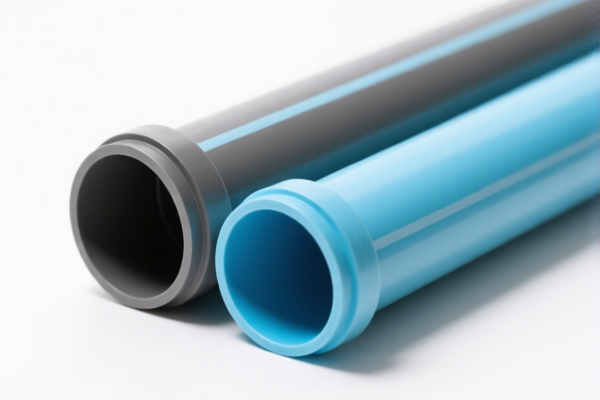
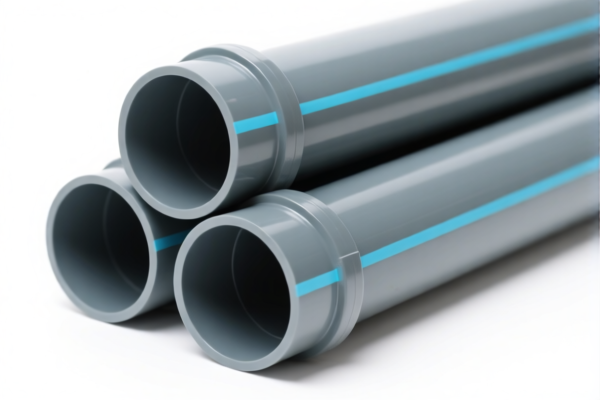
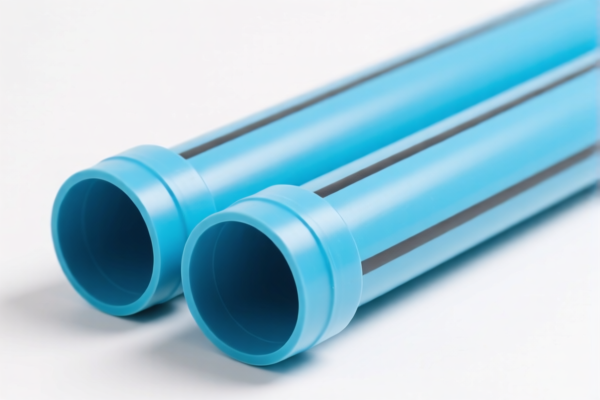

AI Analysis
🚰 PVC Corrugated Drain Pipe (Polyethylene Plastic Pipes)
🌐 HS Code Reference & Customs Clearance Guide | 2026 Latest Tariff Analysis | Professional Compliance Strategy
📌 I. Product Definition & Classification: Do You Truly Understand "Drain Pipes"?
In international trade, "PVC Corrugated Drain Pipe" often requires careful classification based on material composition and pressure rating. While commonly referred to as "PVC," the provided data specifically addresses Polyethylene (PE) pipes and Plastic Fittings.
1. Non-Reinforced Polyethylene Pipes (The Core Product) * Description: Single-layer or multi-layer tubes/pipes/hoses not reinforced or combined with other materials (like metal or fabric), typically used for drainage, irrigation, or low-pressure applications. * Key Characteristic: Pure plastic material, flexible or semi-rigid, no structural reinforcement.
2. Plastic Fittings (DWV Category) * Description: Joints, elbows, flanges, or connectors made of plastic. * Key Distinction: These are classified under "Fittings" rather than "Tubes/Pipes." For drainage systems, they often fall under Drain/Waste/Vent (DWV) fittings, which are not pressure-rated.
⚠️ Critical Classification Point:
- If the product is a pipe/tube itself (straight or corrugated) made of polyethylene and is not reinforced → It belongs to 3917.32.00.20.
- If the product is a connector/joint/elbow used for plumbing/drainage that is NOT pressure-rated → It belongs to 3917.40.00.50.
- Note: Even if marketed as "PVC" in common language, if the actual material is Polyethylene (PE) or if the data provided reflects PE, the classification must align with the specific HS codes provided.
📦 II. HS Code Classification Details (2026 Latest Tariff Authority对照)
| HS Code | Product Description | Application Scenario | Material/Structure |
|---|---|---|---|
3917.32.00.20 |
Other tubes, pipes, and hoses: Not reinforced/combined with other materials, without fittings, Of Polyethylene | Corrugated drain pipes, irrigation lines, non-pressure fluid transport | ✅ Pure Plastic (PE), Unreinforced |
3917.40.00.50 |
Fittings: Plumbing fittings, not pressure rated (Drain/Waste/Vent - DWV): Other | Elbows, tees, couplings for drainage systems | ✅ Plastic Fittings, Non-pressure |
🔍 Important Reminder:
- Corrugated Pipes fall under 3917.32.00.20 if they are unreinforced polyethylene tubes.
- Fittings (even if made of the same plastic) are separated into 3917.40.00.50 if they are plumbing/drainage fittings not designed for pressure.
- Do not mix pipe and fitting codes in a single line item unless they are part of a kit declared correctly, but typically they are classified separately based on their primary function.
💰 III. 2026 Latest Tariff Rate Details (Including Additional Taxes & Policy Add-ons)
✅ Applicable Country: United States (US)
✅ Country of Origin: China (CN) (Assumed based on typical export scenarios requiring detailed tax analysis)
✅ Effective Date: Current rates as per provided data
🎯 1. 3917.32.00.20 —— Polyethylene Pipes/Tubes (Unreinforced)
| Item | Details |
|---|---|
| Base Tariff | 3.1% (Ad valorem) |
| Additional Tariff (Section 301) | +25.0% |
| Total Tariff Rate | 28.1% |
| Tax Calculation | CIF Value × 28.1% |
| De Minimis Exemption | ❌ Not Eligible (Section 301 tariffs generally apply regardless of value for commercial shipments) |
| Legal Basis Path | HTSUS:3917.32.00.20 → Section 301 Footnote 3 |
📌 Explanation:
- The 3.1% is the standard Most Favored Nation (MFN) base rate for unreinforced plastic pipes.
- The 25% is the additional duty imposed under Section 301 of the Trade Act of 1974 against Chinese goods.
- Total Cost Impact: For every $10,000 of goods, the duty is $2,810. This is a significant cost factor that must be pre-calculated in your pricing model.
🎯 2. 3917.40.00.50 —— Plastic Fittings (DWV, Not Pressure-Rated)
| Item | Details |
|---|---|
| Base Tariff | 0.0% |
| Additional Tariff (Section 301) | 0.0% |
| Total Tariff Rate | 0.0% |
| Tax Calculation | $0 (Duty-Free) |
| De Minimis Exemption | N/A (Already 0%) |
| Legal Basis Path | HTSUS:3917.40.00.50 |
📌 Note:
- Plastic plumbing fittings for drainage (DWV) are classified separately from the pipes themselves.
- Excellent News: These items are currently duty-free under both MFN and Section 301 tariffs.
- Strategy: If your shipment contains both pipes and fittings, ensure they are clearly separated on the invoice. You can save 28.1% duty on the fittings portion if classified correctly as DWV fittings.
🛠️ IV. Customs Clearance Practical Advice (Real-World Pitfall Guide)
✅ 1. Documentation Checklist (Must-Haves)
| Document | Required | Description |
|---|---|---|
| ✅ Commercial Invoice | ✔️ | Must clearly distinguish between Pipes (3917.32.00.20) and Fittings (3917.40.00.50). Do not lump them as "PVC Pipe Kit" without breakdown. |
| ✅ Product Description | ✔️ | Specify "Unreinforced Polyethylene Corrugated Drain Pipe" vs. "Plastic DWV Fitting." Avoid ambiguous terms like "PVC" if the material is PE. |
| ✅ Material Declaration | ✔️ | Confirm material is Polyethylene (PE). If it is actual PVC, the HS code may differ (likely 3917.39.xx). Misdeclaration can lead to penalties. |
| ✅ Certificate of Origin | ✔️ | Essential for verifying Country of Origin to apply correct Section 301 rates. |
| ✅ Packaging List | ✔️ | Detail quantities of pipes vs. fittings to support separate line-item classification. |
✅ 2. Declaration Tips (Key Mantras)
🔥 “Separate Pipes and Fittings, Declare Material Clearly!”
| Scenario | Correct Declaration | Incorrect Practice |
|---|---|---|
| Straight/Corrugated Pipe | 3917.32.00.20 - Polyethylene Pipe |
Misclassifying as "Plumbings" → 0% (Risk of Audit) |
| Elbow/Coupling (Drain) | 3917.40.00.50 - DWV Fitting |
Misclassifying as "Pipe Fittings" (Pressure-rated) → Different Rate |
| Mixed Shipment | Split into two line items | Combining into one line → Risk of misclassification error |
| Material Mismatch | "Polyethylene" (PE) | "PVC" (if actually PE) → Customs may reclassify and penalize |
📌 Warning:
- Do NOT classify pipes as "Fittings" to avoid the 25% tariff. Customs can physically inspect and determine the primary function.
- Do NOT assume all plastic pipes are "Reinforced." If they are simple corrugated drain pipes, they are unreinforced. Reinforced pipes (with steel wire mesh, etc.) have different HS codes and potentially different tariffs.
✅ 3. Special Case Handling
| Situation | Handling Advice |
|---|---|
| Pipes with Fittings Attached | If fittings are permanently attached or sold as a single assembled unit, the classification may follow the principal use or the essential character. However, for drainage systems, pipes and fittings are usually shipped separately. |
| Actual PVC vs. Polyethylene | If the product is Polyvinyl Chloride (PVC), it does NOT fit 3917.32.00.20 (which specifies Polyethylene). PVC pipes typically fall under 3917.39 or 3917.29, which may have different tariff rates. Verify material! |
| Reinforced Pipes | If the corrugated pipe has an inner steel liner or outer fabric reinforcement, it is NOT "unreinforced." It would fall under 3917.31 or 3917.33, which may have different tax treatments. |
🌍 V. Global Market Customs Comparison (2026 Latest)
| Country/Region | Recommended HS Code | Tariff Rate | Certification Requirements | Notes |
|---|---|---|---|---|
| 🇺🇸 USA | 3917.32.00.20 (Pipes)3917.40.00.50 (Fittings) |
28.1% (Pipes) 0% (Fittings) |
No specific FCC/CE, but may need ASTM standards for drainage | Section 301 applies heavily to pipes |
| 🇨🇳 China | 3917.32.00.203917.40.00.50 |
~3.1% (Pipes) ~0% (Fittings) |
CCC (if applicable), GB Standards | Low import duty, no Section 301 |
| 🇪🇺 EU | 3917.23 (PE Pipes)3917.29 |
4.0% - 6.5% | CE Marking, REACH Compliance | Different HS structure than US |
| 🇨🇦 Canada | 3917.23.00 |
0% - 3.5% | Health Canada Standards | CUSMA preferential rates may apply |
📌 Conclusion:
- The US market imposes a 28.1% tariff on the polyethylene pipes, making cost control critical.
- Fittings are duty-free, so optimizing the ratio of fittings to pipes in your supply chain (if legally permissible) could offer tax efficiency, but must reflect actual commerce.
- Always verify Material Composition (PE vs. PVC) as it drastically changes the HS code and tariff.
📌 VI. Common Errors & Pitfall Guide (Lessons Learned)
❌ Error 1: Calling "Polyethylene Pipes" "PVC Pipes"
👉 Consequence: Customs may reject the declaration or reclassify under PVC codes, causing delays and potential misclassification penalties.
👉 Fix: Always use the correct chemical name: Polyethylene (PE).
❌ Error 2: Classifying Unreinforced Pipes as Reinforced
👉 Consequence: Wrong HS code, potential underpayment of duty if reinforced codes have higher tariffs, or overpayment if lower.
👉 Fix: Confirm if there is any metal/fabric reinforcement. Corrugated drain pipes are typically unreinforced.
❌ Error 3: Combining Pipes and Fittings in One HS Code
👉 Consequence: High-risk audit. Pipes (28.1%) and Fittings (0%) have vastly different rates. Merging them leads to either under-declaration (penalty) or over-declaration (lost profit).
👉 Fix: Split items on the invoice and customs entry.
✅ Correct Practice:
"Item 1: Unreinforced Polyethylene Corrugated Drain Pipe, 4-inch diameter, 100m roll, Model XYZ. HS: 3917.32.00.20."
"Item 2: Plastic DWV Elbow Fittings, 4-inch, Non-Pressure Rated, Model ABC. HS: 3917.40.00.50."
🎯 VII. Conclusion: Precision in Classification Saves Money!
🎯 Remember the Mantra:
🔹 "Pipes = 28.1%, Fittings = 0%. Separate Them!"
🔹 "Polyethylene, Not PVC. Unreinforced, Not Reinforced."
🔹 "Accurate Material Declaration Avoids Customs Nightmare!"
📌 Pro Tip:
If you are exporting Reinforced pipes or Pressure-Rated plastic pipes, the HS codes and tariffs will be different. Ensure your engineering specs match the HS classification. For standard corrugated drain pipes, 3917.32.00.20 is the likely code, but always double-check with a licensed customs broker.
📣 Immediate Action:
📞 Verify Material: Is it PE or PVC?
📋 Separate Line Items: Pipe vs. Fitting.
💰 Calculate Cost: Include 28.1% for pipes in your Landed Cost Model.
🚀 Clear Compliance, Clear Profits!
✨ Customs Success Starts with the Right HS Code!
Customer Reviews
About HS Code Classification
The Harmonized System (HS) is an internationally standardized nomenclature developed by the World Customs Organization (WCO) to classify traded products. Over 200 countries use the HS system as the basis for customs tariffs, trade statistics, and import/export regulations.
Each HS code follows a hierarchical structure:
- Chapter (2 digits) — Broad category of goods (e.g., Chapter 84: Machinery and Mechanical Appliances)
- Heading (4 digits) — More specific grouping within the chapter
- Subheading (6 digits) — Internationally standardized breakdown, used by all WCO member countries
- National subdivisions (8-10 digits) — Country-specific extensions for further classification, such as US HTSUS 10-digit codes
Correct HS code classification is essential for smooth customs clearance, accurate duty payment, and compliance with trade regulations. Misclassification can lead to customs delays, overpayment of duties, or penalties.
When importing from CN to US, the applicable tariff rates may include:
- Most-Favored-Nation (MFN) rate — The standard duty rate applied to WTO members
- General rate — Applied to countries without trade agreements
- Trade remedy duties — Additional tariffs such as Section 301 (anti-dumping), Section 232 (national security), or countervailing duties
The information provided on this page is for reference purposes only. For official classification, please consult with your local customs authority or a licensed customs broker.