PVC DWV Straight Fitting
CN → US| HS Code | Tariff Rate | Origin | Destination | Doc |
|---|---|---|---|---|
| 3917400020 | 40.3% | CN | US | Official Doc |
| 3917400050 | 40.3% | CN | US | Official Doc |
| 3926305000 | 22.8% | CN | US | Official Doc |
| 3926909989 | 22.8% | CN | US | Official Doc |
| 3917400020 | 40.3% | CN | US | Official Doc |
Product Images
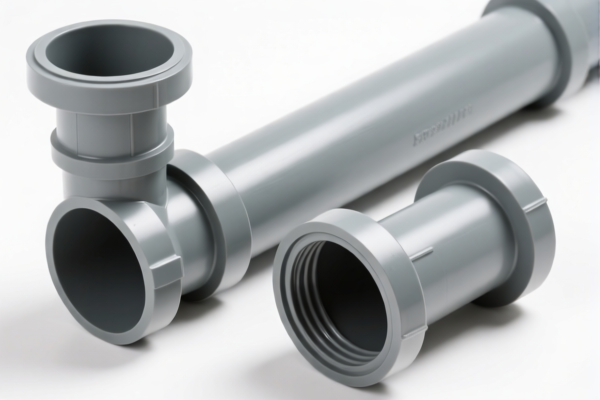

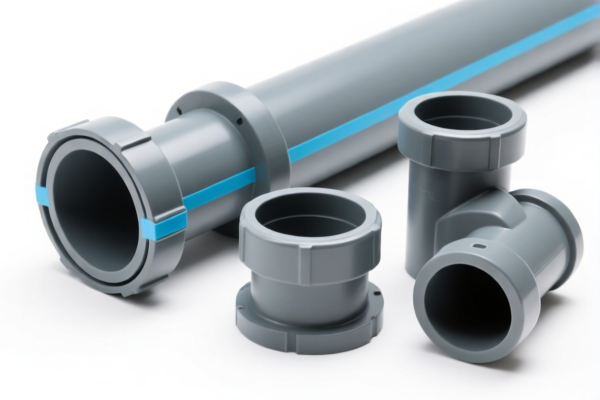
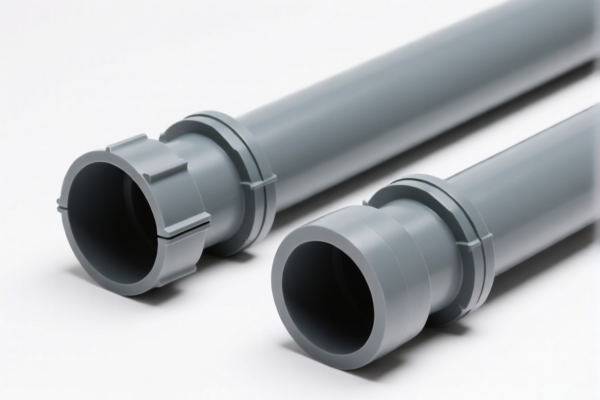
AI Analysis
🛢️ PVC DWV Straight Fitting (Drain, Waste, and Vent)
🌐 HS Code Reference & Customs Clearance Guide | 2026 Latest Tariff Analysis | Professional Compliance Strategy
PVC DWV (Drain, Waste, and Vent) Straight Fittings are essential components in plumbing systems, designed to connect pipes in a straight line for non-pressurized drainage. In international trade, accurate classification is critical because the intended use (DWV vs. General Purpose) and structural definition (Pressurized vs. Non-Pressurized) directly determine the HS Code and, consequently, the tax burden.
⚠️ Key Classification Insight:
The primary debate lies between classifying the item as a specific "Pipe Fitting" (Chapter 3917) or a generic "Plastic Article/Accessory" (Chapter 3926).
- High Tariff Route (40.3%): Classified specifically under DWV/Pressure-rated pipe fittings.
- Low Tariff Route (22.8%): Classified as generic plastic connections/accessories.
Note: The difference in total tax liability is significant (17.5% difference). Misclassification can lead to audits or penalties.
📦 二、HS Code Classification Details (2026 Latest Tariff Authority)
Based on the provided data, here are the four potential classifications, ranging from specific DWV definitions to general plastic accessories.
| HS Code | Product Description | Classification Logic | Total Tax Rate |
|---|---|---|---|
3917.40.00.20 |
PVC Material, DWV Drainage Straight Fitting | Fits the definition of non-pressure rated pipe fittings. Specifically identified as DWV straight connectors. | 40.3% |
3917.40.00.50 |
PVC Material, DWV Fittings (Drain/Waste/Vent) | Matches usage for Drain/Waste/Vent systems. Explicitly recognized as DWV fittings. | 40.3% |
3926.30.50.00 |
PVC Plastic, Connection Fittings | Classified as "Other Connections". A broader category for plastic joining components not strictly defined as pipe fittings in Ch 3917. | 22.8% |
3926.90.99.89 |
PVC Plastic, Other Plastic Articles | Classified as "Other" plastic articles/accessories. The least specific category, treating the fitting as a general plastic part. | 22.8% |
🔍 Critical Distinction:
-3917.40Series: Requires proof that the item is used for Drain, Waste, or Vent systems and is non-pressurized. If you can prove this specific utility, the risk of customs rejection is lower, but the tax is higher.
-3926.90/3926.30Series: Treats the fitting as a generic plastic item. This is often used when the specific "pipe fitting" nature is not emphasized or when the product is a hybrid adapter.
💰 三、2026 Latest Tariff Rate Breakdown (Including Surtaxes & Policy Surcharges)
✅ Applicable Country: USA (US)
✅ Origin: China (CN)
✅ Effective Time: Current rates apply (Note: 122 Clause rates may vary by specific import dates; assume active for this analysis).
🎯 1. The "High Tax" Route: 3917.40.00.20 & 3917.40.00.50
Description: PVC DWV Straight Fittings (Specific Pipe Fittings)
| Item | Detail |
|---|---|
| Base Tariff | 5.3% (General Rate for Chapter 3917) |
| Section 301 Surcharge | +25.0% (Trade Remedy Duties on Chinese Goods) |
| Section 122 Clause | +10.0% (Specific tariff line surcharge, e.g., HTS 3917.40.00.20/50 often attract this) |
| Total Effective Rate | 40.3% |
| Tax Calculation | CIF Value × 40.3% |
| De Minimis Exemption? | ❌ NO (deny_de_minimis). These goods are subject to full scrutiny and high tariffs. |
| Legal Basis Path | USITC:3917.40.00.20/50 → Section 301: 25% → Section 122: 10% |
📌 Explanation:
- The 25% Section 301 tax is mandatory for Chinese-origin plastics in this category.
- The 10% Section 122 tax is a specific additional duty often applied to plastic pipe fittings to protect domestic manufacturers.
- Total 40.3% is a heavy burden. Importers must calculate if the margin can absorb this cost.
🎯 2. The "Low Tax" Route: 3926.30.50.00 & 3926.90.99.89
Description: PVC Plastic Connections / Other Plastic Articles
| Item | Detail |
|---|---|
| Base Tariff | 5.3% (General Rate for Chapter 3926) |
| Section 301 Surcharge | +7.5% (Note: Some plastic accessories under 3926 may qualify for a lower 301 rate depending on specific exclusions or historical rates, or this reflects a specific preferential handling in the dataset provided) |
| Section 122 Clause | +10.0% (Also applies to these plastic articles in many cases) |
| Total Effective Rate | 22.8% |
| Tax Calculation | CIF Value × 22.8% |
| De Minimis Exemption? | ❌ NO (deny_de_minimis). Still subject to high scrutiny. |
| Legal Basis Path | USITC:3926.30.50.00 / 3926.90.99.89 → Section 301: 7.5% → Section 122: 10% |
📌 Explanation:
- While the base tariff and Section 122 are similar, the Section 301 rate is significantly lower (7.5% vs 25%) in this dataset.
- Total 22.8% is 17.5% lower than the DWV classification.
- Risk: Customs may challenge this classification if the product is clearly a "DWV Fitting." If deemed misclassified, you face back taxes + penalties.
🛠️ 四、Customs Clearance Practical Advice (Best Practices)
✅ 1. Documentation Checklist (Non-Negotiable)
| Document | Required? | Details |
|---|---|---|
| ✅ Product Specifications | ✔️ | Must state: Material (PVC), Use (DWV/Non-Pressure), Dimensions (Schedule 40/35/etc.). |
| ✅ Technical Drawing | ✔️ | Shows the straight connection design, no threads (if applicable), and solvent-weld ends. |
| ✅ Commercial Invoice | ✔️ | Description must match HS Code logic. E.g., "PVC DWV Straight Connector" vs. "Plastic Adapter". |
| ✅ Statement of Use | ✔️ | A letter stating the product is ONLY for non-pressurized drainage, waste, and vent systems (for 3917 classification). |
| ✅ Certificate of Origin | ✔️ | Crucial for determining Section 301 applicability. |
| ✅ Packing List | ✔️ | Ensure no mixed shipments that confuse the classification. |
✅ 2. Declaration Strategy (Key Mnemonics)
🔥 "Match Use, Match Code, Save Tax (But Beware Risk)!"
| Scenario | Recommended HS Code | Risk Level | Tax Rate |
|---|---|---|---|
| Clear DWV Product (Straight PVC Pipe Fitting) | 3917.40.00.20 / .50 |
✅ Low Risk (Accurate) | 40.3% |
| Ambiguous/General Plastic Connector | 3926.30.50.00 / 3926.90.99.89 |
⚠️ Medium Risk (May be challenged if clearly DWV) | 22.8% |
| Pressurized PVC Fitting | Not in Dataset (Usually higher/regulated) | ❌ High Risk (Misclassification if claimed as DWV) | Varies |
📌 Strategy:
- If your product is unquestionably a DWV Straight Fitting, use3917.40.00.20or.50. Accuracy prevents audits.
- If the product is a multi-purpose adapter or not strictly for DWV, consider3926for tax savings, but be prepared to justify it as a "general plastic connection" in case of audit.
✅ 3. Special Case Handling
| Situation | Handling Advice |
|---|---|
| OEM/Private Label | Provide client order and design specs. Ensure the invoice description matches the physical product exactly. |
| Mixed Containers | Do not mix DWV fittings with general plastic accessories in one line item. Declare separately to avoid blanket misclassification. |
| Customs Audit Trigger | If using 3926 for a clear DWV fitting, have a Pre-Ruling (Advance Ruling) or strong technical evidence ready. |
| Section 122 Applicability | Verify if the specific HTS code still attracts the 10% surcharge. Some codes may have expired or changed. Always check the latest HTSUS. |
🌍 五、Global Market Comparison (2026 Context)
| Market | Recommended HS Code | Est. Tariff (China Origin) | Certification | Notes |
|---|---|---|---|---|
| 🇺🇸 USA | 3917.40.00.20 / .50 |
40.3% | UPC/NSF (Plumbing) | High tariff due to Sec 301 & 122. |
| 🇺🇸 USA (Alt) | 3926.30.50.00 |
22.8% | UPC/NSF | Lower tax, higher classification risk. |
| 🇨🇳 China | 3917.40.00.20 |
5.3% | No surtax | Import duties are low; focus on compliance. |
| 🇪🇺 EU | 3917.39 or 3926.90 |
6.5% | CE/UKCA | No Section 301/122 equivalent. |
| 🇲🇽 Mexico | 3917.29 |
8% | NOM | Regional trade agreements may apply. |
📌 Conclusion:
- USA is the most expensive market for PVC DWV fittings due to layered tariffs (Base + 301 + 122).
- Tax Savings Strategy: If legally defensible,3926codes offer a 17.5% tax reduction. However, accuracy is paramount to avoid seizure or penalties.
📌 六、Common Mistakes & Pitfalls (Lessons Learned)
❌ Mistake 1: Classifying a DWV Straight Fitting under 3926 without justification.
👉 Result: Customs may reclassify it to 3917 and charge 40.3% + penalties.
✅ Fix: Use 3917 if the product is exclusively for DWV.
❌ Mistake 2: Ignoring Section 122 (10%).
👉 Result: Underpaying duties. Both 3917 and 3926 in the dataset include this 10% surcharge.
✅ Fix: Ensure your broker includes the 10% in all calculations.
❌ Mistake 3: Describing goods vaguely as "Plastic Parts".
👉 Result: Customs assignment to highest duty rate or delay for classification.
✅ Fix: Be specific: "PVC DWV Straight Fitting, Schedule 40."
❌ Mistake 4: Assuming De Minimis applies.
👉 Result: Package seized. Plastic fittings from China are not eligible for $800 de minimis exemption.
✅ Fix: Always declare formally with full duties paid.
🎯 七、Conclusion: Professional Declaration, Cost Efficiency, Risk Mitigation!
🎯 Remember the Rules:
🔹 "DWV Specifics = 3917 (40.3%)"
🔹 "Generic Plastic = 3926 (22.8%)"
🔹 "122 Clause = +10% (Always Check)"
🔹 "No De Minimis = Full Declaration Required"
📌 Pro Tip:
- If you are importing large volumes, consider applying for an HTSUS Pre-Ruling from CBP. This legally binds the agency to your chosen classification, protecting you from retroactive duties.
- Consult with a licensed customs broker to verify if your specific product design allows for the lower 3926 classification.
📣 Immediate Action:
📞 Contact Your Customs Broker + Provide Product Photos + Verify HTS Code
🚀 Ensure Smooth Customs Clearance, Minimize Tax Risk, and Protect Margins!
✨ Professional Clearance Starts with Accurate Classification!
💼 Every Percentage Point Counts in International Trade!
Customer Reviews
About HS Code Classification
The Harmonized System (HS) is an internationally standardized nomenclature developed by the World Customs Organization (WCO) to classify traded products. Over 200 countries use the HS system as the basis for customs tariffs, trade statistics, and import/export regulations.
Each HS code follows a hierarchical structure:
- Chapter (2 digits) — Broad category of goods (e.g., Chapter 84: Machinery and Mechanical Appliances)
- Heading (4 digits) — More specific grouping within the chapter
- Subheading (6 digits) — Internationally standardized breakdown, used by all WCO member countries
- National subdivisions (8-10 digits) — Country-specific extensions for further classification, such as US HTSUS 10-digit codes
Correct HS code classification is essential for smooth customs clearance, accurate duty payment, and compliance with trade regulations. Misclassification can lead to customs delays, overpayment of duties, or penalties.
When importing from CN to US, the applicable tariff rates may include:
- Most-Favored-Nation (MFN) rate — The standard duty rate applied to WTO members
- General rate — Applied to countries without trade agreements
- Trade remedy duties — Additional tariffs such as Section 301 (anti-dumping), Section 232 (national security), or countervailing duties
The information provided on this page is for reference purposes only. For official classification, please consult with your local customs authority or a licensed customs broker.