PVC Decorative Edge Strip
CN → US| HS Code | Tariff Rate | Origin | Destination | Doc |
|---|---|---|---|---|
| 3925900000 | 40.3% | CN | US | Official Doc |
| 3916200091 | 40.8% | CN | US | Official Doc |
| 3916200020 | 40.8% | CN | US | Official Doc |
| 3925200091 | 22.8% | CN | US | Official Doc |
| 3925900000 | 40.3% | CN | US | Official Doc |
Product Images
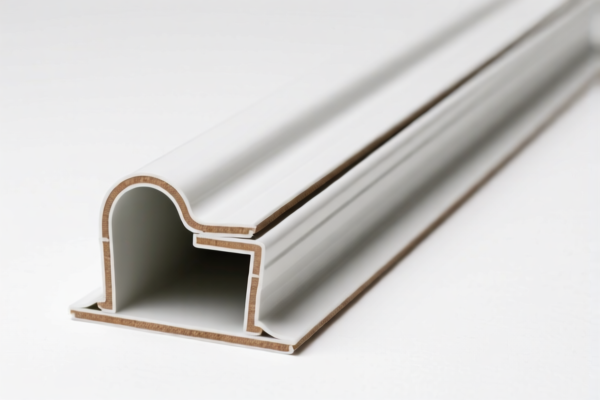
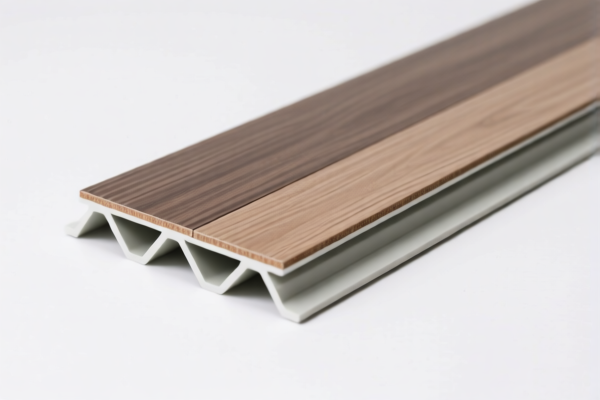
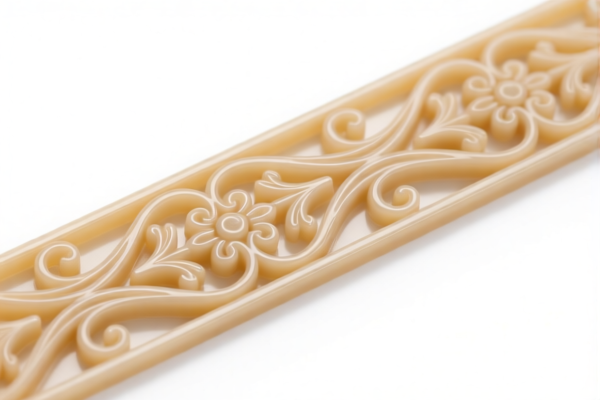
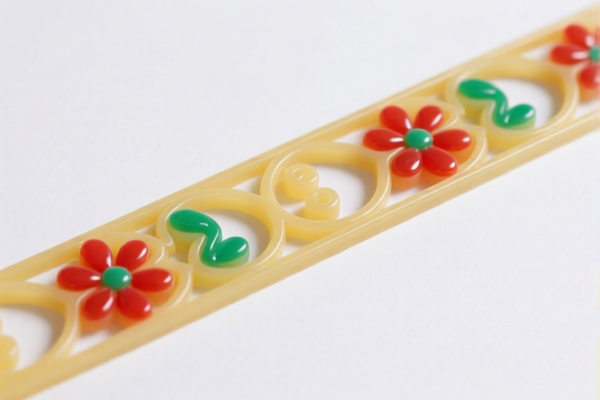
AI Analysis
🏗️ PVC Decorative Edge Strip (PVC Wall/Furniture Edge Banding)
🌐 HS Code Reference & Customs Clearance Guide | 2026 Latest Tariff Analysis | Professional Entry Strategy
📌 I. Product Definition & Classification: Do You Truly Understand "Edge Strips"?
PVC Decorative Edge Strips are essential auxiliary components in the construction and furniture manufacturing industries. They are primarily used for edge protection, decoration, and sealing on boards (such as particle board, MDF) or walls. In international trade, their classification depends heavily on material composition, form factor, and specific application.
Key Distinctions: - Plastic Profiles (3916): Rigid or semi-rigid extruded profiles that may not be specifically defined as "construction articles." - Plastic Articles of Construction (3925): Products specifically designed for installation in buildings, including wall panels, decorative trim, and edge banding intended for architectural or large-scale furniture use.
⚠️ Critical Differentiation Point:
- If the product is explicitly marketed as a building component (e.g., wall trim, decorative finishing for construction), it often falls under 3925.
- If it is considered a general plastic profile or semi-finished material (e.g., raw edge banding rolls for furniture assembly), it may fall under 3916.
- Note: The specific subheading (e.g., .00 vs .91) often determines whether it is classified as a "specific" article or "other" articles, which significantly impacts the tariff rate.
📦 II. HS Code Classification Details (2026 Latest Tariff Authoritative Comparison)
| HS Code | Product Description | Application Scenario | Tax Classification Logic |
|---|---|---|---|
3925.90.00.00 |
PVC Wall Edge Strip classified as Plastic Construction Article; Material: PVC; Form: Edge Strip. | Wall decoration, architectural finishing, rigid trim. | ✅ Construction Article (Specific) |
3916.20.00.91 |
PVC Wall Edge Strip classified as Vinyl Polymer Profiles; Form: Edge Strip; Category: Other. | General plastic profiles, non-specific construction use. | ✅ Other Profiles (General) |
3916.20.00.20 |
PVC Wall Edge Strip classified as Plastic Profiles; Material: PVC; Meets 3916.20.00.20 requirements. | Standard plastic extrusions, raw materials for furniture. | ✅ Plastic Profiles (Specific) |
3925.20.00.91 |
PVC Wall Edge Strip classified as Plastic Construction Articles - Decorative/Edge Strips; Category: Other. | Decorative wall trims, specific construction edge banding. | ✅ Other Construction Articles (Specific Subheading) |
3925.90.00.00 |
Board Edge Strip classified as Plastic Construction Article; Material: PVC/ABS; Use: Building/Furniture Auxiliary. | Furniture edge banding, board finishing. | ✅ Construction Article (General Subheading) |
🔍 Key Reminder:
- 3925 codes generally carry lower base tariffs but may still attract significant附加 taxes depending on the origin (e.g., China).
- 3916 codes are treated as general plastic products, often resulting in higher total tax burdens due to the combination of base rates and specific trade measures.
- Do not confuse "edge banding for furniture" with "wall trim." While similar, customs may classify them differently based on packaging, marketing, and end-use documentation.
💰 III. 2026 Latest Tariff Rate Breakdown (Including Surtaxes & Policy Add-ons)
✅ Applicable Country: USA (US)
✅ Origin: China (CN)
✅ Effective Time: From November 10, 2025 (including subsequent imports)
🎯 1. 3925.90.00.00 – PVC Wall/Board Edge Strip (Plastic Construction Article)
| Item | Content |
|---|---|
| Base Tariff | 5.3% (ad valorem) |
| Section 301 Surcharge | +25.0% |
| Section 122 Tariff | +10.0% |
| Total Tax Rate | 40.3% |
| Tax Calculation | CIF Value × 40.3% |
| De Minimis Eligibility | ❌ No (Deny de minimis) |
| Legal Basis Path | 3925.90.00.00 → Section 301: 25% + Section 122: 10% |
📌 Explanation:
- This classification is considered a "Construction Article."
- The 40.3% rate is the sum of the base duty (5.3%), Section 301 (25%), and Section 122 (10%).
- High Risk: Even though 3925 has a lower base rate, the surcharges make it expensive. Ensure your product description aligns strictly with "Construction Article" to avoid being reclassified to 3916 (which might have similar or higher effective rates depending on interpretation).
🎯 2. 3916.20.00.91 – Vinyl Polymer Profiles (Other)
| Item | Content |
|---|---|
| Base Tariff | 5.8% (ad valorem) |
| Section 301 Surcharge | +25.0% |
| Section 122 Tariff | +10.0% |
| Total Tax Rate | 40.8% |
| Tax Calculation | CIF Value × 40.8% |
| De Minimis Eligibility | ❌ No |
| Legal Basis Path | 3916.20.00.91 → Section 301: 25% + Section 122: 10% |
📌 Note:
- Slightly higher than 3925 due to a higher base rate (5.8% vs 5.3%).
- Applies if the product is deemed a generic "profile" rather than a specific construction article.
🎯 3. 3916.20.00.20 – Plastic Profiles (Specific)
| Item | Content |
|---|---|
| Base Tariff | 5.8% (ad valorem) |
| Section 301 Surcharge | +25.0% |
| Section 122 Tariff | +10.0% |
| Total Tax Rate | 40.8% |
| Tax Calculation | CIF Value × 40.8% |
| De Minimis Eligibility | ❌ No |
| Legal Basis Path | 3916.20.00.20 → Section 301: 25% + Section 122: 10% |
📌 Note:
- Same tax burden as3916.20.00.91.
- Use this code only if the product meets the specific technical requirements for 3916.20.00.20 (e.g., specific cross-section, material grade).
🎯 4. 3925.20.00.91 – Plastic Construction Articles (Decorative/Edge Strip - Other)
| Item | Content |
|---|---|
| Base Tariff | 5.3% (ad valorem) |
| Section 301 Surcharge | +7.5% |
| Section 122 Tariff | +10.0% |
| Total Tax Rate | 22.8% |
| Tax Calculation | CIF Value × 22.8% |
| De Minimis Eligibility | ❌ No |
| Legal Basis Path | 3925.20.00.91 → Section 301: 7.5% + Section 122: 10% |
📌 CRITICAL OPPORTUNITY:
- Lowest Effective Rate! This code applies to "Other" decorative construction articles under 3925.20.
- The Section 301 surcharge is only 7.5% (instead of 25%) for this specific subheading.
- Strategy: If your PVC edge strip can be classified as a decorative construction article under 3925.20, you can save ~18% in taxes compared to the 3916 or 3925.90 categories.
- Requirement: Must be clearly defined as a "decoration/edge strip for construction" and not a generic plastic profile.
🎯 5. 3925.90.00.00 – Board Edge Strip (General)
| Item | Content |
|---|---|
| Base Tariff | 5.3% (ad valorem) |
| Section 301 Surcharge | +25.0% |
| Section 122 Tariff | +10.0% |
| Total Tax Rate | 40.3% |
| Tax Calculation | CIF Value × 40.3% |
| De Minimis Eligibility | ❌ No |
| Legal Basis Path | 3925.90.00.00 → Section 301: 25% + Section 122: 10% |
📌 Note:
- Same as #1. If the product is considered a "board edge strip" for furniture rather than "wall decoration," it may default to this higher-rate category.
🛠️ IV. Customs Clearance Practical Advice (Pitfall Avoidance Guide)
✅ 1. Documentation Checklist (All Required)
| Document | Mandatory? | Description |
|---|---|---|
| ✅ Product Specification Sheet | ✔️ | Must detail material (PVC/ABS), dimensions, thickness, and color. |
| ✅ Product Photos (Labeled) | ✔️ | Show the profile cross-section and final application (e.g., on a wall or board). |
| ✅ Commercial Invoice | ✔️ | Clearly state: "PVC Decorative Edge Strip for Wall/Board Finishing." Avoid vague terms like "Plastic Strip." |
| ✅ Packing List | ✔️ | Indicate weight, quantity, and package dimensions. |
| ✅ Certificate of Origin | ✔️ | Essential for proving Chinese origin (triggers surcharges). |
| ✅ Usage Declaration | ✔️ | Explicitly state if it is for construction/decoration (to argue for 3925.20) or general plastic profile (3916). |
✅ 2. Declaration Strategy (Key Mnemonics)
🔥 "Decide Use First: Wall = 3925.20 (Save $), Board = 3925.90 (Pay More), Profile = 3916 (Pay Most)"
| Scenario | Correct HS Code | Risk Level |
|---|---|---|
| Wall Decoration Trim | 3925.20.00.91 |
🟢 LOWEST TAX (22.8%) |
| General Board Edge Banding | 3925.90.00.00 |
🔴 HIGH TAX (40.3%) |
| Generic Plastic Profile | 3916.20.00.20/.91 |
🔴 HIGH TAX (40.8%) |
Warning:
- If you declare "PVC Edge Strip" without specifying its end-use, Customs may default to 3916 (higher base rate) or 3925.90 (high surcharge).
- To qualify for 3925.20, you must prove it is a decorative construction article. Provide photos of it installed on walls or as part of a decorative molding system.
✅ 3. Special Cases
| Case | Handling Advice |
|---|---|
| Mixed Shipments (Wall + Furniture) | Separate invoices. Declare wall trim under 3925.20 and furniture edge banding under 3925.90 or 3916. Mixing them may cause classification confusion. |
| ABS Material | If made of ABS, it may fall under 3925.90 or 3916. ABS is often treated similarly to PVC in these subheadings, but confirm material data sheets. |
| Pre-adhesive Edge Banding | If it has a peel-and-stick backing, it is still generally a plastic article. Do not declare as "adhesive" unless the adhesive is the primary component (which would change the HS code entirely). |
| Samples | Even for samples, if the value exceeds de minimis thresholds or if Customs flags the category, taxes apply. Always declare accurately. |
🌍 V. Global Market Comparison (2026 Latest)
| Country/Region | Recommended HS Code | Tariff (China Origin) | Certification | Note |
|---|---|---|---|---|
| 🇺🇸 USA | 3925.20.00.91 (if applicable) |
22.8% (Optimal) | N/A | 40.3-40.8% if misclassified as 3916 or 3925.90. |
| 🇨🇳 China | 3925.90.00.00 |
~5.3% | CCC (if applicable) | No surcharges for imports into China. |
| 🇪🇺 EU | 3925.90 |
6.5% | CE/REACH | No Section 301/122. |
| 🇬🇧 UK | 3925.90 |
6.5% | UKCA | Post-Brexit rules apply. |
📌 Conclusion:
- The USA market is the most critical due to Section 301 and Section 122 tariffs.
- Strategic Goal: Aim for3925.20.00.91to reduce the effective tariff from ~40% to ~23%. This requires robust documentation proving the product is a decorative construction article.
📌 VI. Common Mistakes & Pitfalls (Lessons Learned)
❌ Mistake 1: Declaring all PVC strips as "Plastic Profiles" (3916)
👉 Consequence: Higher base rate (5.8%) and no benefit from Section 301 exemptions for construction articles. Total tax: 40.8%.
❌ Mistake 2: Using vague descriptions like "Plastic Strip"
👉 Consequence: Customs may apply the highest possible rate or reject the entry. Always specify "Decorative Edge Strip for Construction/Furniture".
❌ Mistake 3: Ignoring Section 122 (10%)
👉 Consequence: All these HS codes are subject to the 10% Section 122 tariff (China-origin goods). Factor this into your pricing model.
❌ Mistake 4: Assuming Furniture Edge Banding qualifies for Construction Rates
👉 Consequence: Furniture components are often classified under 3925.90 or 3916, not the lower-taxed 3925.20. Ensure your product is marketed as a building/wall decoration item to leverage the 22.8% rate.
✅ Correct Approach:
"PVC Decorative Wall Trim, Profile Type, for Interior Wall Finishing, Material: PVC, Color: White, Model: EDG-001"
🎯 VII. Conclusion: Precision in Classification, Savings in Taxation
🎯 Remember the Mantra:
🔹 "Wall Trim = 3925.20 (Save Big!), Board Edge = 3925.90 (Pay More), Profile = 3916 (Pay Most)"
🔹 "Section 301 + 122 = ~40% for Most, Only ~23% for Decorative Construction"
🔹 "Documentation is Key: Prove it’s for Construction to Get the Lower Rate"
📌 Pro Tip:
If your PVC edge strip is primarily for furniture, you may not qualify for the 22.8% rate. In that case, consider supply chain adjustments or pre-ruling applications to confirm the best possible classification.
For wall decoration, aggressively pursue the 3925.20.00.91 classification with supporting photos and specs.
📣 Immediate Action:
📞 Consult a Customs Broker: Provide product samples and photos.
📄 Prepare a Detailed Specification Sheet: Highlight "Decorative" and "Construction" keywords.
📋 Apply for a Binding Ruling: If importing large volumes, seek a US Customs ruling to lock in the 22.8% rate.
✨ Professional Clearance Starts with Accurate Classification!
💼 Every Percentage Point Matters in Tariff Planning!
Customer Reviews
About HS Code Classification
The Harmonized System (HS) is an internationally standardized nomenclature developed by the World Customs Organization (WCO) to classify traded products. Over 200 countries use the HS system as the basis for customs tariffs, trade statistics, and import/export regulations.
Each HS code follows a hierarchical structure:
- Chapter (2 digits) — Broad category of goods (e.g., Chapter 84: Machinery and Mechanical Appliances)
- Heading (4 digits) — More specific grouping within the chapter
- Subheading (6 digits) — Internationally standardized breakdown, used by all WCO member countries
- National subdivisions (8-10 digits) — Country-specific extensions for further classification, such as US HTSUS 10-digit codes
Correct HS code classification is essential for smooth customs clearance, accurate duty payment, and compliance with trade regulations. Misclassification can lead to customs delays, overpayment of duties, or penalties.
When importing from CN to US, the applicable tariff rates may include:
- Most-Favored-Nation (MFN) rate — The standard duty rate applied to WTO members
- General rate — Applied to countries without trade agreements
- Trade remedy duties — Additional tariffs such as Section 301 (anti-dumping), Section 232 (national security), or countervailing duties
The information provided on this page is for reference purposes only. For official classification, please consult with your local customs authority or a licensed customs broker.