PVC Display Board
CN → US| HS Code | Tariff Rate | Origin | Destination | Doc |
|---|---|---|---|---|
| 3923900080 | 38.0% | CN | US | Official Doc |
| 3921125000 | 41.5% | CN | US | Official Doc |
| 3921121950 | 40.3% | CN | US | Official Doc |
| 3923900080 | 38.0% | CN | US | Official Doc |
| 3921125000 | 41.5% | CN | US | Official Doc |
Product Images
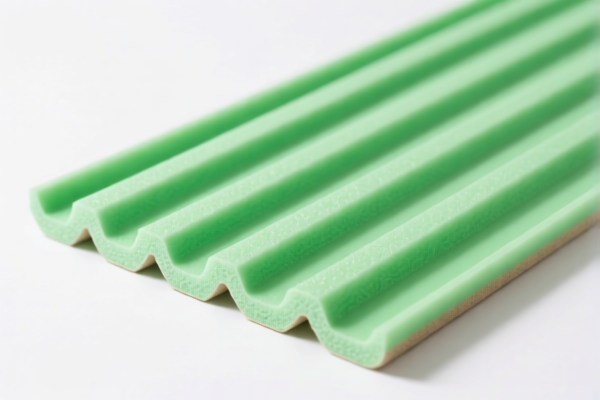
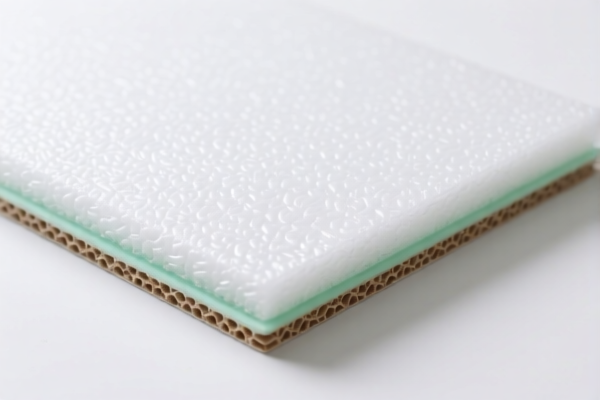
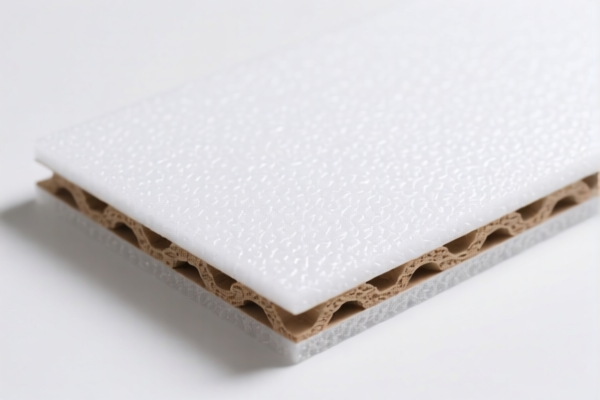

AI Analysis
🖥️ PVC Display Board (PVC Packaging Board & PVC Sheets)
🌐 HS Code Reference & Clearance Guide | 2026 Latest Tariff Analysis | Professional Strategy for US Import
📌 I. Product Definition: What is a "PVC Display Board"?
In international trade, "PVC Display Board" is a broad term that covers different physical states and end-uses. To ensure accurate customs clearance, it must be categorized based on its material composition, form, and specific function.
There are three primary classifications for PVC display boards under the 2026 US Harmonized Tariff Schedule:
- Packaging Boards: PVC boards specifically designed as part of packaging units (e.g., clear blister packs, protective trays).
- Key Characteristic: Used for containment or protection of goods.
- Sheets/Plates (General Purpose): PVC sheets used for signage, construction, or general industrial applications, not necessarily for packaging.
- Key Characteristic: Solid form, used as a raw material or finished component.
- Specialty Polymer Sheets: PVC sheets with specific polymer structures (e.g.,氯乙烯 polymer).
- Key Characteristic: Defined by chemical structure rather than just end-use.
⚠️ Critical Distinction:
- If the board is primarily for packaging (holding/showing products), it may fall under Chapter 39 heading 3923.
- If the board is a raw sheet or used for signage/construction, it falls under Chapter 39 heading 3921.
- Misclassification Risk: Declaring a general PVC sheet as "Packaging Board" to seek lower tariffs can lead to audits and penalties if the commercial invoice does not support the packaging use.
📦 II. HS Code Classification Details (2026 Latest Tariff)
Based on the provided data, here are the three specific HS Codes and their exact definitions:
| HS Code | Product Description | Key Characteristics | Applicable Scenario |
|---|---|---|---|
3923.90.00.80 |
PVC Packaging Board | Material: Plastic; Use: Packaging supplies | Clear blister packs, product trays, protective packaging inserts |
3921.12.50.00 |
PVC Sheet | Material: Polyvinyl chloride polymer; Form: Sheet/Plate | General signage, construction panels, insulation boards |
3921.12.19.50 |
PVC Plate/Sheet | Material: Vinyl chloride polymer; Form: Plate/Board; Structure: Unspecified | Specialized PVC plates where the specific structural type is not defined |
🔍 Focus on Classification Logic:
- 3923.90.00.80: The "Packaging" aspect is crucial. Use this if the board’s primary function is to hold or display goods for retail sale in a packaging context.
- 3921.12.50.00 / 3921.12.19.50: These are for structural or material uses. If the board is used for wall panels, signage, or as a raw material for further processing, these codes apply.
- Difference between 3921.12.50 and 3921.12.19: One refers to "Polyvinyl chloride polymer" (general), the other to "Vinyl chloride polymer" (structural definition). Ensure your technical specs match the description.
💰 III. 2026 Latest Tariff Rate Breakdown (Detailed Tax Clauses)
✅ Applicable Country: United States (US)
✅ Origin: China (CN)
✅ Effective Date: Current rates apply (Note: Rates reflect Section 301 and IEEPA surcharges as per the data provided)
🎯 1. 3923.90.00.80 – PVC Packaging Board
| Item | Detail |
|---|---|
| Basic Tariff Rate | 3.0% (Base rate for plastics/packaging) |
| Section 301 Surcharge | +25.0% (Trump/Biden era tariffs on Chinese goods) |
| Section 122 Surcharge | +10.0% (Specific additional duty on certain Chinese imports) |
| Total Effective Tariff | 38.0% |
| Tax Calculation | CIF Value × 38.0% |
| De Minimis Exemption | ❌ Not Eligible (Value > $800 threshold is subject to full duty) |
| Legal Basis Path | Section 301: 9903.88.01 → Section 122: 9903.01.01 → USITC: 3923.90.00.80 |
📌 Explanation:
- The 25% Section 301 tariff is applied to most Chinese-origin plastic products.
- The 10% Section 122 tariff is an additional layer on top, specifically targeting certain imports.
- Total 38% is high but standard for Chinese plastic packaging materials.
- Compliance Tip: Ensure the "Packaging" use is clearly documented in the commercial invoice to justify3923over3921, though the tax rate difference here is minimal (38% vs 40-41%).
🎯 2. 3921.12.50.00 – PVC Sheet (Polyvinyl Chloride Polymer)
| Item | Detail |
|---|---|
| Basic Tariff Rate | 6.5% |
| Section 301 Surcharge | +25.0% |
| Section 122 Surcharge | +10.0% |
| Total Effective Tariff | 41.5% |
| Tax Calculation | CIF Value × 41.5% |
| De Minimis Exemption | ❌ Not Eligible |
| Legal Basis Path | Section 301: 9903.88.01 → Section 122: 9903.01.01 → USITC: 3921.12.50.00 |
📌 Note:
- Higher base rate (6.5%) compared to packaging (3.0%).
- Used for non-packaging PVC sheets (e.g., signage, construction).
- Cost Impact: This is 3.5% higher than the packaging code. Careful classification is essential to avoid overpaying if the product can be justified as packaging.
🎯 3. 3921.12.19.50 – PVC Plate/Sheet (Vinyl Chloride Polymer)
| Item | Detail |
|---|---|
| Basic Tariff Rate | 5.3% |
| Section 301 Surcharge | +25.0% |
| Section 122 Surcharge | +10.0% |
| Total Effective Tariff | 40.3% |
| Tax Calculation | CIF Value × 40.3% |
| De Minimis Exemption | ❌ Not Eligible |
| Legal Basis Path | Section 301: 9903.88.01 → Section 122: 9903.01.01 → USITC: 3921.12.19.50 |
📌 Note:
- Intermediate base rate (5.3%).
- Applies when the polymer structure is defined as "Vinyl Chloride Polymer" but not specified further.
- Cost Impact: Slightly lower than3921.12.50.00but still higher than packaging.
🛠️ IV. Customs Clearance Practical Advice (Avoid Pitfalls)
✅ 1. Documentation Checklist (Mandatory)
| Document | Required | Purpose |
|---|---|---|
| Commercial Invoice | ✔️ | Must clearly state: "PVC Packaging Board" OR "PVC Sheet" and specify material (Polyvinyl Chloride). |
| Packing List | ✔️ | Detail dimensions, weight, and quantity. |
| Product Specification | ✔️ | Confirm: Is it rigid? Flexible? Thickness? Intended use? |
| Certificate of Origin | ✔️ | Essential for applying Section 301/122 tariffs correctly. |
| Bill of Lading/Air Waybill | ✔️ | Standard shipping document. |
✅ 2. Classification Strategy (Key Tips)
🔥 "Know Your Use, Save Your Money"
| Scenario | Recommended HS Code | Tax Rate | Reason |
|---|---|---|---|
| Blister packs, clamshell cases, product trays | 3923.90.00.80 |
38.0% | Primary function is packaging. Lowest base rate. |
| Signage boards, wall panels, general sheets | 3921.12.19.50 |
40.3% | Structural use. Intermediate base rate. |
| Generic PVC sheets (unspecified structure) | 3921.12.50.00 |
41.5% | General use. Highest base rate. Avoid if possible. |
⚠️ Critical Warning:
- Do NOT classify a general PVC sheet as "Packaging Board" (3923) unless it is actually used for packaging. Customs may challenge this and reclassify to3921, potentially applying different duties or penalties.
- Conversely, do NOT classify packaging boards as3921if you want the lower base rate, but ensure the documentation supports the "packaging" definition.
✅ 3. Special Considerations for 2026
- Section 122 Tariff (10%): This is a significant add-on. Ensure your supplier provides all necessary documentation to prove origin and product nature.
- De Minimis (Section 321): PVC boards from China are excluded from the $800 de minimis exemption. All shipments are subject to full duty.
- Anti-Dumping/Countervailing Duties (AD/CVD): Check if your specific PVC product type is subject to AD/CVD cases. Some PVC sheets may face additional duties beyond the 301/122 tariffs.
🌍 V. Global Market Comparison (2026)
| Country/Region | Recommended HS Code | Est. Tariff (China Origin) | Notes |
|---|---|---|---|
| 🇺🇸 USA | 3923.90.00.80 / 3921.12.xx.xx |
38.0% - 41.5% | High due to Sec 301 + Sec 122 |
| 🇨🇳 China | 3923.90.00.80 / 3921.12.xx.xx |
~3% - 6% | Low base rate, no surcharges |
| 🇪🇺 EU | 3923.90.00 / 3921.10.00 |
~6.5% - 7.0% | No Section 301, but may have carbon border tax (CBAM) in future |
| 🇯🇵 Japan | 3923.90.00 / 3921.10.00 |
~6.0% - 7.0% | Free Trade Agreement (FTA) benefits may apply |
📌 Conclusion:
- USA is the most expensive market for PVC display boards due to multiple layers of tariffs.
- Cost Optimization: Consider duty drawback programs if re-exporting, or explore FTA benefits if sourcing from Vietnam/Mexico (if applicable).
📌 VI. Common Mistakes & Pitfalls (Lessons Learned)
❌ Mistake 1: Using "PVC Board" as the generic description.
👉 Consequence: Customs may classify under the highest base rate (3921.12.50.00 at 41.5%) or demand additional info, causing delays.
✅ Fix: Specify "PVC Packaging Board" or "PVC Sheet for Signage".
❌ Mistake 2: Assuming de minimis exemption applies.
👉 Consequence: Shipment held at border, duties + penalties applied retroactively.
✅ Fix: Always declare full value and pay duties for Chinese-origin PVC boards.
❌ Mistake 3: Confusing "Packaging" vs. "Product".
👉 Consequence: If the board is sold as a product (e.g., for DIY crafts), but declared as packaging, it may be audited.
✅ Fix: Match the HS code to the actual end-use shown in marketing materials and invoices.
🎯 VII. Conclusion: Smart Classification, Lower Costs!
🎯 Key Takeaway:
🔹 Packaging Use →
3923.90.00.80(38.0% Total)
🔹 Structural/Signage Use →3921.12.19.50(40.3% Total)
🔹 General Sheet →3921.12.50.00(41.5% Total)🔹 Action Plan:
1. Define Use: Is it packaging or a product?
2. Select Code: Use3923for packaging,3921for sheets.
3. Document: Clearly state material and use in invoice.
4. Prepare for Duties: Budget for ~38-41% total tariff.
📣 Next Steps:
📞 Contact your customs broker with product specs.
📄 Apply for Advance Ruling if importing large volumes.
🚀 Optimize your supply chain to mitigate tariff impacts.
✨ Precision in Classification, Profit in Clearance!
💼 Every percentage point saved is profit earned!
Customer Reviews
About HS Code Classification
The Harmonized System (HS) is an internationally standardized nomenclature developed by the World Customs Organization (WCO) to classify traded products. Over 200 countries use the HS system as the basis for customs tariffs, trade statistics, and import/export regulations.
Each HS code follows a hierarchical structure:
- Chapter (2 digits) — Broad category of goods (e.g., Chapter 84: Machinery and Mechanical Appliances)
- Heading (4 digits) — More specific grouping within the chapter
- Subheading (6 digits) — Internationally standardized breakdown, used by all WCO member countries
- National subdivisions (8-10 digits) — Country-specific extensions for further classification, such as US HTSUS 10-digit codes
Correct HS code classification is essential for smooth customs clearance, accurate duty payment, and compliance with trade regulations. Misclassification can lead to customs delays, overpayment of duties, or penalties.
When importing from CN to US, the applicable tariff rates may include:
- Most-Favored-Nation (MFN) rate — The standard duty rate applied to WTO members
- General rate — Applied to countries without trade agreements
- Trade remedy duties — Additional tariffs such as Section 301 (anti-dumping), Section 232 (national security), or countervailing duties
The information provided on this page is for reference purposes only. For official classification, please consult with your local customs authority or a licensed customs broker.