PVC Door Frame Profile
CN → US| HS Code | Tariff Rate | Origin | Destination | Doc |
|---|---|---|---|---|
| 3925200010 | 22.8% | CN | US | Official Doc |
| 3916200020 | 40.8% | CN | US | Official Doc |
| 3925200020 | 22.8% | CN | US | Official Doc |
| 3916200091 | 40.8% | CN | US | Official Doc |
| 3925900000 | 40.3% | CN | US | Official Doc |
Product Images
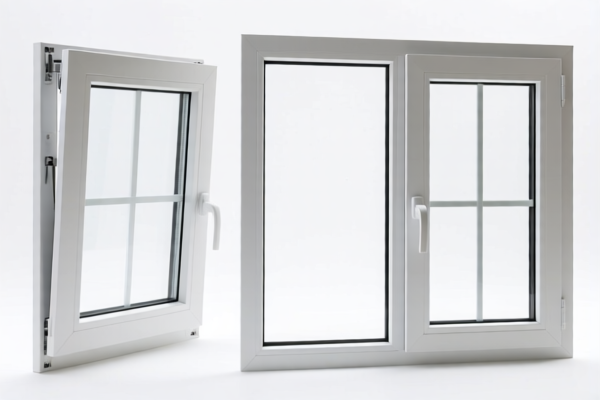
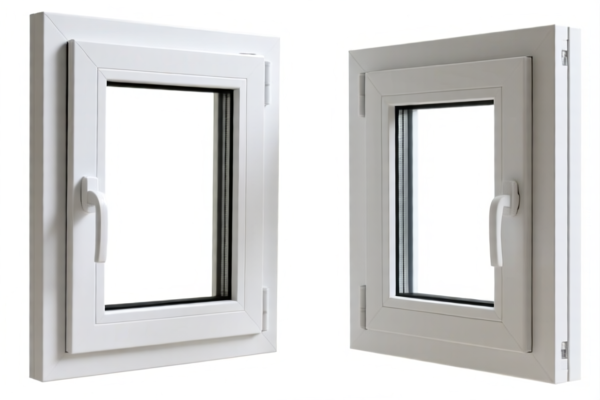
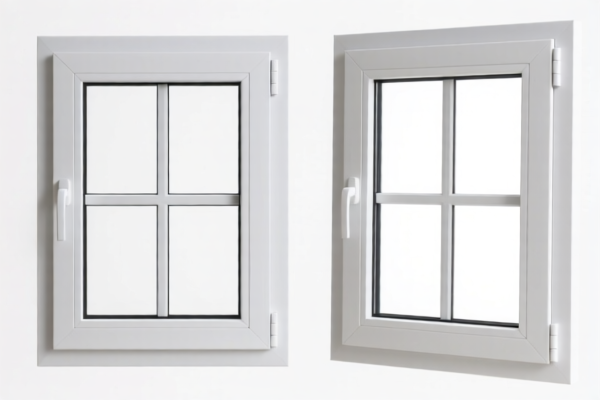
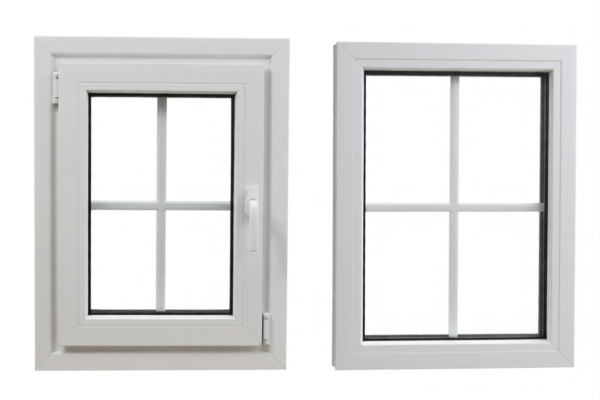
AI Analysis
🚪 PVC Door Frame Profile (PVC门框型材)
🌐 HS Code Classification & Customs Clearance Guide | 2026 Tariff Analysis | Strategic Import Strategy for US Market
📌 Part 1: Product Definition & Classification Logic
PVC Door Frame Profiles are rigid structural components made primarily from Polyvinyl Chloride (PVC) compounded with stabilizers and fillers. In international trade, the classification hinges on two critical factors: 1. End-Use/Function: Is it specifically designed as a door/window frame (a building opening component) or a general industrial/construction profile (a raw extruded shape)? 2. Chemical Composition & Form: While all are PVC, the specific subheading depends on whether they are categorized under "Building fittings" or "Other plastic articles."
⚠️ Key Distinction Point:
- If the product is shaped specifically as a door or window frame (often with multi-chambered structures for insulation and glass holding), it may fall under Heading 3925 (Building fittings).
- If the product is a generic extruded profile (square, rectangular, or complex cross-sections) used for construction but not strictly classified as a "frame" in the legal sense, it may fall under Heading 3916 (Plastic rods, tubes, and profiles).
- Misclassification Risk: Declaring a generic profile as a "frame" to reduce tariffs (or vice versa) can lead to severe penalties if the physical characteristics do not match the legal definition.
📦 Part 2: HS Code Classification Details (2026 Latest Tariff Schedule)
Based on the provided data, there are four possible HS Codes for PVC Door Frame Profiles, depending on the precise physical form and declared use.
| HS Code | Product Description & Summary | Key Classification Criteria |
|---|---|---|
| 3925.20.00.10 | PVC Window/Door Frame (Specific) Material: PVC. Use: Door/Window Frame. Note: Despite the name "Window Frame" in summary, this code often covers framed building openings. |
✅ Best Fit for Functional Frames: Specifically classified as a plastic building fitting for doors/windows. |
| 3925.20.00.20 | PVC Door/Window Frame (General) Material: PVC. Form/Use: Matches classification requirements for frames. |
✅ Alternative for Frames: Similar to .10 but may differ in specific sub-category nuances (e.g., aluminum-clad vs. pure PVC). |
| 3916.20.00.20 | PVC Door Frame Profile (General) Material: PVC. Form: Profile. Use: Door Frame. |
⚠️ High Risk/High Tariff: Classified as a plastic profile (rod/tube/profile) rather than a finished fitting. Used if not strictly defined as a "frame" in local customs interpretation. |
| 3916.20.00.91 | PVC Industrial Profile (Generic) Material: PVC. Form: Profile. Use: Industrial/Construction. |
❌ Wrong Fit for Doors: Classified as other plastic profiles. Only use if the product is a raw extruded profile not yet shaped as a door frame. |
| 3925.90.00.00 | PVC Industrial Profile (Building Fitting) Material: PVC. Form: Profile. Use: Building Component. |
⚠️ Alternative for Building Parts: Classified under "Other building fittings." Used if it doesn't fit the specific door/window frame subheadings. |
🔍 Critical Clarification:
- 3925.20.xx codes are generally for finished building components (frames installed in walls).
- 3916.20.xx codes are for profiles (long extrusions before final assembly).
- If you are importing pre-cut, ready-to-install door frames, aim for 3925.
- If you are importing long extruded profiles for on-site assembly, 3916 might apply, but 3916 carries higher tariffs.
💰 Part 3: 2026 Tariff Rate Breakdown (Including Additional Duties)
✅ Applicable Country: United States (US)
✅ Country of Origin: China (CN)
✅ Effective Date: From November 10, 2025 onwards
🎯 1. 3925.20.00.10 & 3925.20.00.20 — PVC Door/Window Frames (Building Fittings)
These codes offer the lowest tariff burden among the options.
| Item | Content |
|---|---|
| Base Duty Rate | 5.3% |
| Section 301 Additional Duty | 7.5% |
| Section 122 Additional Duty | 10% |
| Total Tariff Rate | 22.8% |
| Calculation Basis | CIF Value × 22.8% |
| De Minimis Exemption | ❌ Not Eligible (High-risk category for China origin) |
| Legal Pathway | Base: 3925.20.00 → Section 301: Footnote 9903.88.01 → Section 122: 25 U.S.C. 1862 |
📌 Explanation:
- Base Rate (5.3%): Standard MFN rate for plastic building fittings.
- Section 301 (7.5%): Retaliatory tariff under US Trade Act Section 301 for Chinese goods.
- Section 122 (10%): Additional safeguard duties for specific industrial inputs.
- Total: 22.8%. This is the most cost-effective classification if the product qualifies as a "window/door frame."
🎯 2. 3916.20.00.20 & 3916.20.00.91 — PVC Profiles (Rods/Tubes/Profiles)
These codes carry a significantly higher tariff burden due to their classification as general plastic profiles.
| Item | Content |
|---|---|
| Base Duty Rate | 5.8% |
| Section 301 Additional Duty | 25.0% |
| Section 122 Additional Duty | 10% |
| Total Tariff Rate | 40.8% |
| Calculation Basis | CIF Value × 40.8% |
| De Minimis Exemption | ❌ Not Eligible |
| Legal Pathway | Base: 3916.20.00 → Section 301: Footnote 9903.88.02 → Section 122: 25 U.S.C. 1862 |
📌 Warning:
- Section 301 (25%): Much higher than the 7.5% for frames.
- Total: 40.8%. This is nearly double the cost of the 3925 codes.
- Risk: If Customs determines your "profile" is actually a "frame" (based on shape, chamfered edges for glass, or pre-assembled joints), they will reclassify it to 3925 and demand the 18% difference (40.8% - 22.8%) plus penalties.
🎯 3. 3925.90.00.00 — Other Building Fittings (PVC Profiles)
| Item | Content |
|---|---|
| Base Duty Rate | 5.3% |
| Section 301 Additional Duty | 25.0% |
| Section 122 Additional Duty | 10% |
| Total Tariff Rate | 40.3% |
| Calculation Basis | CIF Value × 40.3% |
| De Minimis Exemption | ❌ Not Eligible |
📌 Note: This code is a "catch-all" for building fittings not specifically listed elsewhere. It still incurs the 25% Section 301 duty, making it nearly as expensive as the 3916 codes.
🛠️ Part 4: Customs Clearance Practical Advice (Avoid Pitfalls)
✅ 1. Document Checklist (Mandatory)
| Document | Required? | Purpose |
|---|---|---|
| Product Specification Sheet | ✔️ | Must detail dimensions, wall thickness, chamber structure, and intended use (Door/Window). |
| Technical Drawings | ✔️ | Critical: Show cross-sections. If the profile has grooves for glass/beading, it supports the "Frame" (3925) classification. |
| Product Photos | ✔️ | Clear images of the profile ends, showing any pre-drilled holes or molded shapes. |
| Commercial Invoice | ✔️ | Description must match HS Code. Use terms like "PVC Door Frame, Finished" or "PVC Profile, Unfinished." |
| Packing List | ✔️ | Indicate if items are pre-cut lengths or continuous extrusions. |
| Certificate of Origin | ✔️ | To determine Section 301 applicability. |
✅ 2. Classification Strategy & Keywords
🔥 "Shape Defines Duty: Frame vs. Profile!"
| Scenario | Recommended HS Code | Declaration Keywords | Avoid |
|---|---|---|---|
| Pre-cut, ready-to-install door frames | 3925.20.00.10 | "PVC Door Frame, Pre-assembled, for Residential Use" | "Profile," "Extrusion" |
| Multi-chambered profiles for door frames | 3925.20.00.20 | "PVC Door Frame Profile, Multi-Chambered, Insulating" | "Industrial Rod," "Generic Profile" |
| Simple rectangular PVC tubes | 3916.20.00.20 | "PVC Profile, Square Cross-Section, For General Construction" | "Door Frame," "Window Frame" |
| Complex industrial PVC extrusions | 3916.20.00.91 | "PVC Industrial Profile, Custom Cross-Section" | "Building Fitting," "Door Frame" |
⚠️ Critical Tip:
- If you declare 3916.20 to save on upfront "complexity," but Customs inspects the goods and sees door frame characteristics (e.g., integrated beading channels, reinforced cavities for hinges), they will penalize you for misdeclaration.
- Always prioritize 3925.20 if the product is functionally a door/window frame. The 18% tariff savings ($0.18 per $1.00 CIF) is substantial.
✅ 3. Special Cases
| Case | Advice |
|---|---|
| Aluminum-clad PVC Frames | If aluminum is the primary material, it may fall under 7610 (Aluminum structures), not PVC. Check composition. |
| Importing Profiles for Local Assembly | If importing long extrusions and cutting/assembling in the US, 3916 might be appropriate, but ensure the product cannot be used as a frame without significant modification. |
| Section 122 Exemptions | Check if any exclusions apply for specific types of plastic building materials. Most are not excluded. |
| De Minimis (Section 321) | ❌ Do not rely on $800 de minimis exemption for China-origin PVC frames/profiles. They are explicitly excluded from de minimis treatment under current US regulations for Section 301/122 goods. |
🌍 Part 5: Global Market Comparison (2026)
| Country | Recommended HS Code | Total Tariff (China Origin) | Key Requirement |
|---|---|---|---|
| 🇺🇸 USA | 3925.20.00.10 | 22.8% | Strong enforcement on Section 301/122. |
| 🇺🇸 USA | 3916.20.00.20 | 40.8% | High risk of reclassification. |
| 🇨🇳 China | 3925.20.00 | 5.3% | No Section 301/122. |
| 🇪🇺 EU | 3925.20.00 | 0% - 4.7% | Varies by member state. No Section 301. |
| 🇬🇧 UK | 3925.20.00 | 0% - 4.7% | Post-Brexit tariff schedule applies. |
📌 Conclusion:
- The US is the most challenging market due to the 22.8%–40.8% tariff burden.
- Accurate classification (3925 vs. 3916) is the single most important factor in cost management.
- Misclassifying a frame as a profile to declare a lower value or avoid scrutiny is risky and costly.
📌 Part 6: Common Mistakes & Pitfalls (Blood Lessons)
❌ Mistake 1: Declaring "PVC Door Frame" as 3916.20 (Profile) to avoid "Building Fitting" scrutiny.
👉 Consequence: Customs will reclassify to 3925 and charge the difference + penalties. Even worse, if they see it’s a frame, they may apply the higher 40.8% if the documentation supports "profile" but the goods are "frame."
❌ Mistake 2: Ignoring Section 122 Duties.
👉 Consequence: Some traders only consider Section 301 (7.5% or 25%). Forgetting Section 122 (10%) leads to underpayment.
❌ Mistake 3: Using "Plastic Profile" for pre-cut door frames.
👉 Consequence: Customs examiners will reject the "profile" claim because profiles are long, continuous extrusions, not pre-cut components.
❌ Mistake 4: Assuming De Minimis ($800) applies.
👉 Consequence: Shipments under $800 from China for PVC frames are not exempt from duties. They will be seized or taxed.
✅ Correct Approach:
"Be Honest, Be Precise. If it’s a Frame, Declare Frame (3925). If it’s a Profile, Declare Profile (3916). Never Mix."
🎯 Part 7: Conclusion: Smart Classification, Cost Savings!
🎯 Remember the Golden Rule:
🔹 "Frames (3925) = 22.8% | Profiles (3916) = 40.8% | Difference = 18%!"
🔹 "Don’t let 'Profile' in the name fool you. Look at the Function."
📌 Pro Tip:
If you are importing large volumes, consider applying for a Binding Ruling from US Customs and Border Protection (CBP) to secure the 22.8% rate for 3925.20.00.10 definitively. This avoids future disputes and audit risks.
📣 Immediate Action:
📞 Contact a licensed Customs Broker
📝 Provide Cross-Section Drawings
🚀 Secure the 22.8% Tariff Rate!
✨ Professional Customs Clearance Starts with Accurate Classification!
💼 Every 1% in Tariff is 1% in Profit. Protect Your Margin!
Customer Reviews
About HS Code Classification
The Harmonized System (HS) is an internationally standardized nomenclature developed by the World Customs Organization (WCO) to classify traded products. Over 200 countries use the HS system as the basis for customs tariffs, trade statistics, and import/export regulations.
Each HS code follows a hierarchical structure:
- Chapter (2 digits) — Broad category of goods (e.g., Chapter 84: Machinery and Mechanical Appliances)
- Heading (4 digits) — More specific grouping within the chapter
- Subheading (6 digits) — Internationally standardized breakdown, used by all WCO member countries
- National subdivisions (8-10 digits) — Country-specific extensions for further classification, such as US HTSUS 10-digit codes
Correct HS code classification is essential for smooth customs clearance, accurate duty payment, and compliance with trade regulations. Misclassification can lead to customs delays, overpayment of duties, or penalties.
When importing from CN to US, the applicable tariff rates may include:
- Most-Favored-Nation (MFN) rate — The standard duty rate applied to WTO members
- General rate — Applied to countries without trade agreements
- Trade remedy duties — Additional tariffs such as Section 301 (anti-dumping), Section 232 (national security), or countervailing duties
The information provided on this page is for reference purposes only. For official classification, please consult with your local customs authority or a licensed customs broker.