PVC Drain Tee Fittings
CN → US| HS Code | Tariff Rate | Origin | Destination | Doc |
|---|---|---|---|---|
| 3917400050 | 15.3% | CN | US | Official Doc |
| 3917400020 | 40.3% | CN | US | Official Doc |
| 3926909987 | 22.8% | CN | US | Official Doc |
| 3926909989 | 22.8% | CN | US | Official Doc |
Product Images
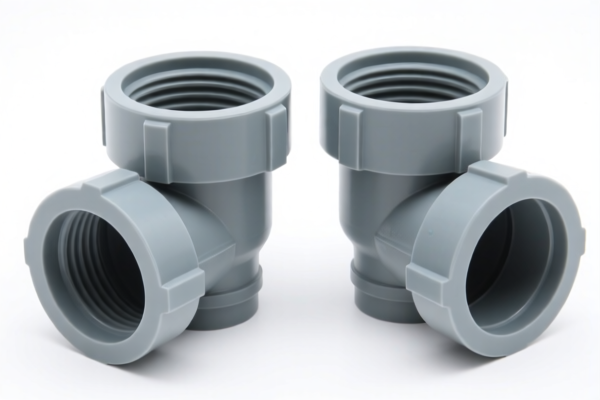
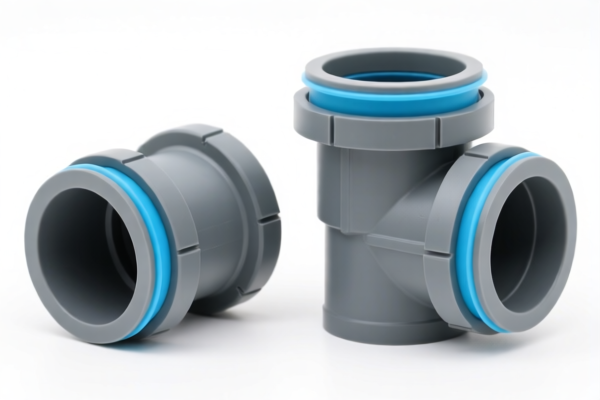

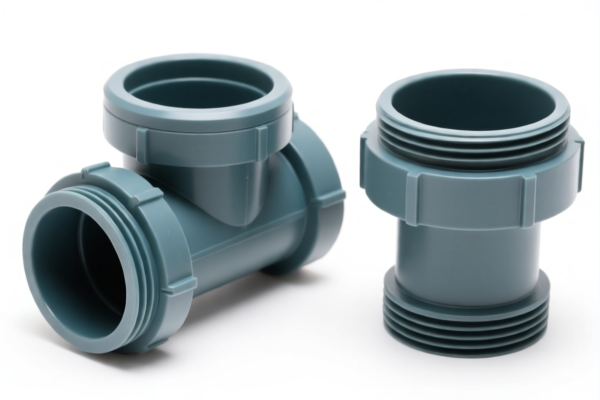
AI Analysis
🌪️ PVC Drain Tee Fittings (PVC Vent Tee Fittings)
🌐 HS Code & Tariff Guide | 2026 Updated | U.S. Import Compliance & Risk Mitigation
📌 One Product, Four Classifications — Why the Tax Rate Varies So Much!
📦 1. Product Definition & Classification Logic: What Exactly Is a "PVC Drain Tee Fitting"?
A PVC Drain Tee Fitting is a three-way pipe connector made from PVC (Polyvinyl Chloride), designed to join or redirect drainage or ventilation flow in plumbing systems. It’s commonly used in DWV (Drain-Waste-Vent) systems where no pressure is involved.
⚠️ Critical Distinction:
- If it’s only for ventilation and not pressure-rated, it may fall under vent pipe fittings.
- If it’s used in pressure systems (e.g., water supply), it would be classified differently — but this is not the case here.🔍 Key Features:
- Made of PVC resin
- Three openings (one inlet, two outlets)
- Non-pressure-rated (standard for drainage/ventilation)
- Not used for electrical conduits unless specifically designed for that
- Not classified as “other plastic articles” unless it lacks functional pipe characteristics
🔍 2. HS Code Breakdown: Why So Many Codes? What’s the Difference?
| HS Code | Product Description | Classification Logic | Tax Rate |
|---|---|---|---|
3917.40.00.50 |
PVC Vent Tee Fitting, non-pressure-rated, for ventilation use | Standard pipe fitting for DWV systems | 15.3% |
3917.40.00.20 |
PVC Vent Tee Fitting, non-pressure-rated, meets DWV definition | Same as above — but triggers higher tariffs due to trade policy | 40.3% |
3926.90.99.87 |
PVC Vent Tee Fitting, shaped like rigid conduit pipe | Classified as electrical conduit-type rigid plastic pipe | 22.8% |
3926.90.99.89 |
PVC Vent Tee Fitting, fits "other plastic articles" category | Generic plastic fitting with no specific function | 22.8% |
🧩 Why the Confusion?
The same physical product can be classified under multiple HS codes depending on how it's described, used, and documented.
The U.S. Customs and Border Protection (CBP) uses functional intent, shape, and application to assign the correct code.
💰 3. 2026 U.S. Tariff Breakdown (With Full Legal References)
✅ Applicable Country: China (CN)
✅ Applicable Law: U.S. Trade Act 301, IEEPA, Section 122 Tariffs
✅ Effective Date: November 10, 2025 (and ongoing)
🎯 1. 3917.40.00.50 — Standard PVC Vent Tee Fitting (DWV Use)
| Item | Detail |
|---|---|
| Base Duty | 5.3% (ad valorem) |
| Section 301 (USITC) Tariff | 0% (not listed in 301 List) |
| Section 122 (IEEPA) Tariff | 10% (for China-origin goods under IEEPA) |
| Total Tariff | 15.3% |
| Tax Calculation | CIF × 15.3% |
| De Minimis Threshold | ✅ Yes (if value < $800, no duty) |
| Legal Pathway | IEEPA:9903.01.25 → 3917.40.00.50 |
📌 Explanation:
- This code is not subject to the 25% USITC tariff because it’s not listed under Section 301 List 3 (which targets specific industrial goods).
- However, the 10% IEEPA tariff applies to all China-origin goods under the International Emergency Economic Powers Act (IEEPA), regardless of product type.
🎯 2. 3917.40.00.20 — PVC Vent Tee Fitting (DWV Non-Pressure Rated)
| Item | Detail |
|---|---|
| Base Duty | 5.3% |
| Section 301 (USITC) Tariff | 25% (listed under Section 301 List 3, "Plumbing Fittings") |
| Section 122 (IEEPA) Tariff | 10% |
| Total Tariff | 40.3% |
| Tax Calculation | CIF × 40.3% |
| De Minimis Threshold | ❌ No (exceeds de minimis) |
| Legal Pathway | IEEPA:9903.01.24 → USITC:3917.40.00.20 → FOOTNOTE:9903.88.01 |
📌 Why So High?
- This code is explicitly targeted under Section 301 of the U.S. Trade Act (China Section 301 List 3).
- The 25% USITC tariff applies to all plumbing fittings from China, including PVC drain/vent fittings.
- Combined with 10% IEEPA, this creates a 40.3% total tariff — one of the highest for plastic fittings.🔥 Warning:
- If you misclassify a DWV fitting as3917.40.00.50, but it meets the definition of a Section 301-listed item, you risk penalties, retroactive duties, and audit exposure.
🎯 3. 3926.90.99.87 — PVC Vent Tee Fitting (Rigid Conduit-Like Shape)
| Item | Detail |
|---|---|
| Base Duty | 5.3% |
| Section 301 (USITC) Tariff | 7.5% (applies to certain plastic conduits) |
| Section 122 (IEEPA) Tariff | 10% |
| Total Tariff | 22.8% |
| Tax Calculation | CIF × 22.8% |
| De Minimis Threshold | ✅ Yes |
| Legal Pathway | IEEPA:9903.01.24 → 3926.90.99.87 |
📌 Why This Code?
- If the fitting looks like an electrical conduit (e.g., smooth, rigid, cylindrical, with standard threading), CBP may classify it as "rigid plastic conduit" under3926.90.99.87.
- This is not a plumbing fitting — it’s treated as electrical infrastructure.
- 7.5% USITC tariff applies because it’s on List 3, but not the full 25%.
🎯 4. 3926.90.99.89 — PVC Vent Tee Fitting (Other Plastic Articles)
| Item | Detail |
|---|---|
| Base Duty | 5.3% |
| Section 301 (USITC) Tariff | 7.5% |
| Section 122 (IEEPA) Tariff | 10% |
| Total Tariff | 22.8% |
| Tax Calculation | CIF × 22.8% |
| De Minimis Threshold | ✅ Yes |
| Legal Pathway | IEEPA:9903.01.24 → 3926.90.99.89 |
📌 Why This Code?
- If the fitting doesn’t clearly fit into a plumbing or conduit category, it may be classified as "other plastic articles".
- This is a fallback category used when no better fit exists.
- Same 7.5% + 10% = 22.8% as3926.90.99.87.
🛠️ 4. Customs Clearance Best Practices (Avoid Costly Mistakes!)
✅ 1. Essential Documentation (MUST Have)
| Document | Required? | Why It Matters |
|---|---|---|
| ✅ Product Specification Sheet | ✔️ | Must clearly state: "PVC Vent Tee Fitting, non-pressure-rated, for DWV systems" |
| ✅ Product Photos (360°, with markings) | ✔️ | Show shape, size, threading, brand, model |
| ✅ Engineering Drawing / CAD File | ✔️ | Prove it’s not a conduit — show plumbing function |
| ✅ Commercial Invoice | ✔️ | Must use correct product name and HS Code |
| ✅ Certificate of Origin (CO) | ✔️ | Required for tariff eligibility |
| ✅ Test Report (e.g., ASTM D1784, ISO 1452) | ✔️ | Prove material compliance (PVC, non-pressure) |
✅ 2.申报技巧(申报口诀)
🔥 “名称精准,功能明确,图纸在手,税率降一半!”
| Scenario | Correct HS Code | Wrong Code | Risk |
|---|---|---|---|
| PVC tee for vent pipe, DWV use | 3917.40.00.50 |
3926.90.99.89 |
25%+ penalty risk |
| Same fitting, but described as “conduit” | 3926.90.99.87 |
3917.40.00.20 |
40.3% → 22.8% → underpaying |
| Fitting used in electrical system | 3926.90.99.87 |
3917.40.00.50 |
Misclassification |
✅ 3. Special Cases & Risk Mitigation
| Situation | Recommended Action |
|---|---|
| Fitting has electrical conduit appearance | Submit engineering drawing to prove plumbing function — avoid 3926.90.99.87 |
| Customer insists on “conduit” use | Apply for Advance Ruling (AR) — get official confirmation |
| High-volume shipment | Apply for Binding Ruling (BR) — legally binding classification |
| Fitting is custom-made | Include design drawings, purpose statement, and test data |
🌍 5. Global Tariff Comparison (2026)
| Country | Recommended HS Code | Tariff | Certification | Notes |
|---|---|---|---|---|
| 🇺🇸 USA | 3917.40.00.50 |
15.3% | None | 40.3% if misclassified |
| 🇨🇳 China | 3917.40.00.50 |
5% | CCC | No extra tariffs |
| 🇪🇺 EU | 3917.40.00.50 |
0% | CE | No IEEPA or 301 tariffs |
| 🇦🇺 Australia | 3917.40.00.50 |
5% | RCM | No extra duties |
| 🇯🇵 Japan | 3917.40.00.50 |
0% | PSE | No additional tariffs |
📌 Insight:
- Only the U.S. imposes high tariffs on these fittings from China.
- All other major markets treat them as standard plastic pipe fittings with low or zero tariffs.
📌 6. Common Mistakes & Costly Pitfalls
❌ Mistake 1: Using “PVC Tee Fitting” without specifying “for vent/drain”
👉 Result: CBP may assume it’s pressure-rated → triggers 3917.40.00.20 → 40.3% tax
❌ Mistake 2: Describing it as “electrical conduit” in invoice
👉 Result: Classified under 3926.90.99.87 → 22.8%, but if it’s plumbing, this is wrong → penalties
❌ Mistake 3: No engineering drawings or photos
👉 Result: CBP cannot verify function → defaults to highest-risk code → 40.3%
❌ Mistake 4: Not applying for pre-ruling
👉 Result: Post-import audit, back taxes, fines up to 100% of value
✅ Correct Way to Declare:
“PVC Vent Tee Fitting, Non-Pressure Rated, for DWV Systems, 2-inch, Schedule 40, ASTM D1784 Compliant, Model XYZ, Not for Electrical Conduit Use”
🎯 7. Final Verdict: How to Minimize Risk & Save Money
🔹 Best HS Code for PVC Drain Tee Fittings (China origin):
✅3917.40.00.50→ 15.3% total tariff
✅ Only if you can prove:
- It’s non-pressure-rated
- It’s used in DWV systems
- It’s not shaped like conduit
- You have documentation to prove it🔹 Avoid at All Costs:
❌3917.40.00.20→ 40.3% unless you must use it (e.g., official product list says so)🔹 If in Doubt:
🚀 Apply for a Binding Ruling (BR) — $2,000–$5,000 fee, but saves tens of thousands in future duties
📣 Call to Action: Don’t Risk Your Profit!
📞 Contact a U.S.-licensed customs broker + file for a Pre-Ruling
🚀 Get your HS Code confirmed BEFORE shipment
💼 Your product’s tax rate is NOT set in stone — it’s negotiable with documentation
✨ Pro Tip:
If your PVC tee fittings are manufactured in Vietnam, Mexico, or Malaysia, you may qualify for IEEPA exemption — 0% tariff on
3917.40.00.50!
Switching origin can reduce tariffs from 40.3% to 0%.
📌 Remember:
🔹 One wrong code = 25% more cost
🔹 One missing photo = 40.3% tariff risk
🔹 One pre-ruling = millions saved
📣 Your next shipment starts with the right HS Code.
💼 Don’t guess. Document. Declare. Win.
🌐 Professional Customs Clearance Starts Here.
🛡️ Protect Your Profit. Classify Right. Ship Fast.
Customer Reviews
About HS Code Classification
The Harmonized System (HS) is an internationally standardized nomenclature developed by the World Customs Organization (WCO) to classify traded products. Over 200 countries use the HS system as the basis for customs tariffs, trade statistics, and import/export regulations.
Each HS code follows a hierarchical structure:
- Chapter (2 digits) — Broad category of goods (e.g., Chapter 84: Machinery and Mechanical Appliances)
- Heading (4 digits) — More specific grouping within the chapter
- Subheading (6 digits) — Internationally standardized breakdown, used by all WCO member countries
- National subdivisions (8-10 digits) — Country-specific extensions for further classification, such as US HTSUS 10-digit codes
Correct HS code classification is essential for smooth customs clearance, accurate duty payment, and compliance with trade regulations. Misclassification can lead to customs delays, overpayment of duties, or penalties.
When importing from CN to US, the applicable tariff rates may include:
- Most-Favored-Nation (MFN) rate — The standard duty rate applied to WTO members
- General rate — Applied to countries without trade agreements
- Trade remedy duties — Additional tariffs such as Section 301 (anti-dumping), Section 232 (national security), or countervailing duties
The information provided on this page is for reference purposes only. For official classification, please consult with your local customs authority or a licensed customs broker.