PVC Drainage Pipe Fittings
CN → US| HS Code | Tariff Rate | Origin | Destination | Doc |
|---|---|---|---|---|
| 3917400060 | 40.3% | CN | US | Official Doc |
| 3926909989 | 22.8% | CN | US | Official Doc |
| 3917400020 | 40.3% | CN | US | Official Doc |
| 3926909987 | 22.8% | CN | US | Official Doc |
| 3917400050 | 40.3% | CN | US | Official Doc |
Product Images
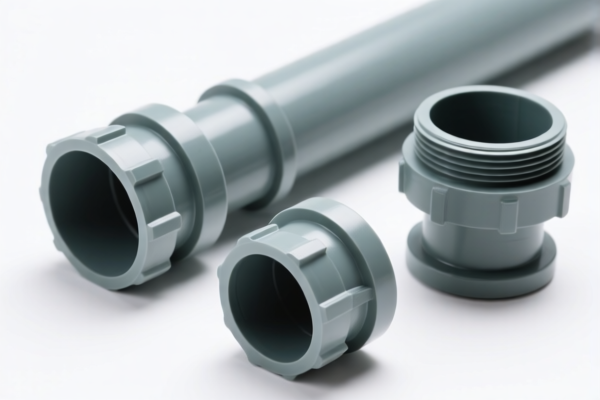

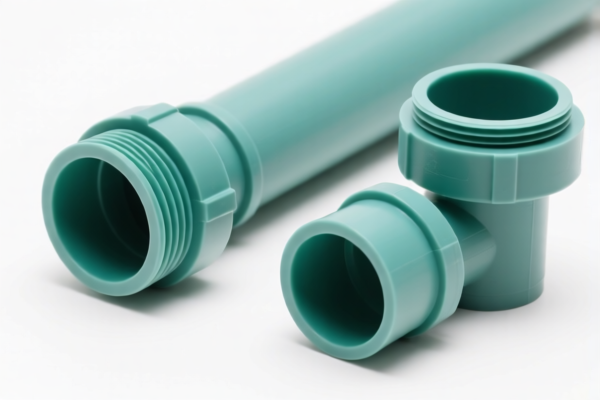
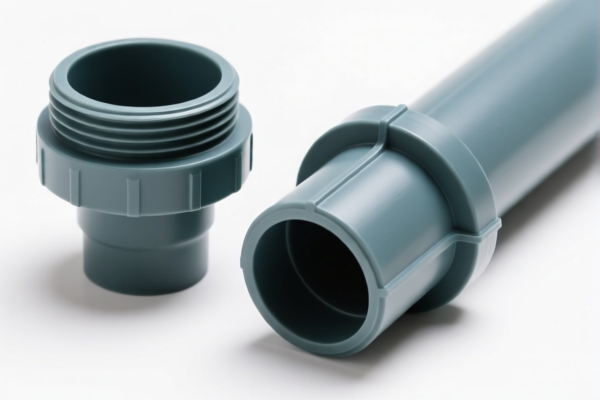
AI Analysis
🚰 PVC Drainage Pipe Fittings
🌐 HS Code Reference & Customs Clearance Guide | 2026 Latest Tariff Analysis | Professional Entry Strategy
📌 Part I: Product Definition & Classification: What exactly are "PVC Drainage Pipe Fittings"?
PVC Drainage Pipe Fittings are essential components in plumbing and industrial piping systems. They are used to connect, redirect, or control the flow of water, wastewater, or ventilation gases. In international trade, these items are typically classified under Chapter 39 (Plastics and Articles Thereof). However, precise classification depends on the specific HS Code used, which drastically alters the tax burden.
⚠️ Key Classification Distinction:
- Group A (3917): Classified explicitly as "Tubes, Pipes, and Hoses... and Fittings Thereof." These often incur higher tariffs (40.3%).
- Group B (3926): Classified as "Other Articles of Plastics." These often incur lower tariffs (22.8%) if viewed as general plastic accessories or electrical conduit fittings.
📦 Part II: HS Code Classification Details (2026 Latest Tariff Authority Comparison)
The following table maps the specific HS Codes from your dataset to their descriptions and tax implications.
| HS Code | Product Description | Summary from Data | Total Tax Rate | Tax Breakdown |
|---|---|---|---|---|
| 3917.40.00.60 | PVC Pipe Fittings, Material: PVC, Form: Pipe Accessories | PVC管材配件,材质为聚氯乙烯,形态为管道附件 | 40.3% | Base: 5.3%, Additional: 25.0%, Sec 301: 10% |
| 3926.90.99.89 | PVC Pipe Fittings, Material: PVC Plastic, Form: Other Plastic Articles | PVC管材配件,材质为PVC塑料,形态为塑料制其他制品 | 22.8% | Base: 5.3%, Additional: 7.5%, Sec 301: 10% |
| 3917.40.00.20 | PVC Pipe Fittings, Material: PVC, Form: Pipe Fittings | PVC管材配件,材质为聚氯乙烯,形态为管材配件 | 40.3% | Base: 5.3%, Additional: 25.0%, Sec 301: 10% |
| 3926.90.99.87 | PVC Pipe Fittings, Material: PVC Plastic, Form: Wire Conduit/Conduit Category Fittings | PVC管材配件,材质为PVC塑料,形态为电线导管/管子类别的配件 | 22.8% | Base: 5.3%, Additional: 7.5%, Sec 301: 10% |
| 3917.40.00.50 | PVC Drainage Pipe Joints, Material: PVC Plastic, Use: Drainage/Waste/Venting | PVC排水管接头,材质为PVC塑料,用途为排水/废水/通风管件 | 40.3% | Base: 5.3%, Additional: 25.0%, Sec 301: 10% |
🔍 Critical Insight:
- The 40.3% rate applies to items explicitly classified under 3917.40 (specifically subcodes .60, .20, .50). This suggests customs views these as primary "pipe fittings."
- The 22.8% rate applies to items classified under 3926.90 (subcodes .89, .87). This suggests customs views these as "other plastic articles" or specifically as "wire conduit fittings," which are taxed less heavily under current trade policies.
💰 Part III: 2026 Latest Tariff Rate Breakdown (Including Surcharges & Policy Add-ons)
✅ Applicable Country: United States (US)
✅ Country of Origin: China (CN)
✅ Effective Date: Current rates apply (includes Section 301 & IEEPA provisions)
🎯 1. High-Tariff Category: HS Code 3917.40 Series (.60, .20, .50)
Applies to: PVC Pipe Fittings, Drainage Joints, General Pipe Accessories
| Item | Detail |
|---|---|
| Base Tariff Rate | 5.3% (Standard MFN) |
| Section 301 Additional Tariff | +25.0% |
| IEEPA / Section 301 Add-on | +10.0% (Specific clause referenced as "122条款" in data) |
| Total Tax Rate | 40.3% |
| Tax Calculation Basis | CIF Value × 40.3% |
| De Minimis Exemption | ❌ Not Applicable (High value goods rarely qualify, and Section 301 taxes often negate small shipment exemptions) |
| Legal Basis Path | HTSUS:3917.40 → Section 301: Footnote 9903.88.01 → IEEPA: 10% Add-on |
📌 Explanation:
- The 25% is the standard Section 301 duty on many plastic products from China.
- The 10% is an additional surcharge (referred to as "122 Clause" in your data, likely referencing specific trade enforcement actions or IEEPA provisions).
- Total Cost Impact: For every $1,000 of goods, you pay $403 in duties alone.
🎯 2. Low-Tariff Category: HS Code 3926.90 Series (.89, .87)
Applies to: Other Plastic Articles, Wire Conduit Fittings
| Item | Detail |
|---|---|
| Base Tariff Rate | 5.3% (Standard MFN) |
| Section 301 Additional Tariff | +7.5% (Reduced rate for specific subheadings or negotiated adjustments) |
| IEEPA / Section 301 Add-on | +10.0% |
| Total Tax Rate | 22.8% |
| Tax Calculation Basis | CIF Value × 22.8% |
| De Minimis Exemption | ❌ Not Applicable (Generally same rules apply) |
| Legal Basis Path | HTSUS:3926.90 → Section 301: Reduced Footnote → IEEPA: 10% Add-on |
📌 Note:
- The 7.5% additional tariff is significantly lower than the 25% applied to the 3917 series. This makes 3926.90 a highly attractive classification if the product fits the description (e.g., "Wire Conduit" or "Other Plastic Articles").
- Savings: Compared to the 40.3% rate, this saves 17.5% of the CIF value in duties.
🛠️ Part IV: Customs Clearance Operational Advice (Practical Pitfall Avoidance)
✅ 1. Documentation Checklist (Non-Negotiable)
| Document | Required? | Explanation |
|---|---|---|
| ✅ Product Specification Sheet | ✔️ | Must specify: Material (PVC/U PVC), Shape, Function (Drainage vs. Electrical Conduit), Dimensions. |
| ✅ Product Photos | ✔️ | Clear images of the fitting, including any branding or model numbers. Show the connection type (Solvent weld, Threaded, Slip-fit). |
| ✅ Commercial Invoice | ✔️ | Must clearly state the HS Code. Discrepancies here lead to audits. |
| ✅ Packing List | ✔️ | Weight and dimensions are critical for CIF calculation. |
| ✅ Bill of Lading/Air Waybill | ✔️ | Standard shipping document. |
| ✅ Country of Origin Certificate | ✔️ | Essential for confirming CN origin and applying correct Section 301 rates. |
✅ 2. Classification Strategy & Declaration Tips
🔥 Golden Rule: "Function Defines Code, Code Defines Cost!"
| Scenario | Recommended HS Code | Tax Rate | Risk Level |
|---|---|---|---|
| Standard Drainage Joints (Used for water/waste/vent) | 3917.40.00.50 |
40.3% | 🟢 High Accuracy – Matches description "Drainage Pipe Fittings" perfectly. |
| General Pipe Accessories (Generic PVC connectors) | 3917.40.00.60 or .20 |
40.3% | 🟢 High Accuracy – Broad "Pipe Fittings" category. |
| Electrical Wire Conduit Fittings (Used for electrical wires) | 3926.90.99.87 |
22.8% | 🟡 Strategic – If the fitting is used for electrical conduit, this is the optimal code. Do not use if it's for water. |
| Miscellaneous Plastic Plastic Parts (Not strictly pipes/conduits) | 3926.90.99.89 |
22.8% | 🟡 Strategic – Use only if the item is not primarily a "pipe fitting" but a general plastic article. |
⚠️ Warning:
- Do NOT misdeclare a water drainage fitting as a "wire conduit" to get the 22.8% rate. If customs inspects and finds it's for plumbing, you face fines, penalties, and back taxes.
- Do NOT split a shipment of drainage fittings into different HS codes to average the tax. Each item must be classified according to its actual use and design.
✅ 3. Special Case Handling
| Situation | Recommendation |
|---|---|
| Mixed Shipment | If you have both drainage fittings (3917) and electrical conduit fittings (3926), separate them on the invoice and declare with their respective HS codes. |
| Customs Audit Trigger | If using 3926.90.99.87 (22.8%), be prepared to prove the fitting is used for electrical wiring (e.g., provide photos of the wire running through it). |
| Volume Discounts | For large shipments, consider applying for a Section 301 Exclusion (if available for the specific HS code), though availability changes frequently. |
🌍 Part V: Global Market Comparison (2026 Context)
| Market | Recommended HS Code | Est. Total Duty | Notes |
|---|---|---|---|
| 🇺🇸 USA | 3917.40 or 3926.90 |
22.8% – 40.3% | High tariffs due to Section 301 & IEEPA. |
| 🇨🇳 China (Import) | 3917.40 |
~5-10% | Lower baseline tariffs, no US-style add-ons. |
| 🇪🇺 EU | 3917.40 |
~4-6% | No Section 301 equivalents. Standard EU tariff. |
| 🇨🇦 Canada | 3917.40 |
~5% | USMCA may apply if originating in North America. |
| 🇦🇺 Australia | 3917.40 |
~5% | Standard tariff, no major anti-dumping duties on PVC fittings. |
📌 Conclusion:
The US market is the most expensive for importing PVC pipe fittings from China due to the layered tariffs (Base + 25% + 10%).
- If you are exporting to the US, accurate classification is your best tool for cost optimization.
- If the fittings can legitimately be classified as Electrical Conduit Fittings, use 3926.90.99.87 to save 17.5% in duties.
- If they are purely for Water/Drainage, you must accept the 40.3% rate under 3917.40.
📌 Part VI: Common Mistakes & Pitfalls (Blood & Tears Lessons)
❌ Mistake 1: Using "PVC Pipe Fittings" as a generic description on the invoice.
👉 Consequence: Customs may assign their own HS code, potentially leading to the highest applicable rate (40.3%) or delays.
✅ Fix: Be specific: "PVC Drainage Pipe Joint, Solvent Weld, 2-inch, for Waste Water" or "PVC Electrical Conduit Coupling, Schedule 40."
❌ Mistake 2: Trying to classify Drainage Fittings as "Other Plastic Articles" (3926) to save tax.
👉 Consequence: Customs inspection reveals the product's primary use is drainage. Penalties for misclassification apply.
✅ Fix: Only use 3926 if the product is genuinely used for electrical conduits or is not primarily a pipe component.
❌ Mistake 3: Ignoring the "122 Clause" (10% IEEPA Add-on).
👉 Consequence: Budgeting only for the 25% Section 301 tax, leaving you short by 10%.
✅ Fix: Always calculate Total Tax = Base + Section 301 + IEEPA (10%).
🎯 Part VII: Conclusion: Professional Classification, Cost Savings, Efficient Clearance!
🎯 Remember the Mantra:
🔹 "Drainage is 40.3%, Conduit is 22.8%."
🔹 "Don't guess the HS Code, know the product's true use."
🔹 "10% IEEPA tax is unavoidable for China-origin PVC in the US."
📌 Pro Tip:
If you are a frequent importer, consider Advance Rulings from US Customs and Border Protection (CBP). Submit photos and specifications of your specific fittings to get a binding decision on whether they fall under 3917.40 (40.3%) or 3926.90 (22.8%). This provides legal certainty and protects you from retroactive penalties.
📣 Immediate Action:
📞 Contact your customs broker with clear product photos and use-case descriptions.
🚀 Optimize your HS Code selection to ensure compliance and minimize your tax burden within legal boundaries.
✨ Professional Clearance Starts with Precise Classification!
💼 Every percentage point of duty counts towards your profit margin!
Customer Reviews
About HS Code Classification
The Harmonized System (HS) is an internationally standardized nomenclature developed by the World Customs Organization (WCO) to classify traded products. Over 200 countries use the HS system as the basis for customs tariffs, trade statistics, and import/export regulations.
Each HS code follows a hierarchical structure:
- Chapter (2 digits) — Broad category of goods (e.g., Chapter 84: Machinery and Mechanical Appliances)
- Heading (4 digits) — More specific grouping within the chapter
- Subheading (6 digits) — Internationally standardized breakdown, used by all WCO member countries
- National subdivisions (8-10 digits) — Country-specific extensions for further classification, such as US HTSUS 10-digit codes
Correct HS code classification is essential for smooth customs clearance, accurate duty payment, and compliance with trade regulations. Misclassification can lead to customs delays, overpayment of duties, or penalties.
When importing from CN to US, the applicable tariff rates may include:
- Most-Favored-Nation (MFN) rate — The standard duty rate applied to WTO members
- General rate — Applied to countries without trade agreements
- Trade remedy duties — Additional tariffs such as Section 301 (anti-dumping), Section 232 (national security), or countervailing duties
The information provided on this page is for reference purposes only. For official classification, please consult with your local customs authority or a licensed customs broker.