PVC Edge Banding Strip
CN → US| HS Code | Tariff Rate | Origin | Destination | Doc |
|---|---|---|---|---|
| 3925900000 | 40.3% | CN | US | Official Doc |
| 3916200091 | 40.8% | CN | US | Official Doc |
| 3916200020 | 40.8% | CN | US | Official Doc |
| 3925200091 | 22.8% | CN | US | Official Doc |
| 3926904590 | 38.5% | CN | US | Official Doc |
Product Images
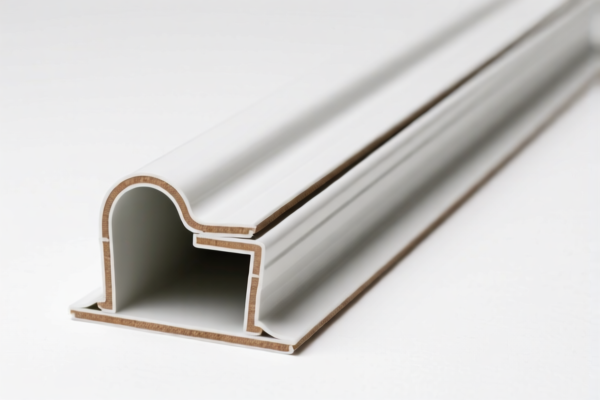
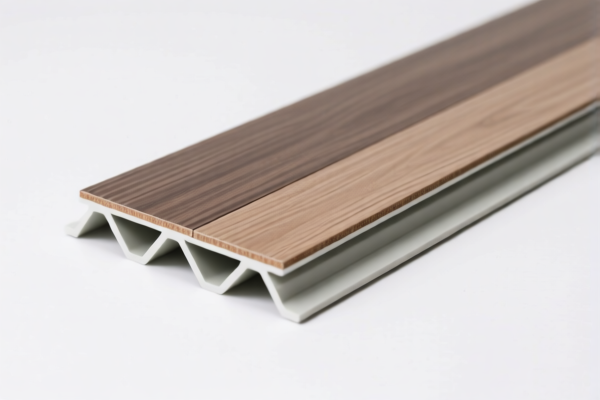
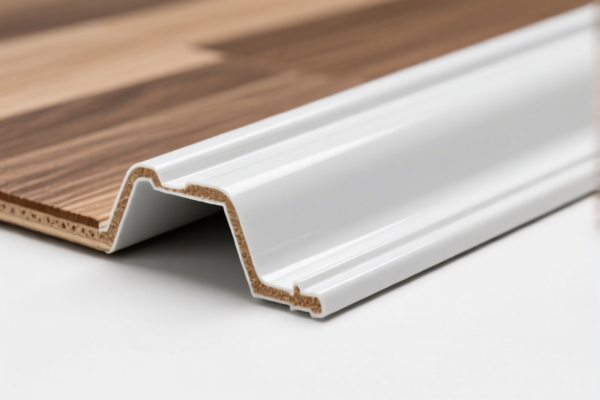

AI Analysis
📦 PVC Edge Banding Strip: HS Code Classification & 2026 US Customs Clearance Guide
🌐 HS Code Reference & Customs Clearance Strategy | 2026 Latest Tariff Analysis | Professional Compliance Guide
📌 I. Product Definition & Classification: Do You Really Know "PVC Edge Banding Strip"?
PVC Edge Banding Strips are specialized decorative and protective profiles used in furniture manufacturing, cabinetry, and interior decoration. They are applied to the exposed edges of wood-based panels (like particleboard, MDF, or plywood) to improve aesthetics, seal moisture, and prevent formaldehyde emissions.
In international trade, these strips are primarily classified under Chapter 39 (Plastics and Articles Thereof). However, the specific HS Code depends heavily on the morphology (shape/form) and specific application characteristics of the product.
⚠️ Key Distinction Point:
- If classified as a "Building Construction Component" →归入 3925.90.00.00
- If classified as a "Plastic Profile/Extrusion" →归入 3916.20.00.91 / 3916.20.00.20
- If classified as a "Decorative/Finishing Strip for Construction" →归入 3925.20.00.91
- If classified as a "Film/Sheet Product" (less common for rigid strips) →归入 3926.90.45.90
📋 II. HS Code Classification Details (2026 Latest Tariff Authority Comparison)
The following table details the five possible HS Codes provided in the data, explaining why each applies and its associated tax burden.
| HS Code | Product Description & Rationale | Applicable Scenario | Total Tax Rate |
|---|---|---|---|
3925.90.00.00 |
PVC Wall Edge Banding Strip: Material PVC, Form: Edge Banding Strip, Classified as Plastic Building Component. | General use as a construction/decoration component. | 40.3% |
3916.20.00.91 |
PVC Wall Edge Banding Strip: Material: Vinyl Polymer, Form: Profile-like, Fits characteristics of "Other Articles". | Classified strictly as a Plastic Profile/Extrusion under Chapter 39, Note 2. | 40.8% |
3916.20.00.20 |
PVC Wall Edge Banding Strip: Material: PVC, Form: Profile-like, Meets requirements for Plastic Profiles. | Fits the technical definition of "Plastic Profiles" (simplified extruded shapes). | 40.8% |
3925.20.00.91 |
PVC Wall Edge Banding Strip: Material: PVC, Form: Decorative/Finishing Strip within Building Components. | Specific sub-category for decorative finishes in construction. | 22.8% |
3926.90.45.90 |
PVC Sealing Film: Material PVC, Form: Film/Sheet Product, Classified as Other Plastic Articles. | Note: This code is for "Films/Sheets", not rigid strips. Use only if product is flexible film-like. | 38.5% |
🔍 Important Reminder:
- Codes3916.20.00.91and3916.20.00.20both carry a 40.8% total tax rate. They are technically "Profile" classifications. If the strip is rigid and extruded, this is the most technically accurate "material" classification.
- Code3925.20.00.91offers the lowest tax rate (22.8%). It requires proving the item is a "decorative/finishing strip" specifically for building components.
- Code3926.90.45.90is for "Other Plastic Articles" like films. Avoid this for rigid edge banding strips unless explicitly defined as a flexible sealing film.
💰 III. 2026 Latest Tariff Rate Breakdown (Including Surtaxes & Policy Add-ons)
✅ Applicable Country: United States (US)
✅ Country of Origin: China (CN)
✅ Effective Date: Current tariffs apply (including Section 301 & IEEPA surcharges)
🎯 1. 3925.90.00.00 – Plastic Building Components (General)
| Item | Content |
|---|---|
| Base Tariff | 5.3% (ad valorem) |
| Section 301 Surtax | +25.0% (Standard USITC Footnote) |
| IEEPA Surtax | +10.0% (Targeted Chinese Products) |
| Total Tax Rate | 40.3% |
| Tax Calculation | CIF Value × 40.3% |
| De Minimis Eligible? | ❌ No (High risk of seizure if undervalued) |
| Legal Basis Path | USITC:3925.90.00.00 → SECTION301:9903.88.01 → IEEPA:9903.01.24 |
📌 Explanation:
- 5.3% Base: Standard MFN rate for plastic building materials.
- 25% Section 301: Retaliatory tariff on Chinese plastic goods.
- 10% IEEPA: Additional surcharge under International Emergency Economic Powers Act.
- Total: 40.3%. This is a high tariff bracket. Cost planning must include this fully.
🎯 2. 3916.20.00.91 & 3916.20.00.20 – Plastic Profiles/Articles
| Item | Content |
|---|---|
| Base Tariff | 5.8% (ad valorem) |
| Section 301 Surtax | +25.0% |
| IEEPA Surtax | +10.0% |
| Total Tax Rate | 40.8% |
| Tax Calculation | CIF Value × 40.8% |
| De Minimis Eligible? | ❌ No |
| Legal Basis Path | USITC:3916.20.00.91 → SECTION301:9903.88.01 → IEEPA:9903.01.24 |
📌 Note:
- These two codes are technically very similar (Profiles vs. Other Articles). The slight difference in base rate (5.8% vs 5.3%) results in a 40.8% total vs 40.3%.
- Both are subject to the same surcharges.
- Why 40.8%? Higher base rate for profiles, but same punitive taxes.
🎯 3. 3925.20.00.91 – Decorative/Finishing Building Components (Optimal Rate?)
| Item | Content |
|---|---|
| Base Tariff | 5.3% (ad valorem) |
| Section 301 Surtax | +7.5% (Reduced Surtax?) |
| IEEPA Surtax | +10.0% |
| Total Tax Rate | 22.8% |
| Tax Calculation | CIF Value × 22.8% |
| De Minimis Eligible? | ❌ No |
| Legal Basis Path | USITC:3925.20.00.91 → SECTION301:Reduced → IEEPA:9903.01.24 |
📌 Critical Analysis:
- This code offers a significantly lower total tax rate of 22.8% compared to 40.3%-40.8%.
- Why the difference? The Section 301 surtax appears reduced to 7.5% for this specific sub-category (Decorative/Finishing), whereas general building components or profiles face the full 25%.
- Strategy: If your product can be legitimately described as a "Decorative/Finishing Strip" rather than a generic "Building Component" or "Profile," this is the most cost-effective classification.
- Risk: Requires strong documentation to prove it is a "finishing strip" and not a structural "profile."
🎯 4. 3926.90.45.90 – Other Plastic Articles (Films)
| Item | Content |
|---|---|
| Base Tariff | 3.5% (ad valorem) |
| Section 301 Surtax | +25.0% |
| IEEPA Surtax | +10.0% |
| Total Tax Rate | 38.5% |
| Tax Calculation | CIF Value × 38.5% |
| De Minimis Eligible? | ❌ No |
📌 Warning:
- This rate (38.5%) is not the lowest.
- More importantly, HS Code 3926 is for "Other Articles." If you import rigid edge banding strips, declaring them as "Films" under 3926 is a classification error that can lead to customs audits, fines, or rejection.
- Only use if the product is genuinely a flexible PVC sealing film, not a rigid strip.
🛠️ IV. Customs Clearance Practical Advice (Field Risk Avoidance Guide)
✅ 1. Document Checklist (Indispensable)
| Document | Mandatory? | Explanation |
|---|---|---|
| ✅ Product Specification Sheet | ✔️ | Must detail: Material (100% PVC or composite), Dimensions (mm), Shape (U-shaped, J-shaped, etc.). |
| ✅ Product Photos (Clear) | ✔️ | Show the strip's cross-section to prove it is a Profile or Strip, not a raw material or film. |
| ✅ Commercial Invoice | ✔️ | Clearly state: "PVC Edge Banding Strip for Furniture/Cabinetry." Avoid vague terms like "Plastic Sheet." |
| ✅ Bill of Lading (B/L) | ✔️ | Ensure description matches invoice. |
| ✅ Certificate of Origin (CO) | ✔️ | Essential for proving Chinese origin to apply correct surcharges. |
| ✅ Third-Party Test Report | ❓ | Optional but helpful. Proves material composition if asked. |
✅ 2. Declaration Tips (Key Mnemonics)
🔥 "Shape Determines Code, Description Matters, Tax Rate Varies!"
| Situation | Correct Declaration | Wrong Practice |
|---|---|---|
| Rigid PVC Strip (Standard) | Use 3925.20.00.91 (if decorative) or 3916.20.00.91 (if profile). |
Declare as "Plastic Sheet" → 3926 (High risk of misclassification). |
| Flexible PVC Film | Use 3926.90.45.90. |
Declare as "Strip" → Misleading. |
| Mixed Container (Strip + Accessories) | Declare Strip as primary item. | Separate small accessories with wrong HS Codes → Audit risk. |
| "Building Component" vs "Profile" | If it has a complex cross-section (e.g., U-channel), use Profile (3916). If it is a flat decorative trim, use 3925. |
Generic "Plastic Part" → Ambiguous, leads to higher scrutiny. |
✅ 3. Special Circumstances Handling
| Situation | Handling Advice |
|---|---|
| OEM Custom Shapes | Provide CAD drawings showing the cross-section. If it resembles a standard profile, 3916 is safer. If it's a decorative trim, argue for 3925.20. |
| Colored vs. Natural | Color does not change HS Code. Ensure invoice mentions "Pigmented PVC" if relevant for chemical classification. |
| With Adhesive Backing | If the strip has pre-applied adhesive, it is still a "Plastic Article/Strip." Do not classify as "Adhesive" (Chapter 35). |
| Low-Value Shipments | No De Minimis exemption. All shipments are subject to full 22.8%-40.8% tariffs. Plan logistics accordingly. |
🌍 V. Global Main Market Clearance Comparison (2026 Latest)
| Country/Region | Recommended HS Code | Estimated Tariff | Certification Requirements | Notes |
|---|---|---|---|---|
| 🇺🇸 USA | 3925.20.00.91 (Best Rate) |
22.8% | No specific FDA/UL needed for PVC strips | Highest Risk: High surtaxes. Precise classification is key. |
| 🇨🇳 China | 3925.90.00.00 |
~5-7% | CCC (if applicable) | No surtaxes. Standard import. |
| 🇪🇺 EU | 3925.90.00.00 |
0-6.5% | REACH (Chemical Compliance) | PVC must meet REACH SVHC limits. |
| 🇬🇧 UK | 3925.90.00.00 |
0-6.5% | UKCA (if applicable) | Post-Brexit rules similar to EU. |
| 🇦🇺 Australia | 3925.90.00.00 |
5% | None | Low risk. |
📌 Conclusion:
- USA is the most complex market due to Section 301 and IEEPA surcharges.
- Strategic Recommendation: For US imports, strive to classify under3925.20.00.91(22.8%) rather than3916(40.8%) or3925.90(40.3%). This requires strong product description support as a "Decorative Finishing Strip."
📌 VI. Common Mistakes & Pitfalls (Lessons Learned)
❌ Mistake 1: Classifying rigid PVC edge banding as "Plastic Sheet" (3920) or "Other Articles" (3926) without justification.
👉 Consequence: Customs may reclassify to 3916 or 3925 with higher penalties, or reject the entry.
❌ Mistake 2: Ignoring the Section 301 Surcharge.
👉 Consequence: Underpaying tax. The 25% surtax is mandatory for Chinese-origin plastic profiles/components.
❌ Mistake 3: Not distinguishing between Profile and Decorative Strip.
👉 Consequence: Using 3916 (40.8%) when 3925.20 (22.8%) is applicable leads to 18% unnecessary cost increase.
✅ Correct Practice:
"PVC Edge Banding Strip, U-Profile, 20mm x 2mm, For Cabinet Edges, Color: White, Material: 100% PVC, HS Code: 3925.20.00.91"
🎯 VII. Conclusion: Professional Classification, Cost Optimization!
🎯 Remember the Golden Rule:
🔹 "Strip vs. Profile: Choose 'Decorative' for Lower Tax (22.8%)"
🔹 "Profile is Safer but Costlier (40.8%)"
🔹 "Never Use 3926 for Rigid Strips!"🔹 "US Tariffs are High: Plan for 22.8% - 40.8%."
📌 Tips:
- If your edge banding has a complex cross-section (e.g., with grooves for glue retention), it may be argued as a Profile (3916) for technical accuracy, but 3925.20 is still preferred for cost if it serves a decorative purpose.
- Consult a Customs Broker: Before shipping large volumes, request a Pre-Ruling or broker opinion to confirm the applicability of 3925.20.00.91.
📣 Immediate Action:
📞 Engage a licensed US Customs Broker.
📝 Prepare detailed product specs and photos.
🚀 Optimize your HS Code to3925.20.00.91to save ~18% in tariffs.
✨ Professional Clearance Starts with Precise Classification!
💼 Every percentage point matters in high-tariff trades!
Customer Reviews
About HS Code Classification
The Harmonized System (HS) is an internationally standardized nomenclature developed by the World Customs Organization (WCO) to classify traded products. Over 200 countries use the HS system as the basis for customs tariffs, trade statistics, and import/export regulations.
Each HS code follows a hierarchical structure:
- Chapter (2 digits) — Broad category of goods (e.g., Chapter 84: Machinery and Mechanical Appliances)
- Heading (4 digits) — More specific grouping within the chapter
- Subheading (6 digits) — Internationally standardized breakdown, used by all WCO member countries
- National subdivisions (8-10 digits) — Country-specific extensions for further classification, such as US HTSUS 10-digit codes
Correct HS code classification is essential for smooth customs clearance, accurate duty payment, and compliance with trade regulations. Misclassification can lead to customs delays, overpayment of duties, or penalties.
When importing from CN to US, the applicable tariff rates may include:
- Most-Favored-Nation (MFN) rate — The standard duty rate applied to WTO members
- General rate — Applied to countries without trade agreements
- Trade remedy duties — Additional tariffs such as Section 301 (anti-dumping), Section 232 (national security), or countervailing duties
The information provided on this page is for reference purposes only. For official classification, please consult with your local customs authority or a licensed customs broker.