PVC Edge Strip
CN → US| HS Code | Tariff Rate | Origin | Destination | Doc |
|---|---|---|---|---|
| 3925900000 | 40.3% | CN | US | Official Doc |
| 3916200091 | 40.8% | CN | US | Official Doc |
| 3916200020 | 40.8% | CN | US | Official Doc |
| 3925200091 | 22.8% | CN | US | Official Doc |
| 3926904590 | 38.5% | CN | US | Official Doc |
Product Images


AI Analysis
🧱 PVC Edge Strip (PVC Wall Panel Edging/Trim)
🌐 HS Code Reference & Customs Clearance Guide | 2026 Latest Tariff Analysis | Professional Customs Strategy
📌 I. Product Definition & Classification: Do You Really Know "PVC Edge Strip"?
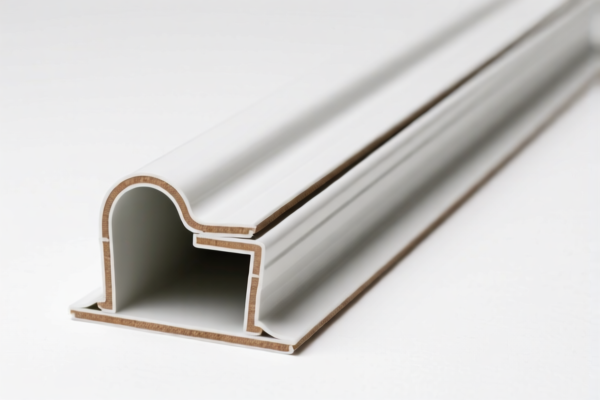
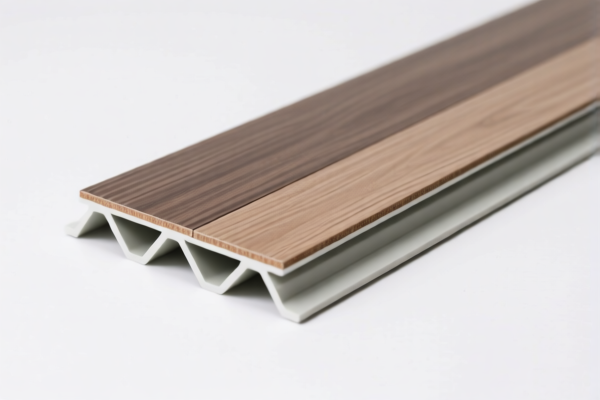
PVC Edge Strip, also known as PVC wall panel edging, finishing strip, or trim, is a critical accessory in interior decoration and construction. It is primarily used to cover the exposed edges of PVC wall panels, wood-based panels, or other building materials, providing a neat finish, protection against moisture, and aesthetic appeal.
In international trade, the classification depends heavily on its material composition, physical form (strip vs. profile), and intended use (building component vs. plastic profile). The following data strictly reflects the provided dataset for US imports (China-origin).
⚠️ Key Distinction Point:
- If viewed as a Building Component/Trim (attached to walls/panels) → Potential HS Codes 3925.90 or 3925.20;
- If viewed as a Plastic Profile/Extrusion (general plastic product) → Potential HS Codes 3916.20;
- If viewed as a Thin Film/Sheet-like product → Potential HS Code 3926.90.
📦 II. HS Code Classification Details (2026 Latest Tariff Authority Comparison)
Based on the provided data, here are the specific classifications for PVC Edge Strips, their descriptions, and the resulting tax liabilities.
| HS Code | Product Description | Application Scenario | Key Classification Logic |
|---|---|---|---|
3925.90.00.00 |
PVC Wall Edge Strip, Material: PVC (Plastic), Form: Edge Strip, Classified as Building Component | Wall panel finishing, interior decoration trims | Classified under Building Materials (Plastic products for building purposes) |
3916.20.00.91 |
PVC Wall Edge Strip, Material: Vinyl Polymer, Form: Profile, Fits Other Category Characteristics | General plastic profiles, extruded strips | Classified as Plastic Profiles/Extrusions (Not specifically for building) |
3916.20.00.20 |
PVC Wall Edge Strip, Material: PVC, Form: Profile, Meets Plastic Profile Requirements | Standard PVC profiles, rigid extrusions | Classified as Plastic Profiles/Extrusions (Vinyl polymer) |
3925.20.00.91 |
PVC Wall Edge Strip, Material: PVC, Form: Decorative/Edge Strip Category | Decorative building elements, specific trims | Classified under Building Materials (Specific sub-category for decor/trims) |
3926.90.45.90 |
PVC Sealing Film/Strip, Material: PVC, Form: Film/Sheet-like, Other Plastic Goods | Thin sealing films, sheet-like PVC products | Classified as Other Plastic Articles (Film/Sheet form) |
🔍 Critical Reminder:
- 3925 Series: Focuses on "Building Installations" (e.g., 3925.20 for other builders' joinery/carpentry; 3925.90 for other). If the edge strip is marketed specifically as a wall trim or building finishing accessory, this category is often preferred for lower tariffs (see below).
- 3916 Series: Focuses on "Plastic Profiles". If declared simply as "PVC Profiles" without emphasizing its building trim function, it may fall here, which carries a higher tariff.
- 3926 Series: Focuses on "Other Plastic Articles". Only applies if the product is essentially a thin film or sheet rather than a rigid strip/profile.
💰 III. 2026 Latest Tariff Rate Breakdown (Including Surtaxes & Policy Surcharges)
✅ Applicable Country: United States (US)
✅ Origin: China (CN)
✅ Effective Date: Includes current and subsequent imports (subject to ongoing trade policies)
🎯 1. 3925.90.00.00 — PVC Wall Edge Strip (Building Component)
| Item | Content |
|---|---|
| Base Tariff | 5.3% |
| USITC Surtax (Section 301) | +25.0% |
| Section 122 Tariff | +10.0% |
| Total Effective Tax Rate | 40.3% |
| Tax Calculation | CIF Value × 40.3% |
| De Minimis Eligibility | ❌ No (High risk of seizure/audit if shipped via informal entry) |
| Legal Basis Path | USITC:3925.90.00.00 → USITC Footnote: Section 301 → Section 122 |
📌 Explanation:
- This code treats the edge strip as a building installation component.
- Despite being a building material, it is not exempt from US-China trade surcharges.
- Total 40.3% includes the standard base duty plus heavy political surtaxes.
🎯 2. 3916.20.00.91 & 3916.20.00.20 — PVC Profiles (Plastic Extrusions)
| Item | Content |
|---|---|
| Base Tariff | 5.8% |
| USITC Surtax (Section 301) | +25.0% |
| Section 122 Tariff | +10.0% |
| Total Effective Tax Rate | 40.8% |
| Tax Calculation | CIF Value × 40.8% |
| De Minimis Eligibility | ❌ No |
| Legal Basis Path | USITC:3916.20.00.x → USITC Footnote: Section 301 → Section 122 |
📌 Note:
- These two codes are nearly identical in tax treatment.
- They classify the product as a generic plastic profile rather than a building trim.
- The rate is 0.5% higher than3925.90due to a slightly higher base tariff (5.8% vs 5.3%).
- Risk: If Customs determines the product is clearly for wall finishing, they may reassess to3925, but if declared as profiles,3916is accepted. However, 40.8% is the worst-case scenario.
🎯 3. 3925.20.00.91 — PVC Decorative/Edge Strip (Building Material)
| Item | Content |
|---|---|
| Base Tariff | 5.3% |
| USITC Surtax (Section 301) | +7.5% |
| Section 122 Tariff | +10.0% |
| Total Effective Tax Rate | 22.8% |
| Tax Calculation | CIF Value × 22.8% |
| De Minimis Eligibility | ❌ No |
| Legal Basis Path | USITC:3925.20.00.91 → USITC Footnote: Section 301 (Reduced?) → Section 122 |
📌 Explanation:
- This is the MOST COST-EFFICIENT classification in the dataset.
- It classifies the strip as a decorative building element under3925.20.
- The Section 301 surtax is only 7.5% (likely due to specific exclusions or category definitions for certain building trims), compared to the standard 25%.
- Total 22.8% is significantly lower than the 40%+ range.
- Crucial: To use this code, you must prove the product is a decorative trim for building use, not just a general plastic profile.
🎯 4. 3926.90.45.90 — PVC Sealing Film/Sheet (Other Plastic Articles)
| Item | Content |
|---|---|
| Base Tariff | 3.5% |
| USITC Surtax (Section 301) | +25.0% |
| Section 122 Tariff | +10.0% |
| Total Effective Tax Rate | 38.5% |
| Tax Calculation | CIF Value × 38.5% |
| De Minimis Eligibility | ❌ No |
| Legal Basis Path | USITC:3926.90.45.90 → USITC Footnote: Section 301 → Section 122 |
📌 Note:
- Only applies if the product is physically a thin film or sheet (flexible, not rigid profile).
- If your "edge strip" is a rigid PVC profile, do not use this code, as it will be deemed misclassification.
- Rate is 38.5%, slightly lower than3916but higher than3925.20.
🛠️ IV. Customs Clearance Practical Advice (Real-World Pitfall Guide)
✅ 1. Documentation Checklist (Mandatory)
| Document | Must Provide | Notes |
|---|---|---|
| ✅ Product Specifications | ✔️ | Include dimensions, thickness, rigidity, and primary use (e.g., "for covering PVC wall panel edges"). |
| ✅ Product Photos | ✔️ | Clear images showing the profile shape (L-shape, U-shape, etc.) and application on a wall panel. |
| ✅ Material Certificate | ✔️ | Confirm it is PVC (Polyvinyl Chloride). Avoid vague terms like "plastic." |
| ✅ Commercial Invoice | ✔️ | Describe item as "PVC Wall Panel Edge Trim" or "Decorative PVC Building Trim". Do NOT just write "Plastic Strip." |
| ✅ Packing List | ✔️ | Ensure weight and volume match the HS code classification. |
✅ 2. Declaration Tips (Key Mnemonics)
🔥 “Define Use, Not Just Form: Trim vs. Profile Decides the Price!”
| Scenario | Correct Declaration | Incorrect Declaration | Resulting Risk |
|---|---|---|---|
| Rigid PVC Strip for Walls | 3925.20.00.91 (Decorative Trim) |
"PVC Profile" or "Plastic Extrusion" | High Tax (40.8%) due to misclassification |
| Thin PVC Sealing Tape | 3926.90.45.90 (Film/Sheet) |
"PVC Profile" | Risk of rejection if not film-like |
| General PVC Rod/Bar | 3916.20.00.20 (Profile) |
"Wall Trim" | Correct for profiles, but not for trims |
| Unspecified "PVC Strip" | 3925.90.00.00 (Building Component) |
Vague description | Medium-High Tax (40.3%) |
📌 Strategy:
- To achieve the 22.8% rate via3925.20.00.91, your documentation MUST emphasize:
- Use: "For decorating/finishing walls"
- Feature: "Decorative trim," "Edge finishing"
- Context: "Installed on PVC wall panels"
- If you declare it as a "PVC Profile" (3916), you pay 40.8%.
- If you declare it as a general "Building Component" (3925.90), you pay 40.3%.
✅ 3. Special Circumstances Handling
| Situation | Handling Advice |
|---|---|
| Mixed Shipments | If shipping with other building materials, ensure PVC edge strips are clearly separated on the invoice to claim 3925.20 if eligible. |
| Customs Audit | Provide installation manuals or photos of installed products to prove it is a trim/finish and not a structural profile. |
| Section 122 Tariff | Note that the 10% Section 122 tariff applies to ALL these codes. This is a non-negotiable surtax on Chinese plastic goods in many cases. |
| De Minimis (Section 321) | Do NOT attempt to ship these via de minimis (under $800) as they are subject to high tariffs and anti-dumping scrutiny. Formal entry is required. |
🌍 V. Global Market Comparison (2026 Latest)
| Country/Region | Recommended HS Code | Estimated Tariff | Certification | Notes |
|---|---|---|---|---|
| 🇺🇸 USA | 3925.20.00.91 |
22.8% | N/A | Best rate if declared as trim. 3916 is 40.8%. |
| 🇨🇳 China | 3925.20.00.91 |
~5% | CCC (if applicable) | Low tariff for imports into China. |
| 🇪🇺 EU | 3925.20.00.91 |
0-6.5% | CE, REACH | No Section 301 surtax. |
| 🇬🇧 UK | 3925.20.00.91 |
0-6.5% | UKCA | Post-Brexit tariff applies. |
| 🇨🇦 Canada | 3925.20.00.91 |
0-5% | N/A | Preferential under CUSMA if Canadian origin. |
📌 Conclusion:
- The USA is the only major market with extraordinary surtaxes (Section 301 + Section 122).
- Classification Strategy is Critical: Choosing3925.20over3916saves ~18% in duty.
- Ensure product description matches the Building Trim intent to qualify for the lower rate.
📌 VI. Common Mistakes & Pitfall Guide (Lessons Learned)
❌ Mistake 1: Declaring PVC Edge Strip as "Plastic Profile" (3916)
👉 Consequence: Pays 40.8% instead of 22.8%.
👉 Fix: Use "PVC Decorative Wall Trim" in description and apply 3925.20.00.91.
❌ Mistake 2: Ignoring Section 122 Tariff
👉 Consequence: Underestimating total landed cost.
👉 Fix: Always add 10% to the calculation for Chinese-origin plastic goods.
❌ Mistake 3: Using "PVC Strip" without context
👉 Consequence: Customs may default to 3925.90 (40.3%) or 3916 (40.8%) due to ambiguity.
👉 Fix: Specify "Wall Panel Edge Finish" or "Decorative Trim".
❌ Mistake 4: Attempting De Minimis Entry
👉 Consequence: Package seized or returned due to tariff liability.
👉 Fix: Use formal customs entry for all PVC edge strips from China.
✅ Correct Declaration Example:
"PVC Decorative Wall Panel Edge Trim, Rigid Profile, 2.5mm Thickness, for Interior Wall Finishing, Brand: XYZ, HS Code: 3925.20.00.91"
🎯 VII. Conclusion: Professional Declaration Saves Money!
🎯 Remember the Key Points:
🔹 "Trim vs. Profile: One Word Changes the Tax by 18%!"
🔹 "Section 122 Always Applies: Add 10% to Your Cost!"
🔹 "Document the Use: Photos of Installed Trims Prove the Category!"
📌 Pro Tip:
- If your product is flexible (like a tape), consider 3926.90.45.90 (38.5%), but only if it is truly film-like.
- For rigid strips, aim for 3925.20.00.91 (22.8%) by emphasizing its decorative building function.
- Always verify with a licensed customs broker before shipment, as trade policies change frequently.
📣 Immediate Action:
📞 Contact Your Customs Broker: Provide photos and specify "Wall Trim" use.
📄 Update Invoice Description: Change "PVC Strip" to "PVC Decorative Wall Edge Trim."
🚀 Optimize Cost: Save 18% in duties by correct classification!
✨ Professional Clearance Starts with Precise Classification!
💼 Every Percent Saved is Pure Profit!
Customer Reviews
About HS Code Classification
The Harmonized System (HS) is an internationally standardized nomenclature developed by the World Customs Organization (WCO) to classify traded products. Over 200 countries use the HS system as the basis for customs tariffs, trade statistics, and import/export regulations.
Each HS code follows a hierarchical structure:
- Chapter (2 digits) — Broad category of goods (e.g., Chapter 84: Machinery and Mechanical Appliances)
- Heading (4 digits) — More specific grouping within the chapter
- Subheading (6 digits) — Internationally standardized breakdown, used by all WCO member countries
- National subdivisions (8-10 digits) — Country-specific extensions for further classification, such as US HTSUS 10-digit codes
Correct HS code classification is essential for smooth customs clearance, accurate duty payment, and compliance with trade regulations. Misclassification can lead to customs delays, overpayment of duties, or penalties.
When importing from CN to US, the applicable tariff rates may include:
- Most-Favored-Nation (MFN) rate — The standard duty rate applied to WTO members
- General rate — Applied to countries without trade agreements
- Trade remedy duties — Additional tariffs such as Section 301 (anti-dumping), Section 232 (national security), or countervailing duties
The information provided on this page is for reference purposes only. For official classification, please consult with your local customs authority or a licensed customs broker.