PVC Elastic Waterproof Water Stop Material
CN → US| HS Code | Tariff Rate | Origin | Destination | Doc |
|---|---|---|---|---|
| 3917220000 | 38.1% | CN | US | Official Doc |
| 3917390020 | 38.1% | CN | US | Official Doc |
| 3916200091 | 40.8% | CN | US | Official Doc |
| 3916200020 | 40.8% | CN | US | Official Doc |
| 3926904590 | 38.5% | CN | US | Official Doc |
Product Images
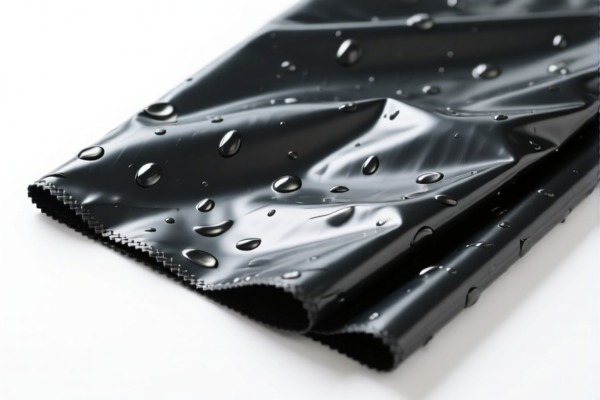



AI Analysis
🛡️ PVC Elastic Waterproof Water Stop Material (Sealing Strips)
🌐 HS Code Reference & Customs Clearance Guide | 2024-2025 Tariff Breakdown | Professional Classification Strategy
📌 One, Product Definition & Classification: What exactly is this product?
PVC Elastic Waterproof Water Stop Material (commonly referred to as PVC sealing strips, waterstops, or rubber-like seals) are critical components used in construction, plumbing, and industrial piping systems to prevent water leakage. In international trade, their classification depends heavily on their physical form and specific application structure.
The key distinction lies in whether the product is viewed as: 1. Pipe/Fitting Accessories: Elongated, tubular, or strip-like forms designed to attach to pipes (Group 3917). 2. Plastic Profiles/Single Strands: Solid plastic rods, bars, or strips that may not be strictly "pipe fittings" but are generic plastic forms (Group 3916). 3. General Plastic Parts: Finished sealing components that don't fit neatly into pipe or profile categories (Group 3926).
⚠️ Key Differentiator:
- If the product is explicitly described as a "tubular attachment" or "strip for pipes" → 3917.
- If it is a "solid profile," "rod," or "single strand" without explicit pipe-fitting function → 3916.
- If it is a generic "sealing part" or "gasket" not fitting the above → 3926.
📦 Two, HS Code Classification Details (Latest Tariff Rules)
| HS Code | Product Description | Form/Structure | Category Logic |
|---|---|---|---|
3917.22.00.00 |
PVC Elastic Sealing Strips (Pipe Attachments) | Strip form, specifically matched to pipe accessories | ✅ Best fit for dedicated pipe sealing strips |
3917.39.00.20 |
PVC Elastic Sealing Strips (Tubular Accessories) | Tubular accessory / Soft strip | ✅ Fits "Plastic pipes and tubes" category |
3916.20.00.91 |
PVC Sealing Strips (Other Plastic Profiles) | Plastic monofilament, rod, bar, or profile | ✅ Generic "Other" category for plastic shapes |
3916.20.00.20 |
PVC Sealing Strips (Profiles) | Strictly defined as profiles under 3916.20 | ✅ Fits "Plastic profiles" definition |
3926.90.45.90 |
PVC Elastic Sealing Strips (General Sealing Parts) | General sealing parts or gaskets | ✅ Fallback for generic plastic sealing components |
🔍 Critical Note:
- 3917 Codes are preferred if the product is clearly an accessory for pipes/tubes.
- 3916 Codes apply if the product is a raw profile or rod used to make seals.
- 3926 Code is the residual category for plastic articles not specified elsewhere.
- All codes above carry significant tariffs due to US-China trade policies.
💰 Three, 2024-2025 Latest Tariff Rate Breakdown (Including Surcharges & Policy Add-ons)
✅ Applicable Country: United States (US)
✅ Origin: China (CN)
✅ Effective Date: Current ongoing trade measures
🎯 1. 3917.22.00.00 & 3917.39.00.20 —— Pipe/Fitting Category
| Item | Details |
|---|---|
| Base Tariff Rate | 3.1% (ad valorem) |
| Section 301 Tariff | +25.0% (Trade Enforcement Tariff) |
| 122 Section Tariff | +10.0% (Specific punitive tariff on Chinese goods) |
| Total Effective Tariff | 38.1% |
| Tax Calculation | CIF Value × 38.1% |
| De Minimis Exemption | ❌ Not Eligible (High-risk category for 800/801 thresholds) |
| Legal Basis Path | Section 301 → 122 Section → USITC:3917.22.00.00 / 3917.39.00.20 |
📌 Explanation:
- The 3.1% base rate applies to plastic pipes, tubes, and hoses.
- The 25% is the standard Section 301 tariff on Chinese plastic products.
- The 10% is an additional layer of tariff under specific enforcement clauses (122 Section).
- Total: 38.1%. This is a high-cost entry.
🎯 2. 3916.20.00.91 & 3916.20.00.20 —— Plastic Profiles/Rods Category
| Item | Details |
|---|---|
| Base Tariff Rate | 5.8% (ad valorem) |
| Section 301 Tariff | +25.0% (Trade Enforcement Tariff) |
| 122 Section Tariff | +10.0% (Specific punitive tariff on Chinese goods) |
| Total Effective Tariff | 40.8% |
| Tax Calculation | CIF Value × 40.8% |
| De Minimis Exemption | ❌ Not Eligible |
| Legal Basis Path | Section 301 → 122 Section → USITC:3916.20.00.91 / 3916.20.00.20 |
📌 Explanation:
- These codes fall under "Plastic profiles" which often have a higher base duty (5.8%) than pipe accessories.
- The same 25% + 10% surcharges apply.
- Total: 40.8%. This is the highest tariff tier in this dataset. Avoid if possible by misclassification risks.
🎯 3. 3926.90.45.90 —— General Plastic Sealing Parts Category
| Item | Details |
|---|---|
| Base Tariff Rate | 3.5% (ad valorem) |
| Section 301 Tariff | +25.0% (Trade Enforcement Tariff) |
| 122 Section Tariff | +10.0% (Specific punitive tariff on Chinese goods) |
| Total Effective Tariff | 38.5% |
| Tax Calculation | CIF Value × 38.5% |
| De Minimis Exemption | ❌ Not Eligible |
| Legal Basis Path | Section 301 → 122 Section → USITC:3926.90.45.90 |
📌 Explanation:
- "Other plastic articles" often have a moderate base rate (3.5%).
- However, the 25% + 10% surcharges remain.
- Total: 38.5%. Slightly higher than 3917 but lower than 3916.
🛠️ Four, Customs Clearance Practical Advice (Battle-Tested Pitfall Guide)
✅ 1. Document Preparation Checklist (Essential)
| Document | Required | Purpose |
|---|---|---|
| ✅ Product Specifications | ✔️ | Must clarify: Form (strip/tube/profile), Material (100% PVC or alloy), Use (pipe seal, joint seal, etc.) |
| ✅ Photos (Clear & Detailed) | ✔️ | Show cross-section, length, and any packaging. Differentiate between "tube" and "solid profile". |
| ✅ Commercial Invoice | ✔️ | Must state: "PVC Elastic Sealing Strip, Material: PVC, Use: Waterproofing". Avoid vague terms like "Plastic Part". |
| ✅ Packing List | ✔️ | Confirm weight and dimensions. |
| ✅ Origin Certificate | ✔️ | Proves CN origin (triggers surcharges). |
📌 Critical Tip:
- Do NOT simply write "Plastic Seal".
- Be specific: "PVC Pipe Joint Sealing Strip" vs. "PVC Plastic Profile for Manufacturing".
✅ 2. Classification Strategy & Risk Mitigation
| Scenario | Recommended HS Code | Reasoning |
|---|---|---|
| Product is a hollow tube/strip for pipes | 3917.22.00.00 or 3917.39.00.20 |
Fits "Pipe Accessories" → Lower base rate (3.1%). Best Option. |
| Product is a solid rod/profile | 3916.20.00.20 |
Fits "Plastic Profiles" → Higher base rate (5.8%). Avoid if possible. |
| Product is a generic gasket/seal | 3926.90.45.90 |
Fallback option → Moderate base rate (3.5%). |
🔥 Golden Rule:
"Pipe Function = 3917 (38.1%)
"Solid Profile = 3916 (40.8%)
"General Part = 3926 (38.5%)"
Choose 3917 if your product can be described as a pipe accessory!
✅ 3. Special Case Handling
| Situation | Advice |
|---|---|
| Mixed Packaging (Pipes + Seals) | Declare separately! Do not bundle into one line item with a vague HS code. |
| OEM Custom Shapes | Provide drawings. If shape resembles a pipe fitting, argue for 3917. |
| Non-PVC Materials? | If material is rubber or other polymers, HS codes change completely. This guide is PVC-only. |
| De Minimis (800/801 Shipment) | ❌ Do Not Rely on De Minimis. High tariffs and scrutiny apply. Even small shipments will be taxed. |
🌍 Five, Global Market Comparison (2024-2025)
| Market | Recommended HS Code | Base Tariff | Surcharges | Total Effective Rate | Notes |
|---|---|---|---|---|---|
| 🇺🇸 USA | 3917.22.00.00 |
3.1% | +35% (25% + 10%) | 38.1% | High barriers. Plan margin accordingly. |
| 🇨🇳 China | 3917.22.00.00 |
5-10% | 0% | ~5-10% | Lower duty for domestic trade. |
| 🇪🇺 EU | 3917.29.00 |
6.5% | 0% | ~6.5% | No Section 301/122 equivalents. |
| 🇬🇧 UK | 3917.29.00 |
6.5% | 0% | ~6.5% | Post-Brexit trade terms apply. |
📌 Conclusion:
- The US market is the most expensive due to Section 301 + 122 Section tariffs.
- European and Asian markets are significantly more competitive on duty costs.
📌 Six, Common Mistakes & Pitfalls (Lessons Learned)
❌ Mistake 1: Classifying PVC Seals as "Rubber Products" (4016)
👉 Consequence: If it's PVC, it's 3917/3916. Wrong classification leads to penalties + back taxes.
❌ Mistake 2: Using "Plastic Profile" (3916) for a pipe seal
👉 Consequence: You pay 40.8% instead of 38.1%. Wasted margin.
❌ Mistake 3: Ignoring the "122 Section" Tariff
👉 Consequence: Many traders only account for Section 301 (25%). The 10% add-on pushes the total to 38.1% or 40.8%. Underquoting leads to seizure.
❌ Mistake 4: Assuming De Minimis applies
👉 Consequence: PVC products from China are high-risk. Customs will inspect and tax even small shipments.
✅ Correct Approach:
"PVC Elastic Sealing Strip for Pipe Joints, HS Code: 3917.22.00.00, Total Duty: 38.1%"
🎯 Seven, Conclusion: Professional Classification Saves Money
🎯 Remember the Rule:
🔹 "Pipe Accessory = 3917 (38.1%)
🔹 "Plastic Profile = 3916 (40.8%)
🔹 "Generic Seal = 3926 (38.5%)
Minimize cost by maximizing specificity: Call it a 'Pipe Accessory'!📌 Pro Tip:
If you are exporting to the US, budget for 38.1% - 40.8% total duty.
Consider supply chain diversification or tariff engineering (e.g., if possible, modify the product form slightly to fit a lower-tariff category, subject to legal advice).
✨ Professional Customs Clearance Starts with Accurate Classification!
💼 Your Profit Margin is Determined by Your HS Code!
Customer Reviews
About HS Code Classification
The Harmonized System (HS) is an internationally standardized nomenclature developed by the World Customs Organization (WCO) to classify traded products. Over 200 countries use the HS system as the basis for customs tariffs, trade statistics, and import/export regulations.
Each HS code follows a hierarchical structure:
- Chapter (2 digits) — Broad category of goods (e.g., Chapter 84: Machinery and Mechanical Appliances)
- Heading (4 digits) — More specific grouping within the chapter
- Subheading (6 digits) — Internationally standardized breakdown, used by all WCO member countries
- National subdivisions (8-10 digits) — Country-specific extensions for further classification, such as US HTSUS 10-digit codes
Correct HS code classification is essential for smooth customs clearance, accurate duty payment, and compliance with trade regulations. Misclassification can lead to customs delays, overpayment of duties, or penalties.
When importing from CN to US, the applicable tariff rates may include:
- Most-Favored-Nation (MFN) rate — The standard duty rate applied to WTO members
- General rate — Applied to countries without trade agreements
- Trade remedy duties — Additional tariffs such as Section 301 (anti-dumping), Section 232 (national security), or countervailing duties
The information provided on this page is for reference purposes only. For official classification, please consult with your local customs authority or a licensed customs broker.