PVC Elastomer Anti corrosion Coating
CN → US| HS Code | Tariff Rate | Origin | Destination | Doc |
|---|---|---|---|---|
| 3210000000 | 36.8% | CN | US | Official Doc |
| 3208000000 | 0.0% | CN | US | Official Doc |
| 3208100000 | 38.7% | CN | US | Official Doc |
| 3208200000 | 38.6% | CN | US | Official Doc |
Product Images

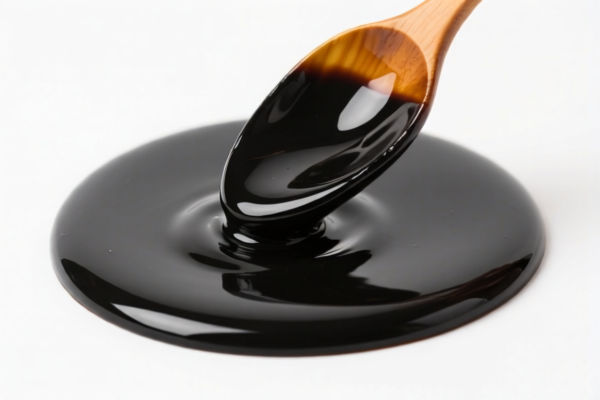
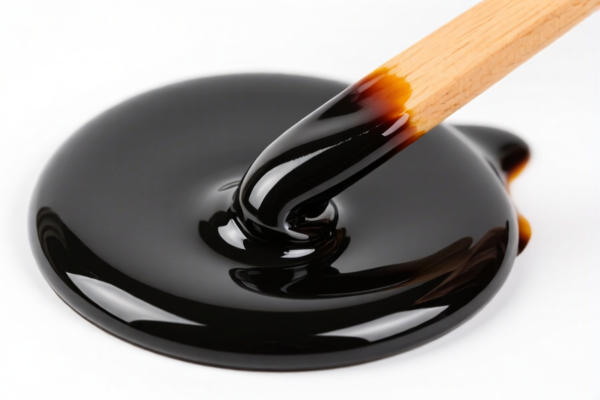
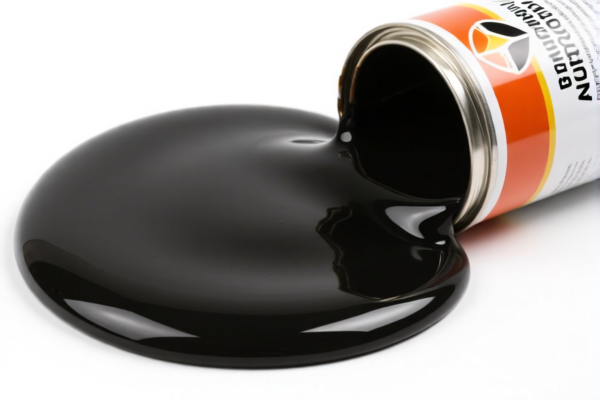
AI Analysis
🛡️ PVC Elastomer Anti-Corrosion Coating
🌐 HS Code Reference & Clearance Guide | 2026 Latest Tariff Analysis | Professional Customs Strategy
📌 I. Product Definition & Classification: Do You Really Understand "PVC Elastomer Anti-Corrosion Coating"?
PVC Elastomer Anti-Corrosion Coating is a specialized industrial surface protection material, primarily used for protecting metal structures (pipelines, tanks, ship hulls, offshore platforms) from harsh chemical, marine, or industrial environments. It combines the durability of Polyvinyl Chloride (PVC) with the flexibility of elastomers to provide a resilient, waterproof, and chemically resistant barrier.
In international trade, this product is generally categorized under Chapter 32: Tanning or Dyeing Extracts; Tannins and Their Derivatives; Dyes, Pigments and Other Coloring Matter; Paints and Varnishes; Putty and Other Ma-stics; Ink, Writing or Drawing Ink and Erasers.
The classification depends heavily on the primary polymer binder and the dissolution medium (aqueous vs. non-aqueous). Since most high-performance anti-corrosion coatings are solvent-based (non-aqueous) or dispersion-based, they fall into specific subheadings under 3208 or 3210.
⚠️ Key Distinction Points:
- If the coating is based on synthetic polymers (like PVC/Elasomer blends) dispersed in a non-aqueous medium (solvent-based), it typically falls under 3208.
- If it is a miscellaneous paint/varnish not specified elsewhere (e.g., specific chemical compositions not listed in 3208–3209), it may fall under 3210.
- Crucial: Avoid misclassifying as simple "pigments" or "preparations for leather" if it is clearly an industrial anti-corrosion coating.
📦 II. HS Code Classification Details (2026 Latest Tariff Authority Comparison)
Based on the provided DATA, here are the relevant HS Codes and their corresponding tax implications:
| HS Code | Product Description | Applicable Scenario | Key Classification Logic |
|---|---|---|---|
3210.00.00.00 |
Other paints and varnishes (including enamels, lacquers and distempers); prepared water pigments of a kind used for finishing leather | General industrial coatings, specialized anti-corrosion paints not covered by other specific headings (e.g., epoxy, polyurethane not listed in 3208/3209). | Used when the coating does not fit the specific polymer/dispersion criteria of 3208 or the definitions of 3209/3211. Often serves as the "catch-all" for industrial paints. |
3208.00.00.00 |
Paints and varnishes, not elsewhere specified or included; other preparations for surface coating, not elsewhere specified or included | Broad category for surface coatings not specified elsewhere. | ⚠️ Note: Tax info unavailable in source. Use with caution. May apply if the specific polymer blend (PVC/Elastomer) doesn't fit the polyester/acrylic criteria of 3208.10/3208.20. |
3208.10.00.00 |
Based on polyesters | Paints based on synthetic polymers dispersed/dissolved in non-aqueous medium; specifically polyester-based. | ❌ Not Applicable unless the PVC Elastomer coating is primarily polyester-based. PVC is a vinyl polymer, not polyester. |
3208.20.00.00 |
Based on acrylic or vinyl polymers | Paints based on synthetic polymers dispersed/dissolved in non-aqueous medium; specifically acrylic or vinyl polymers. | ✅ Highly Relevant: PVC (Polyvinyl Chloride) is a vinyl polymer. If the coating is solvent-based and PVC/vinyl is the main binder, this is a strong candidate. |
🔍 Classification Priority:
- If the coating is solvent-based and PVC (a vinyl polymer) is the dominant binder, 3208.20.00.00 is technically the most accurate per the HS Explanatory Notes.
- If the composition is complex or mixed (e.g., PVC + Elastomer + other binders) and doesn't clearly fit 3208.20, 3210.00.00.00 is the safer "other paints" fallback.
-3208.00.00.00is a general header; specific subheadings (like .10 or .20) should be used if applicable. If not,3210is often preferred for "other" industrial coatings.
💰 III. 2026 Latest Tariff Rate Details (Including Surcharges & Policy Add-ons)
✅ Applicable Country: United States (US)
✅ Country of Origin: China (CN)
✅ Effective Date: From November 10, 2025 (and subsequent imports)
🎯 1. 3210.00.00.00 — Other Paints and Varnishes (Catch-All for Industrial Coatings)
| Item | Details |
|---|---|
| Base Tariff Rate | 0.0% |
| Section 301 Surtax | 0.0% (Note: Most Chapter 32 products are exempt or have low surtaxes; verify specific HTS USITC footnote) |
| IEEPA Surtax | 0.0% (Based on provided data: "Added Tariff: 0.0%") |
| Total Effective Tax Rate | 0.0% |
| Tax Calculation | CIF Value × 0.0% = $0 |
| De Minimis Eligibility | ✅ Likely Yes (if under $800, though industrial chemicals may have restrictions; check CBP rules) |
| Legal Basis Path | HTSUS:3210.00.00.00 → USITC:3210 |
📌 Explanation:
- The provided data indicates a 0.0% total tax for this HS Code.
- This makes 3210.00.00.00 a highly cost-effective classification for importers, assuming the product fits the description.
- Caution: Ensure the product is not more specifically classified under 3208. If it is misclassified, penalties may apply.
🎯 2. 3208.20.00.00 — Based on Acrylic or Vinyl Polymers (Solvent-Based)
| Item | Details |
|---|---|
| Base Tariff Rate | 0.0% |
| Section 301 Surtax | 0.0% |
| IEEPA Surtax | 0.0% |
| Total Effective Tax Rate | 0.0% |
| Tax Calculation | CIF Value × 0.0% = $0 |
| De Minimis Eligibility | ✅ Likely Yes (subject to CBP review for chemical products) |
| Legal Basis Path | HTSUS:3208.20.00.00 → USITC:3208.20 |
📌 Explanation:
- PVC is a vinyl polymer, so if the coating is solvent-based, this code is technically precise.
- Also shows 0.0% total tax in the provided data.
- Advantage: More specific than 3210, which may reduce customs scrutiny if documentation (MSDS, formula) supports vinyl polymer content.
🎯 3. 3208.00.00.00 — Other Paints and Varnishes (General Header)
| Item | Details |
|---|---|
| Base Tariff Rate | Error |
| Tax Detail | "Failed to retrieve tax information" |
| Total Tax | Error |
| Risk Level | 🔴 High |
📌 Warning:
- Do NOT use3208.00.00.00directly for final classification unless no subheading applies. It is a statistical header.
- Customs may reclassify to a specific subheading (like 3208.20 or 3210) and apply different taxes or restrictions.
- The "Error" in tax data indicates incomplete tariff lookup; avoid relying on this code for cost prediction.
🛠️ IV. Clearance Practical Advice (Real-World Pitfall Avoidance Guide)
✅ 1. Required Documentation Checklist (Non-Negotiable)
| Document | Required | Explanation |
|---|---|---|
| ✅ Material Safety Data Sheet (MSDS) | ✔️ | Must state chemical composition, including % of PVC/vinyl polymers, solvents, and additives. |
| ✅ Technical Data Sheet (TDS) | ✔️ | Shows application method, drying time, corrosion resistance specs. |
| ✅ Product Photos | ✔️ | Clear images of packaging, labels, and product state (liquid, paste, etc.). |
| ✅ Certificate of Origin (CO) | ✔️ | To determine eligibility for any free trade agreements (though US-China has limited benefits). |
| ✅ Commercial Invoice | ✔️ | Clearly describe as "PVC Elastomer Anti-Corrosion Coating, Solvent-Based" or similar. |
| ✅ Customs Broker Declaration Form | ✔️ | Confirm HS Code and intended use (industrial, not consumer). |
✅ 2. Declaration Tips (Key Mantras)
🔥 “Vinyl Base = 3208.20, Other Paints = 3210, Solvent-Based Matters!”
| Scenario | Correct Declaration | Common Mistake |
|---|---|---|
| Solvent-Based PVC Coating | 3208.20.00.00 (Based on vinyl polymers) |
Misclassifying as water-based → Wrong code |
| Water-Based or Mixed Binding | 3210.00.00.00 (Other paints) |
Claiming vinyl base when it’s not |
| Industrial vs. Consumer Use | Declare as "Industrial Anti-Corrosion Coating" | Declaring as "Paint for Home Use" → May trigger additional regulations |
| Packaging | Declare as "Paints in Drums/Tins" | Mislabeling as "Chemicals" → Customs delay |
✅ 3. Special Situations
| Situation | Handling Advice |
|---|---|
| High-VOC Content | Check EPA/CAVMA regulations. May require additional environmental compliance docs. |
| Elastomer Blend | If elastomer content is high and not vinyl-based, lean toward 3210. Provide MSDS to prove composition. |
| Private Label (OEM) | Ensure invoice reflects actual manufacturer and product description. Avoid generic terms like "Chemical Paint." |
| Sample vs. Commercial | For samples, declare as "Sample for Testing" to potentially leverage de minimis (if eligible). |
🌍 V. Global Market Clearance Comparison (2026 Latest)
| Country/Region | Recommended HS Code | Tariff Rate (China Origin) | Certification Requirements | Notes |
|---|---|---|---|---|
| 🇺🇸 USA | 3210.00.00.00 or 3208.20.00.00 |
0.0% (per provided data) | No major pre-market approval, but EPA/FDA may apply if food-contact | High accuracy in classification avoids audits |
| 🇪🇺 EU | 3208.20 or 3210 |
0%~6.5% | REACH Registration mandatory for substances >1 ton/year | Strict VOC limits apply |
| 🇨🇳 China | 3208.20 or 3210 |
0%~5% | CCC not required for industrial paints, but GB standards apply | Import license may be needed for certain chemicals |
| 🇬🇧 UK | 3208.20 or 3210 |
0%~6.5% | UK REACH compliance required post-Brexit | Similar to EU standards |
| 🇦🇺 Australia | 3208.20 or 3210 |
5% | NICNAS/ABRS compliance for chemical substances | Check for hazardous goods classification |
📌 Conclusion:
- USA offers 0.0% tariff for these codes (per data), making it cost-competitive.
- EU and UK require strict chemical compliance (REACH/UK REACH), which can delay clearance if MSDS is incomplete.
- Always provide MSDS to prove chemical nature and avoid hazardous goods misclassification.
📌 VI. Common Errors & Pitfall Guide (Lessons Learned)
❌ Error 1: Classifying all paints under 3208.00.00.00
👉 Consequence: Customs may reclassify to specific subheadings (like 3208.20 or 3210) and audit past shipments. Delay + Penalties.
❌ Error 2: Ignoring the solvent vs. water-based distinction
👉 Consequence: If solvent-based, it must go to 3208; if water-based, it may go to 3209 or 3210. Wrong code = Wrong tax.
❌ Error 3: Failing to provide MSDS
👉 Consequence: Customs cannot verify polymer type. May hold shipment for inspection or reject classification. Demurrage costs.
❌ Error 4: Using vague descriptions like "Industrial Paint"
👉 Consequence: Ambiguity leads to manual review. Clear description: "PVC Elastomer Anti-Corrosion Coating, Solvent-Based, Vinyl Polymer Content: XX%"
✅ Correct Approach:
“PVC Elastomer Anti-Corrosion Coating, Solvent-Based, Based on Vinyl Polymers, Industrial Use, MSDS Attached, Model XYZ, Volume: 200L Drum”
🎯 VII. Conclusion: Precise Classification Saves Time and Money
🎯 Remember the Mantra:
🔹 “Vinyl Solvent = 3208.20, Other = 3210, MSDS is King!”
🔹 “0% Tax in US, but Compliance in EU/UK!”
🔹 “HS Code Defines Duty, Documentation Defines Speed!”
📌 Pro Tip:
If your coating has multiple polymer binders (e.g., PVC + Epoxy), provide a formula breakdown to customs broker. The principal polymer determines the code. If uncertain, apply for a Customs Ruling from CBP before shipping.
📣 Immediate Action:
📞 Consult with a licensed customs broker + Provide MSDS + Confirm Polymer Composition
🚀 Ensure your PVC Elastomer Coating clears smoothly, tax-efficiently, and without delays!
✨ Professional Clearance Starts with Accurate Classification!
💼 Every Percent Saved is Profit Gained!
Customer Reviews
About HS Code Classification
The Harmonized System (HS) is an internationally standardized nomenclature developed by the World Customs Organization (WCO) to classify traded products. Over 200 countries use the HS system as the basis for customs tariffs, trade statistics, and import/export regulations.
Each HS code follows a hierarchical structure:
- Chapter (2 digits) — Broad category of goods (e.g., Chapter 84: Machinery and Mechanical Appliances)
- Heading (4 digits) — More specific grouping within the chapter
- Subheading (6 digits) — Internationally standardized breakdown, used by all WCO member countries
- National subdivisions (8-10 digits) — Country-specific extensions for further classification, such as US HTSUS 10-digit codes
Correct HS code classification is essential for smooth customs clearance, accurate duty payment, and compliance with trade regulations. Misclassification can lead to customs delays, overpayment of duties, or penalties.
When importing from CN to US, the applicable tariff rates may include:
- Most-Favored-Nation (MFN) rate — The standard duty rate applied to WTO members
- General rate — Applied to countries without trade agreements
- Trade remedy duties — Additional tariffs such as Section 301 (anti-dumping), Section 232 (national security), or countervailing duties
The information provided on this page is for reference purposes only. For official classification, please consult with your local customs authority or a licensed customs broker.