PVC Electronic Box
CN → US| HS Code | Tariff Rate | Origin | Destination | Doc |
|---|---|---|---|---|
| 3923109000 | 38.0% | CN | US | Official Doc |
| 3923102000 | 35.0% | CN | US | Official Doc |
| 3920435000 | 39.2% | CN | US | Official Doc |
| 3920490000 | 40.8% | CN | US | Official Doc |
| 3926909905 | 22.8% | CN | US | Official Doc |
Product Images
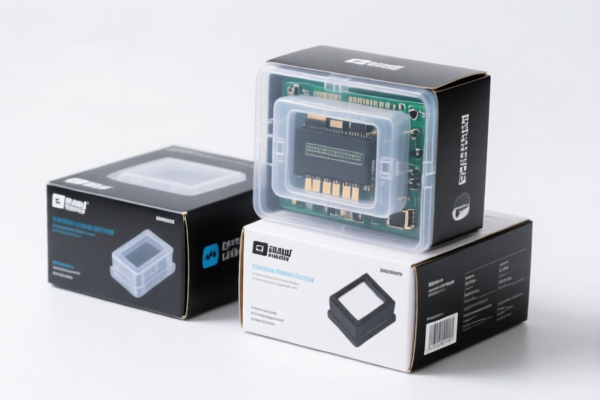
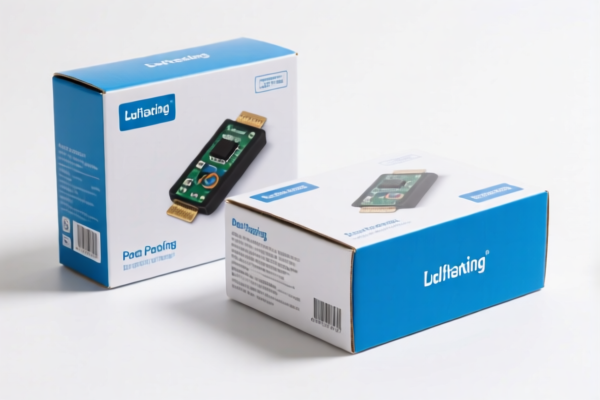
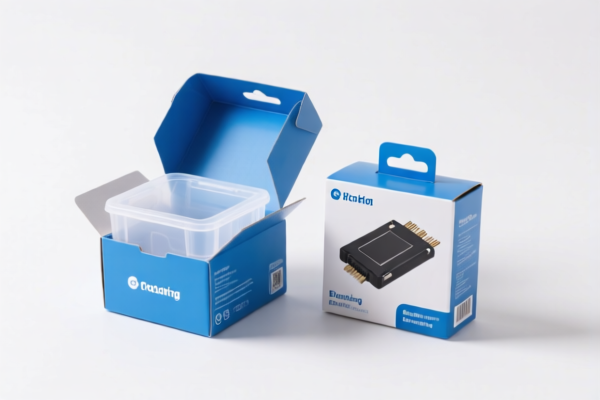
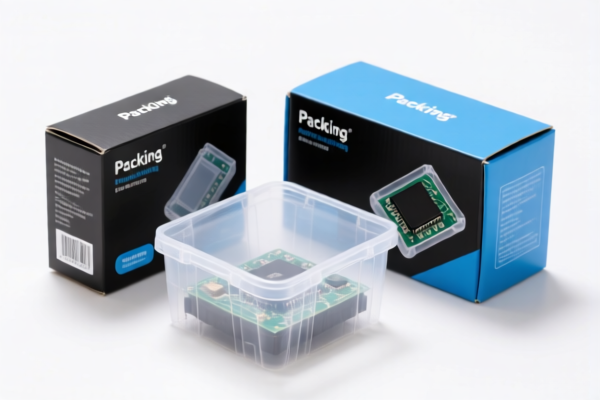
AI Analysis
📦 PVC Electronic Box (PVC Material, Box Shape)
🌐 HS Code Reference & Customs Clearance Guide | 2026 Latest Tariff Analysis | Professional Clearance Strategy
📌 I. Product Definition: Is it a "Packaging" or a "Container"?
A "PVC Electronic Box" is a container made of Polyvinyl Chloride (PVC). However, in international trade, its classification depends entirely on its primary function and structure.
1. Packaging Material (Plastic Articles):
If the box is used primarily to protect, contain, or transport goods during logistics (e.g., bulk packing, protective casing for shipping), it is classified as a plastic packaging article.
Key Characteristic*: Designed for single-use or temporary containment; not intended for long-term industrial storage or structural use.
2. Industrial Container/Accessory:
If the box is a rigid container designed for repeated use, housing electronic components, or serving as part of an electrical system assembly, it may fall under other plastic articles or containers for electrical equipment.
Key Characteristic*: Rigid, durable, potentially part of a larger electrical assembly.
⚠️ Critical Distinction:
- If it’s a simple PVC case for moving goods → 3923.10 (Packaging)
- If it’s a rigid box for electrical equipment → 3920.49 or 3926.90 (Other Plastic Articles/Containers)
📦 II. HS Code Classification Matrix (2026 Latest Tariff Data)
| HS Code | Product Description | Classification Logic | Tax Rate (Total) |
|---|---|---|---|
3923.10.90.00 |
Plastic Articles for the Transmission or Packaging of Goods | PVC Box used as packaging; fits the definition of plastic packaging articles. | 38.0% |
3923.10.20.00 |
Plastic Articles for the Transmission or Packaging of Goods | PVC Box used as packaging; specific sub-heading for certain packaging types. | 35.0% |
3920.43.50.00 |
Other Plates, Sheets, Film, Foil and Strip, of PVC | PVC Box classified as plastic article in other forms (not packaging); structural PVC product. | 39.2% |
3920.49.00.00 |
Other Plates, Sheets, Film, Foil and Strip, of PVC | PVC Box classified as board/panel structure made of vinyl polymers; rigid structural form. | 40.8% |
3926.90.99.05 |
Other Articles of Plastics and Articles of Other Materials | PVC Box classified as plastic container; specifically for electrical/electronic equipment housing. | 22.8% |
🔍 Key Insight:
- Packaging vs. Container: The biggest price difference lies between "Packaging" (3923) and "Other Plastic Articles/Containers" (3926).
- Lowest Tax Option:3926.90.99.05offers the lowest total tax at 22.8%, but requires proving the box is a container for equipment, not just shipping packaging.
💰 III. 2026 Latest Tariff Rate Breakdown (Detailed Analysis)
✅ Applicable Country: United States (US)
✅ Origin: China (CN)
✅ Effective Date: Post-2025 (Current Trade War Context)
🎯 1. 3923.10.90.00 — Plastic Packaging Articles (General)
| Item | Detail |
|---|---|
| Base Tariff | 3.0% (Ad valorem) |
| USITC Add-on (Section 301) | +25.0% |
| IEEPA Add-on (Section 122) | +10.0% |
| Total Effective Rate | 38.0% |
| Calculation | CIF Value × 38.0% |
| De Minimis Exemption | ❌ Not Eligible (Deny_de_minimis applies to high-tariff PVC packaging) |
| Legal Basis | USITC:3923.10.90.00 → FOOTNOTE:9903.88.01 + IEEPA:9903.01.25 |
📌 Explanation:
- Standard plastic packaging from China faces heavy penalties due to Section 301 (25%) and Section 122 (10%).
- No loophole: This is a high-cost category for simple packaging boxes.
🎯 2. 3923.10.20.00 — Plastic Packaging Articles (Specific Sub-heading)
| Item | Detail |
|---|---|
| Base Tariff | 0.0% |
| USITC Add-on (Section 301) | +25.0% |
| IEEPA Add-on (Section 122) | +10.0% |
| Total Effective Rate | 35.0% |
| Calculation | CIF Value × 35.0% |
| De Minimis Exemption | ❌ Not Eligible |
| Legal Basis | USITC:3923.10.20.00 → IEEPA:9903.01.24 |
📌 Note:
- Slightly cheaper than 3923.10.90.00 (3% savings).
- Requires specific product documentation to qualify for this sub-heading (e.g., specific box types for retail).
🎯 3. 3920.43.50.00 — Other PVC Plastic Articles
| Item | Detail |
|---|---|
| Base Tariff | 4.2% |
| USITC Add-on (Section 301) | +25.0% |
| IEEPA Add-on (Section 122) | +10.0% |
| Total Effective Rate | 39.2% |
| Calculation | CIF Value × 39.2% |
| De Minimis Exemption | ❌ Not Eligible |
| Legal Basis | USITC:3920.43.50.00 |
📌 Risk:
- Higher base tariff (4.2%) makes this more expensive than packaging codes.
- Only consider if the box cannot be classified as packaging.
🎯 4. 3920.49.00.00 — PVC Board/Panel Structures
| Item | Detail |
|---|---|
| Base Tariff | 5.8% |
| USITC Add-on (Section 301) | +25.0% |
| > IEEPA Add-on (Section 122) | +10.0% |
| Total Effective Rate | 40.8% |
| Calculation | CIF Value × 40.8% |
| De Minimis Exemption | ❌ Not Eligible |
| Legal Basis | USITC:3920.49.00.00 |
📌 Highest Cost:
- This is the most expensive option.
- Avoid unless the box is structurally a "panel" or "sheet" product.
🎯 5. 3926.90.99.05 — Plastic Containers (Electrical Equipment)
| Item | Detail |
|---|---|
| Base Tariff | 5.3% |
| USITC Add-on (Section 301) | +7.5% (Reduced/Alternative Rate) |
| IEEPA Add-on (Section 122) | +10.0% |
| Total Effective Rate | 22.8% |
| Calculation | CIF Value × 22.8% |
| De Minimis Exemption | ❌ Not Eligible |
| Legal Basis | USITC:3926.90.99.05 |
📌 💡 BEST VALUE OPTION:
- Lowest Total Tax: 22.8% (15-18% savings vs. packaging codes).
- Requires proof that the box is a container for electrical equipment (e.g., housing circuit boards, connectors), not just shipping packaging.
- Strategy: If the PVC box is part of the electronic assembly, declare as3926.90.99.05.
🛠️ IV. Customs Clearance Practical Advice
✅ 1. Documentation Checklist
| Document | Required | Purpose |
|---|---|---|
| Product Specifications | ✔️ | Define if it’s packaging or equipment container. |
| Technical Drawing | ✔️ | Show if it houses electrical components. |
| Commercial Invoice | ✔️ | Use precise terms: "PVC Electrical Enclosure" vs. "PVC Packaging Box". |
| Certificate of Origin | ✔️ | For US origin verification (China origin triggers high taxes). |
| Photos | ✔️ | Show contents (if empty, prove it’s reusable container). |
✅ 2. Declaration Strategy (Critical)
🔥 “Packaging vs. Container: Name Determines Tax!”
| Scenario | Recommended HS Code | Tax Rate | Risk |
|---|---|---|---|
| Box is for shipping goods | 3923.10.20.00 or 3923.10.90.00 |
35-38% | Low risk, but high tax. |
| Box houses electronic parts | 3926.90.99.05 |
22.8% | Best option. Must prove "electrical equipment" use. |
| Box is rigid PVC panel | 3920.49.00.00 |
40.8% | Avoid. Too expensive. |
| Box is simple PVC sheet | 3920.43.50.00 |
39.2% | Avoid. High base tax. |
📌 Key Tip:
- If the PVC box is sold separately as a packaging material, use 3923.
- If the PVC box is part of the electronic product (e.g., a protective casing for a PCB), use 3926.90.99.05.
✅ 3. Special Cases
| Case | Handling Advice |
|---|---|
| OEM Custom Enclosures | Provide design files showing it’s for electrical housing. |
| Bulk Shipment (Loose Boxes) | Likely 3923 (Packaging). |
| Pre-assembled with Electronics | Declare as Complete Unit (HS Code for electronics), not PVC box. |
| Vented/Filtered PVC Boxes | May qualify for 3926 if used for industrial equipment cooling. |
🌍 V. Global Market Comparison (2026)
| Country/Region | Recommended HS Code | Tariff | Note |
|---|---|---|---|
| 🇺🇸 USA | 3926.90.99.05 |
22.8% | Best option. Avoid 3923 unless necessary. |
| 🇨🇳 China | 3926.90.99.05 |
5-10% | Import duty varies; no Section 301/122. |
| 🇪🇺 EU | 3926.90.99.95 |
6.5% | CE marking required for electrical enclosures. |
| 🇬🇧 UK | 3926.90.99.95 |
6.5% | Post-Brexit rules apply. |
| 🇦🇺 Australia | 3926.90.99.00 |
5% | GSP benefits may apply. |
📌 Conclusion:
- USA has the highest complexity due to Section 301 and 122 tariffs.
- Strategic Shift: Try to classify PVC electronic boxes as3926.90.99.05(Plastic Containers) to save ~15% in taxes compared to packaging codes.
📌 VI. Common Mistakes & Pitfalls
❌ Mistake 1: Declaring "PVC Electronic Box" as 3923.10 (Packaging) when it’s actually an enclosure.
👉 Result: Pay 38% tax instead of 22.8%. Overpaid by ~15%.
❌ Mistake 2: Declaring as 3920.49 (PVC Panels) for a simple box.
👉 Result: Pay 40.8% tax. Highest cost. Avoid!
❌ Mistake 3: Mixing Packaging and Product in one shipment.
👉 Result: Customs may split the shipment, applying different tariffs. Declare separately!
✅ Correct Declaration Example:
"PVC Electrical Enclosure Box, Model XYZ, Used for Housing Circuit Boards, Non-Retail Packaging"
HS Code:3926.90.99.05
Tax: 22.8%
🎯 VII. Conclusion: Save Money with Precision!
🎯 Key Takeaway:
🔹 "Packaging is 38%, Container is 22% — Choose Wisely!"
🔹 "If it houses electronics, it’s a Container (3926) — Not Packaging (3923)!"
📌 Pro Tip:
If your PVC box is not made in China, you may avoid Section 301 tariffs. Check origin rules carefully.
For US imports, pre-classification with a customs broker is highly recommended to secure the 22.8% rate.
📣 Action Required:
📞 Contact Customs Broker: Verify if your box qualifies as
3926.90.99.05.
📄 Prepare Documentation: Show it’s an electrical enclosure, not just a shipping box.
🚀 Save Up to 15% on tariffs with correct classification!
✨ Professional Clearance Starts with Accurate Classification!
💼 Every Percent Saved is Pure Profit!
Customer Reviews
About HS Code Classification
The Harmonized System (HS) is an internationally standardized nomenclature developed by the World Customs Organization (WCO) to classify traded products. Over 200 countries use the HS system as the basis for customs tariffs, trade statistics, and import/export regulations.
Each HS code follows a hierarchical structure:
- Chapter (2 digits) — Broad category of goods (e.g., Chapter 84: Machinery and Mechanical Appliances)
- Heading (4 digits) — More specific grouping within the chapter
- Subheading (6 digits) — Internationally standardized breakdown, used by all WCO member countries
- National subdivisions (8-10 digits) — Country-specific extensions for further classification, such as US HTSUS 10-digit codes
Correct HS code classification is essential for smooth customs clearance, accurate duty payment, and compliance with trade regulations. Misclassification can lead to customs delays, overpayment of duties, or penalties.
When importing from CN to US, the applicable tariff rates may include:
- Most-Favored-Nation (MFN) rate — The standard duty rate applied to WTO members
- General rate — Applied to countries without trade agreements
- Trade remedy duties — Additional tariffs such as Section 301 (anti-dumping), Section 232 (national security), or countervailing duties
The information provided on this page is for reference purposes only. For official classification, please consult with your local customs authority or a licensed customs broker.