PVC Fabric Sofa Cover
CN → US| HS Code | Tariff Rate | Origin | Destination | Doc |
|---|---|---|---|---|
| 6304993500 | 28.8% | CN | US | Official Doc |
| 6304930000 | 0.0% | CN | US | Official Doc |
| 5903102010 | 35.0% | CN | US | Official Doc |
| 5903102090 | 35.0% | CN | US | Official Doc |
| 9403995080 | 35.0% | CN | US | Official Doc |
| 9403995010 | 35.0% | CN | US | Official Doc |
Product Images
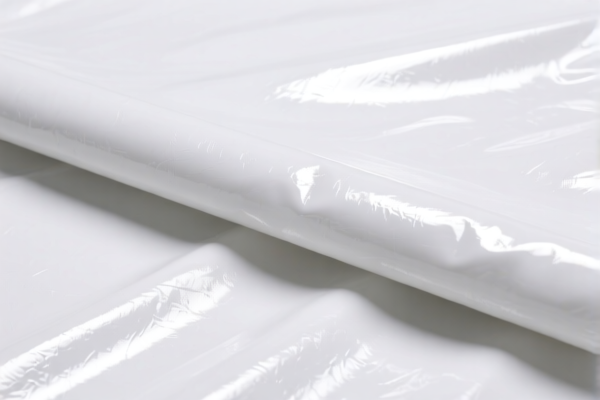
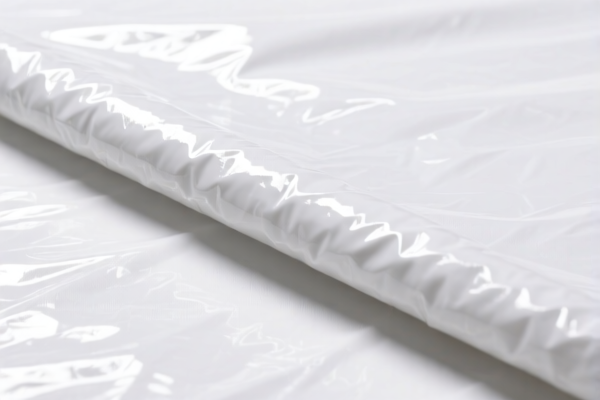


AI Analysis
🛋️ PVC Fabric Sofa Cover (Impregnated/Coated/Laminated Textile Fabrics)
🌐 HS Code Reference & Customs Clearance Guide | 2026 Latest Tariff Analysis | Professional Entry Strategy
📌 I. Product Definition & Classification: Do You Really Know "PVC Sofa Cover"?
A PVC fabric sofa cover is not merely a piece of cloth; in international trade, it is classified based on its material composition and manufacturing process. Specifically, it refers to textile fabrics that have been impregnated, coated, covered, or laminated with plastics (specifically Polyvinyl Chloride or PVC).
The classification hinges on two critical factors: 1. Base Material: Is the underlying fabric man-made fibers (synthetic) or vegetable fibers? 2. Plastic Content: Does the plastic (PVC) constitute over 70% of the weight?
⚠️ Key Distinction Point:
- If the fabric is sheathed with PVC (e.g., coated yarns) but not further impregnated/coated/laminated as a composite sheet, it falls under specific subheadings.
- If the fabric is heavily coated or laminated with PVC (>70% by weight), it is classified under Heading 5903.
- Note: Furniture parts (like upholstery covers) are generally excluded from Heading 9403 unless they are "parts" of a specific structure, but textile fabrics coated with plastic are strictly governed by Chapter 59 before reaching furniture.
📦 II. HS Code Classification Details (2026 Latest Tariff Authority)
Based on the provided data, the product falls under Heading 5903 (Textile fabrics impregnated, coated, covered or laminated with plastics) or potentially Heading 9403 (Furniture parts) if considered solely as a textile part without the plastic coating characteristics dominating the value/function in a specific legal context. However, the data provided focuses on 5903 (fabric) and 9403 (furniture parts).
| HS Code | Product Description | Applicable Scenario | Key Condition |
|---|---|---|---|
5903.10.20.10 |
Man-made fiber fabrics coated/laminated with PVC: Of man-made fibers: Other: Over 70% by weight of rubber or plastics; Fabrics of yarns sheathed with PVC (not otherwise impregnated/coated/laminated) | PVC-coated sofa covers made from synthetic base fabrics (polyester, nylon, etc.) where the PVC layer is significant (>70%) or the yarn is sheathed. | ✅ High Plastic Content / Sheathed Yarn |
5903.10.20.90 |
Man-made fiber fabrics coated/laminated with PVC: Of man-made fibers: Other: Over 70% by weight of rubber or plastics (Other) | Other PVC-coated synthetic fabric covers not fitting the specific "sheathed yarn" description above, but still >70% plastic weight. | ✅ High Plastic Content / General Coating |
6304.99.35.00 |
Other furnishing articles: Not knitted/crocheted, of other textile materials: Of vegetable fibers (except cotton): Other | Excluded: This is for vegetable fibers (like jute, sisal). PVC covers are rarely this type. | ❌ Not Applicable (Vegetable Fiber) |
6304.93.00.00 |
Other furnishing articles: Not knitted/crocheted, of synthetic fibers | Excluded: This is for general furnishing articles (like blankets, pillows) without the specific PVC plastic coating treatment defined in Heading 59. If it's coated, 5903 takes precedence. | ❌ Less Likely (General Textile) |
9403.99.50.80 |
Other furniture and parts thereof: Parts: Other: Of textile material, except cotton: Other | Furniture Parts: If the item is considered a "part" of the sofa (e.g., a slipcover that is not a standalone fabric roll), and not classified as fabric under 5903 due to specific legal interpretations. | ✅ As Furniture Part |
9403.99.50.10 |
Other furniture and parts thereof: Parts: Of textile material, except cotton: For play yards and other enclosures for confining children | Specific Use: Only if the "sofa cover" is specifically designed for play yards or child enclosures. | ✅ Specific Use (Child Enclosure) |
🔍 Key Insight:
- The primary classification for PVC-coated fabric is 5903.10.20 because the PVC treatment defines the product's character.
- 9403 codes are likely secondary or applicable only if the goods are strictly defined as "parts" of furniture and not "fabrics," or for specific child enclosure products.
💰 III. 2026 Latest Tariff Rate Breakdown (Including Additional Duties)
✅ Applicable Country: United States (US)
✅ Origin: China (CN)
✅ Effective Date: Post-November 2025 (Subject to current trade policies)
🎯 1. 5903.10.20.10 & 5903.10.20.90 —— PVC-Coated Textile Fabrics (Man-Made Fibers)
| Item | Detail |
|---|---|
| Base Tariff | 0.0% |
| Additional Tariff (Section 301) | +25.0% |
| Total Tariff Rate | 25.0% |
| Tax Calculation | CIF Value × 25% |
| De Minimis Exemption | ❌ Not Applicable (Section 301 duties generally do not apply to de minimis shipments from China in the same way, but high-value commercial imports are strictly taxed) |
| Legal Basis | USITC Heading 5903.10.20 |
📌 Explanation:
- Although the base tariff is 0%, the 25% additional tariff under Section 301 applies to most Chinese-origin goods in this category.
- This is a significant cost factor. Importers must budget for this 25% duty on top of any freight and insurance costs.
- The tax detail "Base: 0.0%, Additional: 25.0%" is clearly stated in the data.
🎯 2. 9403.99.50.80 —— Furniture Parts (Textile, Except Cotton)
| Item | Detail |
|---|---|
| Base Tariff | 0.0% |
| Additional Tariff (Section 301) | +25.0% |
| Total Tariff Rate | 25.0% |
| Tax Calculation | CIF Value × 25% |
| De Minimis Exemption | ❌ Not Applicable |
| Legal Basis | USITC Heading 9403.99.50 |
📌 Explanation:
- Even if classified as a "furniture part," the 25% additional tariff still applies.
- Misclassification to avoid this tariff is risky and can lead to penalties.
🎯 3. 6304.93.00.00 & 6304.99.35.00 —— General Furnishing Articles (Synthetic/Vegetable Fiber)
| Item | Detail |
|---|---|
| Base Tariff | 0.0% |
| Additional Tariff | 0.0% |
| Total Tariff Rate | 0.0% |
| Tax Calculation | CIF Value × 0% |
| De Minimis Exemption | ✅ Potentially Applicable (if value < $800, though customs may challenge if PVC content is high) |
⚠️ Warning:
- These 0% rates are only if the product is NOT classified under 5903 or 9403 with the 25% duty.
- If the product is clearly PVC-coated fabric, customs will likely force it into 5903 (25% duty). Classifying it as "General Furnishing Article" (0%) is a high-risk misclassification strategy.
🛠️ IV. Customs Clearance Practical Advice (Real-World Pitfall Guide)
✅ 1. Documentation Checklist (Non-Negotiable)
| Document | Required | Explanation |
|---|---|---|
| ✅ Product Specification Sheet | ✔️ | Must clearly state: Base fiber type (e.g., 100% Polyester), PVC content % (if >70%), and manufacturing process (coating vs. lamination). |
| ✅ Commercial Invoice | ✔️ | Must describe the item accurately: "PVC-Coated Polyester Fabric for Sofa Cover" NOT just "Fabric" or "Sofa Part." |
| ✅ Packing List | ✔️ | Weight breakdown is crucial to verify the ">70% by weight" claim if needed for 5903.10.20. |
| ✅ Certificate of Origin | ✔️ | Proves Chinese origin, triggering the 25% Section 301 duty. |
| ✅ Material Test Report | ✔️ | Third-party lab report confirming PVC content and base fiber type to prevent misclassification disputes. |
✅ 2. Classification Strategy (Key Takeaways)
| Scenario | Correct HS Code | Risk |
|---|---|---|
| Standard PVC-Coated Sofa Cover (Synthetic base, >70% PVC) | 5903.10.20.10 or 5903.10.20.90 |
Low Risk. Compliant with Chapter 59 rules. Pay 25%. |
| Sheathed PVC Yarn Fabric | 5903.10.20.10 |
Low Risk. Specific subheading for sheathed yarns. Pay 25%. |
| Simple Fabric Cover (No PVC coating, just cotton/polyester) | 9403.99.50.80 (if part) or 6304.93.00.00 (if furnishing) |
Medium Risk. If customs finds hidden PVC, they will reclassify to 5903 and charge 25% + penalties. |
| Child Play Pen Cover | 9403.99.50.10 |
Low Risk if explicitly for child enclosures. Pay 25%. |
| Vegetable Fiber PVC Cover (Unlikely) | 6304.99.35.00 |
High Risk. Very few PVC covers are vegetable fiber. Likely misclassified. |
🔥 Golden Rule:
"If it has PVC, it goes to 5903. Don't hide it in 6304 or 9403 without strong justification."
Misclassification can lead to duties + interest + penalties (often 30-75% of the duty owed).
✅ 3. Special Considerations
| Situation | Handling Advice |
|---|---|
| PVC Content < 70% | If PVC is <70%, it may not fall under 5903.10.20. It might be classified under 6304 or 9403. Provide lab test results to prove <70% PVC to potentially access lower duties (if 0%). |
| Mixed Materials | If the cover is part cotton and part PVC, determine the "essential character." Usually, PVC coating dominates. |
| Sample vs. Bulk | Samples under $800 might avoid duties under de minimis, but if the importer is a business, customs may still assess duties. Be transparent. |
| Pre-Ruling | For large shipments, apply for an Advance Ruling from US Customs and Border Protection (CBP) to lock in the HS Code and avoid post-entry audits. |
🌍 V. Global Market Comparison (2026)
| Country/Region | Recommended HS Code | Tariff Rate | Notes |
|---|---|---|---|
| 🇺🇸 USA | 5903.10.20.10/90 |
25% | Section 301 duties apply. High cost. |
| 🇪🇺 EU | 5903.10.20 |
Varies (0-7%) | No Section 301 equivalent. Lower tariffs, but strict REACH/SVHC regulations for PVC. |
| 🇨🇳 China | 5903.10.20 |
Varies | Import duties may apply. Check FTAs if exporting from Vietnam/Malaysia. |
| 🇨🇦 Canada | 5903.10.20 |
Varies | Similar to US, but no Section 301. CUSMA/USMCA may help if non-Chinese origin. |
📌 Conclusion:
- The US market is the most challenging due to the 25% additional tariff.
- EU and other markets may have lower tariffs but stricter environmental regulations for PVC.
📌 VI. Common Errors & Pitfalls (Lessons Learned)
❌ Error 1: Declaring "PVC Sofa Cover" as "Furniture Part" (9403) to avoid 5903.
👉 Consequence: CBP may reclassify to 5903, charge 25%, and impose penalties for misdeclaration.
❌ Error 2: Ignoring the "70% by weight" rule for PVC.
👉 Consequence: If PVC is <70%, 5903 might not apply, but you must prove it. Lack of proof leads to audit delays.
❌ Error 3: Using vague descriptions like "Fabric" or "Cover."
👉 Consequence: Customs will assign the highest duty rate or require manual review, causing delays.
✅ Correct Practice:
"PVC-Coated Polyester Sofa Cover, 100% Poly Base, PVC Lamination, Weight 100gsm, for Household Furniture Use."
🎯 VII. Conclusion: Professional Classification Saves Money!
🎯 Remember:
🔹 "PVC >70%? Go to 5903. Pay 25%.
🔹 "No PVC? Check 6304/9403. Maybe 0%.
🔹 "Ambiguous? Test it. Document it. Pre-rule it."
📌 Tip:
If you are sourcing from Vietnam or Malaysia, ensure the Origin Certificate clearly states non-Chinese origin to avoid Section 301 duties in the US (if applicable under USMCA or other FTAs).
For US imports, consider HS Code Pre-Rulings to secure certainty before shipping.
📣 Immediate Action:
📞 Contact your freight forwarder with product specs (PVC %, Base Fiber).
🚀 Declare accurately to avoid customs holds, penalties, and delayed delivery.
✨ Professional clearance starts with precise classification!
💼 Your profit margin depends on the right HS Code!
Customer Reviews
About HS Code Classification
The Harmonized System (HS) is an internationally standardized nomenclature developed by the World Customs Organization (WCO) to classify traded products. Over 200 countries use the HS system as the basis for customs tariffs, trade statistics, and import/export regulations.
Each HS code follows a hierarchical structure:
- Chapter (2 digits) — Broad category of goods (e.g., Chapter 84: Machinery and Mechanical Appliances)
- Heading (4 digits) — More specific grouping within the chapter
- Subheading (6 digits) — Internationally standardized breakdown, used by all WCO member countries
- National subdivisions (8-10 digits) — Country-specific extensions for further classification, such as US HTSUS 10-digit codes
Correct HS code classification is essential for smooth customs clearance, accurate duty payment, and compliance with trade regulations. Misclassification can lead to customs delays, overpayment of duties, or penalties.
When importing from CN to US, the applicable tariff rates may include:
- Most-Favored-Nation (MFN) rate — The standard duty rate applied to WTO members
- General rate — Applied to countries without trade agreements
- Trade remedy duties — Additional tariffs such as Section 301 (anti-dumping), Section 232 (national security), or countervailing duties
The information provided on this page is for reference purposes only. For official classification, please consult with your local customs authority or a licensed customs broker.