PVC Fence Profile
CN → US| HS Code | Tariff Rate | Origin | Destination | Doc |
|---|---|---|---|---|
| 3916200020 | 40.8% | CN | US | Official Doc |
| 3916200091 | 40.8% | CN | US | Official Doc |
| 3925900000 | 40.3% | CN | US | Official Doc |
| 3926305000 | 22.8% | CN | US | Official Doc |
| 3926909989 | 22.8% | CN | US | Official Doc |
Product Images
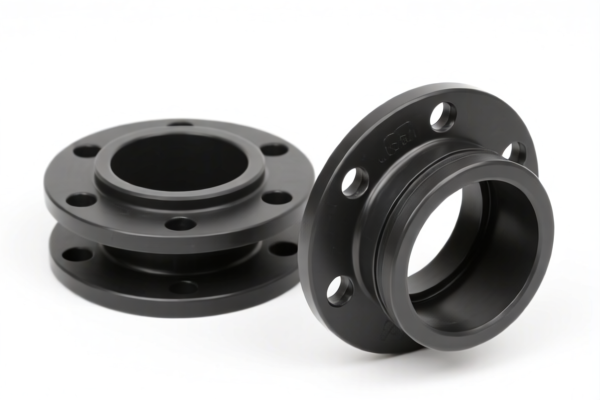

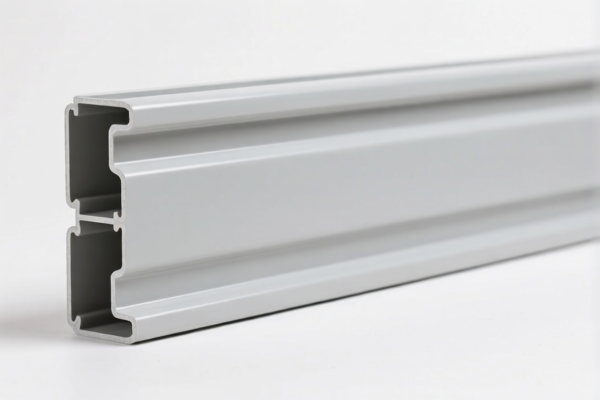
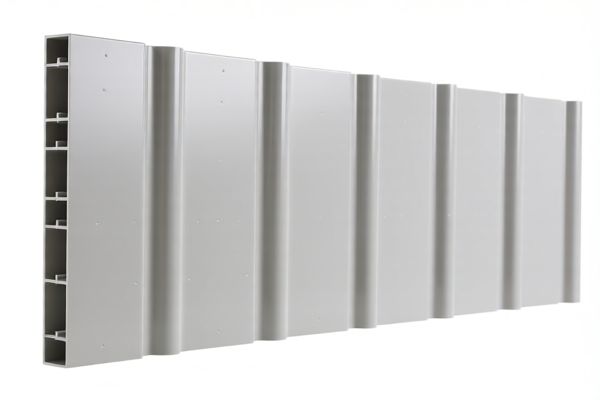
AI Analysis
🏡 PVC Fence Profiles: The Ultimate Import & Customs Clearance Guide (2026)
🌐 HS Code Reference & Customs Strategy | 2026 Latest Tariff Analysis | Professional Entry Strategy
📌 I. Product Definition & Classification: What Exactly is a "PVC Fence Profile"?
PVC (Polyvinyl Chloride) fence profiles are the core structural components of modern vinyl fencing systems. Unlike complete fence panels or assembled fences, profiles are the extruded semi-finished goods (posts, rails, pickets) that require assembly. In international trade, precise classification depends on whether the item is a raw profile, a finished unit, or an accessory.
Key Distinction:
- Profiles (Profiles/Extrusions): Hollow or solid extruded shapes intended for assembly. These are classified under Chapter 39.16 (Plastics in primary forms or semi-manufactured products).
- Finished Fences/Assembled Units: Fully assembled or pre-fabricated panels. These fall under Chapter 39.25 (Builders' ware of plastics).
- Accessories: Connectors, caps, screws. These fall under Chapter 39.26 (Other plastic articles).
⚠️ Critical Classification Point:
- If the product is only the extruded shape (posts/rails) before assembly → HS 3916
- If the product is a complete fence panel/section → HS 3925
- If the product is a connector/cap → HS 3926
Misclassification here leads to massive duty discrepancies (e.g., 22.8% vs. 40.8%).
📦 II. HS Code Classification Details (2026 Latest Tariff Data)
| HS Code | Product Description | Application Scenario | Duty Rate (Total) |
|---|---|---|---|
3916.20.00.20 |
PVC Fence Profiles – Vinyl polymer posts/profiles specifically for fences/railings | Raw extruded posts, rails, pickets (un-assembled) | 40.8% |
3916.20.00.91 |
PVC Fence Profiles – Other vinyl polymer plastics (profiles) | Generic PVC extruded shapes, non-specific fencing | 40.8% |
3925.90.00.00 |
PVC Fences – Plastic builders' ware | Assembled fence sections, pre-fabricated fence panels | 40.3% |
3926.30.50.00 |
PVC Fence Connectors – Plastic articles | Connectors, caps, brackets, hardware pieces | 22.8% |
3926.90.99.89 |
PVC Fence Finished Goods – Other plastic articles | Complete finished fence kits or non-standard plastic fence components | 22.8% |
🔍 Key Insight:
- Profiles (3916) carry the highest burden (40.8%) due to being classified as raw polymer products.
- Accessories/Finished Goods (3926/3925) are cheaper (22.8%-40.3%).
- Strategy: If possible, import assembled connectors (3926.30.50.00) separately to lower the average duty on small parts, but beware of anti-circumvention rules.
💰 III. 2026 Latest Tariff Breakdown (Detailed Tax Clauses)
✅ Applicable Country: United States (US)
✅ Country of Origin: China (CN)
✅ Effective Date: Current applicable rates (includes Section 301 & Section 232/122 impacts)
🎯 1. 3916.20.00.20 & 3916.20.00.91 – PVC Fence Profiles
| Item | Detail |
|---|---|
| Base Tariff | 5.8% (MFN Rate for Chapter 39) |
| Section 301 Additional Tariff | +25.0% (Targeting Chinese manufactured goods) |
| Section 122 Tariff | +10.0% (Special measure for specific imports) |
| Total Effective Rate | 40.8% |
| Tax Calculation | CIF Value × 40.8% |
| De Minimis Exemption | ❌ Not Eligible (deny_de_minimis) for Section 301/122 goods |
| Legal Authority Path | USITC:3916.20.00.20 → FOOTNOTE:301.9977 (25%) → FOOTNOTE:122 (10%) |
📌 Explanation:
- The 5.8% base rate is standard for plastic extrusions.
- The 25% Section 301 tariff is the major cost driver, imposed on Chinese PVC products.
- The 10% Section 122 tariff adds further burden.
- Total 40.8% is a heavy import cost. You must budget for this in your landed cost calculation.
🎯 2. 3925.90.00.00 – PVC Fences (Builders' Ware)
| Item | Detail |
|---|---|
| Base Tariff | 5.3% |
| Section 301 Additional Tariff | +25.0% |
| Section 122 Tariff | +10.0% |
| Total Effective Rate | 40.3% |
| Tax Calculation | CIF Value × 40.3% |
| De Minimis Exemption | ❌ Not Eligible |
| Legal Authority Path | USITC:3925.90.00.00 → FOOTNOTE:301.9977 → FOOTNOTE:122 |
📌 Note:
- Slightly lower than profiles (40.3% vs 40.8%) due to a lower base rate (5.3% vs 5.8%).
- Still subject to the full 35% additional tariffs.
🎯 3. 3926.30.50.00 & 3926.90.99.89 – Connectors & Other Accessories
| Item | Detail |
|---|---|
| Base Tariff | 5.3% |
| Section 301 Additional Tariff | +7.5% |
| Section 122 Tariff | +10.0% |
| Total Effective Rate | 22.8% |
| Tax Calculation | CIF Value × 22.8% |
| De Minimis Exemption | ❌ Not Eligible for Section 301/122 |
| Legal Authority Path | USITC:3926 → FOOTNOTE:301.9950 (7.5%) → FOOTNOTE:122 |
📌 Strategy Alert:
- Connectors (3926.30.50.00) enjoy a much lower Section 301 rate (7.5% vs 25%).
- This results in a 22.8% total rate, significantly cheaper than profiles (40.8%).
- Warning: Do not split a single fence post into "profile" + "connector" parts to artificially lower rates; Customs may merge them under the highest rate or deem it fraudulent.
🛠️ IV. Customs Clearance Practical Advice (Avoiding Pitfalls)
✅ 1. Essential Documentation Checklist
| Document | Required? | Description |
|---|---|---|
| ✅ Commercial Invoice | ✔️ | Must clearly state: "PVC Fence Profile" or "PVC Fence Connector" – NOT just "Plastic Part". |
| ✅ Packing List | ✔️ | Detail contents: "100pcs Posts (HS 3916), 200pcs Connectors (HS 3926)". |
| ✅ Product Specification | ✔️ | Include material composition (100% PVC), extrusion type, dimensions. |
| ✅ Origin Certificate | ✔️ | To confirm Chinese origin for Section 301/122 application. |
| ✅ Assembly Photos | ✔️ | If importing connectors, show how they fit. If importing profiles, show they are unfinished. |
✅ 2. Declaring Strategies (Key Tips)
🔥 "Declare by Component, Not by End-Use Ambiguity!"
| Scenario | Correct Declaration | Wrong Declaration | Consequence |
|---|---|---|---|
| Unassembled Posts/Rails | 3916.20.00.20 (PVC Fence Profile) |
"Fence" or "Plastic Rod" | May be reassigned to higher duty or rejected. |
| Connectors/Caps | 3926.30.50.00 (Plastic Article) |
"Fence Part" | Lower duty (22.8%) applied correctly. |
| Pre-assembled Panel | 3925.90.00.00 (Plastic Builders' Ware) |
"Profile" | Overpaid tax (40.3% vs correct classification). |
| Mixed Container | Split HS Codes per item | Single HS Code for all | High Risk of Audit & Penalty. |
✅ 3. Special Considerations
| Situation | Advice |
|---|---|
| Mixed Container | Ensure your invoice clearly separates Profiles (3916) from Accessories (3926). Applying one HS code to all will cause discrepancies. |
| Section 122 Tariff | The 10% surcharge applies to most Chinese plastic imports. Ensure your broker checks for 122 exclusions (though rare for PVC). |
| Anti-Dumping | While not listed in the data, PVC from China may face AD/CVD. Always verify if AD/CVD cases are active for your specific product type. |
| De Minimis ($800) | Do NOT attempt to use Section 301/122 goods for de minimis entry. They are explicitly excluded. Use formal entry. |
🌍 V. Global Market Comparison (2026)
| Country/Region | Recommended HS Code | Total Duty (China Origin) | Remarks |
|---|---|---|---|
| 🇺🇸 USA | 3916.20.00.20 |
40.8% | High tariffs due to Sec 301 & 122. |
| 🇺🇸 USA | 3926.30.50.00 |
22.8% | Lower duty for connectors. |
| 🇨🇳 China | 3916.20.00.20 |
~5-7% | Low import duty, but check VAT. |
| 🇪🇺 EU | 3916.20.00 |
~6.5% | No Section 301/122 equivalent, but check CBAM. |
📌 Conclusion:
The US market is the most expensive for PVC fence imports from China due to multiple layers of tariffs.
Strategy: If possible, source profiles from Vietnam/Mexico (if rules of origin allow) to avoid Section 301. Or, focus on importing higher-value finished fences (3925) where the per-unit duty might be offset by higher margin, though the rate is similar.
📌 VI. Common Mistakes & Pitfalls (Lessons Learned)
❌ Mistake 1: Declaring "Fence Posts" as "Plastic Tubes" (3917)
👉 Result: Customs may reclassify to 3916 (Profile) or 3925 (Fence), leading to back taxes + penalties.
❌ Mistake 2: Combining Connectors and Profiles under one HS Code
👉 Result: Incorrect duty calculation. If you pay the 22.8% rate on the whole container, but 40.8% is due for profiles, you will face a bill for the difference.
❌ Mistake 3: Ignoring Section 122 Tariff
👉 Result: Underpayment of 10%. Customs will assess this upon audit.
✅ Correct Practice:
"PVC Fence Post, Hollow Extrusion, Unassembled, White, 8ft Length, Model FP-100"
HS Code:3916.20.00.20
Duty: 40.8%
🎯 VII. Conclusion: Precise Classification, Cost Efficiency!
🎯 Key Takeaways:
🔹 Profiles (
3916) = 40.8% Duty (High Cost)
🔹 Connectors (3926) = 22.8% Duty (Lower Cost)
🔹 Always separate HS Codes in mixed containers.
🔹 No De Minimis exemption for these goods.📌 Pro Tip:
If you are importing large volumes, consult a customs broker for a Binding Ruling to confirm the specific sub-heading for your unique profile design. This provides legal certainty against future audits.
📣 Immediate Action:
📞 Contact your freight forwarder with detailed product specs.
📄 Request a Pre-Arrival Review for your specific PVC fence components.
🚀 Optimize your Bill of Lading to reflect accurate HS Codes for each line item.
✨ Smart Customs Clearance Starts with Accurate Classification!
💼 Every percentage point saved in duty is pure profit!
Customer Reviews
About HS Code Classification
The Harmonized System (HS) is an internationally standardized nomenclature developed by the World Customs Organization (WCO) to classify traded products. Over 200 countries use the HS system as the basis for customs tariffs, trade statistics, and import/export regulations.
Each HS code follows a hierarchical structure:
- Chapter (2 digits) — Broad category of goods (e.g., Chapter 84: Machinery and Mechanical Appliances)
- Heading (4 digits) — More specific grouping within the chapter
- Subheading (6 digits) — Internationally standardized breakdown, used by all WCO member countries
- National subdivisions (8-10 digits) — Country-specific extensions for further classification, such as US HTSUS 10-digit codes
Correct HS code classification is essential for smooth customs clearance, accurate duty payment, and compliance with trade regulations. Misclassification can lead to customs delays, overpayment of duties, or penalties.
When importing from CN to US, the applicable tariff rates may include:
- Most-Favored-Nation (MFN) rate — The standard duty rate applied to WTO members
- General rate — Applied to countries without trade agreements
- Trade remedy duties — Additional tariffs such as Section 301 (anti-dumping), Section 232 (national security), or countervailing duties
The information provided on this page is for reference purposes only. For official classification, please consult with your local customs authority or a licensed customs broker.