PVC Fiber Reinforced Tape
CN → US| HS Code | Tariff Rate | Origin | Destination | Doc |
|---|---|---|---|---|
| 3919905020 | 40.8% | CN | US | Official Doc |
| 3926909989 | 22.8% | CN | US | Official Doc |
| 3926905500 | 40.1% | CN | US | Official Doc |
| 3919102010 | 40.8% | CN | US | Official Doc |
| 5603110070 | 35.0% | CN | US | Official Doc |
Product Images

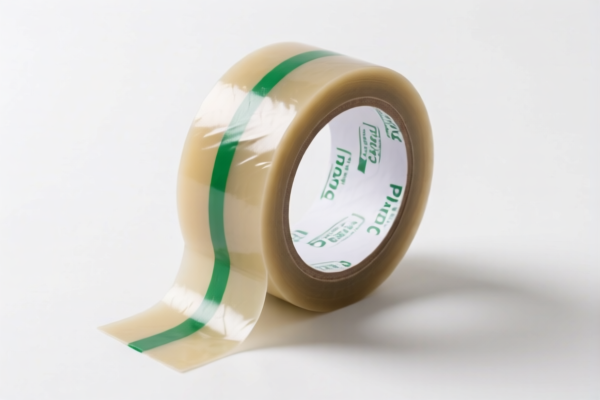
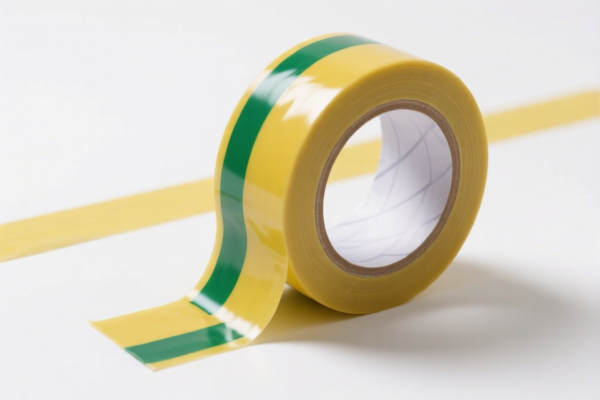
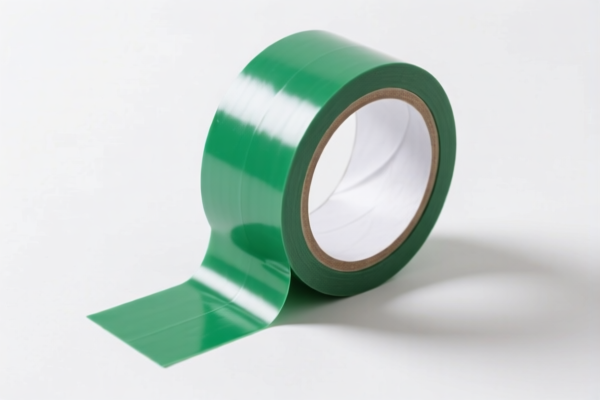
AI Analysis
🛡️ PVC Fiber Reinforced Tape: Ultimate HS Code Guide & Customs Clearance Strategy
🌐 HS Code Reference & Customs Clearance Guide | 2026 Latest Tariff Analysis | Professional Clearance Strategy
📌 Part 1: Product Definition & Classification: Do You Really Understand "PVC Fiber Reinforced Tape"?
PVC Fiber Reinforced Tape is a composite material widely used in construction, packaging, and industrial repair. It combines the flexibility and adhesion of PVC (Polyvinyl Chloride) with the strength of fiber reinforcement. In international trade, it is often misunderstood. Misclassification leads to massive tariff differences!
⚠️ Key Distinction Points:
- If it is primarily a self-adhesive roll used for sealing or bundling → It falls under Chapter 39 (Plastics).
- If it contains significant textile fibers and acts more like a fabric tape → It might be confused with Chapter 56 (Non-wovens), but PVC backing usually keeps it in Chapter 39.
- CRITICAL: The presence of 122 Tariffs and Section 301 Additional Duties makes the HS Code choice critical for cost control.
📦 Part 2: HS Code Classification Details (2026 Latest Tariff Authority Comparison)
Based on the provided data, here are the 5 potential HS Codes. We must analyze why each applies and their specific tax implications.
| HS Code | Product Description | Why This Code Applies? | Tax Rate (Total) | Key Characteristics |
|---|---|---|---|---|
3919.90.50.20 |
Fiber-Reinforced Tape | Perfect Match: Material (PVC/Plastic) and Form (Tape) align exactly. Specifically notes "Fiber Reinforced." | 40.8% | High accuracy for standard PVC tapes with glass/polyester fiber. |
3926.90.99.89 |
Plastic Articles & Other Materials | Broad Category: If the tape is considered a "manufactured article" rather than a simple self-adhesive tape, or if the fiber content is minimal. | 22.8% | Lower tax, but requires proving it's not primarily a "tape" under 3919. Riskier classification. |
3926.90.55.00 |
Plastic/Other Material Articles Containing Textile Fibers | Textile Mix: Specifically targets plastic articles that contain textile fibers. If the "fiber" is textile-based (e.g., polyester mesh embedded in PVC). | 40.1% | Middle ground. High tax due to Section 301 (25%), but base rate is lower. |
3919.10.20.10 |
Self-Adhesive Tape, in Rolls | Form-Based: Focuses on the "Self-Adhesive" and "Rolled" nature. If the fiber reinforcement is seen as secondary to the adhesive function. | 40.8% | Matches "Fiber Reinforced" and "Roll Format." Very similar to 3919.90.50.20. |
5603.11.00.70 |
Non-Woven Textile Articles (Man-Made Filaments) | Alternative View: If the product is primarily a non-woven fabric with a thin PVC coating, rather than a PVC tape with fibers. | 35.0% | Lowest tax among high-tariff items. Only applicable if the "tape" is essentially a coated fabric. |
💰 Part 3: 2026 Latest Tariff Rate Breakdown (Including Surcharges & Policy Add-ons)
✅ Applicable Country: United States (US)
✅ Origin: China (CN)
✅ Effective Date: 2025-11-10 onwards (Including subsequent imports)
🎯 1. 3919.90.50.20 —— Fiber-Reinforced Tape (Perfect Match)
| Item | Details |
|---|---|
| Base Tariff | 5.8% |
| Section 301 Additional Duty | +25.0% |
| Section 122 Tariff | +10.0% |
| Total Tax Rate | 40.8% |
| Tax Calculation | CIF Value × 40.8% |
| De Minimis Exemption | ❌ Not Applicable (deny_de_minimis) |
| Legal Path | USITC:3919.90.50.20 → Footnote:301 → Footnote:122 |
📌 Explanation:
- This is the most accurate description for "PVC Fiber Reinforced Tape."
- The 25% Section 301 duty is the major cost driver.
- The 10% Section 122 duty is an additional punitive tariff.
- Total 40.8% is very high. Avoid if possible, unless no better alternative exists.
🎯 2. 3926.90.99.89 —— Plastic Articles (Other)
| Item | Details |
|---|---|
| Base Tariff | 5.3% |
| Section 301 Additional Duty | +7.5% |
| Section 122 Tariff | +10.0% |
| Total Tax Rate | 22.8% |
| Tax Calculation | CIF Value × 22.8% |
| De Minimis Exemption | ❌ Not Applicable |
| Legal Path | USITC:3926.90.99.89 → Footnote:301 → Footnote:122 |
📌 Explanation:
- Significant Savings: 22.8% vs. 40.8% is a 18% difference.
- Risk: You must argue that the product is a "manufactured plastic article" rather than a "self-adhesive tape."
- Strategy: Use this if the tape is cut into specific shapes or has complex forms not typical of standard rolls.
🎯 3. 3926.90.55.00 —— Plastic Articles Containing Textile Fibers
| Item | Details |
|---|---|
| Base Tariff | 5.1% |
| Section 301 Additional Duty | +25.0% |
| Section 122 Tariff | +10.0% |
| Total Tax Rate | 40.1% |
| Tax Calculation | CIF Value × 40.1% |
| De Minimis Exemption | ❌ Not Applicable |
| Legal Path | USITC:3926.90.55.00 → Footnote:301 → Footnote:122 |
📌 Explanation:
- Only applicable if the "fiber" is textile-based (e.g., polyester, nylon).
- If your fiber is glass or carbon, this code is incorrect.
- Tax is slightly lower than 3919 codes due to lower base rate (5.1% vs 5.8%), but still high due to 301/122 duties.
🎯 4. 3919.10.20.10 —— Self-Adhesive Tape in Rolls
| Item | Details |
|---|---|
| Base Tariff | 5.8% |
| Section 301 Additional Duty | +25.0% |
| Section 122 Tariff | +10.0% |
| Total Tax Rate | 40.8% |
| Tax Calculation | CIF Value × 40.8% |
| De Minimis Exemption | ❌ Not Applicable |
| Legal Path | USITC:3919.10.20.10 → Footnote:301 → Footnote:122 |
📌 Explanation:
- Very similar to3919.90.50.20.
- Use this if the product is strictly self-adhesive and the fiber is embedded within the adhesive or backing.
- Same high tax as 3919.90.50.20.
🎯 5. 5603.11.00.70 —— Non-Woven Textile Articles
| Item | Details |
|---|---|
| Base Tariff | 0.0% |
| Section 301 Additional Duty | +25.0% |
| Section 122 Tariff | +10.0% |
| Total Tax Rate | 35.0% |
| Tax Calculation | CIF Value × 35.0% |
| De Minimis Exemption | ❌ Not Applicable |
| Legal Path | USITC:5603.11.00.70 → Footnote:301 → Footnote:122 |
📌 Explanation:
- Lowest Base Tariff (0%) helps reduce total.
- Only valid if the product is primarily a non-woven fabric coated with PVC, not a PVC tape with fibers.
- If customs inspectors see it as "Plastic Tape," this code will be rejected.
- Potential Savings: 35.0% is 5.8% lower than 40.8%. Worth fighting for if the product structure supports it.
🛠️ Part 4: Customs Clearance Practical Advice (Avoid Pitfalls)
✅ 1. Documentation Checklist (Essential)
| Document | Required | Notes |
|---|---|---|
| ✅ Product Specifications | ✔️ | Detail composition: % PVC, % Fiber type (Glass/Polyester), adhesive type. |
| ✅ Structure Diagram | ✔️ | Show layers: PVC backing + Fiber reinforcement + Adhesive. |
| ✅ Photos (Clear) | ✔️ | Show cross-section, roll format, and end-use. |
| ✅ Commercial Invoice | ✔️ | Clearly state "PVC Fiber Reinforced Tape" and HS Code. |
| ✅ Bill of Lading | ✔️ | Ensure weight and volume match declaration. |
✅ 2. Declaration Strategy (Key Mantra)
🔥 "Form Defines Code, Material Defines Duty! Be Precise!"
| Scenario | Correct HS Code | Wrong Code | Consequence |
|---|---|---|---|
| Standard PVC Tape with Glass Fiber | 3919.90.50.20 or 3919.10.20.10 |
5603.11.00.70 |
High tax, but accurate. No penalty if correct. |
| Cut PVC Tape Pieces (Not Rolls) | 3926.90.99.89 |
3919.xxxx |
Lower tax (22.8%) if proven not a "roll." |
| Coated Non-Woven Fabric | 5603.11.00.70 |
3919.xxxx |
Lower tax (35.0%) if it's a fabric, not a tape. |
| Textile Fiber in Plastic | 3926.90.55.00 |
3919.xxxx |
Slightly lower tax (40.1%) if fibers are textile. |
✅ 3. Special Cases & Handling
| Situation | Recommendation |
|---|---|
| OEM Custom Tape | Provide client order + design specs. Avoid "Generic" descriptions. |
| Mixed Shipment | If other plastic goods are present, ensure clear separation in declaration. |
| Origin: Not China | If from Vietnam/Mexico, IEEPA Exemption may apply → Tax drops to 0-5%. |
| De Minimis Value | ❌ Not Applicable. Section 301/122 duties apply regardless of value. |
🌍 Part 5: Global Market Comparison (2026 Latest)
| Country/Region | Recommended HS Code | Tariff (China Origin) | Certification | Notes |
|---|---|---|---|---|
| 🇺🇸 USA | 3919.90.50.20 |
40.8% | No specific certs | High tax due to 301/122. |
| 🇪🇺 EU | 3919.10 |
~6-10% | CE (if applicable) | No Section 301. |
| 🇨🇳 China | 3919.10 |
~5-10% | CCC (if applicable) | Standard import tax. |
| 🇯🇵 Japan | 3919.10 |
~0-5% | PSE (if applicable) | Low tax. |
📌 Conclusion:
- USA is the most expensive market for PVC tapes due to punitive tariffs.
- Optimize HS Code: Try to qualify for3926.90.99.89(22.8%) if the product form allows.
- Supply Chain: Consider sourcing from non-China origins for US market to avoid 301/122 duties.
📌 Part 6: Common Errors & Pitfalls (Lessons Learned)
❌ Error 1: Declaring as 5603.11.00.70 for a PVC Tape
👉 Consequence: Customs rejects it as "Not a Non-Woven Fabric." Delay + Penalty.
❌ Error 2: Splitting Shipment into "PVC Backing" + "Fiber Roll"
👉 Consequence: Each part taxed separately. Total cost may exceed 50%.
❌ Error 3: Ignoring Section 122 Tariff
👉 Consequence: Underpayment by 10%. Retrospective penalty + Interest.
❌ Error 4: Using "Tape" for Non-Roll Items
👉 Consequence: Misclassification. Switch to 3926 articles category.
✅ Correct Practice:
"PVC Fiber Reinforced Self-Adhesive Tape, 50mm x 30m, Glass Fiber Reinforced, Roll Form, Model XYZ"
🎯 Part 7: Conclusion: Precise Classification Saves Money!
🎯 Remember the Mantra:
🔹 "Form is King: Roll = 3919, Article = 3926, Fabric = 5603"
🔹 "301 + 122 = 35%+ Tax. Avoid if possible."
🔹 "Documentation Proves Classification. Be Detailed!"
📌 Pro Tip:
If your product is primarily a non-woven fabric with a thin PVC coating, fight for 5603.11.00.70 (35.0%). If it's a PVC tape with fibers, 3919.90.50.20 (40.8%) is safest. If it's a cut piece, try 3926.90.99.89 (22.8%).
📣 Immediate Action:
📞 Consult Customs Broker + Provide Cross-Section Photo + Apply for Pre-Ruling
🚀 Clear Customs Smoothly, Reduce Costs, Maximize Profit!
✨ Professional Customs Clearance Starts with Accurate Classification!
💼 Every Percent of Tax Saved is Pure Profit!
Customer Reviews
About HS Code Classification
The Harmonized System (HS) is an internationally standardized nomenclature developed by the World Customs Organization (WCO) to classify traded products. Over 200 countries use the HS system as the basis for customs tariffs, trade statistics, and import/export regulations.
Each HS code follows a hierarchical structure:
- Chapter (2 digits) — Broad category of goods (e.g., Chapter 84: Machinery and Mechanical Appliances)
- Heading (4 digits) — More specific grouping within the chapter
- Subheading (6 digits) — Internationally standardized breakdown, used by all WCO member countries
- National subdivisions (8-10 digits) — Country-specific extensions for further classification, such as US HTSUS 10-digit codes
Correct HS code classification is essential for smooth customs clearance, accurate duty payment, and compliance with trade regulations. Misclassification can lead to customs delays, overpayment of duties, or penalties.
When importing from CN to US, the applicable tariff rates may include:
- Most-Favored-Nation (MFN) rate — The standard duty rate applied to WTO members
- General rate — Applied to countries without trade agreements
- Trade remedy duties — Additional tariffs such as Section 301 (anti-dumping), Section 232 (national security), or countervailing duties
The information provided on this page is for reference purposes only. For official classification, please consult with your local customs authority or a licensed customs broker.