PVC Film
CN → US| HS Code | Tariff Rate | Origin | Destination | Doc |
|---|---|---|---|---|
| 3921125000 | 41.5% | CN | US | Official Doc |
| 3920490000 | 40.8% | CN | US | Official Doc |
| 3920435000 | 39.2% | CN | US | Official Doc |
| 3919905040 | 40.8% | CN | US | Official Doc |
| 3921121950 | 40.3% | CN | US | Official Doc |
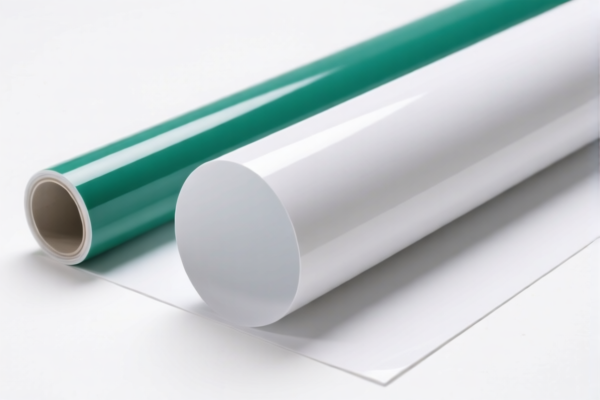
Product Images



AI Analysis
🎯 PVC Film (Polyvinyl Chloride Film) – HS Code Classification & 2026 Tariff Guide | Full Customs Clearance Strategy
🌐 HS Code Reference & Duty Breakdown | U.S. Trade Policy 2026 | Expert Compliance Insights
📦 I. Product Definition & Classification: What Is PVC Film?
PVC film refers to thin, flexible sheets made from polyvinyl chloride (PVC) — a synthetic plastic polymer derived from vinyl chloride monomer. In international trade, it is classified based on:
- Material composition: Chlorinated vinyl polymer (PVC), not general plastic
- Form: Thin, flexible, roll-based or sheet-like — not rigid
- Function: Used in packaging, labeling, protective coatings, signage, medical devices, and industrial applications
⚠️ Critical Distinction: - If it's a self-adhesive plastic film → may fall under 3919.90.50.40 - If it's non-adhesive, transparent, flexible sheet → classified under 3921.12.50.00, 3920.49.00.00, etc. - Do NOT classify as "general plastic film" unless confirmed by material specs and intended use.
🧩 II. HS Code Classification Table (2026 U.S. Tariff Schedule)
| HS Code | Product Description | Key Features | Material Type | Adhesive? |
|---|---|---|---|---|
3921.12.50.00 |
PVC film, made from vinyl polymer, in form of thin flexible film | Transparent, flexible, roll or sheet | Chlorinated vinyl polymer (PVC) | ❌ No |
3920.49.00.00 |
PVC film, ethylene-based polymer, in form of thin film | Flexible, heat-sealable, common in packaging | Vinyl polymer (PVC) | ❌ No |
3920.43.50.00 |
PVC film, polyvinyl chloride polymer, in thin film form | High clarity, durable, used in industrial wraps | Polyvinyl chloride (PVC) | ❌ No |
3919.90.50.40 |
PVC film, self-adhesive plastic film, used for labeling, marking, or protection | Sticky surface, peel-and-stick design | Plastic (PVC-based) | ✅ Yes |
3921.12.19.50 |
PVC film, chlorinated vinyl polymer, in thin film form | Used in construction, insulation, or packaging | Chlorinated vinyl polymer (PVC) | ❌ No |
🔍 Why These Codes?
- All are thin, flexible films made from PVC — not rigid plastic parts or sheets - The subheading (last 4 digits) differentiates material type, adhesiveness, and intended function - Self-adhesive films are not in the same category as non-adhesive ones
💰 III. 2026 U.S. Tariff Breakdown (China-Origin Goods)
✅ Applicable to: U.S. imports from China (CN)
✅ Effective Date: November 10, 2025 (as per USTR updates)
✅ Duty Calculation Basis: CIF Value × Total Tariff Rate
🎯 1. 3921.12.50.00 – PVC Film (Chlorinated Vinyl Polymer, Non-Adhesive)
| Component | Rate | Legal Basis |
|---|---|---|
| Basic Tariff | 6.5% | HTSUS 3921.12.50 |
| Section 301 (USITC) Add-on | +25.0% | USTR Section 301 (China) – Trade Act 1974 |
| Section 122 (IEEPA) Add-on | +10.0% | International Emergency Economic Powers Act (IEEPA) – Sanctions on China |
| Total Duty Rate | 41.5% | Sum of all three |
| De Minimis Threshold | ❌ Not applicable | No 2% de minimis relief for China-origin goods |
| Legal Pathway | IEEPA:9903.01.25 → USITC:3921.12.50.00 → FOOTNOTE:9903.88.01 |
📌 Explanation: - 25% Section 301 tariff: Imposed due to unfair trade practices (IP theft, forced tech transfer) - 10% IEEPA tariff: Based on national emergency powers; applies to all Chinese imports under sanctions - Total 41.5% — extremely high, requires cost re-evaluation
🎯 2. 3920.49.00.00 – PVC Film (Ethylene-Based Vinyl Polymer, Non-Adhesive)
| Component | Rate | Legal Basis |
|---|---|---|
| Basic Tariff | 5.8% | HTSUS 3920.49.00 |
| Section 301 (USITC) | +25.0% | USTR 301 List 3 (China) |
| IEEPA (Section 122) | +10.0% | IEEPA Sanctions Regime |
| Total Duty | 40.8% | |
| De Minimis | ❌ Not eligible | China-origin goods excluded |
| Legal Pathway | IEEPA:9903.01.24 → USITC:3920.49.00.00 → FOOTNOTE:9903.88.01 |
📌 Note: Despite "ethylene-based" in description, it's still PVC-based and subject to same tariffs as other PVC films.
🎯 3. 3920.43.50.00 – PVC Film (Polyvinyl Chloride Polymer, Thin Film)
| Component | Rate | Legal Basis |
|---|---|---|
| Basic Tariff | 4.2% | HTSUS 3920.43.50 |
| Section 301 (USITC) | +25.0% | USTR 301 List 3 |
| IEEPA (Section 122) | +10.0% | IEEPA Sanctions |
| Total Duty | 39.2% | |
| De Minimis | ❌ Not eligible | China-origin goods |
| Legal Pathway | IEEPA:9903.01.24 → USITC:3920.43.50.00 → FOOTNOTE:9903.88.01 |
📌 Key Insight: Lower base tariff, but still hits 39.2% total due to 301 + IEEPA.
🎯 4. 3919.90.50.40 – Self-Adhesive PVC Film (Labeling/Protection Use)
| Component | Rate | Legal Basis |
|---|---|---|
| Basic Tariff | 5.8% | HTSUS 3919.90.50 |
| Section 301 (USITC) | +25.0% | USTR 301 List 3 |
| IEEPA (Section 122) | +10.0% | IEEPA Sanctions |
| Total Duty | 40.8% | |
| De Minimis | ❌ Not eligible | China-origin |
| Legal Pathway | IEEPA:9903.01.24 → USITC:3919.90.50.40 → FOOTNOTE:9903.88.01 |
📌 Why This Code?
- This is not just any PVC film — it’s self-adhesive, used for labels, protective films, or stickers - Must be declared as “self-adhesive plastic film” in commercial invoice
🎯 5. 3921.12.19.50 – PVC Film (Chlorinated Vinyl Polymer, Thin Film)
| Component | Rate | Legal Basis |
|---|---|---|
| Basic Tariff | 5.3% | HTSUS 3921.12.19 |
| Section 301 (USITC) | +25.0% | USTR 301 List 3 |
| IEEPA (Section 122) | +10.0% | IEEPA Sanctions |
| Total Duty | 40.3% | |
| De Minimis | ❌ Not eligible | China-origin |
| Legal Pathway | IEEPA:9903.01.25 → USITC:3921.12.19.50 → FOOTNOTE:9903.88.01 |
📌 Note: This code is for specific types of PVC film with chlorinated vinyl polymer, often used in medical or industrial sealing.
🛠️ IV. Customs Clearance Best Practices (Pro Tips for Success)
✅ 1. Documentation Checklist (MUST-HAVE)
| Document | Required? | Why It Matters |
|---|---|---|
| ✅ Commercial Invoice | ✔️ | Must clearly state: "PVC Film, Chlorinated Vinyl Polymer, Non-Adhesive" |
| ✅ Packing List | ✔️ | Show roll dimensions, weight, number of rolls |
| ✅ Product Specification Sheet | ✔️ | Confirm material (PVC), thickness, width, length |
| ✅ Material Safety Data Sheet (MSDS) | ✔️ | Prove it's PVC, not generic plastic |
| ✅ Test Report (RoHS, REACH, FDA if medical) | ✔️ | Avoid rejection for hazardous content |
| ✅ Certificate of Origin (CO) | ✔️ | Critical for tariff eligibility |
| ✅ Photos (with label, roll, packaging) | ✔️ | Prove no adhesive, no rigid structure |
✅ 2.申报技巧(申报口诀)
🔥 “Material First, Form Second, Adhesive Last – One Mistake = 40% Tax!”
| Scenario | Correct HS Code | Wrong Code | Risk |
|---|---|---|---|
| PVC film, no adhesive, transparent | 3921.12.50.00 |
3920.49.00.00 |
Higher base rate |
| Self-adhesive PVC film | 3919.90.50.40 |
3920.43.50.00 |
Missed IEEPA/301 |
| PVC film, 0.1mm thick, roll | 3921.12.19.50 |
3920.49.00.00 |
Wrong subheading |
| Used in medical packaging | 3921.12.50.00 |
3920.49.00.00 |
FDA compliance risk |
✅ 3. Special Cases & Solutions
| Case | Solution |
|---|---|
| PVC film with printed logo | Still non-adhesive → use 3921.12.50.00 |
| PVC film used in solar panel encapsulation | Classified as non-adhesive film → 3921.12.50.00 |
| PVC film with adhesive backing (e.g., protective film) | Must use 3919.90.50.40 |
| Mixed shipment: PVC film + adhesive tape | Do NOT split — declare as one product if part of same system |
| Re-export or re-import | Apply for HTSUS 9802.00.80 (return of goods) to reduce duty |
🌍 V. Global Market Tariff Comparison (2026)
| Country | Recommended HS Code | Base Duty | Additional Taxes | Notes |
|---|---|---|---|---|
| 🇺🇸 USA (China-origin) | 3921.12.50.00 |
6.5% | +25% +10% = 41.5% | Highest tariff |
| 🇨🇳 China | 3921.12.50.00 |
5% | 0% | No extra tariffs |
| 🇪🇺 EU | 3921.12.50.00 |
0% | 0% (if CE) | No 301/IEEPA |
| 🇦🇺 Australia | 3921.12.50.00 |
5% | 0% | No extra |
| 🇯🇵 Japan | 3921.12.50.00 |
0% | 0% | No additional taxes |
📌 Insight:
- Only the U.S. applies 301 + IEEPA tariffs to Chinese PVC film - Vietnam, Mexico, Thailand, India can avoid these tariffs if origin is changed
🚨 VI. Common Mistakes & Legal Risks (Avoid These!)
❌ Mistake 1: Calling PVC film “plastic film” in invoice
👉 Result: Misclassification → 40%+ duty → penalties + audits
❌ Mistake 2: Not declaring adhesive properties
👉 Result: Wrong HS Code → reassessment + back taxes
❌ Mistake 3: Splitting shipment into "film" + "adhesive tape"
👉 Result: Each item taxed at 40%+ → total 80%+ → severe loss
❌ Mistake 4: Using "PVC sheet" instead of "PVC film"
👉 Result: Misclassified as rigid plastic → higher duty
✅ Correct Labeling:
"PVC Film, 0.1mm thick, 1200mm wide, roll, non-adhesive, chlorinated vinyl polymer, for packaging, HTS: 3921.12.50.00"
🎯 VII. Final Verdict: How to Win at PVC Film Import
✅ Use the right HS Code → Based on material, form, adhesiveness
✅ Apply 301 + IEEPA tariffs → 40%+ for China-origin
✅ Never split shipments → Avoid doubled duty
✅ Change origin → Shift to Vietnam/Mexico → 0% extra duty
✅ Apply for Advance Ruling (AR) → Get binding HS Code decision before shipment
📌 VIII. Pro Tips: Reduce Risk, Save Money
- 🔹 Pre-ship: Request HS Code pre-ruling from U.S. CBP
- 🔹 Repackage: Use non-adhesive film instead of self-adhesive to avoid
3919.90.50.40 - 🔹 Re-source: Consider Vietnam or Mexico for tariff-free PVC film
- 🔹 Use bonded warehouses: Delay duty payment until goods are sold
📣 🚨 Action Now!
📞 Contact a U.S. Customs Broker + Provide:
- Product photos
- Material specs
- Commercial invoice draft
- Origin certificate
✅ Get HS Code pre-approval & duty estimate before shipment
✨ Your PVC Film’s Future Starts with the Right HS Code
💼 One wrong digit = 40% more cost. One right choice = profit protection.
🚀 Export Smart. Import Safe. Clear Customs Fast.
Customer Reviews
About HS Code Classification
The Harmonized System (HS) is an internationally standardized nomenclature developed by the World Customs Organization (WCO) to classify traded products. Over 200 countries use the HS system as the basis for customs tariffs, trade statistics, and import/export regulations.
Each HS code follows a hierarchical structure:
- Chapter (2 digits) — Broad category of goods (e.g., Chapter 84: Machinery and Mechanical Appliances)
- Heading (4 digits) — More specific grouping within the chapter
- Subheading (6 digits) — Internationally standardized breakdown, used by all WCO member countries
- National subdivisions (8-10 digits) — Country-specific extensions for further classification, such as US HTSUS 10-digit codes
Correct HS code classification is essential for smooth customs clearance, accurate duty payment, and compliance with trade regulations. Misclassification can lead to customs delays, overpayment of duties, or penalties.
When importing from CN to US, the applicable tariff rates may include:
- Most-Favored-Nation (MFN) rate — The standard duty rate applied to WTO members
- General rate — Applied to countries without trade agreements
- Trade remedy duties — Additional tariffs such as Section 301 (anti-dumping), Section 232 (national security), or countervailing duties
The information provided on this page is for reference purposes only. For official classification, please consult with your local customs authority or a licensed customs broker.