PVC Flange
CN → US| HS Code | Tariff Rate | Origin | Destination | Doc |
|---|---|---|---|---|
| 3917400095 | 40.3% | CN | US | Official Doc |
| 3917400020 | 40.3% | CN | US | Official Doc |
| 3926909987 | 22.8% | CN | US | Official Doc |
| 3926305000 | 22.8% | CN | US | Official Doc |
| 3926305000 | 22.8% | CN | US | Official Doc |
Product Images
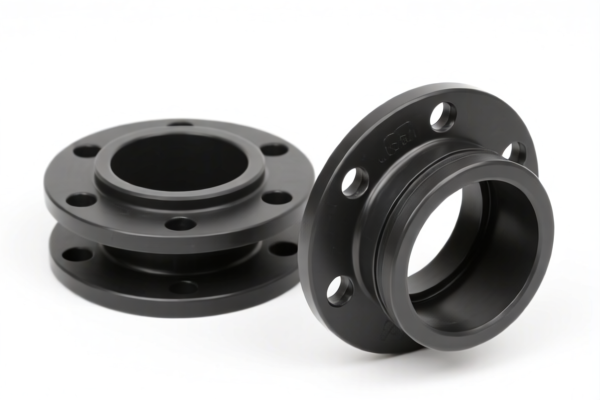

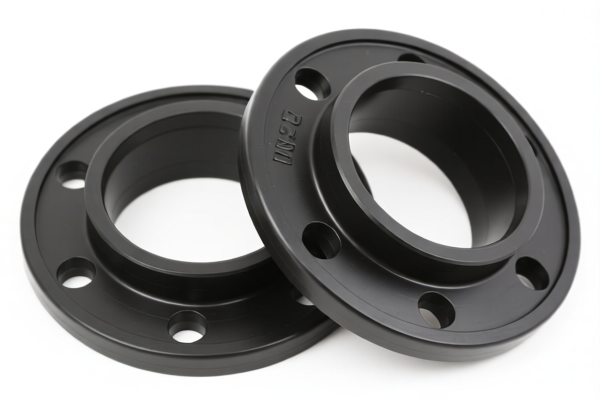
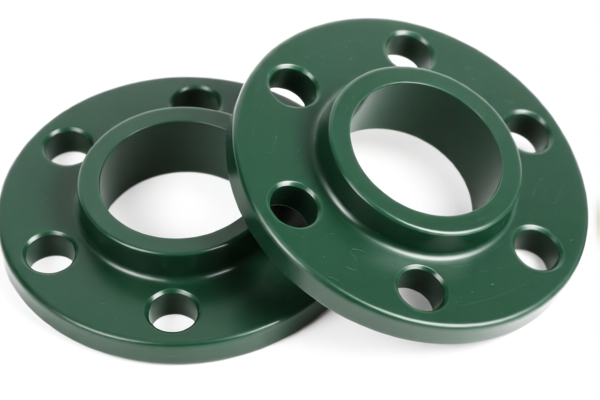
AI Analysis
🏭 PVC Flange (Polyvinyl Chloride Flange)
🌐 HS Code Reference & Clearance Guide | 2026 Latest Tariff Analysis | Professional Customs Strategy
📌 I. Product Definition & Classification: Do You Really Understand "PVC Flanges"?
PVC Flanges are critical pipeline connection components used in industrial, municipal, and residential plumbing systems. They provide a secure, leak-proof connection between pipes, valves, pumps, and other equipment. In international trade, classification depends heavily on the specific material composition, functional form, and intended application.
There are two primary categories for PVC flanges in customs terminology: 1. Tube/Plate/Pipe & Fittings (HS Chapter 3917): Specifically designed for fluid transport systems. 2. Articles of Plastics, Other (HS Chapter 3926): General-purpose plastic articles that do not fit specific machinery or tubing categories.
⚠️ Key Distinction Point:
- If the flange is explicitly described as a "pipe fitting" or "accessory for pipes" made of PVC, it falls under 3917.40.
- If it is a generic "plastic article" or "connection part" not strictly defined as a pipe component, it may fall under 3926.
- Note: The presence of different materials (e.g., Polyethylene vs. PVC) can also shift classification to different subheadings.
📦 II. HS Code Classification Details (2026 Latest Tariff Authority Comparison)
| HS Code | Product Description | Applicable Scenario | Material/Form Key |
|---|---|---|---|
3917.40.00.95 |
PVC Flanges, Material: PVC, Form: Flange Accessories | General PVC pipeline flanges, industrial connectors | ✅ PVC, Pipe Fitting |
3917.40.00.20 |
PVC Flanges, Material: Polyvinyl Chloride, Form: Pipe Accessory Attachments | Specific PVC pipe attachment flanges | ✅ PVC, Pipe Accessory |
3926.90.99.87 |
PVC Plastic Flanges, Material: PVC, Form: Pipe Parts/Component Plastic Articles | General plastic pipe parts not strictly "tubes/fittings" | ✅ PVC, Plastic Component |
3926.30.50.00 |
PVC Plastic Flanges, Material: PVC, Form: Connectors/Accessories | Generic PVC connectors or accessories | ✅ PVC, Connector |
3926.30.50.00 |
Polyethylene Flanges, Material: Polyethylene, Form: Connection Article Products | Flanges made of Polyethylene (PE), not PVC | ✅ Polyethylene |
🔍 Key Reminder:
- Material Matters: Ensure your commercial invoice clearly states the material. "PVC" vs. "Polyethylene" leads to the same HS Code (3926.30.50.00) in some contexts but distinct treatment in others. - Function Matters: "Pipe Fitting" (3917) vs. "General Plastic Article" (3926) significantly impacts tariff rates due to different trade remedy policies.
💰 III. 2026 Latest Tariff Rate Breakdown (Including Surtaxes, Policy Surcharges)
✅ Applicable Country: United States (US)
✅ Country of Origin: China (CN)
✅ Effective Date: Post-2025 (Includes subsequent imports subject to Section 301 & 122 tariffs)
🎯 1. 3917.40.00.95 & 3917.40.00.20 —— PVC Flanges (Pipe Fittings)
| Item | Content |
|---|---|
| Base Tariff Rate | 5.3% (Ad Valorem) |
| Section 301 Surtax | +25.0% (USITC Footnote 301) |
| Section 122 Surtax | +10.0% (Specific China Surcharges) |
| Total Tariff Rate | 40.3% |
| Tax Calculation | CIF Value × 40.3% |
| De Minimis Eligibility | ❌ Not Eligible (High tax rate prevents $800 exemption) |
| Legal Basis Path | USITC:3917.40.00.95 → FOOTNOTE:301 → SECTION:122 |
📌 Explanation:
- PVC flanges classified under 3917 are considered essential pipe components.
- They are subject to both the standard 25% Section 301 tariff and an additional 10% Section 122 tariff.
- Total burden: 40.3%. This is a high-cost classification. Importers must account for this in pricing strategies.
🎯 2. 3926.90.99.87 & 3926.30.50.00 —— PVC/Polyethylene Flanges (General Plastic Articles)
| Item | Content |
|---|---|
| Base Tariff Rate | 5.3% (Ad Valorem) |
| Section 301 Surtax | +7.5% (USITC Footnote 301 - Lower Tier) |
| Section 122 Surtax | +10.0% (Specific China Surcharges) |
| Total Tariff Rate | 22.8% |
| Tax Calculation | CIF Value × 22.8% |
| De Minimis Eligibility | ❌ Not Eligible |
| Legal Basis Path | USITC:3926.90.99.87 or 3926.30.50.00 → FOOTNOTE:301 → SECTION:122 |
📌 Explanation:
- Classified under 3926 as "Other Articles of Plastics" or "Connectors."
- These fall into a lower surtax tier (7.5%) compared to the 25% for pipe fittings.
- Total burden: 22.8%. This is significantly cheaper than the 3917 classification.
- Strategic Note: If the product can be legitimately classified under 3926 (e.g., as a generic connector or non-standard fitting), it offers a 17.5% cost saving.
🛠️ IV. Customs Clearance Practical Advice (Real-World Pitfall Guide)
✅ 1. Preparation Checklist (Essential Documents)
| Document | Must Provide | Description |
|---|---|---|
| ✅ Commercial Invoice | ✔️ | Must specify "PVC Flange" or "Polyethylene Flange" clearly. Avoid vague terms like "Plastic Part." |
| ✅ Material Specification | ✔️ | Explicitly state "PVC" or "Polyethylene." Mismatched materials lead to misclassification. |
| ✅ Product Photos | ✔️ | Show the flange shape, bolt holes, and connection type. |
| ✅ Functional Description | ✔️ | Describe whether it is a "Pipe Fitting" (connects pipes) or a "Connector/Bracket" (general purpose). |
| ✅ HS Code Justification | ✔️ | Provide reasoning for choosing 3917 vs. 3926 based on function and form. |
✅ 2. Classification Strategy (Key Mantras)
🔥 "Pipe Fitting = 3917 (40.3%) | General Connector = 3926 (22.8%)"
| Scenario | Correct HS Code | Risk if Misclassified |
|---|---|---|
| Standard PVC pipe flange connecting two pipes | 3917.40.00.95 |
If misclassified as 3926 → Potential penalty for undervaluation + back taxes |
| Generic plastic connector not strictly a pipe fitting | 3926.30.50.00 |
If misclassified as 3917 → Overpaying tariffs unnecessarily |
| Polyethylene (PE) Flange | 3926.30.50.00 |
If labeled as PVC → Material mismatch leads to rejection |
| Mixed Material Flange (PVC + Metal) | Check Composition | If >50% PVC → 3917/3926; If Metal dominant → 7307/7318 |
✅ 3. Special Handling Tips
| Situation | Handling Advice |
|---|---|
| OEM Custom Flanges | Provide client drawings. Ensure description matches exact function (pipe vs. general). |
| Small B2C Shipments | Even under $800, high tariffs (22.8-40.3%) may apply if declared correctly. Do not assume de minimis applies. |
| Polyethylene vs. PVC | Critical: Do not confuse them. Both may use 3926.30.50.00, but accuracy prevents audit flags. |
| Kit Packages | If flanges are sold with gaskets/bolts, declare as a set. Ensure primary component dictates HS Code. |
🌍 V. Global Market Clearance Comparison (2026 Latest)
| Country/Region | Recommended HS Code | Tariff Rate | Certification | Notes |
|---|---|---|---|---|
| 🇺🇸 USA | 3917.40.00.95 / 3926.30.50.00 |
40.3% / 22.8% | N/A | High tariffs due to Section 301 & 122 |
| 🇨🇳 China | 3917.40.00 / 3926.30 |
~5-10% | CCC (if applicable) | Lower import duties, but export from China faces US tariffs |
| 🇪🇺 EU | 3917.29 / 3926.90 |
0-6% | REACH + RoHS | No Section 301 equivalent, but CE marking needed |
| 🇨🇦 Canada | 3917.29 / 3926.90 |
5-6% | Health Canada | Similar to US but lower surtaxes |
📌 Conclusion:
- USA is the most expensive market for PVC/PE flanges due to Section 301 and 122 tariffs.
- Classification choice (3917 vs. 3926) can save 17.5% in tariffs.
- Europe and Canada are more tariff-friendly, but require strict environmental certifications (REACH, RoHS).
📌 VI. Common Errors & Pitfall Guide (Lessons Learned)
❌ Error 1: Calling all plastic flanges "PVC" when some are "Polyethylene"
👉 Consequence: Audit flag for false declaration. May lead to fines.
❌ Error 2: Classifying pipe fittings as "General Plastic Parts" (3926) to save tax
👉 Consequence: CBP may reclassify to 3917, demanding back taxes + penalties for underpayment.
❌ Error 3: Ignoring the "Section 122" 10% surcharge
👉 Consequence: Underquoting the total landed cost by 10%, leading to budget shortfalls.
❌ Error 4: Using vague terms like "Plastic Connection" without specifying function
👉 Consequence: CBP requests additional info, causing delays and potential storage fees.
✅ Correct Practice:
"PVC Pipe Flange, ANSI Class 150, Material: Polyvinyl Chloride, Form: Pipe Fitting, For Water Supply System"
🎯 VII. Conclusion: Precise Classification, Cost Efficiency!
🎯 Remember the Mantra:
🔹 "Pipe Fitting = 3917 (40.3%) | General Connector = 3926 (22.8%)"
🔹 "Material Accuracy Prevents Fines | Classification Choice Saves 17.5%"
📌 Tips:
- If your flanges are strictly for pipe connections, accept the 40.3% rate for 3917.
- If they are general-purpose connectors, strive for 3926 to pay 22.8%.
- Always verify the material (PVC vs. Polyethylene) on the invoice.
📣 Immediate Action:
📞 Consult a Customs Broker for pre-classification review.
📄 Provide detailed product specs to CBP if uncertain.
🚀 Optimize your supply chain by leveraging the lower tariff tier where legally applicable.
✨ Professional Clearance Starts with Accurate Classification!
💼 Every Percent Saved is Pure Profit!
Customer Reviews
About HS Code Classification
The Harmonized System (HS) is an internationally standardized nomenclature developed by the World Customs Organization (WCO) to classify traded products. Over 200 countries use the HS system as the basis for customs tariffs, trade statistics, and import/export regulations.
Each HS code follows a hierarchical structure:
- Chapter (2 digits) — Broad category of goods (e.g., Chapter 84: Machinery and Mechanical Appliances)
- Heading (4 digits) — More specific grouping within the chapter
- Subheading (6 digits) — Internationally standardized breakdown, used by all WCO member countries
- National subdivisions (8-10 digits) — Country-specific extensions for further classification, such as US HTSUS 10-digit codes
Correct HS code classification is essential for smooth customs clearance, accurate duty payment, and compliance with trade regulations. Misclassification can lead to customs delays, overpayment of duties, or penalties.
When importing from CN to US, the applicable tariff rates may include:
- Most-Favored-Nation (MFN) rate — The standard duty rate applied to WTO members
- General rate — Applied to countries without trade agreements
- Trade remedy duties — Additional tariffs such as Section 301 (anti-dumping), Section 232 (national security), or countervailing duties
The information provided on this page is for reference purposes only. For official classification, please consult with your local customs authority or a licensed customs broker.