PVC Flexible Hose
CN → US| HS Code | Tariff Rate | Origin | Destination | Doc |
|---|---|---|---|---|
| 3917320010 | 38.1% | CN | US | Official Doc |
| 3917390020 | 38.1% | CN | US | Official Doc |
| 5909002000 | 38.3% | CN | US | Official Doc |
| 3919905040 | 40.8% | CN | US | Official Doc |
Product Images

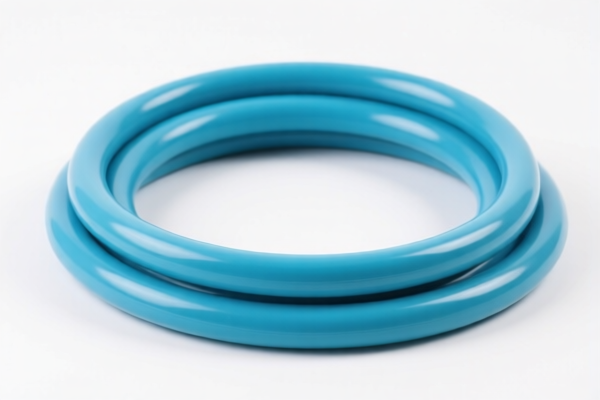
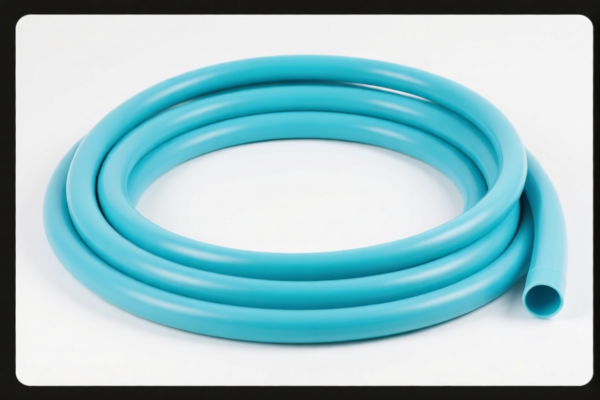
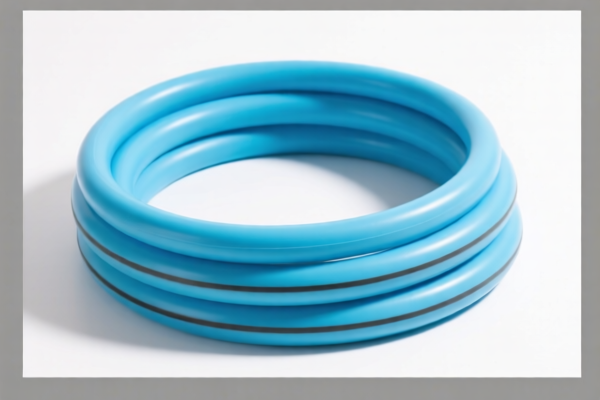
AI Analysis
🌊 PVC Flexible Hose (PVC材质软管)
🌐 HS Code Reference & Customs Clearance Guide | 2026 Latest Tariff Analysis | Professional Compliance Strategy
📌 I. Product Definition & Classification: Do You Really Understand "PVC Hose"?
PVC Flexible Hoses are essential components in fluid transport, used extensively in industrial, agricultural, and household applications. In international trade, they are primarily classified under Chapter 39 (Plastics and Articles Thereof) or occasionally under Chapter 59 (Impregnated, Coated, Covered or Laminated Textile Fabrics) depending on their specific material composition and structural definition.
Key Classification Divergence: * Pure PVC Tubing: Classified under 3917 (Plastics tubes, pipes, and hoses). This is the most accurate classification for standard PVC hoses. * Textile- Reinforced/Composite Hose: May fall under 5909 if the primary characteristic is considered a textile fabric impregnated with rubber or plastic. * Flat/Sheet-like Form: If the product is flattened or lacks a hollow tubular structure, it may be misclassified under 3919 (Self-adhesive plates, sheets...), though this is technically incorrect for true hoses.
⚠️ Critical Distinction:
- If the product is a hollow tube with circular or non-circular cross-sections made of plastic → HS 3917
- If the product is flat or sheet-like → HS 3919 (Incorrect for hoses, but a common error)
- If the product is primarily a textile fabric coated with plastic → HS 5909 (Less common for pure PVC, but possible in composite forms)
📦 II. HS Code Classification Details (2026 Latest Tariff Authority对照)
Based on the provided data, here are the precise HS Codes associated with "PVC Flexible Hose" and their tax implications.
| HS Code | Product Description | Application Scenario | Tax Rate | Legal/Tariff Basis |
|---|---|---|---|---|
3917.32.00.10 |
PVC Flexible Hose, classified as other tubes, pipes, and hoses of plastics | Standard PVC hoses, industrial fluid transfer, water supply | 38.1% | Base: 3.1% + Section 301: 25.0% + Section 122: 10% |
3917.39.00.20 |
PVC Flexible Hose, fully compliant with material and form limitations | General-purpose PVC hoses, agricultural irrigation, low-pressure applications | 38.1% | Base: 3.1% + Section 301: 25.0% + Section 122: 10% |
5909.00.20.00 |
PVC Plastic Hose, classified under "Other" textile hoses | Composite hoses with textile reinforcement, plastic-coated fabric hoses | 38.3% | Base: 3.3% + Section 301: 25.0% + Section 122: 10% |
3919.90.50.40 |
PVC Flexible Sheet (Misclassification Risk) | Flat PVC strips, non-tubular plastic films, transparent tapes | 40.8% | Base: 5.8% + Section 301: 25.0% + Section 122: 10% |
🔍 Key Insight:
- HS 3917 is the correct classification for true PVC hoses.
- HS 5909 applies only if the product is structurally a textile fabric impregnated/coated with plastic.
- HS 3919 is for flat sheets/films, not hoses. Using this code is a high-risk misclassification that can lead to penalties, as it carries the highest tax rate (40.8%).
💰 III. 2026 Latest Tariff Rate Breakdown (Including Surcharges & Policy Add-ons)
✅ Applicable Country: United States (US)
✅ Origin: China (CN)
✅ Effective Date: 2025/2026 (Including subsequent imports)
🎯 1. 3917.32.00.10 & 3917.39.00.20 —— PVC Flexible Hoses (Plastic Tubing)
| Item | Content |
|---|---|
| Base Tariff | 3.1% (Ad Valorem) |
| USITC Surcharge (Section 301) | +25.0% |
| Section 122 Tariff | +10.0% |
| Total Effective Rate | 38.1% |
| Calculation Basis | CIF Value × 38.1% |
| De Minimis Exemption | ❌ Not Eligible (High tariff threshold prevents $800 exemption) |
| Legal Path | HTSUS:3917 → USITC:301 → Section 122 |
📌 Explanation:
- The 3.1% is the standard MFN (Most Favored Nation) duty for plastic hoses.
- The 25% is the Section 301 tariff imposed on Chinese-origin goods under US Trade Act Section 301.
- The 10% is the Section 122 tariff (232 investigation) applied to certain industrial inputs, including some plastic products.
- Total 38.1% is a very high duty rate, significantly impacting profitability.
🎯 2. 5909.00.20.00 —— PVC Plastic Hose (Textile Composite)
| Item | Content |
|---|---|
| Base Tariff | 3.3% (Ad Valorem) |
| USITC Surcharge (Section 301) | +25.0% |
| Section 122 Tariff | +10.0% |
| Total Effective Rate | 38.3% |
| Calculation Basis | CIF Value × 38.3% |
| De Minimis Exemption | ❌ Not Eligible |
| Legal Path | HTSUS:5909 → USITC:301 → Section 122 |
📌 Note:
- Slightly higher base rate (3.3% vs 3.1%) due to the textile nature, but total rate is nearly identical.
- Must provide proof of textile reinforcement if classified here.
🎯 3. 3919.90.50.40 —— PVC Flexible Sheet (Misclassified as Hose)
| Item | Content |
|---|---|
| Base Tariff | 5.8% (Ad Valorem) |
| USITC Surcharge (Section 301) | +25.0% |
| Section 122 Tariff | +10.0% |
| Total Effective Rate | 40.8% |
| Calculation Basis | CIF Value × 40.8% |
| De Minimis Exemption | ❌ Not Eligible |
| Legal Path | HTSUS:3919 → USITC:301 → Section 122 |
📌 Warning:
- This classification is for flat sheets, not hoses.
- Misclassifying a hose as a sheet results in a higher tax burden (40.8%) and potential customs fraud allegations.
- Always declare the true form (tubular) to use HS 3917.
🛠️ IV. Customs Clearance Practical Advice (Risk Avoidance Guide)
✅ 1. Required Documentation Checklist
| Document | Mandatory? | Description |
|---|---|---|
| ✅ Product Specification Sheet | ✔️ | Material: 100% PVC or composite; Inner/Outer diameter; Wall thickness; Temperature/Pressure ratings. |
| ✅ Product Photos | ✔️ | Clear images showing the hollow tubular structure. Avoid images that look like flat sheets. |
| ✅ Commercial Invoice | ✔️ | Clearly state "PVC Flexible Hose" or "Plastic Tubing". Avoid vague terms like "PVC Material". |
| ✅ Packing List | ✔️ | Show unit packaging (e.g., coils, rolls) to prove flexibility and tubular form. |
| ✅ Origin Certificate | ✔️ | To confirm China origin and trigger accurate tariff application. |
| ✅ Import License (if applicable) | ✔️ | For certain industrial applications. |
✅ 2. Declaration Best Practices
🔥 “True Form, True Material, Accurate Code, Save Cost!”
| Scenario | Correct Declaration | Incorrect Declaration | Risk |
|---|---|---|---|
| Standard PVC Hose | 3917.32.00.10 or 3917.39.00.20 |
3919.90.50.40 |
Overpayment (2.7% extra) + Audit Risk |
| Composite Hose | 5909.00.20.00 |
3917... |
Underpayment + Penalty |
| Flat PVC Strip | 3919.90.50.40 |
3917... |
Misclassification |
✅ 3. Special Cases & Handling
| Scenario | Handling Advice |
|---|---|
| OEM Custom Hoses | Provide design drawings to prove tubular structure. |
| Hoses with Fittings | Declare hose and fittings separately if they are standard hardware (HS 7307), not part of the hose. |
| High-Temperature Resistant PVC | Still classified under 3917 if material is PVC. Do not misclassify under Chapter 30 or 84. |
| Small Sample Shipments | Even small quantities are subject to full tariff. De Minimis ($800) does not apply due to Section 301/122. |
🌍 V. Global Market Comparison (2026 Latest)
| Country/Region | Recommended HS Code | Tariff Rate | Certification | Notes |
|---|---|---|---|---|
| 🇺🇸 USA | 3917.32.00.10 |
38.1% | FDA (if for water/food) | High duty due to Section 301/122. |
| 🇨🇳 China | 3917.32.00.10 |
~5% | CCC (if applicable) | No Section 301. |
| 🇪🇺 EU | 3917.32.00.90 |
~0-6% | REACH, RoHS | No additional surcharges. |
| 🇦🇺 Australia | 3917.32.00.00 |
~5% | Australian Pesticides | Standard GST applies. |
| 🇯🇵 Japan | 3917.32.00.00 |
~0-3% | PSE (if electrical) | Stable trade environment. |
📌 Conclusion:
- USA is the most expensive market for PVC hoses due to multiple surcharges.
- EU and Japan offer more favorable tariff environments.
- Diversify supply chain if targeting the US market to mitigate tariff risks.
📌 VI. Common Errors & Pitfalls (Lessons Learned)
❌ Error 1: Declaring PVC hose as "Plastic Sheet" (3919)
👉 Consequence: Higher tax (40.8% vs 38.1%) and customs inquiry.
❌ Error 2: Using "PVC Tube" and "PVC Hose" interchangeably without specifying material
👉 Consequence: Misclassification under wrong subheading, leading to delays.
❌ Error 3: Ignoring Section 122 and 301 surcharges in cost calculations
👉 Consequence: Underestimating landed cost by ~35%.
❌ Error 4: Shipping small samples without declaring proper HS Code
👉 Consequence: No de minimis exemption; full duty paid even for $100 samples.
✅ Correct Approach:
"PVC Flexible Hose, 1/2 inch diameter, for water transfer, made of 100% PVC, Coiled"
🎯 VII. Conclusion: Professional Declaration, Time-Saving, Cost-Efficient!
🎯 Remember the Mantra:
🔹 "Tubular Form, Plastic Material, HS 3917, Tax 38.1%. Flat Sheet is 40.8%, Don't Get Trapped!"
🔹 "Check Origin, Apply Surcharges, Avoid Misclassification, Save Money!"
📌 Pro Tip:
If your PVC hoses are originating from Vietnam, Mexico, Thailand, or Malaysia, you may be eligible for IEEPA Exemptions or lower Section 301 rates.
Recommend Applying for a Pre-Ruling (Advance Ruling) from US Customs and Border Protection (CBP) to confirm the correct HS Code and avoid post-entry audits.
📣 Take Action Now:
📞 Contact a licensed customs broker + Provide Product Specs + Apply for HS Code Pre-Ruling
🚀 Ensure smooth customs clearance, efficient export, and maximized profit margins!
✨ Professional clearance starts with accurate classification!
💼 Every cent of your cost deserves precise calculation!
Customer Reviews
About HS Code Classification
The Harmonized System (HS) is an internationally standardized nomenclature developed by the World Customs Organization (WCO) to classify traded products. Over 200 countries use the HS system as the basis for customs tariffs, trade statistics, and import/export regulations.
Each HS code follows a hierarchical structure:
- Chapter (2 digits) — Broad category of goods (e.g., Chapter 84: Machinery and Mechanical Appliances)
- Heading (4 digits) — More specific grouping within the chapter
- Subheading (6 digits) — Internationally standardized breakdown, used by all WCO member countries
- National subdivisions (8-10 digits) — Country-specific extensions for further classification, such as US HTSUS 10-digit codes
Correct HS code classification is essential for smooth customs clearance, accurate duty payment, and compliance with trade regulations. Misclassification can lead to customs delays, overpayment of duties, or penalties.
When importing from CN to US, the applicable tariff rates may include:
- Most-Favored-Nation (MFN) rate — The standard duty rate applied to WTO members
- General rate — Applied to countries without trade agreements
- Trade remedy duties — Additional tariffs such as Section 301 (anti-dumping), Section 232 (national security), or countervailing duties
The information provided on this page is for reference purposes only. For official classification, please consult with your local customs authority or a licensed customs broker.