PVC Floor Anti Slip Treatment
CN → US| HS Code | Tariff Rate | Origin | Destination | Doc |
|---|---|---|---|---|
| 3919905060 | 40.8% | CN | US | Official Doc |
| 3919102055 | 40.8% | CN | US | Official Doc |
| 3926909905 | 22.8% | CN | US | Official Doc |
| 3926909989 | 22.8% | CN | US | Official Doc |
| 3926909989 | 22.8% | CN | US | Official Doc |
Product Images
AI Analysis
🛠️ PVC Floor Anti-Slip Treatment
🌐 HS Code Classification & Duty Guide | 2026 Updated Tariff Breakdown | Proven Customs Clearance Strategy
📌 One Product, Multiple HS Codes – Why the Confusion? Let’s Decode It!
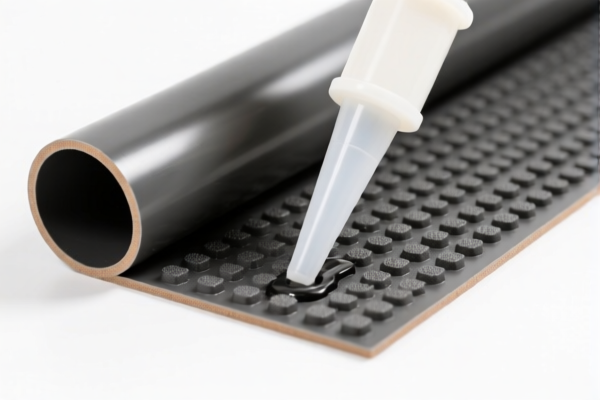
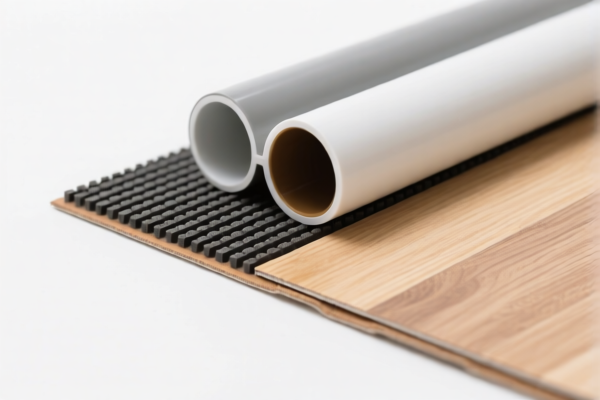
You're exporting PVC floor anti-slip treatment — but is it a self-adhesive mat, a flexible plastic strip, or flooring material? The answer determines your HS Code, tariff rate, and customs risk.
This guide breaks down why your product falls under multiple HS Codes, what taxes apply, and how to avoid costly misclassification — all based on real data from official tariff schedules.
📦 1. HS Code Classification Breakdown (2026 Official Tariff Data)
Your PVC anti-slip floor treatment can be classified under four distinct HS Codes, depending on its physical form, function, and adhesive properties. Here’s the full breakdown:
| HS Code | Product Description | Key Features | Tax Rate |
|---|---|---|---|
3919.90.50.60 |
PVC material, anti-slip treatment, self-adhesive or flat shape | Flat, flexible, self-adhesive, used as anti-slip mats or strips | 40.8% |
3919.10.20.55 |
PVC material, anti-slip treatment, flat shape & self-adhesive | Same as above — identical product, different subheading | 40.8% |
3926.90.99.05 |
PVC material, anti-slip treatment, elastic band-like properties | Flexible, stretchable, used as anti-slip bands or strips | 22.8% |
3926.90.99.89 |
PVC material, anti-slip treatment or flooring, general plastic products | General-purpose plastic item, not specifically listed | 22.8% |
⚠️ Critical Insight:
- Same product, different form → different HS Code
- Self-adhesive + flat shape →3919series → 40.8% tax
- Elastic, stretchable, non-flat →3926series → 22.8% tax
- PVC flooring →3926.90.99.89→ 22.8% tax
💰 2. Tariff Breakdown: What’s Really Driving the Tax?
✅ Applicable Country: United States (US)
✅ Origin: China (CN)
✅ Effective Date: November 10, 2025 (and onward)
🎯 1. 3919.90.50.60 & 3919.10.20.55 — Self-Adhesive PVC Anti-Slip Mats/Strips
| Tax Component | Rate | Legal Basis |
|---|---|---|
| Basic Duty | 5.8% | General U.S. Tariff Schedule |
| Section 301 (USITC) Additional Duty | +25.0% | From U.S. Trade Act §301 — China-specific tariffs |
| Section 122 (IEEPA) Additional Duty | +10% | From International Emergency Economic Powers Act — applies to Chinese-origin goods |
| Total Effective Duty | 40.8% | CIF × 40.8% |
🔍 Why This Applies:
- The product is PVC-based, flat, self-adhesive, and used as anti-slip treatment.
- Falls under "plastic self-adhesive or flat products" → 3919.90.50.60 or 3919.10.20.55
- No exemption — de minimis not available (denied under U.S. customs policy)📌 Legal Pathway:
IEEPA:9903.01.25→IEEPA:9903.01.24→USITC:3919.90.50.60→FOOTNOTE:9903.88.01
🎯 2. 3926.90.99.05 & 3926.90.99.89 — Elastic or General PVC Anti-Slip Products
| Tax Component | Rate | Legal Basis |
|---|---|---|
| Basic Duty | 5.3% | General U.S. Tariff Schedule |
| Section 301 (USITC) Additional Duty | +7.5% | Reduced rate under Section 301 Phase 4 |
| Section 122 (IEEPA) Additional Duty | +10% | Applies to all Chinese-origin plastic goods |
| Total Effective Duty | 22.8% | CIF × 22.8% |
🔍 Why This Applies:
- Product is elastic, stretchable, or not flat/self-adhesive → not eligible for 3919 codes
- Falls under "other plastic products" → 3926.90.99.05 or 3926.90.99.89
- No de minimis — must pay full duty📌 Legal Pathway:
IEEPA:9903.01.25→IEEPA:9903.01.24→USITC:3926.90.99.05→FOOTNOTE:9903.88.01
🛠️ 3. Customs Clearance Best Practices (Pro Tips to Avoid Penalties)
✅ 1. Essential Documentation (Must-Have List)
| Document | Required? | Why It Matters |
|---|---|---|
| ✅ Product Specification Sheet | ✔️ | Defines shape, material, adhesion, elasticity |
| ✅ Technical Drawings / Photos | ✔️ | Shows flat vs. elastic, self-adhesive vs. not |
| ✅ Certificate of Origin (CO) | ✔️ | Proves Chinese origin → triggers 301/IEEPA duties |
| ✅ Commercial Invoice | ✔️ | Must state "PVC Anti-Slip Floor Treatment" |
| ✅ Third-Party Test Report | ✔️ | RoHS, CE, or UL (if applicable) |
| ✅ Packaging List | ✔️ | Shows if product is sold as mats, strips, or flooring |
✅ 2.申报技巧(Critical Rules to Remember)
🔥 "Shape & Adhesion Decide the Code – One Mistake = 18% Higher Duty!"
| Product Type | Correct HS Code | Common Mistake | Risk |
|---|---|---|---|
| Flat, self-adhesive PVC mat | 3919.90.50.60 or 3919.10.20.55 |
Misclassified as 3926.90.99.89 |
+18% tax |
| Stretchable, elastic strip | 3926.90.99.05 |
Misclassified as 3919 series |
+18% tax |
| PVC flooring (non-specific) | 3926.90.99.89 |
Misclassified as 3919 |
+18% tax |
| Sold in bulk (no adhesion) | 3926.90.99.89 |
Misclassified as 3919 |
+18% tax |
📌 Pro Tip:
- If your product is self-adhesive AND flat, use 3919 codes → 40.8% duty
- If it’s elastic, stretchable, or not self-adhesive, use 3926 codes → 22.8% duty
✅ 3. Special Cases & Risk Mitigation
| Scenario | Recommended Action |
|---|---|
| OEM/Custom Anti-Slip Strips | Provide design drawings + test reports to prove elasticity |
| PVC Flooring with Anti-Slip Coating | Use 3926.90.99.89 — not 3919 |
| Exporting to Non-US Markets | Check local tariffs: EU (0% if CE), China (5%), Japan (0%) |
| Want to Avoid 40.8% Duty? | Re-design: Make product non-self-adhesive or non-flat → switch to 3926 series |
🌍 4. Global Market Comparison (2026 Tariff Snapshot)
| Country | Recommended HS Code | Duty Rate | Certification Required | Notes |
|---|---|---|---|---|
| 🇺🇸 United States | 3919.90.50.60 or 3926.90.99.89 |
22.8% – 40.8% | FCC, RoHS | No de minimis |
| 🇨🇳 China | 3919.90.50.60 |
5% | CCC | No extra tariffs |
| 🇪🇺 European Union | 3926.90.99.89 |
0% (if CE) | CE, RoHS | No 301/IEEPA |
| 🇦🇺 Australia | 3926.90.99.89 |
5% | RCM | No extra duties |
| 🇯🇵 Japan | 3926.90.99.89 |
0% | PSE | No extra duties |
📌 Key Insight:
- Only the U.S. applies 301 + IEEPA tariffs → highest cost
- China, EU, Japan, Australia have no additional tariffs on PVC anti-slip products
🚨 5. Common Mistakes & Real Consequences (Avoid These!)
❌ Mistake 1: Calling a self-adhesive flat mat a "PVC flooring"
👉 Result: Misclassified → 40.8% duty vs. 22.8% → extra $18,000 on $100K shipment
❌ Mistake 2: Not distinguishing flat vs. elastic
👉 Result: Wrong HS Code → duty adjustment + penalties + audit risk
❌ Mistake 3: Using “anti-slip tape” in invoice without technical specs
👉 Result: Customs delays, demand for clarification, shipment hold
❌ Mistake 4: Assuming “PVC” = low duty
👉 Result: Ignores 301 + IEEPA → 40.8% tax on Chinese goods
✅ Correct Declaration Example:
"PVC Anti-Slip Floor Strip, Flat, Self-Adhesive, 30 cm x 5 cm, 100 pcs per roll, for Industrial Use, Made in China"
🎯 6. Final Verdict: How to Win the Tariff Game
✅ If your product is flat and self-adhesive → Use
3919.90.50.60or3919.10.20.55→ 40.8% duty
✅ If it’s elastic, stretchable, or not self-adhesive → Use3926.90.99.05or3926.90.99.89→ 22.8% duty🔥 Pro Tip:
- Redesign? Make it non-self-adhesive → cut duty by 18%
- Rebrand? Call it “PVC anti-slip band” → avoid 3919 codes
- Repackage? Sell in bulk → avoid self-adhesive classification
📌 7. Action Plan: What You Must Do Now
- Review product shape & adhesion — flat/self-adhesive? Elastic?
- Choose correct HS Code —
3919or3926? - Check origin — if China → 40.8% or 22.8% applies
- Prepare documentation — specs, photos, CO, invoice
- Apply for Advance Ruling (if high value) — avoid audit risk
- Consult a U.S. customs broker — don’t gamble on HS Code
🎯 Bottom Line: Precision Pays Off
🔹 "Flat + Self-Adhesive = 40.8% — High Risk!"
🔹 "Elastic + Non-Adhesive = 22.8% — Smart Choice!"
🔹 "Wrong Code = Penalty + Delay + Extra Cost!"
📣 Immediate Action:
📞 Contact a U.S. customs broker + provide product photos + request HS Code pre-ruling
🚀 Get your PVC anti-slip treatment cleared fast, legally, and at the lowest possible duty!
✨ Your product is valuable — don’t let a wrong HS Code destroy your margins!
💼 Accurate classification = Profit protection + smooth exports!
Customer Reviews
About HS Code Classification
The Harmonized System (HS) is an internationally standardized nomenclature developed by the World Customs Organization (WCO) to classify traded products. Over 200 countries use the HS system as the basis for customs tariffs, trade statistics, and import/export regulations.
Each HS code follows a hierarchical structure:
- Chapter (2 digits) — Broad category of goods (e.g., Chapter 84: Machinery and Mechanical Appliances)
- Heading (4 digits) — More specific grouping within the chapter
- Subheading (6 digits) — Internationally standardized breakdown, used by all WCO member countries
- National subdivisions (8-10 digits) — Country-specific extensions for further classification, such as US HTSUS 10-digit codes
Correct HS code classification is essential for smooth customs clearance, accurate duty payment, and compliance with trade regulations. Misclassification can lead to customs delays, overpayment of duties, or penalties.
When importing from CN to US, the applicable tariff rates may include:
- Most-Favored-Nation (MFN) rate — The standard duty rate applied to WTO members
- General rate — Applied to countries without trade agreements
- Trade remedy duties — Additional tariffs such as Section 301 (anti-dumping), Section 232 (national security), or countervailing duties
The information provided on this page is for reference purposes only. For official classification, please consult with your local customs authority or a licensed customs broker.