PVC Floor Anti Static Treatment
CN → US| HS Code | Tariff Rate | Origin | Destination | Doc |
|---|---|---|---|---|
| 3921125000 | 41.5% | CN | US | Official Doc |
| 3921121950 | 40.3% | CN | US | Official Doc |
| 3919905060 | 40.8% | CN | US | Official Doc |
| 3920435000 | 39.2% | CN | US | Official Doc |
| 3919905040 | 40.8% | CN | US | Official Doc |
Product Images
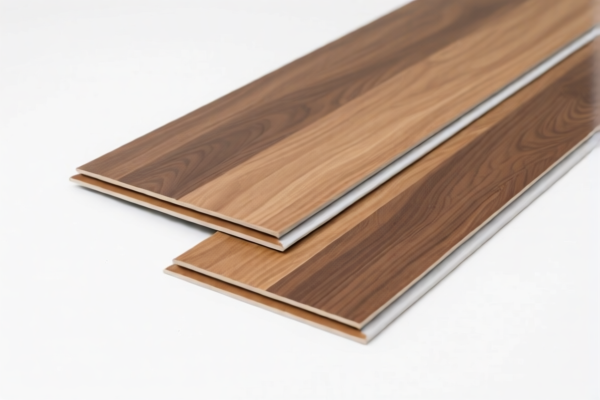
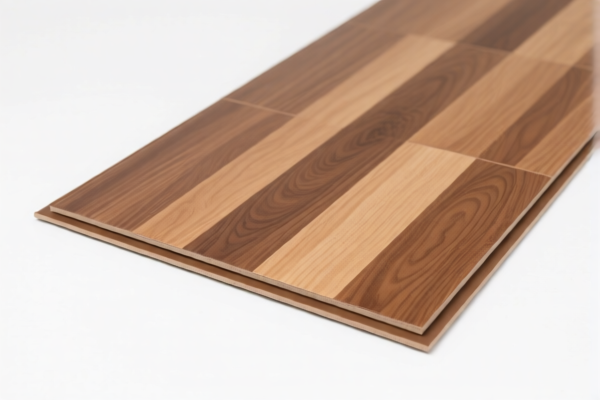
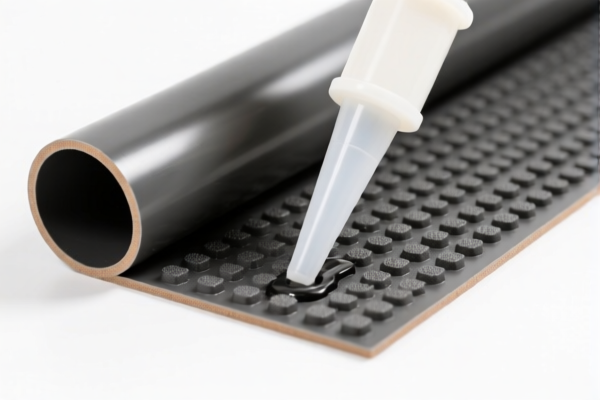
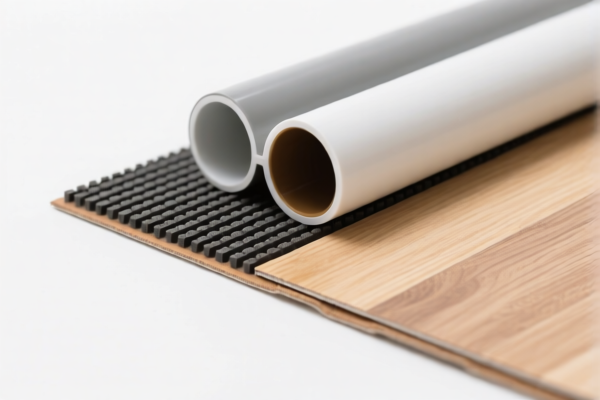
AI Analysis
🧱 PVC Floor Anti-Static Film / Treatment (PVC Floor Anti Static Treatment)
🌐 HS Code Reference & Customs Clearance Guide | 2026 Latest Tariff Analysis | Professional Customs Strategy
📌 I. Product Definition and Classification: Do You Really Understand "PVC Anti-Static Film"?
PVC Anti-Static Film (often used for floor treatment, static-dissipative flooring, or protective covering) is a plastic product made from polyvinyl chloride (PVC). In international trade, it is classified based on its physical form, material composition, and functional characteristics.
Key Classification Logic: * Material: Polyvinyl Chloride (PVC) / Vinyl Polymers. * Form: Film, Sheet, or Plate. * Function: Anti-static (conductive/dissipative properties). * Structure: Self-adhesive vs. Non-adhesive; Woven vs. Non-woven combinations.
⚠️ Critical Distinction:
- If the product is a simple sheet/film without adhesive backing → Look at Chapter 3920 (Other plates, sheets, film, foil, and strip, of plastics).
- If the product is self-adhesive or functions as a "tape-like" film → Look at Chapter 3919 (Self-adhesive plates, sheets, film, foil, tape, strip and other flat shapes, of plastics).
- Anti-static properties do not automatically move the product to a new chapter; they are considered functional additives within the plastic category unless it becomes a complex electronic component.
📦 II. HS Code Classification Details (2026 Latest Tariff Authority Comparison)
Based on the provided data, here are the 5 specific HS Codes applicable to PVC Anti-Static Films, ranging from general plastic films to self-adhesive types.
| HS Code | Product Description | Key Characteristics | Total Tax Rate* |
|---|---|---|---|
3921.12.50.00 |
PVC Anti-Static Film; PVC Material; Film Form; Classifies as a film made of vinyl polymers. | Standard PVC film, not necessarily self-adhesive. | 41.5% |
3921.12.19.50 |
PVC Anti-Static Film; Vinyl Polymer Material; Film Form; Classified under "Other" for non-woven material combinations. | Specific sub-category for vinyl polymers under other plastic sheets. | 40.3% |
3919.90.50.60 |
PVC Anti-Static Film; Plastic Material; Film Form; Classified under "Other" for anti-static functional films. | Likely self-adhesive or treated as a functional plastic film. | 40.8% |
3920.43.50.00 |
PVC Anti-Static Film; Polyvinyl Chloride Polymer; Film Form; Classified as a plastic product. | Specific PVC polymer film (non-adhesive sheet). | 39.2% |
3919.90.50.40 |
PVC Anti-Static Film; Plastic Material; Film Form; Complies with self-adhesive plastic film classification logic. | Self-adhesive PVC film, "Other" category. | 40.8% |
🔍 Key Reminder:
-3920Series generally refers to non-adhesive plastic plates, sheets, film, foil, and strip. -3919Series generally refers to self-adhesive plastic plates, sheets, film, etc. -3921Series refers to other plates, sheets, film, foil, and strip (including laminated, reinforced, etc.). - The choice depends heavily on whether the film has an adhesive backing and the specific polymer structure.
💰 III. 2026 Latest Tariff Rate Details (Including Surtaxes and Policy Add-ons)
✅ Applicable Country: USA (US)
✅ Origin: China (CN)
✅ Effective Date: From Nov 10, 2025 onwards (including subsequent imports)
The tax rates below include Base Tariff, Section 301 Surcharge (25%), and Section 122 Tariff (10%).
🎯 1. 3921.12.50.00 —— PVC Anti-Static Film (Vinyl Polymer Film)
| Item | Content |
|---|---|
| Base Tariff | 6.5% (ad valorem) |
| Section 301 Surtax | +25.0% |
| Section 122 Tariff | +10.0% |
| Total Tax Rate | 41.5% |
| Tax Calculation | CIF Value × 41.5% |
| De Minimis Eligibility | ❌ No (Deny De Minimis) |
| Legal Basis Path | Base: 3921.12.50.00 → 301: Footnote 9903.88.01 → 122: IEEDA/Customs Directive |
📌 Explanation:
- This code carries the highest base rate (6.5%) among the options, but after surcharges, it totals 41.5%. - Suitable for general PVC anti-static films that do not fit strictly into the self-adhesive or specific vinyl polymer sub-categories.
🎯 2. 3921.12.19.50 —— PVC Anti-Static Film (Other Vinyl Polymers)
| Item | Content |
|---|---|
| Base Tariff | 5.3% (ad valorem) |
| Section 301 Surtax | +25.0% |
| Section 122 Tariff | +10.0% |
| Total Tax Rate | 40.3% |
| Tax Calculation | CIF Value × 40.3% |
| De Minimis Eligibility | ❌ No (Deny De Minimis) |
| Legal Basis Path | Base: 3921.12.19.50 → 301: Footnote 9903.88.01 → 122: IEEDA/Customs Directive |
📌 Note:
- This is the lowest total tax rate (40.3%) in the provided dataset. - Applicable if the film is classified under "Other" vinyl polymer combinations (non-woven or specific laminate). - Recommendation: If your product fits this description, use this code for optimal cost savings.
🎯 3. 3919.90.50.60 —— PVC Anti-Static Film (Self-Adhesive/Functional)
| Item | Content |
|---|---|
| Base Tariff | 5.8% (ad valorem) |
| Section 301 Surtax | +25.0% |
| Section 122 Tariff | +10.0% |
| Total Tax Rate | 40.8% |
| Tax Calculation | CIF Value × 40.8% |
| De Minimis Eligibility | ❌ No (Deny De Minimis) |
| Legal Basis Path | Base: 3919.90.50.60 → 301: Footnote 9903.88.01 → 122: IEEDA/Customs Directive |
📌 Note:
-3919codes are for self-adhesive films. - If your PVC film has a glue backing (used for floor treatment/laying), this is the correct functional category. - Rate: 40.8%.
🎯 4. 3920.43.50.00 —— PVC Anti-Static Film (Polyvinyl Chloride Sheet)
| Item | Content |
|---|---|
| Base Tariff | 4.2% (ad valorem) |
| Section 301 Surtax | +25.0% |
| Section 122 Tariff | +10.0% |
| Total Tax Rate | 39.2% |
| Tax Calculation | CIF Value × 39.2% |
| De Minimis Eligibility | ❌ No (Deny De Minimis) |
| Legal Basis Path | Base: 3920.43.50.00 → 301: Footnote 9903.88.01 → 122: IEEDA/Customs Directive |
📌 Note:
- This is the absolute lowest total tax rate (39.2%) in the list. -3920.43typically refers to PVC sheets/films. - Recommendation: If the product is a non-adhesive PVC sheet used for anti-static flooring, this is the best fiscal code.
🎯 5. 3919.90.50.40 —— PVC Anti-Static Film (Self-Adhesive "Other")
| Item | Content |
|---|---|
| Base Tariff | 5.8% (ad valorem) |
| Section 301 Surtax | +25.0% |
| Section 122 Tariff | +10.0% |
| Total Tax Rate | 40.8% |
| Tax Calculation | CIF Value × 40.8% |
| De Minimis Eligibility | ❌ No (Deny De Minimis) |
| Legal Basis Path | Base: 3919.90.50.40 → 301: Footnote 9903.88.01 → 122: IEEDA/Customs Directive |
📌 Note:
- Similar to3919.90.50.60, this is for self-adhesive films. - Rate: 40.8%. - Use this if3919.90.50.60is not applicable due to specific "Other" classification rules for your film type.
🛠️ IV. Customs Clearance Practical Advice (Real-World Pitfall Avoidance Guide)
✅ 1. Document Checklist (Missing Items Not Allowed)
| Document | Required | Explanation |
|---|---|---|
| ✅ Product Specification Sheet | ✔️ | Must specify: Material (PVC), Thickness, Width, Anti-Static Properties (Surface Resistance). |
| ✅ Product Photos | ✔️ | Clear images showing the film roll, labels, and any adhesive backing. |
| ✅ Composition Analysis | ✔️ | Proving the material is >10% PVC or entirely PVC. |
| ✅ Commercial Invoice | ✔️ | Must clearly state "PVC Anti-Static Film" and HS Code. |
| ✅ Packing List | ✔️ | Net/Gross weight, number of rolls. |
| ✅ Certificate of Origin (CO) | ✔️ | Required for tariff calculation. |
| ✅ Adhesive Disclosure | ✔️ | Explicitly state if the film is self-adhesive (affects 3919 vs 3920/3921). |
✅ 2. Declaration Tips (Key Mantra)
🔥 “Non-Adhesive is 3920/3921, Self-Adhesive is 3919. Pick one, don’t mix!”
| Scenario | Correct Declaration | Wrong Practice |
|---|---|---|
| Non-adhesive PVC Sheet | 3920.43.50.00 or 3921.12.xxxxx |
Declare as "Plastic Mat" → Unclear classification |
| Self-Adhesive PVC Film | 3919.90.50.xxxxx |
Declare as "Sheet" → Misclassification Risk |
| Laminated PVC Film | 3921.12.xxxxx |
Declare as "Simple Film" → May face higher scrutiny |
| Anti-Static Additives | Mention in specs | Hide additives → Customs may reclassify |
✅ 3. Special Case Handling
| Scenario | Handling Advice |
|---|---|
| OEM Custom Widths | Provide roll specifications (width, length) to prove it’s a standard film, not a custom-made item. |
| Anti-Static Certification | Provide test reports (e.g., ESD Resistance < 10^9 ohms) to justify "Anti-Static" claim, though it doesn’t change HS Code, it helps clear functional description. |
| Mixed Shipments | If shipping both adhesive and non-adhesive films, split the declaration by HS Code to avoid rejection of the entire shipment. |
| Floor Tiles vs. Films | If the product is rigid tiles or sheets > 1mm, it may be 3921.90. Ensure the product is truly a film (< 1mm typically) to use 3920 or 3919. |
🌍 V. Global Market Comparison (2026 Latest)
| Country/Region | Recommended HS Code | Tariff | Certification | Remarks |
|---|---|---|---|---|
| 🇺🇸 USA | 3920.43.50.00 (Best Rate) |
39.2% (CN Origin) | None Specific | High tariff due to 301 + 122. Self-adhesive is 40.8%. |
| 🇨🇳 China | 3920.43.50.00 |
~5-6% | RoHS | No surtaxes. |
| 🇪🇺 EU | 3920.43.00.00 |
0% (Standard) | REACH + RoHS | No surtaxes. Must comply with REACH for PVC. |
| 🇬🇧 UK | 3920.43.00.00 |
0% (Standard) | UKCA + REACH | No surtaxes. |
| 🇦🇺 Australia | 3920.43.00.00 |
5% | RCM | No surtaxes. |
📌 Conclusion:
- USA is the only market with high additional tariffs (39.2% - 41.5%). - China origin PVC films face significant cost increases due to Section 301 and Section 122. - For USA imports,3920.43.50.00offers the lowest total rate (39.2%). Use it if the product is non-adhesive. - If the product is self-adhesive,3919.90.50.60(40.8%) is the best option among self-adhesive codes.
📌 VI. Common Errors & Pitfall Guide (Lessons Learned)
❌ Error 1: Declaring "Anti-Static Plastic Sheet" without specifying adhesive status.
👉 Consequence: Customs will ask for clarification, causing delays. If they assume adhesive, they may apply a different code.
❌ Error 2: Using 3920 for self-adhesive film.
👉 Consequence: Misclassification. 3920 is for non-adhesive. Self-adhesive must be 3919. Risk of penalty.
❌ Error 3: Ignoring Section 122 Tariff.
👉 Consequence: Under-declaration of tax. The 10% surcharge is often overlooked but is mandatory for many plastic imports from China.
❌ Error 4: Using "PVC Mat" as the product name.
👉 Consequence: Vague description. Must use "PVC Film" or "PVC Sheet" to match HS Code headings.
✅ Correct Declaration Example:
"PVC Anti-Static Film, Non-Adhesive, Roll, 20mm Thickness, for Industrial Flooring, Made of Polyvinyl Chloride, Model XYZ"
HS Code:3920.43.50.00
Rate: 39.2%
🎯 VII. Conclusion: Professional Declaration Saves Money!
🎯 Remember the Mantra:
🔹 "Non-Adhesive = 3920 (Lowest 39.2%), Self-Adhesive = 3919 (40.8%). Don't Mix!"
🔹 "USA Tax is High: Base + 301 + 122. Plan Your HS Code Early!"
📌 Pro Tip:
If your PVC film is originating from Vietnam, Mexico, or Thailand, you may be eligible for IEEPA Exemptions or lower tariffs under USMCA/FTAs.
Recommendation: Apply for an Advance Ruling from US Customs and Border Protection (CBP) before shipment to confirm the exact HS Code and tariff rate.
📣 Immediate Action:
📞 Contact a Professional Customs Broker + Provide Product Photos + Apply for HS Code Advance Ruling
🚀 Let your PVC Film clear customs smoothly, efficiently, and profitably!
✨ Professional Customs Clearance Starts with Accurate Classification!
💼 Every Cent of Your Cost Deserves to Be Calculated Precisely!
Customer Reviews
About HS Code Classification
The Harmonized System (HS) is an internationally standardized nomenclature developed by the World Customs Organization (WCO) to classify traded products. Over 200 countries use the HS system as the basis for customs tariffs, trade statistics, and import/export regulations.
Each HS code follows a hierarchical structure:
- Chapter (2 digits) — Broad category of goods (e.g., Chapter 84: Machinery and Mechanical Appliances)
- Heading (4 digits) — More specific grouping within the chapter
- Subheading (6 digits) — Internationally standardized breakdown, used by all WCO member countries
- National subdivisions (8-10 digits) — Country-specific extensions for further classification, such as US HTSUS 10-digit codes
Correct HS code classification is essential for smooth customs clearance, accurate duty payment, and compliance with trade regulations. Misclassification can lead to customs delays, overpayment of duties, or penalties.
When importing from CN to US, the applicable tariff rates may include:
- Most-Favored-Nation (MFN) rate — The standard duty rate applied to WTO members
- General rate — Applied to countries without trade agreements
- Trade remedy duties — Additional tariffs such as Section 301 (anti-dumping), Section 232 (national security), or countervailing duties
The information provided on this page is for reference purposes only. For official classification, please consult with your local customs authority or a licensed customs broker.