PVC Floor Covering Rolls
CN → US| HS Code | Tariff Rate | Origin | Destination | Doc |
|---|---|---|---|---|
| 5904901000 | 35.0% | CN | US | Official Doc |
| 3918102000 | 40.3% | CN | US | Official Doc |
| 3918101040 | 40.3% | CN | US | Official Doc |
| 5904909000 | 35.0% | CN | US | Official Doc |
| 3920490000 | 40.8% | CN | US | Official Doc |
Product Images
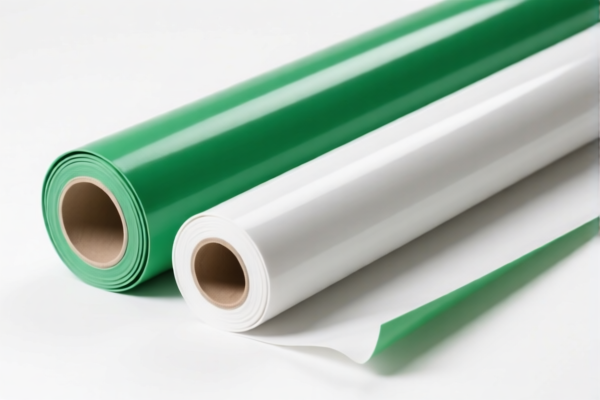
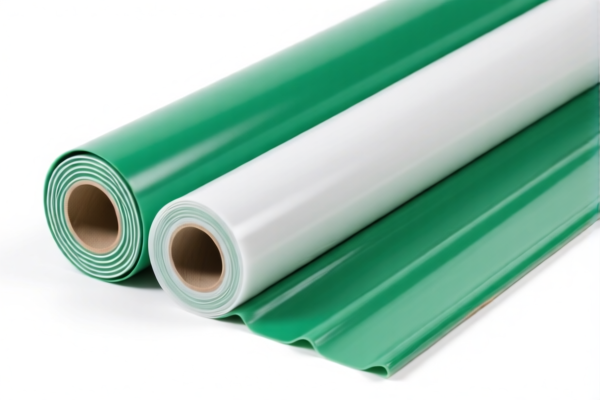
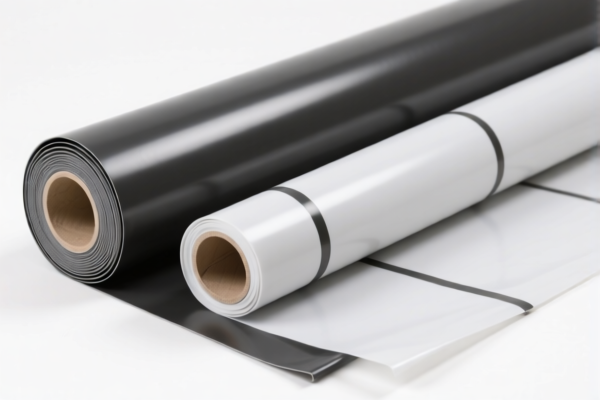
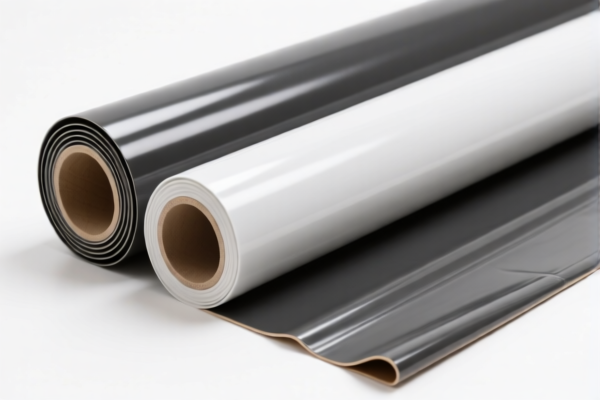
AI Analysis
🏠 PVC Floor Covering Rolls (Vinyl Flooring Rolls)
🌐 HS Code Reference & Customs Clearance Guide | 2026 Latest Tariff Analysis | Professional-Level Clearance Strategy
📌 I. Product Definition & Classification: Do You Really Understand "PVC Floor Rolls"?
PVC floor coverings, commonly known as vinyl flooring or luxury vinyl tile (LVT) rolls, are versatile flooring solutions widely used in residential, commercial, and industrial settings. In international trade, the classification depends heavily on the material composition, structure, and application method.
They are primarily categorized into two distinct types based on their backing and manufacturing process:
- Plastic Sheet Flooring (Chapter 39): Made primarily of polyvinyl chloride (PVC) in sheet or roll form, often used as a direct covering.
- Textile Floor Coverings with Plastic Coating (Chapter 59): Textile substrates (such as felt or fabric) coated or covered with PVC, often used for carpet-like flooring or specialized industrial mats.
⚠️ Key Distinction Point:
- If the product is primarily plastic (PVC) formed into a sheet/roll for flooring → Goes to Chapter 39 (e.g.,3918.10...or3920.49...).
- If the product has a textile base (fabric/felt) that is then coated/covered with PVC → Goes to Chapter 59 (e.g.,5904.90...).
- Note: The presence of a fabric backing does not automatically make it a textile product; however, customs often scrutinize the "essential character" of the item. If the plastic layer is merely a surface coating on a textile, it may fall under Chapter 59.
📦 II. HS Code Classification Details (2026 Latest Tariff Authority Comparison)
| HS Code | Product Description | Applicable Scenario | Material/Base Structure |
|---|---|---|---|
5904.90.10.00 |
PVC Floor Rolls: Floor coverings matching coating or covering applied to textile bases | Carpet-like vinyl, textile-backed vinyl rolls | ✅ Textile Base + PVC Coating |
3918.10.20.00 |
PVC Floor Rolls: Material is polyvinyl chloride, form is rolls, purpose is floor covering | Standard solid PVC vinyl rolls, homogenous or heterogenous vinyl | ❌ Pure Plastic Base |
3918.10.10.40 |
PVC Floor Rolls: Material, form, and use all meet classification requirements | General PVC flooring rolls, strictly plastic composition | ❌ Pure Plastic Base |
5904.90.90.00 |
PVC Floor Rolls: Other floor coverings under different categories, material is plastic | Misc. plastic floor coverings not specified elsewhere, textile-like but classified as plastic | ❓ Plastic (Non-standard textile mix) |
3920.49.00.00 |
PVC Flooring: Material is vinyl polymer, form matches plastic plates, sheets, or film | Thin PVC films, industrial plastic sheets used for flooring | ❌ Pure Plastic (Sheet/Film type) |
🔍 Key Reminder:
- All textile-based PVC floors (where the fabric provides the structural integrity) must go to Chapter 59 (5904.90...). Misclassifying these as Chapter 39 can lead to audits. - All solid plastic PVC rolls go to Chapter 39 (3918.10...or3920.49...). - If the product is a composite, customs will look at which material gives the product its "essential character." For most standard "vinyl roll flooring" sold in home improvement stores, if it has a heavy felt backing, it might be classified under5904.90.10.00, but pure rigid PVC rolls are3918.
💰 III. 2026 Latest Tariff Rate Breakdown (Including Surcharges & Policy Additions)
✅ Applicable Country: United States (US)
✅ Country of Origin: China (CN)
✅ Effective Date: From November 10, 2025 (including subsequent imports)
🎯 1. 5904.90.10.00 & 5904.90.90.00 —— Textile/Plastic Composite Floor Coverings
| Item | Content |
|---|---|
| Base Tariff Rate | 0% (ad valorem) |
| Section 301 Surcharge | +25% (From USITC Footnote) |
| IEEPA Surcharge | +10% (Against Chinese/HK products, effective from Nov 10, 2025) |
| Total Tariff Rate | 35.0% |
| Tax Calculation | CIF Value × 35% |
| De Minimis Eligibility | ❌ No (deny_de_minimis) |
| Legal Basis Path | IEEPA:9903.01.25 → IEEPA:9903.01.24 → USITC:5904.90... → FOOTNOTE |
📌 Explanation:
- "Base Tariff 0%": Textile floor coverings often have lower base duties. - "Section 301 +25%": Standard trade war tariff on Chinese goods. - "IEEPA +10%": Additional surcharge under the International Emergency Economic Powers Act. - Total 35%: This is a high tariff category. Do not underestimate the cost impact.
🎯 2. 3918.10.20.00 & 3918.10.10.40 —— PVC Plastic Floor Rolls
| Item | Content |
|---|---|
| Base Tariff Rate | 5.3% (ad valorem) |
| Section 301 Surcharge | +25% |
| IEEPA Surcharge | +10% |
| Total Tariff Rate | 40.3% |
| Tax Calculation | CIF Value × 40.3% |
| De Minimis Eligibility | ❌ No (deny_de_minimis) |
| Legal Basis Path | IEEPA:9903.01.25 → IEEPA:9903.01.24 → USITC:3918.10... → FOOTNOTE |
📌 Note:
- Base rate is 5.3% for plastic floor coverings. - Despite a slightly higher base than textile types, the total effective rate (40.3%) is higher due to the 5.3% base. - Applies to all pure PVC rolls, homogenous vinyl, and heterogenous vinyl sheets.
🎯 3. 3920.49.00.00 —— Other Plastic Plates/Sheets/Films
| Item | Content |
|---|---|
| Base Tariff Rate | 5.8% (ad valorem) |
| Section 301 Surcharge | +25% |
| IEEPA Surcharge | +10% |
| Total Tariff Rate | 40.8% |
| Tax Calculation | CIF Value × 40.8% |
| De Minimis Eligibility | ❌ No (deny_de_minimis) |
| Legal Basis Path | IEEPA:9903.01.25 → IEEPA:9903.01.24 → USITC:3920.49... → FOOTNOTE |
📌 Attention:
- This code applies if the product is considered a plastic plate, sheet, or film rather than a dedicated "floor covering" (3918). - It has the highest total rate (40.8%) among the options provided. - Avoid this classification if possible unless the product is a thin film not specifically shaped or marketed primarily as flooring.
🛠️ IV. Customs Clearance Practical Advice (Combat Pitfall Guide)
✅ 1. Documentation Checklist (Non-negotiable)
| Document | Required | Explanation |
|---|---|---|
| ✅ Product Specification Sheet | ✔️ | Must detail material composition (e.g., "PVC + Fiberglass Backing" vs. "Pure PVC"). |
| ✅ Product Photos (Cross-section) | ✔️ | Crucial for proving whether there is a textile base (5904) or pure plastic (3918). |
| ✅ Commercial Invoice | ✔️ | Must clearly state "PVC Floor Rolls" or "Vinyl Flooring". Avoid vague terms like "Plastic Mat". |
| ✅ Packing List | ✔️ | Detailed weight and dimensions. |
| ✅ Certificate of Origin (CO) | ✔️ | Required for duty calculation and trade compliance. |
| ✅ Third-Party Test Report | ✔️ | REACH, RoHS, or Prop 65 (if applicable) to prove safety compliance. |
✅ 2. Declaration Tips (Key Mnemonics)
🔥 “Look at the Backing: Fabric means 59, Plastic means 39. Get it wrong, pay more.”
| Situation | Correct Declaration | Incorrect Action |
|---|---|---|
| Vinyl rolls with fabric/felt backing | 5904.90.10.00 |
Misclassify as 3918 → Potential penalty for underpayment/overpayment |
| Solid PVC rolls (no textile) | 3918.10.20.00 or 3918.10.10.40 |
Misclassify as 5904 → Unnecessary complexity, no benefit |
| Thin PVC sheets/films used for flooring | 3920.49.00.00 |
Over-classifying as flooring if not structured for it |
| Mixed shipment (Tiles + Rolls) | Separate Line Items | Combining into one line → Risk of rejection or misclassification |
✅ 3. Special Situation Handling
| Situation | Handling Advice |
|---|---|
| OEM Custom Colors/Patterns | Provide design drawings to prove it is a finished product, not raw material. |
| Click-Lock PVC Rolls | Still classified as rolls (3918 or 5904) if sold in roll form, not tiles. |
| Sample vs. Bulk | Samples may be declared separately, but duty rates remain the same for commercial goods. |
| Wood-Plastic Composite (WPC) | If it contains wood flour, it may fall under 4418 or 3918 depending on composition. Not PVC only. |
🌍 V. Global Market Comparison (2026 Latest)
| Country/Region | Recommended HS Code | Tariff | Certification | Notes |
|---|---|---|---|---|
| 🇺🇸 USA | 3918.10.20.00 / 5904.90.10.00 |
35.0% - 40.8% | REACH, CA Prop 65 | High tariffs due to Section 301 + IEEPA |
| 🇨🇳 China | 3918.10.20.00 |
5.3% | CCC (if applicable) | No additional surcharges |
| 🇪🇺 EU | 3918.10.90 |
0% - 3% | REACH, CE | Low base duties, but strict chemical compliance |
| 🇬🇧 UK | 3918.10.90 |
0% - 3% | UKCA | Post-Brexit rules apply |
| 🇦🇺 Australia | 3918.10.00 |
5% | AS/NZS Standards | Moderate duties |
📌 Conclusion:
- The US is the most expensive market for PVC flooring due to cumulative tariffs (Base + 301 + IEEPA). - China, EU, and UK offer significantly lower duty burdens, but compliance costs (chemical testing) are high. - Strategy: For US-bound goods, consider supply chain diversification (e.g., manufacturing in Vietnam or Mexico) to avoid the 35-40%+ tariff burden.
📌 VI. Common Mistakes & Pitfall Guide (Lessons Learned)
❌ Mistake 1: Declaring "Textile-backed PVC" as "Plastic Sheet" (3918)
👉 Consequence: Customs may reclassify, leading to duty underpayment penalties or release delays.
❌ Mistake 2: Ignoring the IEEPA 10% Surcharge in cost calculations
👉 Consequence: Profit margins are wiped out by the unexpected 10% extra tax effective Nov 2025.
❌ Mistake 3: Using vague descriptions like "Floor Mat"
👉 Consequence: Customs officers may guess the HS Code, leading to incorrect classification and audits.
❌ Mistake 4: Assuming De Minimis (Section 321) applies
👉 Consequence: PVC flooring rolls are explicitly denied de minimis status. Do not attempt to ship via small parcel with this strategy.
✅ Correct Practice:
"PVC Vinyl Floor Roll, 2.0mm Thickness, Fiberglass Backing, Water-Resistant, For Residential Use, Model XYZ, REACH Compliant"
🎯 VII. Conclusion: Professional Declaration, Cost Efficiency!
🎯 Remember the Mantra:
🔹 "Check the Backing: Fabric = 59, Plastic = 39."
🔹 "US Tariff is 35-40%, Plan Ahead or Pivot Supply Chain."
🔹 "No De Minimis, No Excuses."
📌 Pro Tip:
If your PVC flooring is originally from Vietnam, Mexico, Thailand, or Malaysia, you may be eligible for IEEPA Exemptions or lower Section 301 rates.
It is highly recommended to apply for an Advance Ruling with US Customs and Border Protection (CBP) to confirm the HS Code and avoid post-entry audits.
📣 Immediate Action:
📞 Contact a professional customs broker + Provide Product Cross-Section Images + Apply for HS Code Advance Ruling
🚀 Ensure your PVC Floor Rolls clear customs smoothly, legally, and profitably!
✨ Professional Clearance Starts with Accurate Classification!
💼 Every cent of your cost deserves precise calculation!
Customer Reviews
About HS Code Classification
The Harmonized System (HS) is an internationally standardized nomenclature developed by the World Customs Organization (WCO) to classify traded products. Over 200 countries use the HS system as the basis for customs tariffs, trade statistics, and import/export regulations.
Each HS code follows a hierarchical structure:
- Chapter (2 digits) — Broad category of goods (e.g., Chapter 84: Machinery and Mechanical Appliances)
- Heading (4 digits) — More specific grouping within the chapter
- Subheading (6 digits) — Internationally standardized breakdown, used by all WCO member countries
- National subdivisions (8-10 digits) — Country-specific extensions for further classification, such as US HTSUS 10-digit codes
Correct HS code classification is essential for smooth customs clearance, accurate duty payment, and compliance with trade regulations. Misclassification can lead to customs delays, overpayment of duties, or penalties.
When importing from CN to US, the applicable tariff rates may include:
- Most-Favored-Nation (MFN) rate — The standard duty rate applied to WTO members
- General rate — Applied to countries without trade agreements
- Trade remedy duties — Additional tariffs such as Section 301 (anti-dumping), Section 232 (national security), or countervailing duties
The information provided on this page is for reference purposes only. For official classification, please consult with your local customs authority or a licensed customs broker.