PVC Floor Protective Film
CN → US| HS Code | Tariff Rate | Origin | Destination | Doc |
|---|---|---|---|---|
| 3920435000 | 39.2% | CN | US | Official Doc |
| 3918102000 | 40.3% | CN | US | Official Doc |
| 3918101040 | 40.3% | CN | US | Official Doc |
| 3920490000 | 40.8% | CN | US | Official Doc |
| 3926909989 | 22.8% | CN | US | Official Doc |
Product Images
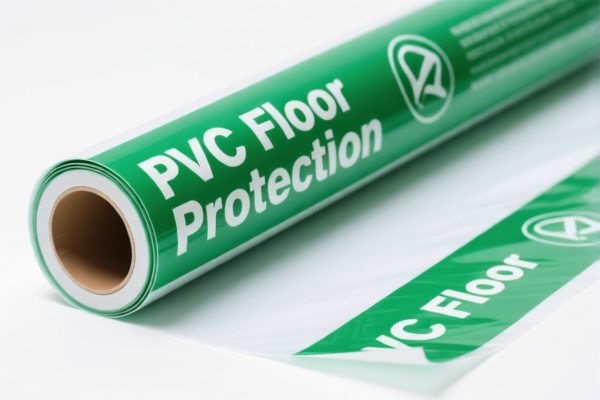
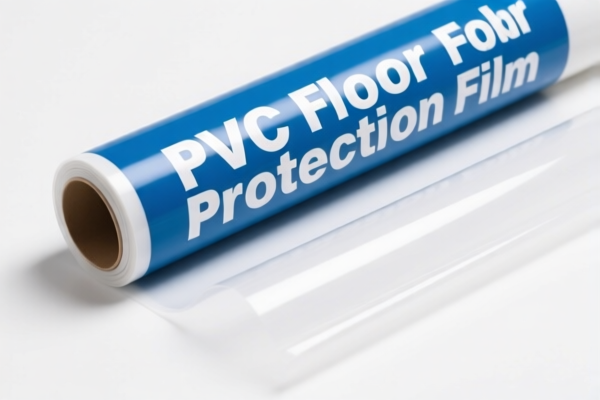
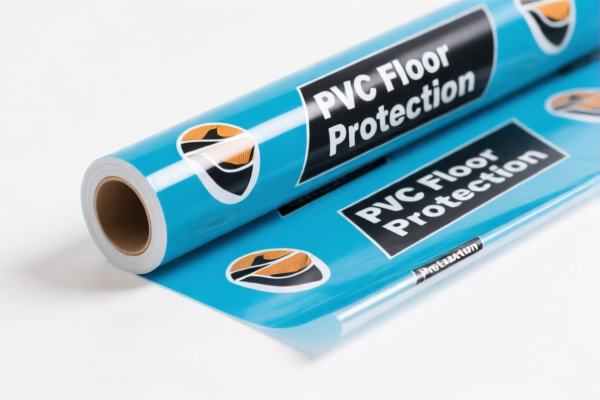
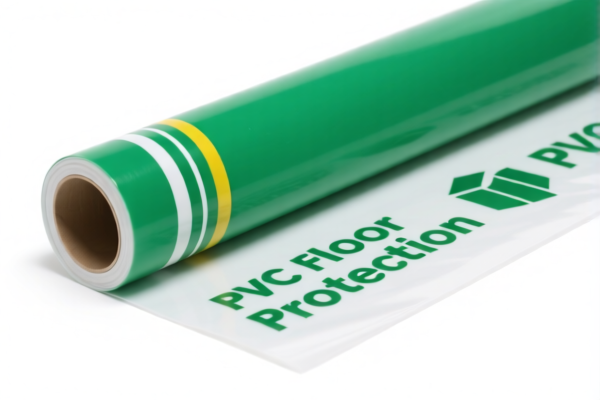
AI Analysis
🏗️ PVC Floor Protective Film: HS Code Classification & US Customs Clearance Guide (2026)
🌐 HS Code Reference & Clearance Strategy | 2026 Latest Tariff Analysis | Professional Compliance Guide
📌 I. Product Definition & Classification: Is it Flooring or Just Protection?
PVC Floor Protective Film is a specialized plastic film made of Polyvinyl Chloride (PVC), primarily designed to protect flooring surfaces (wood, laminate, stone, etc.) during transportation, installation, and renovation. It is not a permanent flooring material but a temporary covering or film-like product.
In international trade, the key distinction lies in its primary function: * Flooring Product (3918): If the product is marketed as a permanent or semi-permanent floor covering (like vinyl tiles/planks), it falls under Chapter 3918. * General Plastic Article (3920/3926): If the product is explicitly a protective film (removable, temporary, non-adhesive or lightly adhesive for protection only), it is often classified as a general plastic film or other plastic article.
⚠️ Key Distinction Point:
- If the product is installed permanently as flooring → 3918.xx.xx.xx
- If the product is removed after use for protection → 3920.xx.xx.xx or 3926.90.xx.xx
📦 II. HS Code Classification Details (Based on Provided Data)
According to the provided data, there are 5 potential HS Codes for PVC Floor Protective Film, each with different tax implications. The correct classification depends on the specific physical form and intended use declared.
| HS Code | Product Description (Summary) | Primary Characteristic | Total Tax Rate (US/CN) |
|---|---|---|---|
3920.43.50.00 |
PVC Film/Sheeting for Floor Protection | General PVC plastic film/sheeting | 39.2% |
3918.10.20.00 |
PVC Floor Covering (Specific Variant) | Classified as a floor covering material | 40.3% |
3918.10.10.40 |
Vinyl Tile/Floor Covering | "PVC" + "Floor" = Vinyl flooring type | 40.3% |
3920.49.00.00 |
Other PVC Plastic Films/Sheets | General PVC film category (not specific to flooring) | 40.8% |
3926.90.99.89 |
Other Plastic Articles | PVC plastic article not specifically named elsewhere | 22.8% |
🔍 Critical Observation:
- Cheapest Option:3926.90.99.89(22.8% total tax)
- Most Common for "Film":3920.43.50.00or3920.49.00.00
- Most Common for "Flooring":3918.10.20.00or3918.10.10.40
💰 III. 2026 US Tariff Rate Breakdown (China Origin)
✅ Applicable Country: United States (US)
✅ Origin: China (CN)
✅ Effective Date: Current US-China trade terms (including Section 301 and IEEPA tariffs)
🎯 1. 3920.43.50.00 – PVC Plastic Film/Sheets (Floor Protection)
| Item | Details |
|---|---|
| Base Duty | 4.2% |
| Section 301 Duty | +25.0% |
| IEEPA Duty (122 Clause) | +10.0% |
| Total Effective Rate | 39.2% |
| Calculation Basis | CIF Value × 39.2% |
| De Minimis Exemption? | ❌ No (Denied for Chinese goods under Section 301/IEEPA) |
📌 Interpretation:
- This code is suitable if the product is clearly identified as a plastic film rather than a flooring material.
- The "122 Clause" refers to additional IEEPA tariffs on specific Chinese products.
🎯 2. 3918.10.20.00 – PVC Floor Covering (Specific)
| Item | Details |
|---|---|
| Base Duty | 5.3% |
| Section 301 Duty | +25.0% |
| IEEPA Duty (122 Clause) | +10.0% |
| Total Effective Rate | 40.3% |
| Calculation Basis | CIF Value × 40.3% |
📌 Interpretation:
- Higher base duty (5.3%) than the film option.
- Used if the product is marketed as a floor covering (even if temporary).
🎯 3. 3918.10.10.40 – Vinyl Tile/Floor Covering
| Item | Details |
|---|---|
| Base Duty | 5.3% |
| Section 301 Duty | +25.0% |
| IEEPA Duty (122 Clause) | +10.0% |
| Total Effective Rate | 40.3% |
| Calculation Basis | CIF Value × 40.3% |
📌 Interpretation:
- Similar to above, but specifically for vinyl tile characteristics.
- If your film looks like vinyl planks/tiles, this code may be applied.
🎯 4. 3920.49.00.00 – Other PVC Plastic Films
| Item | Details |
|---|---|
| Base Duty | 5.8% |
| Section 301 Duty | +25.0% |
| IEEPA Duty (122 Clause) | +10.0% |
| Total Effective Rate | 40.8% |
| Calculation Basis | CIF Value × 40.8% |
📌 Interpretation:
- Highest duty among the film categories (40.8%).
- Used for PVC films that do not fit the "43.50" specific subheading.
🎯 5. 3926.90.99.89 – Other Plastic Articles (Best Rate)
| Item | Details |
|---|---|
| Base Duty | 5.3% |
| Section 301 Duty | +7.5% |
| IEEPA Duty (122 Clause) | +10.0% |
| Total Effective Rate | 22.8% |
| Calculation Basis | CIF Value × 22.8% |
📌 Interpretation:
- Lowest Total Duty (22.8%).
- Applicable if the product is considered a general plastic article not specifically classified as flooring or film in other headings.
- Section 301 duty is only 7.5% here, not 25%. This is a significant saving.
🛠️ IV. Customs Clearance Operational Advice
✅ 1. Documentation Checklist (Mandatory)
| Document | Required? | Notes |
|---|---|---|
| Product Description | ✔️ | Must clearly state "Protective Film" vs. "Flooring" |
| Commercial Invoice | ✔️ | Value must match declared HS code purpose |
| Packing List | ✔️ | Include dimensions, weight, and packaging type |
| Material Composition | ✔️ | Confirm 100% PVC or PVC blend |
| Usage Statement | ✔️ | "For temporary floor protection during installation" |
| Photos | ✔️ | Show product roll, texture, and application |
✅ 2. Classification Strategy & Risk Mitigation
🔥 Rule: "Protective Film, Not Flooring"
To qualify for the lower-rate3926.90.99.89(22.8%) or3920.43.50.00(39.2%), you must emphasize the protective nature of the product.
| Scenario | Recommended HS Code | Risk Level |
|---|---|---|
| Product is clearly a thin, removable film | 3920.43.50.00 (39.2%) |
🟡 Medium |
| Product is thick, tile-like, and sold as flooring | 3918.10.10.40 (40.3%) |
🟢 Low (Correct) |
| Product is a general plastic sheet with no flooring features | 3926.90.99.89 (22.8%) |
🔴 High (Requires strong argument) |
⚠️ Warning:
- If you declare3926.90.99.89but the product is clearly used as flooring, CBP may reclassify it to3918(40.3%) + penalties.
- Best Practice: Use3920.43.50.00if it’s a film; use3926.90.99.89only if it’s a non-flooring plastic article.
✅ 3. Special Considerations
| Issue | Solution |
|---|---|
| Section 301 Tariff Exclusion | Check if your specific product code was excluded from the 25% tariff. (Note: Most PVC films are not excluded). |
| IEEPA 10% Surcharge | Applies to all Chinese-origin goods under this chapter. Ensure your supplier confirms CN origin. |
| De Minimis (Section 321) | Not applicable. Goods over $800 shipped via Section 321 are still subject to duties if from China. |
🌍 V. Global Market Comparison (2026)
| Country | Recommended HS Code | Estimated Duty | Notes |
|---|---|---|---|
| 🇺🇸 USA | 3926.90.99.89 |
22.8% | Lowest rate; use if product fits general plastic article |
| 🇺🇸 USA | 3920.43.50.00 |
39.2% | Safer for "film" classification |
| 🇨🇳 China | 3920.43.50.00 |
~4.2% | Low entry duty; no Section 301 |
| 🇪🇺 EU | 3920.49.00.00 |
4.2% + VAT | No Section 301; check for eco-taxes |
| 🇬🇧 UK | 3920.49.00.00 |
4.2% + VAT | Post-Brexit rules apply |
📌 VI. Common Mistakes & Pitfalls
❌ Mistake 1: Declaring as "Flooring" when it’s "Protective Film"
👉 Consequence: Incorrect HS Code 3918 may be applied, leading to 40.3% duty instead of potential 22.8% or 39.2%.
❌ Mistake 2: Using 3926.90.99.89 without justification
👉 Consequence: CBP may argue the product is a "film" and reclassify to 3920, leading to back duties and fines.
❌ Mistake 3: Ignoring IEEPA 10% surcharge
👉 Consequence: Underpayment of duties by 10%, resulting in penalties and interest.
🎯 VII. Conclusion: Professional Clearance Strategy
🎯 Recommendation:
1. If the product is a thin, removable film: Use 3920.43.50.00 (39.2%) for safety.
2. If the product is a thick, plastic sheet with no flooring characteristics: Try 3926.90.99.89 (22.8%) with strong documentation proving it’s not flooring.
3. If the product is sold as flooring: Use 3918.10.20.00 or 3918.10.10.40 (40.3%).
📌 Pro Tip:
Always include a detailed product description in the invoice:
"PVC Protective Film, Non-Adhesive, For Temporary Floor Protection During Installation, Not Intended as Permanent Flooring."
📣 Action Step:
📞 Consult a licensed customs broker for a Pre-Ruling if uncertain about the classification.
📄 Ensure all documentation clearly distinguishes between "Flooring" and "Protective Film."
✨ Accurate Classification Saves Money!
💼 Your Bottom Line Depends on the Right HS Code!
Customer Reviews
About HS Code Classification
The Harmonized System (HS) is an internationally standardized nomenclature developed by the World Customs Organization (WCO) to classify traded products. Over 200 countries use the HS system as the basis for customs tariffs, trade statistics, and import/export regulations.
Each HS code follows a hierarchical structure:
- Chapter (2 digits) — Broad category of goods (e.g., Chapter 84: Machinery and Mechanical Appliances)
- Heading (4 digits) — More specific grouping within the chapter
- Subheading (6 digits) — Internationally standardized breakdown, used by all WCO member countries
- National subdivisions (8-10 digits) — Country-specific extensions for further classification, such as US HTSUS 10-digit codes
Correct HS code classification is essential for smooth customs clearance, accurate duty payment, and compliance with trade regulations. Misclassification can lead to customs delays, overpayment of duties, or penalties.
When importing from CN to US, the applicable tariff rates may include:
- Most-Favored-Nation (MFN) rate — The standard duty rate applied to WTO members
- General rate — Applied to countries without trade agreements
- Trade remedy duties — Additional tariffs such as Section 301 (anti-dumping), Section 232 (national security), or countervailing duties
The information provided on this page is for reference purposes only. For official classification, please consult with your local customs authority or a licensed customs broker.