PVC Floor Strip
CN → US| HS Code | Tariff Rate | Origin | Destination | Doc |
|---|---|---|---|---|
| 3920435000 | 39.2% | CN | US | Official Doc |
| 3918102000 | 40.3% | CN | US | Official Doc |
| 3918101040 | 40.3% | CN | US | Official Doc |
| 3920490000 | 40.8% | CN | US | Official Doc |
| 3926909989 | 22.8% | CN | US | Official Doc |
| 3918101020 | 40.3% | CN | US | Official Doc |
Product Images
AI Analysis
🏗️ PVC Floor Strip (Vinyl Flooring)
🌐 HS Code Reference & Customs Clearance Guide | 2026 Latest Tariff Analysis | Professional Strategy
📌 I. Product Definition & Classification: Do You Really Know "PVC Floor Strip"?
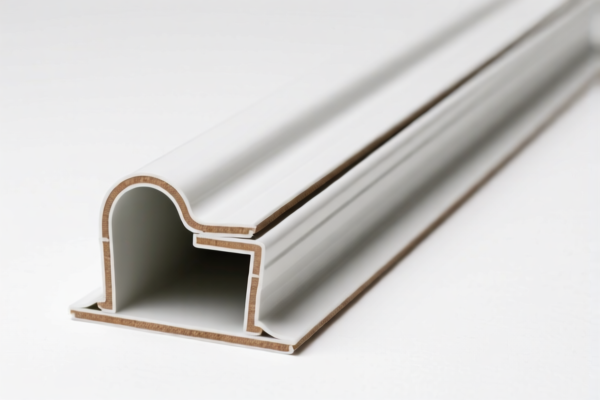
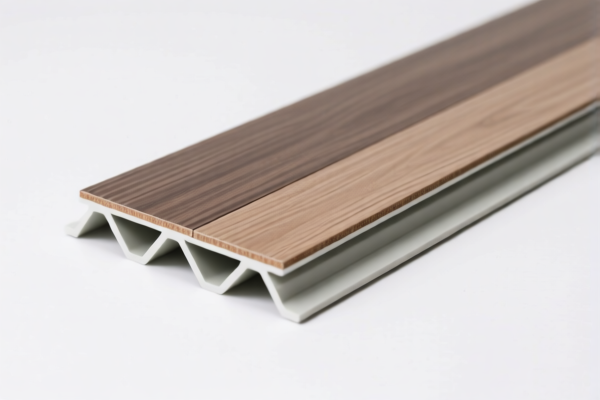
PVC Floor Strips (often referred to as Vinyl Tiles or Luxury Vinyl Planks/Tiles - LVT/LVP) are rigid or semi-rigid flooring materials made from polyvinyl chloride. In international trade, they are primarily classified based on their form, method of installation, and specific composition.
Key Distinction in Classification: 1. Flooring Covers (3918 Series): Products specifically designed as floor coverings, often installed by adhesive or click-lock, resembling tiles or planks. This is the most common and "safe" classification for standard vinyl flooring. 2. Plastic Sheets/Rolls (3920 Series): Rolls of plastic sheets that are cut to size on-site. If the product is strictly a "sheet" or "roll" rather than a pre-formed "tile/plank," it may fall here. 3. Other Plastic Articles (3926 Series): A residual category for plastic articles not specified elsewhere. If the product is ambiguous or lacks specific flooring features, customs might default to this, though it often carries different duty structures.
⚠️ Critical Differentiation Point:
- If the product is pre-formed planks/tiles intended for flooring → Likely Chapter 3918 (Flooring).
- If the product is a roll/sheet to be cut → Likely Chapter 3920 (Plastic Sheets).
- If the classification is disputed or highly complex → Customs may use 3926.90 (Other), but this is risky due to potential duty discrepancies.
📦 II. HS Code Classification Details (Based on Provided Data)
The following table details the six specific HS Codes provided in the dataset for PVC Floor Strips, along with their summaries and total tax rates.
| HS Code | Summary / Description | Total Tax Rate | Tax Detail Breakdown |
|---|---|---|---|
| 3920.43.50.00 | PVC Floor, PVC material, floor form, fits non-cellular, non-reinforced plastic characteristics. | 39.2% | Base: 4.2% Surcharge: 25.0% Sec 122: 10% |
| 3918.10.20.00 | PVC Floor, PVC material, use as floor covering, specific variety under this heading. | 40.3% | Base: 5.3% Surcharge: 25.0% Sec 122: 10% |
| 3918.10.10.40 | PVC Floor, Vinyl polymer, floor covering, fits vinyl tile/flooring characteristics. | 40.3% | Base: 5.3% Surcharge: 25.0% Sec 122: 10% |
| 3920.49.00.00 | PVC Floor, Vinyl polymer, plastic sheet/film category, no material conflict. | 40.8% | Base: 5.8% Surcharge: 25.0% Sec 122: 10% |
| 3926.90.99.89 | PVC Floor, PVC material, plastic article not specifically listed elsewhere. | 22.8% | Base: 5.3% Surcharge: 7.5% Sec 122: 10% |
| 3918.10.10.20 | PVC Floor Strip, Vinyl chloride polymer, floor material form. | 40.3% | Base: 5.3% Surcharge: 25.0% Sec 122: 10% |
🔍 Key Insight:
- The lowest tax rate (22.8%) applies to 3926.90.99.89. However, this is a "catch-all" category. Using this code requires strong justification that the product does not fit the specific definitions of flooring (3918) or sheets (3920).
- The highest and most common rates (40.3% - 40.8%) apply to products explicitly identified as flooring (3918) or plastic sheets (3920) with a 25% surcharge.
- Sec 122 Tariff (10%) appears consistently across all codes, likely referring to specific section notes or additional duties applicable to certain plastic articles.
💰 III. 2026 Latest Tariff Rate Breakdown (Including Surcharges)
✅ Applicable Market: United States (US)
✅ Origin: China (CN) (Inferred from high surcharges typical of US-China trade context)
✅ Effective Time: 2025-2026 Tariff Structure
🎯 1. 3920.43.50.00 – PVC Floor (Non-cellular/Non-reinforced Sheet)
| Item | Content |
|---|---|
| Base Tariff | 4.2% |
| Section 301 Surcharge | +25.0% |
| Section 122 Tariff | +10.0% |
| Total Tax Rate | 39.2% |
| Tax Calculation | CIF Value × 39.2% |
| De Minimis Exemption | ❌ Not Applicable (High value threshold exceeded) |
📌 Explanation:
- This code targets PVC floors that are essentially plastic sheets. The 25% surcharge is the standard Section 301 tariff for Chinese goods.
- The 10% "Section 122" tariff is a specific additional duty for this plastic category.
- Risk: If customs determines the product is a "finished flooring" rather than a "sheet," they may reclassify it to 3918.10, increasing the base rate slightly.
🎯 2. 3918.10.20.00 & 3918.10.10.40 & 3918.10.10.20 – PVC Floor Coverings (Tiles/Planks)
| Item | Content |
|---|---|
| Base Tariff | 5.3% |
| Section 301 Surcharge | +25.0% |
| Section 122 Tariff | +10.0% |
| Total Tax Rate | 40.3% |
| Tax Calculation | CIF Value × 40.3% |
| De Minimis Exemption | ❌ Not Applicable |
📌 Explanation:
- These codes are for specific flooring products (tiles, strips, planks).
- The base rate (5.3%) is slightly higher than 3920.43.50 (4.2%), leading to a higher total rate (40.3% vs 39.2%).
- Why 40.3%? Even though the base is only 1.1% higher, the surcharges are identical. This suggests that "Finished Flooring" is taxed slightly more heavily at the base level than "Raw Sheets."
🎯 3. 3920.49.00.00 – PVC Floor (Other Plastic Sheets)
| Item | Content |
|---|---|
| Base Tariff | 5.8% |
| Section 301 Surcharge | +25.0% |
| Section 122 Tariff | +10.0% |
| Total Tax Rate | 40.8% |
| Tax Calculation | CIF Value × 40.8% |
| De Minimis Exemption | ❌ Not Applicable |
📌 Explanation:
- This is the highest tax rate (40.8%) in the dataset.
- It applies to "Other" plastic sheets not specifically listed as 3920.43.
- Warning: Avoid this code if your product can be classified under 3918 or 3920.43, as it penalizes the importer with an extra 0.5% base duty.
🎯 4. 3926.90.99.89 – PVC Floor (Other Plastic Articles)
| Item | Content |
|---|---|
| Base Tariff | 5.3% |
| Section 301 Surcharge | +7.5% |
| Section 122 Tariff | +10.0% |
| Total Tax Rate | 22.8% |
| Tax Calculation | CIF Value × 22.8% |
| De Minimis Exemption | ❌ Not Applicable |
📌 Explanation:
- This is the lowest tax rate (22.8%).
- Crucial Caveat: The Section 301 surcharge is only 7.5%, not 25%. This suggests this code might be exempt from the standard 301 list or qualifies for a different treatment.
- Risk: Customs will aggressively challenge this classification. If they prove the product is a "floor covering" (3918) or "sheet" (3920), you will owe the difference in taxes (up to 40.3% + penalties) upon audit. Only use this if you have a strong legal argument that the product is not a standard flooring or sheet.
🛠️ IV. Customs Clearance Practical Advice (Avoid Pitfalls)
✅ 1. Document Checklist (Mandatory)
| Document | Required? | Description |
|---|---|---|
| Product Specification Sheet | ✅ | Must detail: Material (100% PVC?), Form (Tile/Strip/Sheet), Thickness, Width, Length. |
| Installation Manual | ✅ | Shows how it's installed (adhesive, click-lock, loose lay). Proves it's "flooring." |
| Product Photos | ✅ | Clear images of packaging, product (front/back), and scale. |
| Commercial Invoice | ✅ | Must clearly state: "PVC Floor Strip," "Vinyl Flooring," and HS Code. |
| Packing List | ✅ | Details quantity, weight, and dimensions. |
| Certificate of Origin | ✅ | If applicable for any potential exemptions (though unlikely for US from China). |
| Test Reports | ✅ | Flammability, VOCs, Lead content (for US/EU compliance). |
✅ 2. Declaration Strategy (Key Mantras)
🔥 “Describe the Form, Specify the Use, Justify the Code!”
| Scenario | Correct Declaration | Incorrect Practice |
|---|---|---|
| Pre-cut Planks/Tiles | 3918.10.10.20 (Flooring) |
Declaring as "Plastic Sheet" to save tax → Audit Risk |
| Rolls/Sheets | 3920.43.50.00 (Sheet) |
Declaring as "Flooring" → Potential Duty Increase |
| Ambiguous Product | 3926.90.99.89 (Other) |
Do not use without legal backing → High Penalty Risk |
| Mixed Orders | Split by HS Code | Mixing codes in one line item → Customs Rejection |
✅ 3. Special Case Handling
| Case | Handling Advice |
|---|---|
| Click-Lock Vinyl Planks | Classify as 3918 (Flooring). They are finished goods, not raw sheets. |
| Peel-and-Stick Tiles | Classify as 3918 or 3920.43 depending on if they are considered "adhesive-backed sheets" or "tiles." 3918 is safer for "tiles." |
| Custom Cut Rolls | Classify as 3920. Emphasize they are "sheets to be cut." |
| Export to US from China | Assume 25% Section 301 applies to 3918/3920. Check if 3926.90 is truly exempt. |
🌍 V. Global Market Comparison (2026 Outlook)
| Market | Recommended HS Code | Estimated Duty | Notes |
|---|---|---|---|
| 🇺🇸 USA | 3918.10.10.20 or 3920.43.50.00 |
39.2% - 40.3% | High Section 301 duties. 3926.90 is risky. |
| 🇨🇳 China | 3918.10.10.00 |
~5-10% | Lower duties for domestic sale. |
| 🇪🇺 EU | 3918.10.90 |
~6.5% | No Section 301 surcharges. |
| 🇬🇧 UK | 3918.10.90 |
~6.5% | Post-Brexit tariffs similar to EU. |
📌 Conclusion:
- The US market is the most expensive due to Section 301 tariffs.
- Accurate classification is critical. Misclassifying a3918product as3926to save tax can lead to back taxes, penalties, and seizure.
📌 VI. Common Errors & Pitfalls (Lessons Learned)
❌ Error 1: Declaring PVC Flooring as "Plastic Sheets" (3926) to get the 22.8% rate.
👉 Consequence: Customs issues a Notice of Denial or Audit, demanding the difference (up to 40.3%) + interest + penalties.
❌ Error 2: Failing to specify "Flooring" in the description.
👉 Consequence: Customs may classify under a general "Plastic Article" code with unknown duty rates or reject the entry.
❌ Error 3: Ignoring the "Section 122" tariff.
👉 Consequence: Underpayment by 10% on every shipment. Always verify if your specific HS Code is subject to Section 122.
✅ Correct Action:
For PVC Floor Strips:
"Vinyl PVC Floor Planks, Click-Lock Installation, 100% Polyvinyl Chloride, For Indoor Residential Use, Model XYZ, Made in China."
HS Code:3918.10.10.20(if standard tiles/planks) or3920.43.50.00(if rolls).
🎯 VII. Conclusion: Precision Pays Off
🎯 Remember the Rules:
🔹 "Finished Flooring goes to 3918, Raw Sheets to 3920, Ambiguous to 3926 (with caution)."
🔹 "US Duties are High: 25% Surcharge is Standard for 3918/3920."
🔹 "Do Not Guess 3926.90 unless you have Legal Backup."
📌 Pro Tip:
Apply for an Advance Ruling (Binding Ruling) from US Customs (CBP) if your product is unique. This provides legal certainty on the HS Code and duty rate before you ship, protecting you from future audits.
📣 Immediate Action:
📞 Consult a licensed customs broker.
📄 Prepare detailed product specs.
🚀 Ensure your PVC Floor Strips clear customs smoothly and profitably!
✨ Professional Customs Clearance Starts with Accurate Classification!
💼 Every percentage point matters in the US-China trade corridor!
Customer Reviews
About HS Code Classification
The Harmonized System (HS) is an internationally standardized nomenclature developed by the World Customs Organization (WCO) to classify traded products. Over 200 countries use the HS system as the basis for customs tariffs, trade statistics, and import/export regulations.
Each HS code follows a hierarchical structure:
- Chapter (2 digits) — Broad category of goods (e.g., Chapter 84: Machinery and Mechanical Appliances)
- Heading (4 digits) — More specific grouping within the chapter
- Subheading (6 digits) — Internationally standardized breakdown, used by all WCO member countries
- National subdivisions (8-10 digits) — Country-specific extensions for further classification, such as US HTSUS 10-digit codes
Correct HS code classification is essential for smooth customs clearance, accurate duty payment, and compliance with trade regulations. Misclassification can lead to customs delays, overpayment of duties, or penalties.
When importing from CN to US, the applicable tariff rates may include:
- Most-Favored-Nation (MFN) rate — The standard duty rate applied to WTO members
- General rate — Applied to countries without trade agreements
- Trade remedy duties — Additional tariffs such as Section 301 (anti-dumping), Section 232 (national security), or countervailing duties
The information provided on this page is for reference purposes only. For official classification, please consult with your local customs authority or a licensed customs broker.