PVC Floor Tiles
CN → US| HS Code | Tariff Rate | Origin | Destination | Doc |
|---|---|---|---|---|
| 3920435000 | 39.2% | CN | US | Official Doc |
| 3918102000 | 40.3% | CN | US | Official Doc |
| 3918101040 | 40.3% | CN | US | Official Doc |
| 3920490000 | 40.8% | CN | US | Official Doc |
| 3926909989 | 22.8% | CN | US | Official Doc |
Product Images
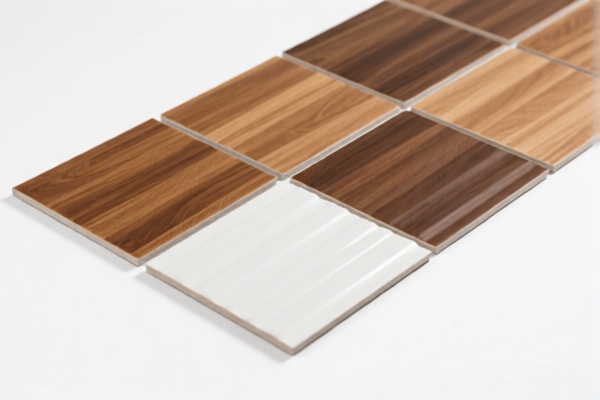
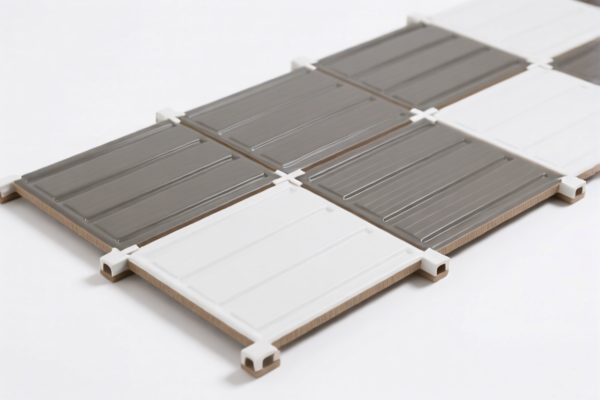
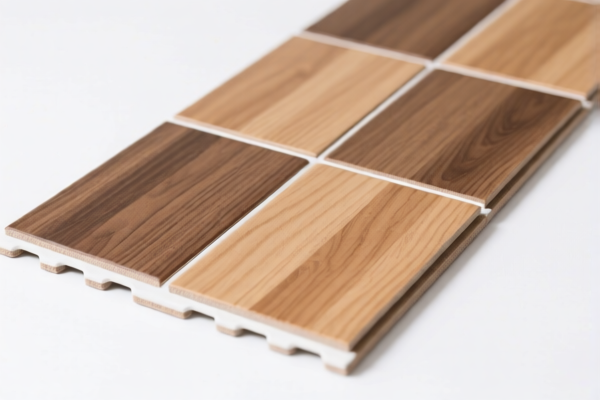
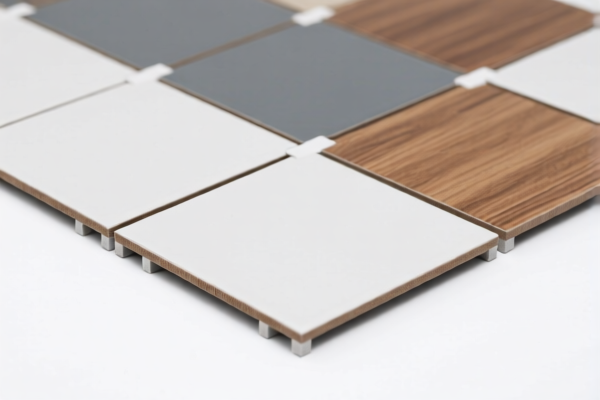
AI Analysis
🏠 PVC Floor Tiles (Vinyl Flooring & PVC Sheet Flooring)
🌐 HS Code Reference & Customs Clearance Guide | 2024/2026 Latest Tariff Analysis | Professional Clearance Strategy
📌 I. Product Definition & Classification: What Exactly Are "PVC Floor Tiles"?
PVC Floor Tiles, commonly known as Vinyl Flooring or LVT (Luxury Vinyl Tile), are rigid or flexible plastic sheet goods primarily made from Polyvinyl Chloride (PVC). In international trade, they are primarily classified under Chapter 39 (Plastics and Articles Thereof).
The critical distinction for classification lies in their form and specific use: * Plastic Sheets/Plates (3920 Series): Rigid or flexible sheets of PVC that may be cut into tiles, rolls, or planks but are considered general "plastic plates/sheets." * Floor Coverings (3918 Series): Products specifically identified as "floors, wall coverings, and other articles of plastics for the flooring." This includes vinyl tiles, sheet flooring, and parquet flooring composed of small pieces of wood/plastic.
⚠️ Key Classification Point:
- If the product is described simply as a "PVC plate/sheet" without specific floor-covering claims or complex assembly → Group 3920.
- If the product is explicitly marketed/used as "Floor Covering," "Vinyl Tile," or "Parquet" → Group 3918.
- If it is a miscellaneous plastic item with no specific floor designation (rare for tiles) → Group 3926.
📦 II. HS Code Classification Details (Based on Provided Data)
| HS Code | Product Description | Application Scenario | Tax Rate Summary |
|---|---|---|---|
3920.43.50.00 |
PVC Floor, Material: Polyvinyl Chloride, Form: Plate/Sheet Articles | Generic PVC sheets used for flooring, rigid/plastic plates | 39.2% |
3918.10.20.00 |
PVC Floor, Material: Polyvinyl Chloride, Use: Floor Covering | Vinyl tiles, sheet flooring specifically for floors | 40.3% |
3918.10.10.40 |
PVC Floor, Corresponds to: Vinyl Tiles / Floor Covering | LVT, WPC/SPC core vinyl tiles, decorative floor coverings | 40.3% |
3920.49.00.00 |
PVC Floor, Material: Vinyl Polymer, Form: Plastic Plate/Sheet | Other vinyl polymer plates, less specific classification | 40.8% |
3926.90.99.89 |
PVC Floor, Classified as: Unspecified Plastic Articles | Miscellaneous plastic items, generic PVC flooring without specific subheading | 22.8% |
🔍 Critical Note:
- 3918.10 codes are the most common for finished vinyl flooring products.
- 3920.43/49 codes often apply to semi-finished sheets or generic PVC plates that are later cut.
- 3926.90 is a "catch-all" for plastics not elsewhere specified, often resulting in lower tariff base but higher risk of classification dispute if not justified.
💰 III. 2024/2026 Latest Tariff Rate Breakdown (Including Surtaxes & Policy Additions)
✅ Applicable Country: United States (US)
✅ Origin: China (CN)
✅ Effective Time: 2025/2026 (Current Trade Policy Context)
🎯 1. 3920.43.50.00 —— PVC Floor, Polyvinyl Chloride, Plate Form
| Item | Content |
|---|---|
| Base Tariff | 4.2% |
| Section 301 Surtax | +25.0% (Standard China-China tariffs) |
| Section 122 Tariff | +10.0% (Specific China-related surtax) |
| Total Tax Rate | 39.2% |
| Tax Calculation | CIF Value × 39.2% |
| De Minimis Exemption | ❌ Not Eligible (High tariff rate exceeds threshold) |
| Legal Basis Path | USITC:3920.43.50.00 → FTC:301.01 → Sec122:ChinaSurcharge |
📌 Explanation:
- This code applies to PVC plates/sheets used as flooring.
- The 35% total surcharge (25% + 10%) makes the landed cost very high.
- Justification must focus on material composition (PVC) and physical form (plate/sheet).
🎯 2. 3918.10.20.00 & 3918.10.10.40 —— PVC Floor Coverings / Vinyl Tiles
| Item | Content |
|---|---|
| Base Tariff | 5.3% |
| Section 301 Surtax | +25.0% |
| Section 122 Tariff | +10.0% |
| Total Tax Rate | 40.3% |
| Tax Calculation | CIF Value × 40.3% |
| De Minimis Exemption | ❌ Not Eligible |
| Legal Basis Path | USITC:3918.10.xx.xx → FTC:301.01 → Sec122:ChinaSurcharge |
📌 Explanation:
- These are the most specific codes for finished vinyl flooring.
- Highest tax burden (40.3%) among the specific floor codes.
- Must provide proof of flooring application (e.g., packaging, product descriptions stating "Flooring," "Vinyl Tile," "LVT").
🎯 3. 3920.49.00.00 —— Other Vinyl Polymer Plates
| Item | Content |
|---|---|
| Base Tariff | 5.8% |
| Section 301 Surtax | +25.0% |
| Section 122 Tariff | +10.0% |
| Total Tax Rate | 40.8% |
| Tax Calculation | CIF Value × 40.8% |
| De Minimis Exemption | ❌ Not Eligible |
| Legal Basis Path | USITC:3920.49.00.00 → FTC:301.01 → Sec122:ChinaSurcharge |
📌 Explanation:
- This is a fallback code for vinyl polymer plates not specified elsewhere.
- Highest total rate (40.8%). Use only if 3918 codes are not applicable due to product form (e.g., raw rolls not yet cut/finished for floor use).
🎯 4. 3926.90.99.89 —— Other Specified Plastic Articles
| Item | Content |
|---|---|
| Base Tariff | 5.3% |
| Section 301 Surtax | +7.5% (Reduced Section 301 rate for some categories) |
| Section 122 Tariff | +10.0% |
| Total Tax Rate | 22.8% |
| Tax Calculation | CIF Value × 22.8% |
| De Minimis Exemption | ❌ Not Eligible (Generally, but rate is lower) |
| Legal Basis Path | USITC:3926.90.99.89 → FTC:301.01 (Special Category) → Sec122:ChinaSurcharge |
📌 Explanation:
- Lowest tax rate (22.8%) in the provided list.
- High Risk: This code is for "Other" plastic articles. Using it for PVC flooring requires strong justification that it does not fit the specific "Floor Covering" (3918) definition.
- Only use if the product is a miscellaneous plastic item with incidental flooring use or lacks specific floor-covering characteristics. Misclassification here can lead to audits and penalties.
🛠️ IV. Customs Clearance Practical Advice (Real-World Pitfall Guide)
✅ 1. Documentation Checklist (Non-Negotiable)
| Document | Required? | Notes |
|---|---|---|
| ✅ Product Specification Sheet | ✔️ | Must state material (PVC/Vinyl), thickness, form (tile/sheet), and intended use (Flooring). |
| ✅ Product Images | ✔️ | Clear photos showing texture, packaging, and application context. |
| ✅ Commercial Invoice | ✔️ | Description must be precise: e.g., "PVC Vinyl Floor Tiles, 5mm thick, for interior flooring use." Avoid vague terms like "Plastic Sheet." |
| ✅ Packing List | ✔️ | Details dimensions, weight, and quantity. |
| ✅ Certificate of Origin (CO) | ✔️ | Essential for proving Chinese origin and applying surtaxes. |
| ✅ Third-Party Test Report | ✔️ | ASTM, CE, or RoHS reports can support material claims. |
✅ 2. Declaration Strategy (Key Mnemonics)
🔥 "Be Specific, Be Honest, Choose the Right Chapter!"
| Scenario | Correct HS Code | Incorrect Code | Risk |
|---|---|---|---|
| Finished Vinyl Tiles (LVT/SPC/WPC) | 3918.10.10.40 or 3918.10.20.00 |
3926.90... |
Misclassification: Underpayment/Overpayment + Audit Risk |
| Raw PVC Sheets/Rolls for Flooring | 3920.43.50.00 or 3920.49.00.00 |
3918.10... |
May be accepted if not yet cut/finished as "floor covering" |
| Generic Plastic Floor Mats (Non-Vinyl) | Other Chapter 39 or 63 | 3918.10... |
Wrong material claim |
| PVC Floor Tiles declared as "Other Plastic Articles" | 3926.90.99.89 (Only if justified) |
3918.10... |
High Risk: CBP may reclassify to 3918 and assess higher duties + penalties |
📌 Important:
- Do not use3926.90.99.89to artificially lower tariffs for standard vinyl flooring. CBP has strict rules against "classification shopping." If the product is clearly a floor covering, it must go to 3918.
✅ 3. Special Circumstances
| Scenario | Handling Advice |
|---|---|
| SPC/WPC Core Flooring | Still primarily PVC/Vinyl. Use 3918.10... if vinyl-rich, or check if core material changes classification (e.g., wood-composite). |
| Hybrid Flooring (Wood + PVC) | May fall under Chapter 44 (Wood) if wood is predominant. Check wood percentage. If PVC > 50%, stay in Chapter 39. |
| Pre-cut vs. Rolls | Pre-cut tiles are clearly "floor coverings" (3918). Rolls may be argued as "plates" (3920) until cut, but intent matters. |
| Sample Shipments | Even samples are subject to duties if value exceeds de minimis or if classified under high-tax codes. |
🌍 V. Global Market Comparison (2026 Context)
| Country/Region | Recommended HS Code | Est. Duty | Certification | Notes |
|---|---|---|---|---|
| 🇺🇸 USA | 3918.10.10.40 |
40.3% (incl. 301+122) | FTC, DOE | Highest cost. Strict enforcement. |
| 🇨🇳 China | 3918.10.10.40 |
~5-10% | CCC (if applicable) | Lower base tariff, no Section 301. |
| 🇪🇺 EU | 3918.10.00 |
0-6.5% | CE, REACH | No Section 301. Eco-labeling may apply. |
| 🇬🇧 UK | 3918.10.00 |
0-6.5% | UKCA, REACH | Post-Brexit rules align with EU mostly. |
| 🇨🇦 Canada | 3918.10.00 |
0-5% (if FTA) | Health Canada | CUSMA may apply for non-Chinese origin. |
📌 Conclusion:
- USA is the most expensive market due to Section 301 (25%) and Section 122 (10%) surtaxes.
- Total effective duty can reach 40.8%.
- Plan for high landed costs or consider third-country assembly (e.g., Vietnam, Malaysia) to avoid China-origin surtaxes.
📌 VI. Common Mistakes & Pitfalls (Lessons Learned)
❌ Mistake 1: Using 3926.90.99.89 for standard PVC vinyl tiles to save 17.5% in taxes.
👉 Consequence: CBP audit, reassessment of duties + interest + penalties. Do not do this.
❌ Mistake 2: Declaring as "Plastic Plates" when product is clearly "Vinyl Floor Tiles."
👉 Consequence: Misdeclaration, potential seizure or delay.
❌ Mistake 3: Ignoring Section 122 Tariffs.
👉 Consequence: Underpayment of duties. Ensure all surtaxes are included in cost calculation.
❌ Mistake 4: Not providing product images or specs.
👉 Consequence: CBP requests additional info, delays clearance by days/weeks.
✅ Correct Practice:
"Vinyl Floor Tiles, PVC Material, 5mm Thick, Interlocking, for Residential/Commercial Flooring Use, Model XYZ"
🎯 VII. Conclusion: Smart Classification, Cost Control, Compliance!
🎯 Remember the Golden Rules:
🔹 "If it’s for floors, think 3918 first."
🔹 "301 + 122 = ~35-40% Extra Duty for China Origin."
🔹 "De Minimis is NOT your friend for PVC Flooring from China."
🔹 "Be accurate. Misclassification costs more than correct tariffs."
📌 Pro Tip:
If your PVC flooring is shipped from Vietnam, Thailand, or Mexico, you may avoid Section 301/122 surtaxes (if substantial transformation occurs).
Consider subcontracting final assembly or sourcing raw materials from non-China origins to reduce landed cost by ~35%.
📣 Immediate Action Items:
📞 Confirm HS Code with your customs broker using product specs.
📊 Calculate Landed Cost including 40.3% total duty for US imports.
🚀 Evaluate Supply Chain: Can you shift final assembly to a non-China country to save ~35%?
✨ Professional Clearance Starts with Accurate Classification!
💼 Your Profit Margin Depends on Your HS Code Strategy!
Customer Reviews
About HS Code Classification
The Harmonized System (HS) is an internationally standardized nomenclature developed by the World Customs Organization (WCO) to classify traded products. Over 200 countries use the HS system as the basis for customs tariffs, trade statistics, and import/export regulations.
Each HS code follows a hierarchical structure:
- Chapter (2 digits) — Broad category of goods (e.g., Chapter 84: Machinery and Mechanical Appliances)
- Heading (4 digits) — More specific grouping within the chapter
- Subheading (6 digits) — Internationally standardized breakdown, used by all WCO member countries
- National subdivisions (8-10 digits) — Country-specific extensions for further classification, such as US HTSUS 10-digit codes
Correct HS code classification is essential for smooth customs clearance, accurate duty payment, and compliance with trade regulations. Misclassification can lead to customs delays, overpayment of duties, or penalties.
When importing from CN to US, the applicable tariff rates may include:
- Most-Favored-Nation (MFN) rate — The standard duty rate applied to WTO members
- General rate — Applied to countries without trade agreements
- Trade remedy duties — Additional tariffs such as Section 301 (anti-dumping), Section 232 (national security), or countervailing duties
The information provided on this page is for reference purposes only. For official classification, please consult with your local customs authority or a licensed customs broker.