PVC Floor Transportation
CN → US| HS Code | Tariff Rate | Origin | Destination | Doc |
|---|---|---|---|---|
| 3918101040 | 40.3% | CN | US | Official Doc |
| 3918102000 | 40.3% | CN | US | Official Doc |
| 3920490000 | 40.8% | CN | US | Official Doc |
| 3926909989 | 22.8% | CN | US | Official Doc |
| 3920435000 | 39.2% | CN | US | Official Doc |
Product Images
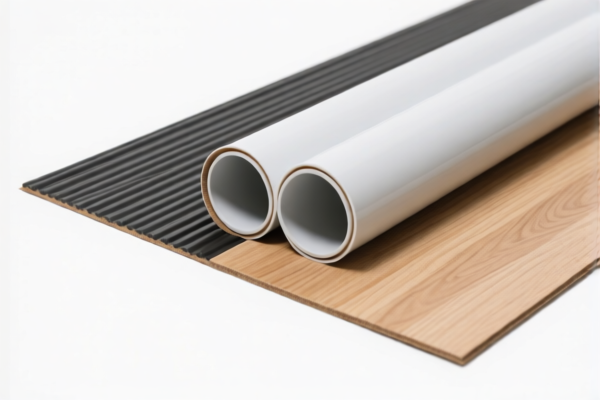

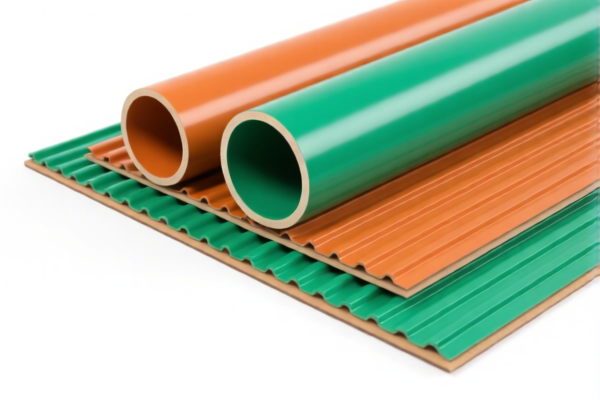
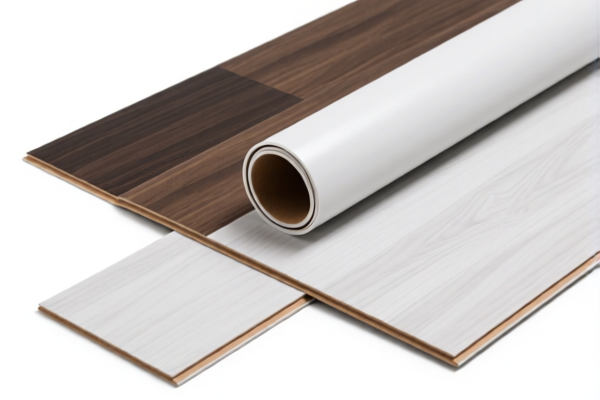
AI Analysis
🏠 PVC Flooring: HS Code Classification & U.S. Customs Clearance Guide (2026)
🌐 HS Code Reference & Customs Strategy | 2026 Latest Tariff Analysis | Professional Clearance Strategy
📌 I. Product Definition & Classification: Do You Really Understand "PVC Flooring"?
PVC Flooring, primarily composed of Polyvinyl Chloride (PVC) polymers, is a dominant material in modern flooring solutions due to its durability, water resistance, and aesthetic versatility. In international trade, it is not a single monolithic product but is classified based on its chemical composition, physical form, and intended use.
Key Distinctions in Classification: 1. Finished Floor Coverings (Heading 3918): Products specifically designed and manufactured for use as floor coverings, often pre-cut or in roll form with backing layers. 2. Plastic Plates/Sheets (Heading 3920): Semi-finished plastic sheets or plates that may be used for flooring but are generally classified by their polymer type (e.g., Vinyl, PVC) and form factor. 3. Other Plastic Articles (Heading 3926): General-purpose plastic items that do not fit specific headings (e.g., certain decorative PVC trims or unformed components).
⚠️ Critical Differentiation Point:
- If the product is explicitly marketed and shaped as "Floor Covering" → Likely 3918.10.xx.xx.
- If it is a "Plastic Sheet/Plate" made of Vinyl/PVC, regardless of potential floor use → Likely 3920.49.xx.xx or 3920.43.xx.xx.
- If it is a generic Plastic Accessory with no specific flooring structure → 3926.90.xx.xx.
📦 II. HS Code Classification Matrix (Based on Provided Data)
| HS Code | Product Description (Summary) | Material/Form | Total Tax Rate | Key Classification Logic |
|---|---|---|---|---|
| 3918.10.10.40 | PVC Flooring, material: PVC polymer, use: Floor covering | PVC Polymer | 40.3% | Explicitly designated as "Floor Covering" made of PVC polymers. |
| 3918.10.20.00 | PVC Flooring, material: PVC, use: Floor covering | PVC Material | 40.3% | General PVC floor covering classification under Heading 3918. |
| 3920.49.00.00 | PVC Flooring, material: Vinyl polymer, form: Plastic plate/sheet | Vinyl Polymer | 40.8% | Classified as a "Plastic Plate/Sheet" made of other plastics (Vinyl), not specifically as a finished flooring product under 3918. |
| 3926.90.99.89 | PVC Flooring, material: PVC, category: Unspecified plastic article | PVC Plastic | 22.8% | Classified as an "Other" plastic article. Lower tax but risky if misused for actual flooring. |
| 3920.43.50.00 | PVC Flooring, material: PVC, form: Plate/sheet plastic product | PVC Plate | 39.2% | Specific classification for PVC plates/sheets used in flooring applications. |
🔍 Key Insight:
- 3918 headings generally apply to finished flooring products (rugs, mats, floor coverings of plastic).
- 3920 headings apply to plastic plates, sheets, film, foil, and strip. If your PVC is sold as a sheet/roll that the buyer cuts, it may fall here.
- 3926 is a "basket" category. Using this for flooring is possible but requires proving it's not specifically a "floor covering" or "plastic plate." Caution: Misclassification can lead to audits.
💰 III. 2026 U.S. Tariff Rate Breakdown (Including Additional Duties)
✅ Applicable Country: United States (US)
✅ Country of Origin: China (CN) (Assumed based on "122 Clause" and typical trade context)
✅ Effective Time: Current 2026 Rates
🎯 1. 3918.10.10.40 & 3918.10.20.00 —— PVC Flooring (Finished Covering)
| Item | Details |
|---|---|
| Base Duty Rate | 5.3% (Standard Most Favored Nation Rate) |
| Section 301 Duty (Added Tariff) | 25.0% |
| Section 122 Duty (Other Added Tariff) | 10.0% |
| Total Effective Tax Rate | 40.3% |
| Calculation Basis | CIF Value × 40.3% |
| De Minimis Exemption? | ❌ NO (These goods are subject to high additional duties and do not qualify for $800 de minimis exemption if properly assessed under trade enforcement rules, or even if they do, the cost impact is significant.) |
| Legal Basis Path | HTSUS:3918.10.xx.xx → Section 301 Footnote → Section 122 Authority |
📌 Explanation:
- The 25% Section 301 tariff is the primary punitive duty on Chinese plastics and finished goods.
- The 10% Section 122 tariff (often associated with specific trade remedies or emergency measures) adds further cost.
- Total: 40.3%. This is a high-cost entry barrier.
🎯 2. 3920.49.00.00 —— Plastic Plates/Sheets (Vinyl)
| Item | Details |
|---|---|
| Base Duty Rate | 5.8% |
| Section 301 Duty | 25.0% |
| Section 122 Duty | 10.0% |
| Total Effective Tax Rate | 40.8% |
| Calculation Basis | CIF Value × 40.8% |
| De Minimis Exemption? | ❌ NO |
📌 Note:
- Even though it's classified as a "sheet," the additional duties remain the same because it originates from China and falls under the broad plastic/product list.
- The slightly higher base rate (5.8% vs 5.3%) results in a 40.8% total, making it marginally more expensive than 3918.
🎯 3. 3926.90.99.89 —— Other Plastic Articles
| Item | Details |
|---|---|
| Base Duty Rate | 5.3% |
| Section 301 Duty | 7.5% (Lower Section 301 rate for this specific subheading in some contexts) |
| Section 122 Duty | 10.0% |
| Total Effective Tax Rate | 22.8% |
| Calculation Basis | CIF Value × 22.8% |
| De Minimis Exemption? | ❌ NO |
📌 Strategic Implication:
- This is the lowest tax rate (22.8%) in the provided dataset.
- However, you cannot simply declare PVC flooring as "Other Plastic Articles" to save taxes. Customs will scrutinize the product's end-use. If it is clearly flooring, they will reclassify it to 3918 or 3920 and impose penalties + back duties.
- Use Case: Only applies if the PVC item is an accessory (e.g., edge trim, non-structural component) and not the main floor covering.
🎯 4. 3920.43.50.00 —— PVC Plates/Sheets
| Item | Details |
|---|---|
| Base Duty Rate | 4.2% |
| Section 301 Duty | 25.0% |
| Section 122 Duty | 10.0% |
| Total Effective Tax Rate | 39.2% |
| Calculation Basis | CIF Value × 39.2% |
🛠️ IV. Practical Customs Clearance Advice (Risk Avoidance Guide)
✅ 1. Documentation Checklist (Non-Negotiable)
| Document | Required? | Purpose |
|---|---|---|
| ✅ Product Specification Sheet | ✔️ | Must detail: Material composition (% PVC), thickness, dimensions, backing type, and intended use (Flooring). |
| ✅ Commercial Invoice | ✔️ | Must clearly state: "PVC Floor Covering" or "Plastic Sheet for Flooring." Avoid vague terms like "Plastic Item." |
| ✅ Packing List | ✔️ | List weight, volume, and number of boxes/rolls. |
| ✅ Certificate of Origin | ✔️ | Crucial for proving China origin. May be needed for Section 301 exclusion applications (if any remain). |
| ✅ Photos of Product & Packaging | ✔️ | Show the product in its final form (e.g., planks, tiles, rolls) to prove it is a "Floor Covering." |
| ✅ Supply Chain Info | ✔️ | If claiming non-China origin, provide full chain of custody documents. |
✅ 2. Declaration Tips (The "Golden Rules")
🔥 “Declare What It Is, Not What You Hope It Is.”
| Scenario | Correct Declaration | Risky/Wrong Declaration | Consequence |
|---|---|---|---|
| Finished PVC Planks/Tiles | 3918.10.10.40 (PVC Floor Covering) |
3926.90.99.89 (Other Plastic) |
High Risk: Customs reclassifies → Back duties (~17.5% difference) + Penalties. |
| PVC Rolls/Sheets for Floor | 3920.49.00.00 or 3920.43.50.00 |
3918.10.20.00 |
Medium Risk: If sheets are uncut and generic, 3920 is better. If pre-cut for floor, 3918 is mandatory. |
| PVC Trim/Edge Banding | 3926.90.99.89 (Accessory) |
3918.10.10.40 (Flooring) |
Low Risk: But ensure it's not the main flooring material. |
💡 Pro Tip: If you are exporting PVC Sheets that the US buyer will cut into flooring, classify as 3920 (Plastic Plates/Sheets). If you are exporting pre-cut vinyl planks, classify as 3918 (Floor Covering). This distinction is critical for HS Code accuracy.
✅ 3. Special Case Handling
| Situation | Recommendation |
|---|---|
| Hybrid Materials (PVC + Wood Fiber) | Still likely 3918 if PVC is the primary binding agent and it's used as flooring. Provide material % breakdown. |
| Rigid Core LVT/SPC | If it has a stone-plastic composite core but PVC wear layer, consult customs. May still be 3918 or 3920 depending on structure. |
| OEM/Private Label | Ensure the invoice matches the actual manufacturer. Misrepresentation of origin is a felony. |
| Section 301 Exclusion | Check if your specific HS Code still has an active exclusion list. Most PVC flooring exclusions have expired or are limited. |
🌍 V. Global Market Comparison (2026 Snapshot)
| Market | Recommended HS Code | Base Tariff | Additional Duties (China) | Total Est. Cost | Notes |
|---|---|---|---|---|---|
| 🇺🇸 USA | 3918.10.10.40 |
5.3% | 35% (301+122) | 40.3% | Highest barrier. Strict enforcement. |
| 🇨🇳 China (Import) | 3918.10.10.40 |
5.3% | 0% | 5.3% | No additional penalties for imports into China. |
| 🇪🇺 EU | 3918.10.00.00 |
4.0% | 0% (usually) | 4.0% | Anti-dumping duties may apply for specific Chinese manufacturers. Check CE/RoHS. |
| 🇬🇧 UK | 3918.10.00.00 |
4.0% | 0% | 4.0% | Post-Brexit rules. Verify UKCA marking. |
| 🇦🇺 Australia | 3918.10.00.00 |
5.0% | 0% | 5.0% | No major trade war tariffs on plastics. |
📌 Conclusion:
- The USA is the most expensive market for PVC flooring from China due to叠加 (stacked) tariffs.
- EU/UK/Australia offer significantly lower entry costs, but may require additional environmental/safety certifications (RoHS, REACH, CE).
📌 VI. Common Mistakes & Pitfalls (Lessons Learned)
❌ Mistake 1: Declaring "PVC Flooring" as "Plastic Sheet" (3920) when it's pre-cut flooring.
👉 Result: Customs determines it's a finished good → Reclassifies to 3918 → Back taxes + Interest.
❌ Mistake 2: Declaring "Other Plastic Articles" (3926) to save tax.
👉 Result: Customs inspects goods, sees it's flooring → Rejection of entry, penalties, and potential seizure.
❌ Mistake 3: Ignoring the "122 Clause" or "Section 301" in tariff calculations.
👉 Result: Underpaying duties → Audit later, plus penalties.
❌ Mistake 4: Vague descriptions like "Plastic Item" on the Invoice.
👉 Result: Customs assigns highest possible tariff or holds shipment for further review → Delays.
✅ Correct Action:
"Luxury Vinyl Tile (LVT), PVC Flooring, 5mm thick, with UV coating, 1200x180mm planks, Made in China"
🎯 VII. Conclusion: Precision Saves Money
🎯 Remember:
🔹 "Finished Flooring goes to 3918, Sheets go to 3920."
🔹 "40.3% is the US Reality for PVC Flooring from China."
🔹 "Don't gamble with 'Other Plastic' codes for flooring."
📌 Pro Tip:
If you are importing large volumes, consider:
1. Advance Ruling: Apply to US Customs for a binding classification decision.
2. Supply Chain Diversification: Source from Vietnam or Malaysia for the US market to avoid China-specific tariffs.
3. Duty Drawback: If the flooring is re-exported, explore duty drawback programs.
📣 Immediate Action:
📞 Consult a licensed customs broker with your product samples and material MSDS.
📄 Request a tariff classification ruling before your first shipment.
🚀 Accurate classification = Peace of mind and optimized logistics costs!
✨ Professional Clearance Starts with Correct Classification!
💼 Every Percentage Point Counts in Global Trade!
Customer Reviews
About HS Code Classification
The Harmonized System (HS) is an internationally standardized nomenclature developed by the World Customs Organization (WCO) to classify traded products. Over 200 countries use the HS system as the basis for customs tariffs, trade statistics, and import/export regulations.
Each HS code follows a hierarchical structure:
- Chapter (2 digits) — Broad category of goods (e.g., Chapter 84: Machinery and Mechanical Appliances)
- Heading (4 digits) — More specific grouping within the chapter
- Subheading (6 digits) — Internationally standardized breakdown, used by all WCO member countries
- National subdivisions (8-10 digits) — Country-specific extensions for further classification, such as US HTSUS 10-digit codes
Correct HS code classification is essential for smooth customs clearance, accurate duty payment, and compliance with trade regulations. Misclassification can lead to customs delays, overpayment of duties, or penalties.
When importing from CN to US, the applicable tariff rates may include:
- Most-Favored-Nation (MFN) rate — The standard duty rate applied to WTO members
- General rate — Applied to countries without trade agreements
- Trade remedy duties — Additional tariffs such as Section 301 (anti-dumping), Section 232 (national security), or countervailing duties
The information provided on this page is for reference purposes only. For official classification, please consult with your local customs authority or a licensed customs broker.