PVC Flooring
CN → US| HS Code | Tariff Rate | Origin | Destination | Doc |
|---|---|---|---|---|
| 3920435000 | 39.2% | CN | US | Official Doc |
| 3918102000 | 40.3% | CN | US | Official Doc |
| 3918101040 | 40.3% | CN | US | Official Doc |
| 3920490000 | 40.8% | CN | US | Official Doc |
| 3926909989 | 22.8% | CN | US | Official Doc |
Product Images
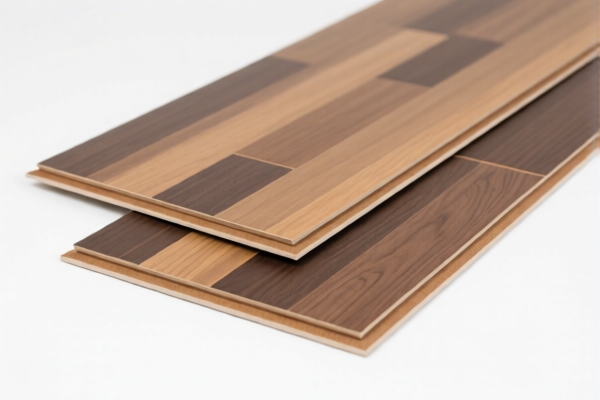
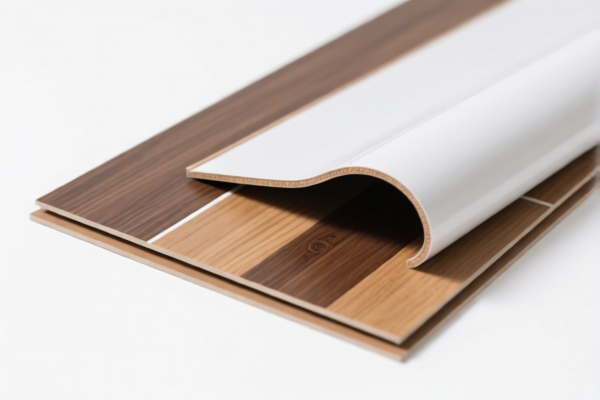
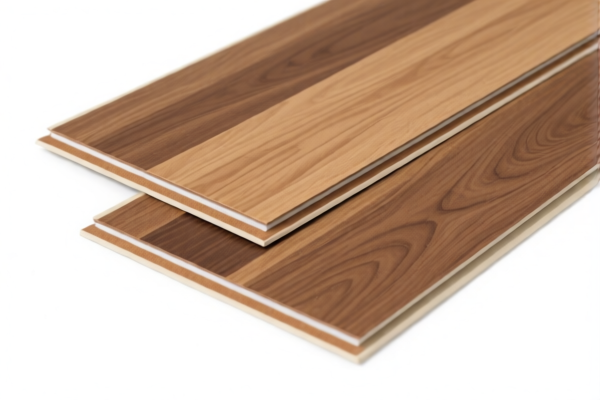
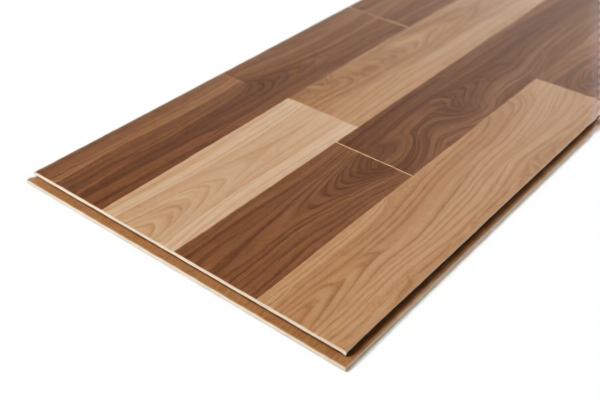
AI Analysis
🏠 PVC Flooring: The Ultimate HS Code & Customs Clearance Guide
🌐 HS Code Reference & Customs Strategy | 2026 Latest Tariff Analysis | Professional Clearance Protocols
📌 I. Product Definition: What Exactly is "PVC Flooring"?
PVC Flooring (Polyvinyl Chloride Flooring) is a synthetic floor covering widely used in residential, commercial, and industrial settings. In international trade, its classification depends heavily on its physical form, manufacturing process, and specific use.
It is generally categorized into two main streams: 1. Flooring Panels/Coverings (Chapter 3918): Specifically designed as floor coverings, often flexible sheets or tiles. 2. General Plastic Plates/Sheets (Chapter 3920/3926): General-purpose plastic materials that happen to be used as flooring, or unfinished plastic products.
⚠️ Critical Distinction:
- If the product is specifically manufactured as "Floor Covering" (e.g., vinyl tiles, linoleum-like sheets) → Look at 3918.
- If the product is a general "Plastic Plate/Sheet" used for flooring but not specifically classified as flooring → Look at 3920 or 3926.
📦 II. HS Code Classification Breakdown (2026 Latest Tariff Data)
Based on the provided data, here are the 5 potential HS Codes for PVC Flooring, ranging from specialized flooring codes to general plastic product codes.
| HS Code | Product Description & Summary | Key Characteristics | Total Tax Rate* |
|---|---|---|---|
3918.10.20.00 |
PVC Flooring - Specific Floor Covering | Material: PVC; Use: Floor covering; Specific variety under this heading. | 40.3% |
3918.10.10.40 |
PVC Flooring - Vinyl Tile/Covering | Material: PVC Polymer; Use: Floor covering; Fits "Vinyl Tile/Floor Covering" features. | 40.3% |
3920.43.50.00 |
PVC Flooring - PVC Plates/Sheets | Material: PVC; Form: Flooring; Non-cellular, non-reinforced plastic product features. | 39.2% |
3920.49.00.00 |
PVC Flooring - Vinyl Polymer Sheets | Material: Vinyl Polymer; Form: Plastic plates/sheets; No material conflict. | 40.8% |
3926.90.99.89 |
PVC Flooring - Other Plastic Articles | Material: PVC; Classified as "Other" plastic articles not specified elsewhere. | 22.8% |
🔍 重点提醒 (Key Insights):
- Lowest Tax Option:3926.90.99.89(22.8%) is the cheapest but risky. It classifies PVC flooring as a "miscellaneous plastic article," not specifically as flooring.
- Most Accurate for Flooring:3918.10.10.40or3918.10.20.00(40.3%). These explicitly mention "Floor Covering."
- General Sheet Classification:3920series (39.2% - 40.8%) applies if the product is technically a "plastic sheet" used for flooring.
💰 III. 2026 Latest Tariff Rate Breakdown (Including Surtaxes)
✅ Applicable Country: United States (US)
✅ Origin: China (CN)
✅ Effective Date: Post-2025 (Includes Section 301 & Section 122 tariffs)
🎯 1. 3926.90.99.89 – The Low-Tax Trap
Classification: Other Plastic Articles (PVC Flooring)
| Item | Content |
|---|---|
| Base Duty | 5.3% |
| Surtax (Section 301) | +7.5% |
| Section 122 Duty | +10% |
| Total Tax Rate | 22.8% |
| Calculation | CIF Value × 22.8% |
| De Minimis Exemption | ❌ Not Available (Usually denied for Chinese origin goods under these surtaxes) |
📌 Explanation:
- This code attracts the lowest tariff (22.8%).
- Risk: Customs may reclassify this as3918(flooring specific) if the product is clearly identified as "flooring" in commercial invoices and marketing, leading to back taxes at 40.3%.
- Strategy: Use only if the product is a raw plastic sheet sold to be cut and installed, not pre-cut tiles marketed explicitly as "PVC Flooring."
🎯 2. 3918.10.10.40 & 3918.10.20.00 – The "True Flooring" Classification
Classification: Plastic Floor Coverings
| Item | Content |
|---|---|
| Base Duty | 5.3% |
| Surtax (Section 301) | +25.0% |
| Section 122 Duty | +10% |
| Total Tax Rate | 40.3% |
| Calculation | CIF Value × 40.3% |
| De Minimis Exemption | ❌ Not Available |
📌 Explanation:
- These codes are for specific floor coverings.
- The 25% Surtax is the standard Section 301 rate for many plastic products.
- Compliance: This is the safest classification if you are importing finished vinyl tiles or rolls labeled as "PVC Flooring."
🎯 3. 3920.43.50.00 – The "Sheet" Classification
Classification: Other Plates, Sheets, Film, Foil, and Strip (PVC)
| Item | Content |
|---|---|
| Base Duty | 4.2% |
| Surtax (Section 301) | +25.0% |
| Section 122 Duty | +10% |
| Total Tax Rate | 39.2% |
| Calculation | CIF Value × 39.2% |
| De Minimis Exemption | ❌ Not Available |
📌 Explanation:
- Slightly lower base duty (4.2% vs 5.3%) but still subject to 25% + 10% surtaxes.
- Applicable if the product is considered a "non-cellular, non-reinforced" plastic sheet used for flooring.
🎯 4. 3920.49.00.00 – Other Vinyl Polymer Plates
Classification: Other Plates, Sheets, etc. (Vinyl Polymer)
| Item | Content |
|---|---|
| Base Duty | 5.8% |
| Surtax (Section 301) | +25.0% |
| Section 122 Duty | +10% |
| Total Tax Rate | 40.8% |
| Calculation | CIF Value × 40.8% |
| De Minimis Exemption | ❌ Not Available |
📌 Explanation:
- This is the highest tax bracket in the dataset.
- Use this only if the product does not fit "PVC" specifically under 3920.43 but falls under general "Vinyl Polymer" plates. Avoid if possible.
🛠️ IV. Customs Clearance Practical Advice (Real-World Pitfall Guide)
✅ 1. Document Checklist (Non-Negotiable)
| Document | Required? | Description |
|---|---|---|
| ✅ Commercial Invoice | ✔️ | Must clearly state "PVC Flooring" or "Plastic Floor Covering." Mislabeling as "Plastic Sheet" when it's clearly flooring triggers audits. |
| ✅ Packing List | ✔️ | Detailed weight and dimensions. |
| ✅ Product Photos | ✔️ | Show the product installed (if possible) to prove end-use, OR show raw sheets if claiming 3920/3926. |
| ✅ Material Safety Data Sheet (MSDS) | ✔️ | Required for plastic/chlorinated products. |
| ✅ Certification (RoHS/REACH) | ✔️ | While US doesn't mandate RoHS, it helps prove material safety and classification. |
✅ 2. Classification Strategy (Key Logic)
| Scenario | Recommended HS Code | Why? |
|---|---|---|
| Finished Vinyl Tiles/Rolls labeled "PVC Flooring" | 3918.10.10.40 or 3918.10.20.00 |
Correct Classification: Specific for floor coverings. Avoids penalty for misclassification. |
| Raw PVC Sheets sold to be cut and installed by buyer | 3920.43.50.00 |
Cost-Effective: Slightly lower base duty (4.2%). Must not be marketed as "ready-to-install flooring." |
| Generic Plastic Floor Mat/Runner (not vinyl) | 3926.90.99.89 |
Lowest Tax: 22.8%. Only if it doesn't fit specific flooring definitions. |
🔥 Golden Rule:
"If it looks like a tile, acts like a tile, and is sold as flooring, it's 3918. Don't try to hide it as a 'sheet' unless you have a solid legal basis."
✅ 3. Special Case Handling
| Case | Handling Advice |
|---|---|
| Hybrid Products (Wood+PVC) | If composite, it may not be classified under Chapter 39. Check Chapter 44 or 46. If PVC is just a surface layer, 3918 may still apply. |
| Sample Shipments | Even samples are subject to tariffs. Do not mark as "No Commercial Value" to avoid duty; declare true value and pay tax. |
| Section 122 Duty | The 10% Section 122 duty applies to most Chinese plastic goods. It is non-negotiable and separate from the 25% Section 301. |
🌍 V. Global Market Comparison (2026 Overview)
| Country/Region | Recommended HS Code | Est. Total Duty | Notes |
|---|---|---|---|
| 🇺🇸 USA | 3918.10.10.40 |
40.3% | Includes 25% Sec 301 + 10% Sec 122. High barrier. |
| 🇨🇳 China (Import) | 3918.10.10.00 |
~5-9% | Low duty. No surtaxes. |
| 🇪🇺 EU | 3918.10.00 |
~6.5% | No Section 301/122. Standard MFN rate. |
| 🇬🇧 UK | 3918.10.00 |
~6.5% | Similar to EU post-Brexit. |
| 🇦🇺 Australia | 3918.10.00 |
~5% | GATS preferential rates may apply. |
📌 Conclusion:
- The US market is the most expensive for PVC flooring due to aggressive tariffs (Sec 301 + Sec 122).
- EU/Asia/Australia offer significantly lower entry costs.
- Optimization: Consider sourcing from Vietnam or Thailand if possible, but ensure substantial transformation occurs to avoid US "country of origin" rules targeting China-transshipped goods.
📌 VI. Common Mistakes & Pitfalls (Lessons Learned)
❌ Mistake 1: Misclassifying "PVC Flooring" as "Building Materials" (Chapter 68 or 44)
👉 Consequence: Immediate rejection by CBP. PVC is plastic, not stone or wood.
❌ Mistake 2: Using 3926.90.99.89 for obvious vinyl tiles
👉 Consequence: CBP will audit, reclassify to 3918, and charge back taxes + interest + penalties.
❌ Mistake 3: Ignoring Section 122 Duty
👉 Consequence: Underpayment of 10%. CBP audits catch this frequently. It applies to all Chinese plastic imports unless specifically exempted.
❌ Mistake 4: Assuming "De Minimis" (Section 321) applies
👉 Consequence: No De Minimis for China. All shipments, regardless of value, are subject to duties and taxes.
✅ Correct Approach:
"Vinyl Flooring, PVC, 5mm thick, Click-Lock, for Residential Use, Model XYZ, Made in China"
Use this precise description to support3918.10.10.40or3918.10.20.00.
🎯 VII. Conclusion: Professional Classification Saves Money
🎯 Key Takeaways:
🔹 Accuracy over Savings: Do not risk using the 22.8% rate (
3926) if the product is clearly flooring. The 40.3% rate (3918) is the compliant path. 🔹 Budget for 40%+: Factor in 39.2% - 40.8% total duty costs for US imports. 🔹 Documentation is Key: Ensure your commercial invoice matches the HS Code description exactly.
📌 Pro Tip:
Apply for an Advance Ruling (R99-0000) from US Customs and Border Protection (CBP) before shipping. This provides legal certainty on your HS Code and prevents surprise audits.
📣 Immediate Action:
📞 Consult a Customs Broker
📝 Prepare Product Specifications
🚀 Start the Advance Ruling Process Today
✨ Professional Clearance Starts with Accurate Classification!
💼 Your Margins Depend on It!
Customer Reviews
About HS Code Classification
The Harmonized System (HS) is an internationally standardized nomenclature developed by the World Customs Organization (WCO) to classify traded products. Over 200 countries use the HS system as the basis for customs tariffs, trade statistics, and import/export regulations.
Each HS code follows a hierarchical structure:
- Chapter (2 digits) — Broad category of goods (e.g., Chapter 84: Machinery and Mechanical Appliances)
- Heading (4 digits) — More specific grouping within the chapter
- Subheading (6 digits) — Internationally standardized breakdown, used by all WCO member countries
- National subdivisions (8-10 digits) — Country-specific extensions for further classification, such as US HTSUS 10-digit codes
Correct HS code classification is essential for smooth customs clearance, accurate duty payment, and compliance with trade regulations. Misclassification can lead to customs delays, overpayment of duties, or penalties.
When importing from CN to US, the applicable tariff rates may include:
- Most-Favored-Nation (MFN) rate — The standard duty rate applied to WTO members
- General rate — Applied to countries without trade agreements
- Trade remedy duties — Additional tariffs such as Section 301 (anti-dumping), Section 232 (national security), or countervailing duties
The information provided on this page is for reference purposes only. For official classification, please consult with your local customs authority or a licensed customs broker.