PVC Flooring Design
CN → US| HS Code | Tariff Rate | Origin | Destination | Doc |
|---|---|---|---|---|
| 3918101040 | 40.3% | CN | US | Official Doc |
| 3918102000 | 40.3% | CN | US | Official Doc |
| 3920490000 | 40.8% | CN | US | Official Doc |
| 3926909989 | 22.8% | CN | US | Official Doc |
| 3920435000 | 39.2% | CN | US | Official Doc |
| 3918101020 | 40.3% | CN | US | Official Doc |
Product Images
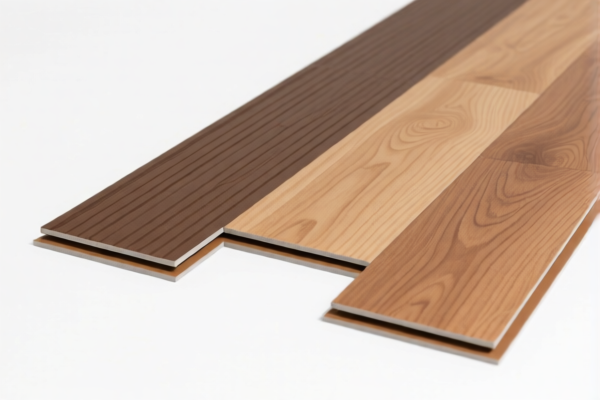
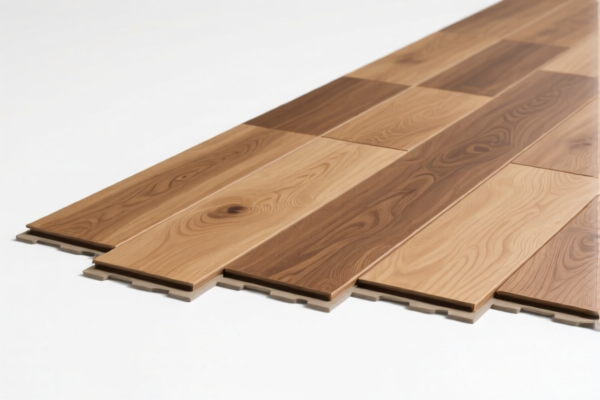
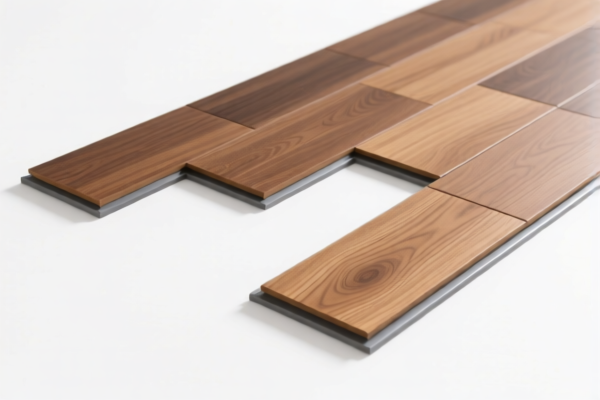
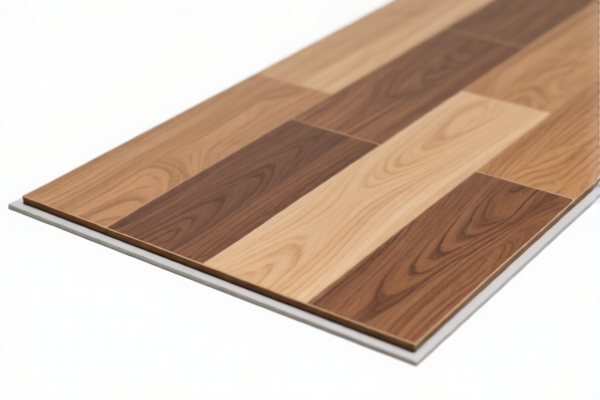
AI Analysis
🏠 PVC Flooring Design (Vinyl Flooring)
🌐 HS Code Reference & Customs Clearance Guide | 2026 Latest Tariff Analysis | Professional Strategy for US Imports from China
📌 I. Product Definition & Classification: Do You Really Understand "PVC Flooring"?
PVC Flooring, commonly known as Vinyl Flooring, is a versatile covering material widely used in residential, commercial, and industrial settings. In international trade, it is not a single homogeneous product. Its classification depends heavily on its material composition, physical form, and specific application. Misclassification can lead to significant tariff discrepancies and clearance delays.
⚠️ Key Distinction:
- Is it a finished floor covering ready for installation? → Likely Chapter 39.18
- Is it a raw plastic sheet/board (not yet installed as flooring)? → Likely Chapter 39.20
- Is it a complex plastic assembly not specifically listed elsewhere? → Likely Chapter 39.26
📦 II. HS Code Classification Details (2026 Latest Tariff Authority Comparison)
| HS Code | Product Description | Applicable Scenario | Form/State | Tax Rate (Total) |
|---|---|---|---|---|
3918.10.10.40 |
PVC Flooring, Material: Polyvinyl Chloride (PVC) Polymer, Use: Floor Covering | Standard finished PVC floor tiles/planks | Finished Flooring | 40.3% |
3918.10.20.00 |
PVC Flooring, Material: PVC, Use: Floor Covering | Standard finished PVC floor sheets | Finished Flooring | 40.3% |
3920.49.00.00 |
PVC Flooring, Material: Ethylene Polymer (Vinyl), Form: Plastic Sheet/Plate | Industrial vinyl sheets, non-PVC specific vinyls | Plastic Sheets | 40.8% |
3926.90.99.89 |
PVC Flooring, Material: PVC, Category: Other Unlisted Plastic Articles | Non-standard PVC items, complex assemblies not fitting 39.18/20 | Unlisted Plastic Item | 22.8% |
3920.43.50.00 |
PVC Flooring, Material: PVC, Form: Board/Plate Products | PVC boards/plates intended for flooring but classified as semi-finished | Plastic Boards | 39.2% |
🔍 Critical Reminder:
- Finished Floor Coverings (rolls, tiles, planks) generally fall under 3918.10.
- Semi-finished Plastic Sheets/Plates (even if intended for flooring) may fall under 3920.
- Miscellaneous/Unlisted Items might fall under 3926, but this is a "catch-all" and often attracts scrutiny if a more specific code exists.
💰 III. 2026 Latest Tariff Rate Breakdown (Including Supplementary Taxes & Policy Add-ons)
✅ Applicable Country: USA (US)
✅ Origin: China (CN)
✅ Effective Date: Ongoing (Section 301 & IEEPA tariffs apply)
🎯 1. 3918.10.10.40 & 3918.10.20.00 —— PVC Flooring (Finished Coverings)
| Item | Detail |
|---|---|
| Basic Tariff | 5.3% (Standard MFN Rate) |
| Section 301 Supplementary Tariff | +25.0% (Trade Remedy Duty) |
| IEEPA Section 122 Tariff | +10.0% (Specific China-related Add-on) |
| Total Tariff Rate | 40.3% |
| Tax Calculation | CIF Value × 40.3% |
| De Minimis Exemption? | ❌ No (Not eligible for Section 321 de minimis) |
| Legal Basis Path | HTSUS:3918.10.10.40 → USITC Footnote: 301 (25%) → IEEPA: 122 Clause (10%) |
📌 Explanation:
- These codes represent finished flooring products.
- The 25% is the standard Section 301 duty on Chinese plastic floor coverings.
- The 10% is the additional IEEPA tariff applied to specific Chinese goods.
- Combined burden: 40.3%. This is a high-cost category.
🎯 2. 3920.49.00.00 —— Vinyl Plastic Sheets (Ethylene Polymer)
| Item | Detail |
|---|---|
| Basic Tariff | 5.8% |
| Section 301 Supplementary Tariff | +25.0% |
| IEEPA Section 122 Tariff | +10.0% |
| Total Tariff Rate | 40.8% |
| Tax Calculation | CIF Value × 40.8% |
| De Minimis Exemption? | ❌ No |
📌 Note:
- Slightly higher than 3918 due to a 0.5% higher basic tariff.
- Applies if the material is strictly defined as "Ethylene Polymer" (Vinyl) rather than general PVC polymer.
🎯 3. 3920.43.50.00 —— PVC Boards/Plates
| Item | Detail |
|---|---|
| Basic Tariff | 4.2% |
| Section 301 Supplementary Tariff | +25.0% |
| IEEPA Section 122 Tariff | +10.0% |
| Total Tariff Rate | 39.2% |
| Tax Calculation | CIF Value × 39.2% |
📌 Note:
- Lower basic tariff (4.2%) results in a slightly lower total rate (39.2%).
- Only applicable if the product is classified as a "Board/Plate" rather than a "Floor Covering."
🎯 4. 3926.90.99.89 —— Other Plastic Articles (Unlisted)
| Item | Detail |
|---|---|
| Basic Tariff | 5.3% |
| Section 301 Supplementary Tariff | +7.5% |
| IEEPA Section 122 Tariff | +10.0% |
| Total Tariff Rate | 22.8% |
| Tax Calculation | CIF Value × 22.8% |
📌 Warning:
- This is the lowest tariff (22.8%).
- However, this code is for "Unlisted Plastic Articles."
- Risk: US Customs may reject this classification if the product clearly fits 3918 or 3920. Misclassification can lead to seizure, penalties, and back taxes.
- Only use if the product is a complex, non-standard PVC assembly that cannot be described by the other codes.
🛠️ IV. Customs Clearance Practical Advice (Field Pitfall Avoidance Guide)
✅ 1. Required Documentation Checklist
| Document | Required | Description |
|---|---|---|
| ✅ Product Specification Sheet | ✔️ | Must specify: Material (PVC/Vinyl), Form (Tile/Sheet/Board), Thickness, Use (Flooring) |
| ✅ Product Photos | ✔️ | Clear images of the product, packaging, and any labels |
| ✅ Commercial Invoice | ✔️ | Must accurately describe goods as "PVC Floor Covering" or "Vinyl Sheet" |
| ✅ Packing List | ✔️ | Itemize contents clearly |
| ✅ Certificate of Origin (CO) | ✔️ | Required for origin verification |
| ✅ HS Code Pre-Ruling (Optional but Recommended) | ✔️ | To confirm correct classification with CBP |
✅ 2. Declaration Tips (Key Mantra)
🔥 "Finish vs. Semi-Finish Matters! Name it Right, Save Money!"
| Scenario | Correct Declaration | Wrong Practice |
|---|---|---|
| Finished PVC Tiles/Planks | 3918.10.10.40 or 3918.10.20.00 |
Misreport as "Plastic Sheet" → 39.2% or 22.8% (Risk of penalty) |
| Raw PVC Vinyl Sheets (Not Installed) | 3920.49.00.00 or 3920.43.50.00 |
Misreport as "Flooring" → 40.3% (Overpay) |
| Complex/Unusual PVC Assembly | 3926.90.99.89 (with justification) |
Force-fitting into 3918 → Rejection |
| "Vinyl" vs. "PVC" | Clarify chemical composition | Vague description → Customs Detention |
✅ 3. Special Case Handling
| Scenario | Handling Advice |
|---|---|
| SPC/WPC Flooring (Stone/Wood Plastic Composite) | Still often classified under 3918 if used as flooring. Verify material mix. |
| Luxury Vinyl Tile (LVT) | Typically 3918.10. High-value items attract more scrutiny. |
| Rolls vs. Tiles | Both can be 3918.10, but ensure description matches "Floor Covering." |
| Samples | Even samples are subject to duties. Use proper declaration. |
🌍 V. Global Market Customs Comparison (2026 Latest)
| Country/Region | Recommended HS Code | Tariff (China Origin) | Certification Requirements | Notes |
|---|---|---|---|---|
| 🇺🇸 USA | 3918.10.10.40 |
40.3% | No specific CBP certification | High tariff burden. IEEPA 122 applies. |
| 🇨🇳 China | 3918.10.10.40 |
5.3% | GB Standards | No Section 301/IEEPA for domestic trade. |
| 🇪🇺 EU | 3918.10 |
6.5% | CE, REACH | No additional Section 301-style tariffs. |
| 🇬🇧 UK | 3918.10 |
6.5% | UKCA, REACH | Post-Brexit rules apply. |
| 🇦🇺 Australia | 3918.10 |
5.0% | GEMS Registration | Low tariff, but strict compliance. |
📌 Conclusion:
- USA is the most expensive market for PVC flooring due to the 40.3% total duty rate.
- EU/UK/Australia have much lower base tariffs.
- Supply Chain Strategy: Consider diversifying sourcing or exploring duty exemption programs (if applicable).
📌 VI. Common Mistakes & Pitfall Guide (Lessons Learned)
❌ Mistake 1: Declaring "PVC Flooring" under 3926.90.99.89 to save tax.
👉 Consequence: CBP issues a protest or seizure. Back taxes + penalties. Risk: High.
❌ Mistake 2: Confusing "PVC Polymer" (3918/3920) with "Ethylene Polymer" (3920.49).
👉 Consequence: Incorrect basic rate (5.3% vs 5.8%). Minor overpayment or scrutiny.
❌ Mistake 3: Not specifying "Floor Covering" in the description.
👉 Consequence: CBP reclassifies based on physical characteristics. Potential misclassification penalty.
❌ Mistake 4: Ignoring IEEPA Section 122 Tariff.
👉 Consequence: Underpayment by 10%. Audit trigger.
✅ Correct Practice:
"PVC Vinyl Floor Tile, 4mm Thickness, Click-Lock Installation, for Residential Use, Made of Polyvinyl Chloride Polymer"
🎯 VII. Conclusion: Professional Declaration, Cost Control, Risk Mitigation
🎯 Remember the Mantra:
🔹 "Finished Flooring is 40.3%, Semi-Finish is 39-40%, Unlisted is 22.8% but Risky!"
🔹 "IEEPA 122 + Section 301 = High Cost. Plan Ahead!"
🔹 "HS Code Defines Your Tax. Get it Right, Save 17.5% (22.8% vs 40.3%)!"
📌 Tips:
- If your PVC flooring originates from Vietnam, Mexico, or Thailand, you may qualify for IEEPA exemptions or lower Section 301 rates.
- Consider applying for a CBP Binding Ruling before shipment to ensure correct classification.
- For high-volume imports, work with a licensed customs broker to navigate the complexities of Section 301 and IEEPA.
📣 Take Action Now:
📞 Consult a Customs Expert + Provide Product Specs + Request HS Code Ruling
🚀 Ensure Smooth Clearance, Cost Efficiency, and Compliance for your PVC Flooring Business!
✨ Professional Customs Clearance Starts with Accurate Classification!
💼 Every Percent of Duty Matters!
Customer Reviews
About HS Code Classification
The Harmonized System (HS) is an internationally standardized nomenclature developed by the World Customs Organization (WCO) to classify traded products. Over 200 countries use the HS system as the basis for customs tariffs, trade statistics, and import/export regulations.
Each HS code follows a hierarchical structure:
- Chapter (2 digits) — Broad category of goods (e.g., Chapter 84: Machinery and Mechanical Appliances)
- Heading (4 digits) — More specific grouping within the chapter
- Subheading (6 digits) — Internationally standardized breakdown, used by all WCO member countries
- National subdivisions (8-10 digits) — Country-specific extensions for further classification, such as US HTSUS 10-digit codes
Correct HS code classification is essential for smooth customs clearance, accurate duty payment, and compliance with trade regulations. Misclassification can lead to customs delays, overpayment of duties, or penalties.
When importing from CN to US, the applicable tariff rates may include:
- Most-Favored-Nation (MFN) rate — The standard duty rate applied to WTO members
- General rate — Applied to countries without trade agreements
- Trade remedy duties — Additional tariffs such as Section 301 (anti-dumping), Section 232 (national security), or countervailing duties
The information provided on this page is for reference purposes only. For official classification, please consult with your local customs authority or a licensed customs broker.