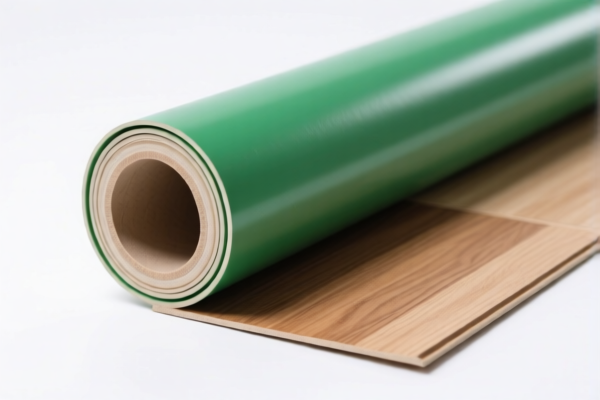
PVC Flooring Roll
CN → US| HS Code | Tariff Rate | Origin | Destination | Doc |
|---|---|---|---|---|
| 5904901000 | 35.0% | CN | US | Official Doc |
| 3918102000 | 40.3% | CN | US | Official Doc |
| 3918101040 | 40.3% | CN | US | Official Doc |
| 5904909000 | 35.0% | CN | US | Official Doc |
| 3920490000 | 40.8% | CN | US | Official Doc |
Product Images



AI Analysis
🏗️ PVC Flooring Roll (Vinyl Floor Coverings)
🌐 HS Code Reference & Customs Clearance Guide | 2026 Latest Tariff Analysis | Professional Clearance Strategy
📌 I. Product Definition & Classification: Do You Really Understand “PVC Flooring”?
PVC flooring, also known as Vinyl Flooring, is a synthetic floor covering widely used in residential, commercial, and industrial settings. It is made from polyvinyl chloride (PVC) polymers. In international trade, the classification depends heavily on the form (roll vs. tile) and the specific type (rigid core vs. standard vinyl).
The provided data specifies two key categories under HS Code 3918.10: 1. Standard Vinyl Tiles: General vinyl floor coverings. 2. Rigid Core Vinyl Tiles: Specifically those with a solid polymer core (often associated with Luxury Vinyl Plank/Tile - LVP/LVT technologies).
⚠️ Key Distinction:
- If the product is self-adhesive, in rolls, or tiles made of PVC polymers → It falls under 3918.10. - The description "Vinyl tile" in the provided data refers to 3918.10.10.40 (Other) and 3918.10.10.20 (Rigid solid polymer core).
📦 II. HS Code Classification Details (Based on Provided Data)
| HS Code | Product Description | Application Scenario | Core Type |
|---|---|---|---|
3918.10.10.40 |
Floor coverings of plastics (PVC), self-adhesive, in rolls or tiles: Vinyl tile - Other | Standard PVC vinyl rolls, click-lock vinyl without rigid core, traditional PVC flooring | ❌ No rigid solid core |
3918.10.10.20 |
Floor coverings of plastics (PVC), self-adhesive, in rolls or tiles: Vinyl tile - Vinyl tile consisting of a rigid solid polymer core | LVP (Luxury Vinyl Plank), WPC/SPC flooring with a solid rigid core, high-end commercial vinyl | ✅ Yes (Rigid Solid Core) |
🔍 Important Note:
- Both codes fall under Chapter 39 (Plastics and Articles Thereof), specifically Heading 3918 (Floor coverings of plastics). - The distinction between.40and.20lies in the internal structure (rigid core vs. standard/flexible). - If your product is a roll (not tiles), it still generally falls under this heading if it is PVC-based, but the specific sub-description in the data mentions "Vinyl tile." Ensure the commercial invoice matches the physical form (roll/tile) and composition.
💰 III. 2026 Latest Tariff Rate Details
✅ Origin: China (CN)
✅ Applicable Tariff: As per provided data
✅ Status: 0.0% Total Tax
🎯 1. 3918.10.10.40 — Vinyl Tile (Other)
| Item | Content |
|---|---|
| Base Tariff | 0.0% |
| Additional Tariff | 0.0% |
| Total Tax Rate | 0.0% |
| Tax Calculation | CIF Value × 0.0% = $0 |
| Legal Basis | Provided Data: tax: { tax_detail: "基础关税: 0.0%, 加征关税: 0.0%", total_tax: "0.0%" } |
📌 Interpretation:
- This code currently enjoys zero duty under the provided dataset. - Caution: Tariff policies change frequently. Always verify with current USITC or customs announcements if this is for import into the US or other jurisdictions.
🎯 2. 3918.10.10.20 — Vinyl Tile (Rigid Solid Polymer Core)
| Item | Content |
|---|---|
| Base Tariff | 0.0% |
| Additional Tariff | 0.0% |
| Total Tax Rate | 0.0% |
| Tax Calculation | CIF Value × 0.0% = $0 |
| Legal Basis | Provided Data: tax: { tax_detail: "基础关税: 0.0%, 加征关税: 0.0%", total_tax: "0.0%" } |
📌 Interpretation:
- Like the standard vinyl tile, the rigid core variant also shows 0.0% total tax in the provided data. - This is favorable for exporters as it avoids the heavy 25% Section 301 tariffs that often apply to many Chinese-made plastic products. However, double-check if any new executive orders have updated this status.
🛠️ IV. Customs Clearance Practical Advice (Avoid Pitfalls)
✅ 1. Required Documentation Checklist
| Document | Mandatory? | Notes |
|---|---|---|
| Commercial Invoice | ✅ Yes | Must clearly state: "PVC Floor Covering," "Vinyl Tile," and "HS Code 3918.10.10.40/20." |
| Packing List | ✅ Yes | Include weight, dimensions, and number of rolls/tiles. |
| Product Composition Statement | ✅ Yes | Confirm material is 100% Polyvinyl Chloride (PVC). If it contains significant wood/plastic composite (WPC/SPC), ensure it aligns with "rigid solid polymer core" if claiming .20. |
| Photos | ✅ Yes | Show cross-section (to prove rigid core if claiming .20) and surface texture. |
| FSC/Phthalate Compliance | ✅ Yes | Many markets (EU, US) require low-VOC or phthalate-free certification for indoor flooring. |
✅ 2. Declaration Tips
🔥 "Specify Material, Specify Form, Avoid Ambiguity!"
| Scenario | Correct Declaration | Wrong Practice |
|---|---|---|
| PVC Rolls | "PVC Floor Covering, in Rolls, Made of Polymers of Vinyl Chloride" | "Vinyl Rolls" (too vague) |
| Rigid Core LVP | "Vinyl Tile, Consisting of Rigid Solid Polymer Core, HS 3918.10.10.20" | "Wood-Plastic Composite Floor" (might mislead to Chapter 44) |
| Standard Vinyl Tile | "Vinyl Tile, PVC, Self-Adhesive, HS 3918.10.10.40" | "Carpet Tiles" (wrong category) |
✅ 3. Special Cases
| Case | Handling Advice |
|---|---|
| SPC/WPC Flooring | If the core is Stone-Plastic (SPC) or Wood-Plastic (WPC), ensure it qualifies as "rigid solid polymer core." If it’s a composite with >50% wood, it might be reclassified under Chapter 44 (Wood). Stick to "Polymer Core" for Chapter 39. |
| Self-Adhesive vs. Click-Lock | Both are PVC floor coverings. The "self-adhesive" note in the data is part of the heading description. Non-adhesive click-lock tiles are still under 3918. |
| Mixed Shipments | If a shipment contains both rolls and tiles, split the declaration to ensure accurate HS code application. |
🌍 V. Global Market Comparison (General Insight)
| Region | Typical HS Code | Tariff Rate (China Origin) | Notes |
|---|---|---|---|
| 🇺🇸 USA | 3918.10.xxxx |
0.0% (per provided data) | Verify if Section 301 tariffs apply. Some plastic products face 25%, but this data shows 0%. Check latest rulings. |
| 🇪🇺 EU | 3918.10 |
0% - 3% | Often 0% under general preferential or standard rates. |
| 🇨🇳 China | 3918.10 |
0% - 10% | Import duties vary; check latest Chinese customs tariff. |
| 🇦🇺 Australia | 3918.10 |
5% | Standard tariff rate. |
📌 Conclusion:
- USA: The provided data indicates 0% tax, which is highly competitive. However, given the ongoing trade tensions, always verify if any new "Section 301" exclusions or additions affect PVC flooring.
- EU: Generally favorable for PVC flooring if it meets environmental standards (REACH, RoHS).
📌 VI. Common Mistakes & Pitfalls (Lessons Learned)
❌ Mistake 1: Classifying PVC Flooring as "Carpet" (5701-5705)
👉 Consequence: Wrong HS code, potential duty discrepancy, customs delay.
❌ Mistake 2: Confusing "Vinyl" with "Vinyl Record" or "Vinyl Sheet" for other uses
👉 Consequence: Misclassification. Ensure the product is flooring.
❌ Mistake 3: Ignoring the "Rigid Core" distinction
👉 Consequence: If you claim .20 (Rigid Core) but the product is flexible PVC, customs may reclassify to .40 or penalize for misdeclaration.
✅ Correct Practice:
"PVC Vinyl Flooring, Rigid Core, Click-Lock, 5mm Thickness, Commercial Grade, HS 3918.10.10.20"
🎯 VII. Conclusion: Professional Declaration, Smooth Clearance!
🎯 Remember the Key Points:
🔹 "PVC Flooring = Chapter 39, Heading 3918"
🔹 "Rigid Core = .20, Standard = .40"
🔹 "Current Tax = 0.0% (Verify Always!)"
📌 Pro Tip:
If you are importing into the US, while the data shows 0%, Section 301 tariffs can change. Check the USITC Harmonized Tariff Schedule (HTS) for the most current status on 3918.10.10.20 and 3918.10.10.40 to ensure no additional 25% duty applies. For EU, ensure REACH compliance.
📣 Immediate Action:
📞 Confirm product structure (Rigid vs. Flexible)
📄 Prepare clear commercial invoices with precise HS codes
✅ Verify latest tariff updates before shipment
🚀 Ensure smooth customs clearance and cost efficiency!
✨ Professional Customs Clearance Starts with Accurate Classification!
💼 Your Profit Margin Depends on Precise Tariff Management!
Customer Reviews
About HS Code Classification
The Harmonized System (HS) is an internationally standardized nomenclature developed by the World Customs Organization (WCO) to classify traded products. Over 200 countries use the HS system as the basis for customs tariffs, trade statistics, and import/export regulations.
Each HS code follows a hierarchical structure:
- Chapter (2 digits) — Broad category of goods (e.g., Chapter 84: Machinery and Mechanical Appliances)
- Heading (4 digits) — More specific grouping within the chapter
- Subheading (6 digits) — Internationally standardized breakdown, used by all WCO member countries
- National subdivisions (8-10 digits) — Country-specific extensions for further classification, such as US HTSUS 10-digit codes
Correct HS code classification is essential for smooth customs clearance, accurate duty payment, and compliance with trade regulations. Misclassification can lead to customs delays, overpayment of duties, or penalties.
When importing from CN to US, the applicable tariff rates may include:
- Most-Favored-Nation (MFN) rate — The standard duty rate applied to WTO members
- General rate — Applied to countries without trade agreements
- Trade remedy duties — Additional tariffs such as Section 301 (anti-dumping), Section 232 (national security), or countervailing duties
The information provided on this page is for reference purposes only. For official classification, please consult with your local customs authority or a licensed customs broker.