PVC Flooring Sheets
CN → US| HS Code | Tariff Rate | Origin | Destination | Doc |
|---|---|---|---|---|
| 3920435000 | 39.2% | CN | US | Official Doc |
| 3918102000 | 40.3% | CN | US | Official Doc |
| 3918101040 | 40.3% | CN | US | Official Doc |
| 3920490000 | 40.8% | CN | US | Official Doc |
| 3926909989 | 22.8% | CN | US | Official Doc |
Product Images
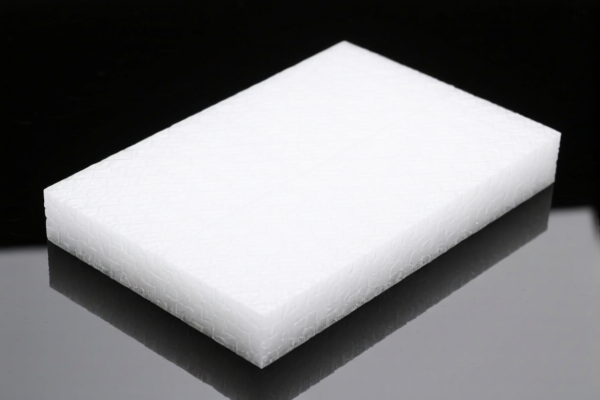
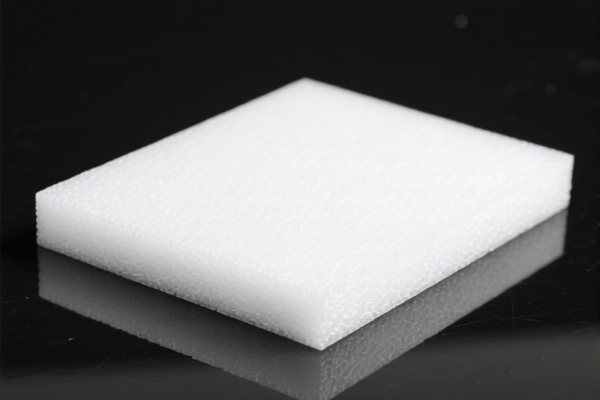
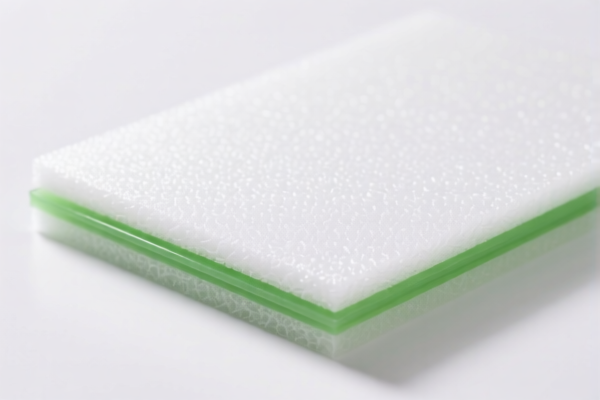
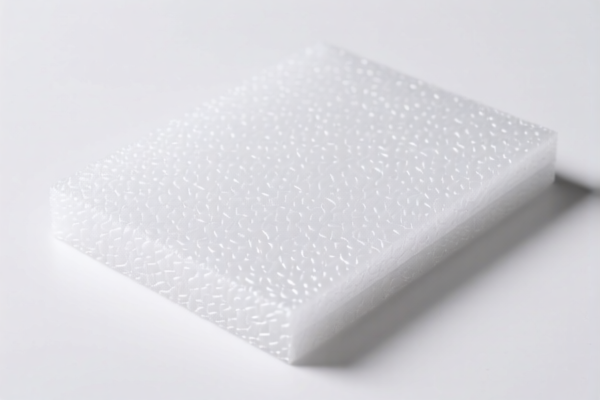
AI Analysis
🏗️ PVC Flooring Sheets (Vinyl Flooring & Plastic Sheeting)
🌐 HS Code Reference & Clearance Guide | 2026 Latest Tariff Analysis | Professional Custom Strategy
📌 1. Product Definition: What exactly is "PVC Flooring"?
PVC Flooring, generally known as Vinyl Flooring, is a popular resilient flooring material made primarily from polyvinyl chloride (PVC) resin. In international trade, it is strictly categorized based on its form factor (sheets vs. rolls vs. tiles) and its intended use (floor covering vs. general plastic sheeting).
⚠️ Key Distinction:
- If the product is explicitly designed and marketed as a floor covering (even if in sheet form), it often falls under Chapter 3918 (Floor coverings of plastics).
- If the product is a general-purpose plastic sheet/board not specifically identified as a floor covering, or lacks specific flooring features, it may fall under Chapter 3920 (Other plates, sheets, film, foil and strip, of plastics).
- If it is a miscellaneous plastic item not specifically provided for elsewhere, it might fall under 3926.
📦 2. HS Code Classification Details (2026 Official Tariff Alignment)
Based on the provided data, here are the 5 specific HS Codes applicable to PVC Flooring Sheets, with their corresponding tax implications.
| HS Code | Product Description (Summary) | Form/Type | Total Tax Rate (China Origin to US) | Key Tax Components |
|---|---|---|---|---|
3920.43.50.00 |
PVC Flooring; Material: Polyvinyl Chloride; Form: Sheet-like articles | General Plastic Sheet | 39.2% | Base: 4.2% + Sec 301: 25.0% + Section 122: 10.0% |
3918.10.20.00 |
PVC Flooring; Material: Polyvinyl Chloride; Use: Floor Covering | Specific Floor Covering | 40.3% | Base: 5.3% + Sec 301: 25.0% + Section 122: 10.0% |
3918.10.10.40 |
PVC Flooring; Corresponds to Vinyl Tiles/Floor Covering | Vinyl Tile/Sheet | 40.3% | Base: 5.3% + Sec 301: 25.0% + Section 122: 10.0% |
3920.49.00.00 |
PVC Flooring; Material: Vinyl Polymer; Form: Plastic Sheet | Other Vinyl Plastic Sheet | 40.8% | Base: 5.8% + Sec 301: 25.0% + Section 122: 10.0% |
3926.90.99.89 |
PVC Flooring; Classified as Unspecified Plastic Article | Miscellaneous Plastic | 22.8% | Base: 5.3% + Sec 301: 7.5% + Section 122: 10.0% |
🔍 Critical Insight:
-3918.xxxxxxcodes are for products specifically classified as floor coverings. They carry a slightly higher base tariff (5.3%) but are the most "correct" for finished flooring products.
-3920.xxxxxxcodes are for plastic sheets not specifically identified as floor coverings. They carry lower base tariffs (4.2%-5.8%).
-3926.90.99.89is the "fallback" category for unlisted plastic items. It has the lowest total tax (22.8%) but requires careful justification that the product does not fit the specific definition of a "floor covering" in Chapter 3918. Risk: High misclassification risk.
💰 3. 2026 Latest Tariff Rate Breakdown (Including Surcharges & Policy Add-ons)
✅ Applicable Country: United States (US)
✅ Country of Origin: China (CN)
✅ Effective Date: Ongoing (Subject to Section 301 & 122 updates)
🎯 1. 3920.43.50.00 – PVC Flooring (Sheet-like, PVC Material)
| Item | Details |
|---|---|
| Base Tariff | 4.2% (Ad Valorem) |
| Section 301 Surcharge | +25.0% (Trade Remedies) |
| Section 122 Surcharge | +10.0% (National Security/Emergency) |
| Total Effective Rate | 39.2% |
| Tax Calculation | CIF Value × 39.2% |
| De Minimis Exemption | ❌ Not Eligible (High-risk category for China) |
| Legal Basis Path | HTSUS:3920.43.50.00 → Section 301: Footnote 9903.88.01 → Section 122: IEEMA/Proclamation |
📌 Explanation:
- This code treats the product as a generic PVC sheet.
- The 25% Section 301 tax applies to most plastics from China.
- The 10% Section 122 tax is an additional layer for specific strategic materials.
- Total 39.2% is a significant cost driver.
🎯 2. 3918.10.20.00 & 3918.10.10.40 – PVC Flooring (Floor Coverings)
| Item | Details |
|---|---|
| Base Tariff | 5.3% (Ad Valorem) |
| Section 301 Surcharge | +25.0% (Trade Remedies) |
| Section 122 Surcharge | +10.0% (National Security/Emergency) |
| Total Effective Rate | 40.3% |
| Tax Calculation | CIF Value × 40.3% |
| De Minimis Exemption | ❌ Not Eligible |
| Legal Basis Path | HTSUS:3918.10.xxxx → Section 301: Footnote 9903.88.01 → Section 122 |
📌 Note:
- These codes are for finished flooring products.
- The base tariff is slightly higher (5.3% vs 4.2%), leading to a 40.3% total rate.
- Use this only if the product is explicitly marketed and used as a floor covering. Misusing this for generic sheets can lead to customs delays if the product doesn't meet "floor covering" criteria.
🎯 3. 3920.49.00.00 – PVC Flooring (Vinyl Polymer, Other Sheets)
| Item | Details |
|---|---|
| Base Tariff | 5.8% (Ad Valorem) |
| Section 301 Surcharge | +25.0% (Trade Remedies) |
| Section 122 Surcharge | +10.0% (National Security/Emergency) |
| Total Effective Rate | 40.8% |
| Tax Calculation | CIF Value × 40.8% |
| De Minimis Exemption | ❌ Not Eligible |
| Legal Basis Path | HTSUS:3920.49.00.00 → Section 301 → Section 122 |
📌 Warning:
- This is the highest tax rate (40.8%) in the list.
- It applies to vinyl polymer sheets not elsewhere specified.
- Avoid unless no other code fits better, as it is the least favorable financially.
🎯 4. 3926.90.99.89 – PVC Flooring (Unspecified Plastic Article)
| Item | Details |
|---|---|
| Base Tariff | 5.3% (Ad Valorem) |
| Section 301 Surcharge | +7.5% (Reduced Section 301 Rate) |
| Section 122 Surcharge | +10.0% (National Security/Emergency) |
| Total Effective Rate | 22.8% |
| Tax Calculation | CIF Value × 22.8% |
| De Minimis Exemption | ❌ Not Eligible (High scrutiny) |
| Legal Basis Path | HTSUS:3926.90.99.89 → Section 301: Exclusion List/Rated Category → Section 122 |
📌 Strategic Opportunity:
- This is the lowest tax rate (22.8%).
- Why? The Section 301 surcharge is significantly lower (7.5% vs 25%).
- Risk: Customs may challenge this classification if the product is clearly a "floor covering." You must prove it is not a floor covering (e.g., industrial use, non-residential, specific industrial plastic sheet).
- Recommendation: Only use if you have strong legal justification and possibly an Advance Ruling.
🛠️ 4. Customs Clearance Practical Advice (Avoid Pitfalls)
✅ 1. Documentation Checklist (Non-Negotiable)
| Document | Required? | Purpose |
|---|---|---|
| ✅ Product Specification Sheet | ✔️ | Must detail composition (PVC %), thickness, width/length, and intended use. |
| ✅ Product Photos | ✔️ | Show the product in its final form. If it looks like a tile/sheet flooring, it will likely be classified as 3918. |
| ✅ Commercial Invoice | ✔️ | Description must match HS Code. Use "PVC Plastic Sheet" for 3920 codes; use "PVC Floor Covering" for 3918 codes. |
| ✅ Declaration of Use | ✔️ | Crucial for 3926.90.99.89. If claiming lower tax, declare "Industrial Use" not "Residential Flooring." |
| ✅ Third-Party Test Report | ✔️ | ISO, ASTM, or CE tests showing material composition. |
✅ 2. Classification Strategy & Tips
🔥 “Shape Determines Code, Use Determines Tax!”
| Scenario | Recommended HS Code | Reasoning |
|---|---|---|
| Finished Vinyl Tiles/Sheets for Home/Office | 3918.10.20.00 or 3918.10.10.40 |
Explicitly "Floor Covering." High tax (40.3%) but safe and compliant. |
| Generic PVC Plastic Sheets (Industrial/Construction) | 3920.43.50.00 |
Treated as plastic sheet. Lower base tax (39.2%). Safer than 3926 if it's clearly PVC. |
| Miscellaneous Plastic Parts (Non-Flooring) | 3926.90.99.89 |
Lowest tax (22.8%) but high risk. Only if product is NOT used as flooring. |
| Vinyl Polymer Sheets (Unspecified) | 3920.49.00.00 |
Highest tax (40.8%). Avoid unless no other code fits. |
📌 Crucial Tip:
- If you declare "PVC Flooring" on the invoice but try to classify it under3926to save tax, Customs will flag it. The description and the code must match.
- Misclassification Penalty: Can lead to seizure, fines, and back taxes.
✅ 3. Special Cases & Edge Conditions
| Situation | Handling Advice |
|---|---|
| Mixed Shipment (Tiles + Rolls) | Declare separately. Tiles under 3918.10.10.40, Rolls under 3918.10.20.00 or 3920.43.50.00 depending on form. |
| OEM/White Label | Provide customer agreement showing intended use. If customer uses it as flooring, you must classify as flooring. |
| Small Samples | If value is below $800, de minimis may apply, but Section 301 taxes still apply for China. Do not rely on de minimis to avoid tariffs. |
| Pre-Cut Shapes | If cut to specific room shapes, it may still be "Floor Covering." If just cut to standard sheet sizes, it may be "Plastic Sheet." |
🌍 5. Global Market Comparison (2026 Overview)
| Market | Recommended HS Code | Approx. Tariff (China Origin) | Notes |
|---|---|---|---|
| 🇺🇸 USA | 3920.43.50.00 or 3918.10.20.00 |
39.2% - 40.8% | High Section 301 + 122 tariffs. 3926 is risky. |
| 🇨🇳 China (Import) | 3920.43.50.00 |
~5-10% | Lower base tariffs, no Section 301. |
| 🇪🇺 EU | 3918.10.00 |
~4-6% | Standard MFN rates. No major surcharges. |
| 🇬🇧 UK | 3918.10.00 |
~4-6% | Post-Brexit tariffs similar to EU. |
| 🇦🇺 Australia | 3918.10.00 |
~5% | Generally low tariffs for plastic flooring. |
📌 Conclusion:
- USA is the most expensive market due to Section 301 and 122 tariffs.
- Cost Optimization: Consider sourcing from Vietnam, Thailand, or Mexico to avoid China-specific surcharges (verify rules of origin carefully).
📌 6. Common Mistakes & Pitfalls (Blood & Tears Lessons)
❌ Mistake 1: Declaring "PVC Floor Tiles" but using HS Code 3926.90.99.89 to get 22.8% tax.
👉 Consequence: Customs audit, classification correction, penalty, and potential back taxes + interest.
❌ Mistake 2: Ignoring Section 122 (10% surcharge).
👉 Consequence: Underpayment of duties. All codes listed above include this 10% charge.
❌ Mistake 3: Using 3920.49.00.00 (40.8%) when 3920.43.50.00 (39.2%) applies.
👉 Consequence: Unnecessary 1.6% cost increase. Ensure material is correctly identified as "PVC" vs "Other Vinyl Polymer."
❌ Mistake 4: Not providing a Declaration of Use.
👉 Consequence: Customs cannot verify the product's nature, leading to delays and potential red-boxing.
✅ Correct Approach:
"PVC Vinyl Floor Covering, 2mm thickness, 1.2m width, Roll Form, For Indoor Residential Use"
→ Use3918.10.20.00(40.3%).
OR
"PVC Plastic Sheet, 2mm thickness, Industrial Grade, Not for Flooring"
→ Use3926.90.99.89(22.8%) with strong legal backing.
🎯 7. Conclusion: Professional Classification for Cost & Compliance
🎯 Key Takeaway:
🔹 "If it walks like a duck (floor), talk like a duck (floor), it's a duck (3918)."
🔹 "Don't force a square peg into a round hole (3926) just to save tax – the risk isn't worth the 17% savings."
🔹 "Section 301 + 122 = High Cost. Factor this into your pricing strategy."
📌 Pro Tip:
- For large shipments, consider applying for an Advance Ruling from US Customs and Border Protection (CBP) if you are using
3926for a product that might be challenged.- Always check if your product qualifies for any exclusions from Section 301 (though rare for PVC flooring).
- Consult a licensed customs broker before shipping to ensure the HS Code matches the physical product exactly.
📣 Immediate Action Required:
📞 Contact Your Freight Forwarder: Confirm the HS Code classification with your broker.
📄 Prepare Documents: Ensure your invoice and packing list match the HS Code description.
📉 Cost Calculation: Include the full tax rate (Base + 301 + 122) in your landed cost model.
✨ Smart Classification, Smarter Savings!
💼 Compliance is the best strategy for long-term success in the US market.
Customer Reviews
About HS Code Classification
The Harmonized System (HS) is an internationally standardized nomenclature developed by the World Customs Organization (WCO) to classify traded products. Over 200 countries use the HS system as the basis for customs tariffs, trade statistics, and import/export regulations.
Each HS code follows a hierarchical structure:
- Chapter (2 digits) — Broad category of goods (e.g., Chapter 84: Machinery and Mechanical Appliances)
- Heading (4 digits) — More specific grouping within the chapter
- Subheading (6 digits) — Internationally standardized breakdown, used by all WCO member countries
- National subdivisions (8-10 digits) — Country-specific extensions for further classification, such as US HTSUS 10-digit codes
Correct HS code classification is essential for smooth customs clearance, accurate duty payment, and compliance with trade regulations. Misclassification can lead to customs delays, overpayment of duties, or penalties.
When importing from CN to US, the applicable tariff rates may include:
- Most-Favored-Nation (MFN) rate — The standard duty rate applied to WTO members
- General rate — Applied to countries without trade agreements
- Trade remedy duties — Additional tariffs such as Section 301 (anti-dumping), Section 232 (national security), or countervailing duties
The information provided on this page is for reference purposes only. For official classification, please consult with your local customs authority or a licensed customs broker.