PVC Foam Plastic Sheet
CN → US| HS Code | Tariff Rate | Origin | Destination | Doc |
|---|---|---|---|---|
| 3921125000 | 41.5% | CN | US | Official Doc |
| 3923900080 | 38.0% | CN | US | Official Doc |
| 3921121950 | 40.3% | CN | US | Official Doc |
| 3921110000 | 40.3% | CN | US | Official Doc |
| 3921190090 | 41.5% | CN | US | Official Doc |
Product Images
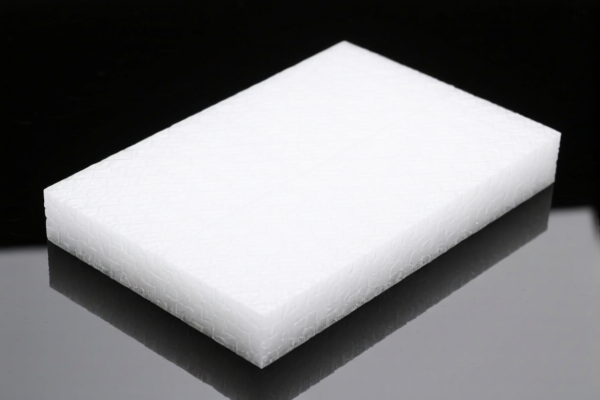
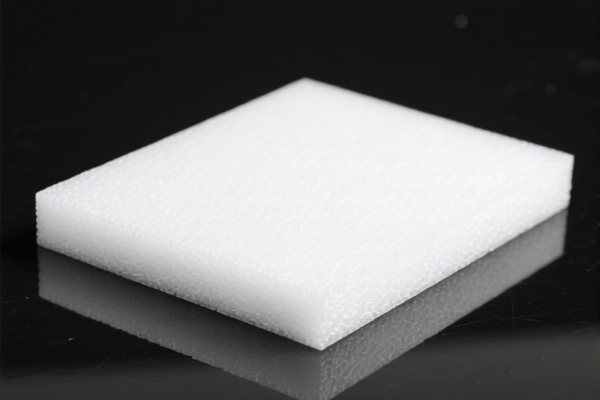
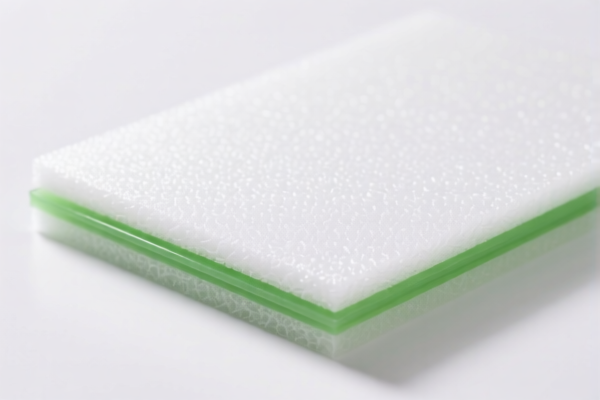
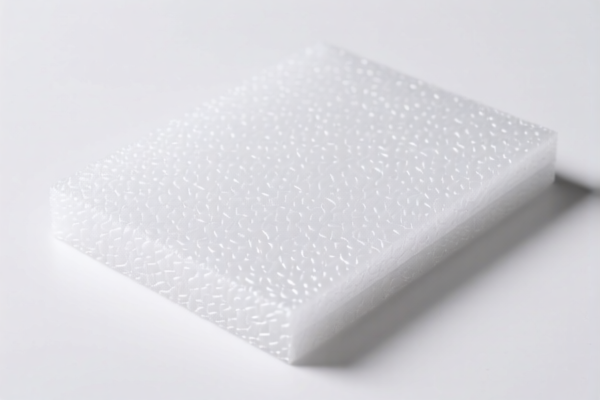
AI Analysis
🧱 PVC Foam Plastic Sheet (PVC Board/Plastic Foam Sheet)
🌐 HS Code Reference & Customs Clearance Guide | 2026 Latest Tariff Analysis | Professional Entry Strategy
📌 I. Product Definition & Classification: Do You Really Know "PVC Foam Sheets"?
PVC Foam Plastic Sheets (often referred to as PVC boards, foam boards, or cellular PVC sheets) are rigid or semi-rigid plastic products made from Polyvinyl Chloride (PVC) resin, expanded with foaming agents. In international trade, they are primarily classified under Chapter 39 (Plastics and Articles Thereof).
They are broadly categorized into two main types based on their form and specific chemical structure: 1. Cellular/Foamed PVC Sheets: Made from PVC resins that have been expanded during manufacturing. These are lightweight, waterproof, and widely used in construction, signage, and furniture. 2. Solid PVC Sheets: Dense, non-foamed sheets. However, in this analysis, we focus on the foamed/cellular variants and their "catch-all" equivalents, as indicated in the data.
⚠️ Key Distinction Point:
- If the product is a solid, non-foamed board (high density) → It may fall under 3921.12.50.00.
- If the product is explicitly a plastic packaging material (e.g., blister packs, thin films used for packaging) → It falls under 3923.90.00.80.
- If it is a foamed PVC board (cellular structure) → It typically falls under 3921.11.00.00 (Cellular PVC) or 3921.19.00.90 (Other Plastic Sheets).
- If it is a generic PVC board that doesn’t fit specific cellular definitions → It may be classified under the catch-all/residual category 3921.12.19.50.
📦 II. HS Code Classification Details (2026 Latest Tariff Authoritative Comparison)
| HS Code | Product Description | Application Scenario | Density/Structure |
|--------|--------------------------|--------------------------|
| 3921.12.50.00 | PVC material, form is board, consistent with vinyl chloride polymer board classification | Solid PVC boards, general-purpose rigid sheets | ✅ Solid/Non-foamed |
| 3923.90.00.80 | PVC material, classified as plastic packaging supplies | Blister packs, plastic wrapping, packaging trays | ✅ Packaging Use |
| 3921.12.19.50 | PVC material, form is board, based on residual category determination | Generic PVC boards not meeting specific cellular or solid criteria | ✅ General/Residual |
| 3921.11.00.00 | Plastic rigid foam board, form and material meet classification requirements | Cellular PVC foam board, lightweight construction materials | ✅ Cellular/Foamed |
| 3921.19.00.90 | Plastic foam board, form is foam board, consistent with classification description | Other plastic foam sheets (non-cellular PVC specific) | ✅ Foamed/Other |
🔍 Key Reminder:
- Packaging vs. Structural Use: If your PVC sheet is intended for packaging (e.g., blister packs), it MUST be declared as3923.90.00.80, even if made of PVC. Misclassifying packaging as "board" leads to severe penalties.
- Foamed vs. Solid: If the product is a foam board (used for signage, CNC carving, construction), it should ideally be classified under 3921.11.00.00 or 3921.19.00.90. Do not misclassify foam as solid board (3921.12.x) as this alters duty calculations.
- Residual Category:3921.12.19.50is a "catch-all" for PVC boards that don't fit specific subheadings. It often carries a slightly lower base tariff but is subject to the same additional duties.
💰 III. 2026 Latest Tariff Rate Details (Including Surtaxes, Policy Add-ons)
✅ Applicable Country: United States (US)
✅ Country of Origin: China (CN)
✅ Effective Date: Starting November 10, 2025 (including subsequent imports)
🎯 1. 3921.12.50.00 —— PVC Board (Vinyl Chloride Polymer Board)
| Item | Detail |
|---|---|
| Base Tariff | 6.5% (Ad Valorem) |
| Section 301 Surtax | +25.0% (Based on USITC Footnote 9903.88.01) |
| IEEPA Surtax (122 Clause) | +10.0% (Targeting Chinese/HK products) |
| Total Tariff Rate | 41.5% |
| Tax Calculation | CIF Value × 41.5% |
| De Minimis Eligibility | ❌ NOT Eligible (deny_de_minimis) |
| Legal Basis Path | Base Tariff → Section 301: 25% → IEEPA: 10% → Total: 41.5% |
📌 Explanation:
- The 25% Section 301 tax applies to all Chinese-origin PVC plastics under Chapter 39.
- The 10% IEEPA tax is an additional levy on Chinese goods, effective from late 2025.
- Total 41.5% is a high tariff. This applies to solid PVC boards. Misclassification as lower-duty items is heavily audited.
🎯 2. 3923.90.00.80 —— PVC Plastic Packaging Supplies
| Item | Detail |
|---|---|
| Base Tariff | 3.0% |
| Section 301 Surtax | +25.0% |
| IEEPA Surtax (122 Clause) | +10.0% |
| Total Tariff Rate | 38.0% |
| Tax Calculation | CIF Value × 38.0% |
| De Minimis Eligibility | ❌ NOT Eligible (deny_de_minimis) |
| Legal Basis Path | Base Tariff → Section 301: 25% → IEEPA: 10% → Total: 38.0% |
📌 Note:
- Although the base tariff is lower (3.0%), the additional taxes remain the same.
- Critical: Only apply this HS Code if the PVC sheet is actually used for packaging (e.g., blister packs, clamshell packaging).
- If you are shipping PVC foam boards for construction but declare them as "packaging," customs will reject this, leading to delays, re-classification, and penalties.
🎯 3. 3921.12.19.50 —— PVC Board (Residual Category)
| Item | Detail |
|---|---|
| Base Tariff | 5.3% |
| Section 301 Surtax | +25.0% |
| IEEPA Surtax (122 Clause) | +10.0% |
| Total Tariff Rate | 40.3% |
| Tax Calculation | CIF Value × 40.3% |
| De Minimis Eligibility | ❌ NOT Eligible (deny_de_minimis) |
| Legal Basis Path | Base Tariff → Section 301: 25% → IEEPA: 10% → Total: 40.3% |
📌 Explanation:
- This is a fallback classification for PVC boards that do not fit specific cellular or solid definitions.
- 40.3% is slightly lower than3921.12.50.00(41.5%) due to a lower base rate, but the difference is marginal.
- Use this only if your product truly does not fit the specific "Vinyl Chloride Polymer Board" or "Foamed" categories.
🎯 4. 3921.11.00.00 —— Plastic Rigid Foam Board (Cellular PVC)
| Item | Detail |
|---|---|
| Base Tariff | 5.3% |
| Section 301 Surtax | +25.0% |
| IEEPA Surtax (122 Clause) | +10.0% |
| Total Tariff Rate | 40.3% |
| Tax Calculation | CIF Value × 40.3% |
| De Minimis Eligibility | ❌ NOT Eligible (deny_de_minimis) |
| Legal Basis Path | Base Tariff → Section 301: 25% → IEEPA: 10% → Total: 40.3% |
📌 Key Insight:
- This is the most common HS Code for genuine PVC Foam Boards (like Sintra, Forex, Celtec).
- Base Tariff 5.3% is the same as the residual category, but it is the correct classification for foamed PVC.
- Do not under-declare as packaging (3923.90) to save 3.5%. Customs inspections focus on "Foam Board" vs. "Packaging" to prevent revenue loss.
🎯 5. 3921.19.00.90 —— Other Plastic Foam Board
| Item | Detail |
|---|---|
| Base Tariff | 6.5% |
| Section 301 Surtax | +25.0% |
| IEEPA Surtax (122 Clause) | +10.0% |
| Total Tariff Rate | 41.5% |
| Tax Calculation | CIF Value × 41.5% |
| De Minimis Eligibility | ❌ NOT Eligible (deny_de_minimis) |
| Legal Basis Path | Base Tariff → Section 301: 25% → IEEPA: 10% → Total: 41.5% |
📌 Explanation:
- This is a "Other" category for plastic foam boards that are not specifically cellular PVC (3921.11) or solid vinyl polymer boards.
- 41.5% is the highest tariff in this set.
- Use this only if the product is a foam board but doesn't meet the strict definition of "Cellular PVC" or if it's a different type of plastic foam.
🛠️ IV. Customs Clearance Practical Advice (Battle-Tested Pitfall Avoidance Guide)
✅ 1. Required Documentation Checklist (Non-negotiable)
| Document | Mandatory? | Description |
|---|---|---|
| ✅ Product Specification Sheet | ✔️ | Must include: Material (PVC), Density (e.g., 0.6 g/cm³), Thickness, Dimensions, Foam Structure (Cellular vs. Solid). |
| ✅ Product Photos | ✔️ | Clear images of the sheet cross-section (showing foam cells) and surface. Label must show "PVC Foam Board." |
| ✅ Commercial Invoice | ✔️ | Must clearly state: "PVC Foam Plastic Sheet" or "Cellular PVC Board." DO NOT use vague terms like "Plastic Material." |
| ✅ Packing List | ✔️ | Detail weight, dimensions, and quantity. Ensure packaging type matches HS code (e.g., if claiming packaging, packaging must be minimal). |
| ✅ Manufacturer Declaration | ✔️ | Statement confirming product composition (PVC resin + foaming agent) and intended use (Construction vs. Packaging). |
✅ 2. Declaration Tips (Key Mnemonic)
🔥 "Foam Needs Proof, Packaging Needs Use, Name Matches Form, Taxes Won't Stun!"
| Scenario | Correct Declaration | Wrong Action |
|---|---|---|
| PVC Foam Board (Construction/Signage) | 3921.11.00.00 (Cellular PVC) |
Misdeclare as "Packaging" (3923.90) → Risk of seizure & penalties |
| Solid PVC Board | 3921.12.50.00 |
Misdeclare as "Foam" → Incorrect tax calculation |
| PVC Blister Pack | 3923.90.00.80 |
Misdeclare as "Board" → Higher base tariff, but minor difference; however, functional mismatch is the real risk |
| Generic PVC Sheet | 3921.12.19.50 |
No description → Customs delay |
✅ 3. Special Case Handling
| Case | Handling Advice |
|---|---|
| OEM Custom Foam Boards | Provide custom order + design drawings. Ensure the HS Code reflects the material structure (foam) not just the brand. |
| PVC Sheets with Adhesive Backing | Still classified as PVC Sheet (3921.11.00.00). Do not split into "Sheet + Adhesive" as this may trigger higher duties on the adhesive. |
| Used PVC Foam Boards | Considered waste/recycled material. May fall under different HS codes (e.g., 3915). Requires detailed recycling proof. |
| Mixed Containers | If a container has both PVC Foam Boards and PVC Packaging, declare separately. Mixed declarations cause massive delays. |
🌍 V. Global Market Comparison (2026 Latest)
| Country/Region | Recommended HS Code | Tariff (China Origin) | Certification Required | Notes |
|---|---|---|---|---|
| 🇺🇸 USA | 3921.11.00.00 (Foam) |
40.3% (Base 5.3% + 35% Surtax) | None specific for PVC | High tariffs due to Section 301 + IEEPA |
| 🇨🇳 China | 3921.11.00.00 |
6.5% | None | Base rate only |
| 🇪🇺 EU | 3921.11.00.00 |
6.5% | REACH (Chemical Compliance) | Standard tariff, no US-style surtaxes |
| 🇬🇧 UK | 3921.11.00.00 |
6.5% | UKCA | Post-Brexit rules apply |
| 🇦🇺 Australia | 3921.11.00.00 |
5.0% | None | Lower base rate, no surtaxes |
📌 Conclusion:
- The US is the most expensive market for PVC Foam Sheets due to Section 301 (25%) and IEEPA (10%) surtaxes.
- Total US Tariff: 40.3% - 41.5%.
- EU/UK/Australia only charge base tariffs (5-6.5%), making them much more cost-effective for PVC exports.
📌 VI. Common Errors & Pitfall Guide (Lessons Learned)
❌ Error 1: Declaring PVC Foam Boards as "Plastic Packaging" (3923.90) to save 3.5% base tariff.
👉 Consequence: Customs inspection reveals construction use → Penalties + Retroactive Duties + Potential Seizure.
❌ Error 2: Using vague terms like "Plastic Sheet" on the Invoice.
👉 Consequence: Customs lacks clarity → Delay in Release + Request for Additional Documentation.
❌ Error 3: Misclassifying Solid PVC as Foam PVC (3921.11).
👉 Consequence: Incorrect tax calculation → Underpayment → Audit & Back Taxes.
❌ Error 4: Ignoring IEEPA 122 Clause.
👉 Consequence: Failure to declare 10% surtax → Immediate Duty Assessment & Penalties at Border.
✅ Correct Practice:
"PVC Foam Board, Cellular Structure, 10mm Thick, White, 1.22m x 2.44m, Model XYZ, For Construction Use"
🎯 VII. Conclusion: Professional Declaration, Save Time, Reduce Costs!
🎯 Remember the Mnemonic:
🔹 "Foam is 40.3%, Packaging is 38.0%, Solid is 41.5%. Name it Right, Avoid the Fight!"
🔹 "HS Code Decides Fate, 3.5% Difference Matters, Declaration Mistake Costs Thousands!"
📌 Pro Tip:
If your PVC Foam Boards are shipped to the US, consider Advance Ruling (Pre-classification) from CBP to ensure your HS Code (
3921.11.00.00) is accepted. This prevents delays at the port.
For EU/UK markets, ensure REACH Compliance documentation is ready, as PVC contains phthalates which are strictly regulated.
📣 Immediate Action:
📞 Contact your Freight Forwarder + Provide Product Cross-Section Photo + Apply for CBP Advance Ruling
🚀 Let your PVC Foam Boards, clear customs smoothly, expand your market, and maximize profits!
✨ Professional Customs Clearance Starts with Accurate Classification!
💼 Every Cent of Cost is Worth Calculating Precisely!
Customer Reviews
About HS Code Classification
The Harmonized System (HS) is an internationally standardized nomenclature developed by the World Customs Organization (WCO) to classify traded products. Over 200 countries use the HS system as the basis for customs tariffs, trade statistics, and import/export regulations.
Each HS code follows a hierarchical structure:
- Chapter (2 digits) — Broad category of goods (e.g., Chapter 84: Machinery and Mechanical Appliances)
- Heading (4 digits) — More specific grouping within the chapter
- Subheading (6 digits) — Internationally standardized breakdown, used by all WCO member countries
- National subdivisions (8-10 digits) — Country-specific extensions for further classification, such as US HTSUS 10-digit codes
Correct HS code classification is essential for smooth customs clearance, accurate duty payment, and compliance with trade regulations. Misclassification can lead to customs delays, overpayment of duties, or penalties.
When importing from CN to US, the applicable tariff rates may include:
- Most-Favored-Nation (MFN) rate — The standard duty rate applied to WTO members
- General rate — Applied to countries without trade agreements
- Trade remedy duties — Additional tariffs such as Section 301 (anti-dumping), Section 232 (national security), or countervailing duties
The information provided on this page is for reference purposes only. For official classification, please consult with your local customs authority or a licensed customs broker.