PVC Folding Board
CN → US| HS Code | Tariff Rate | Origin | Destination | Doc |
|---|---|---|---|---|
| 3920490000 | 40.8% | CN | US | Official Doc |
| 3920435000 | 39.2% | CN | US | Official Doc |
| 3904210000 | 41.5% | CN | US | Official Doc |
| 3920992000 | 39.2% | CN | US | Official Doc |
| 3923900080 | 38.0% | CN | US | Official Doc |
Product Images
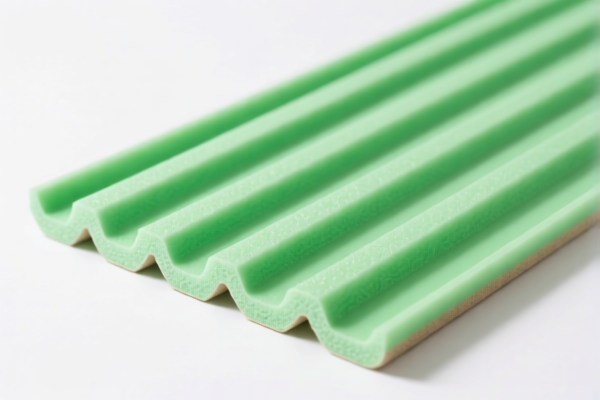
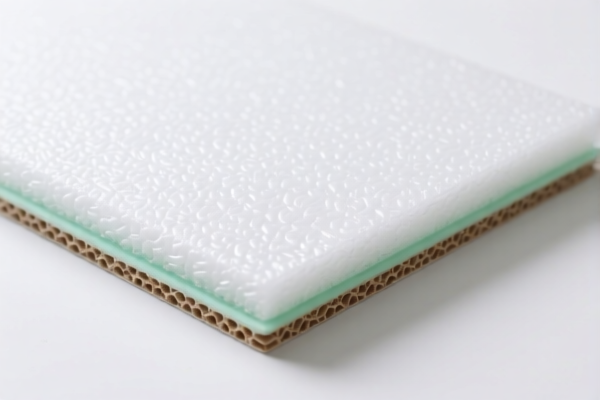
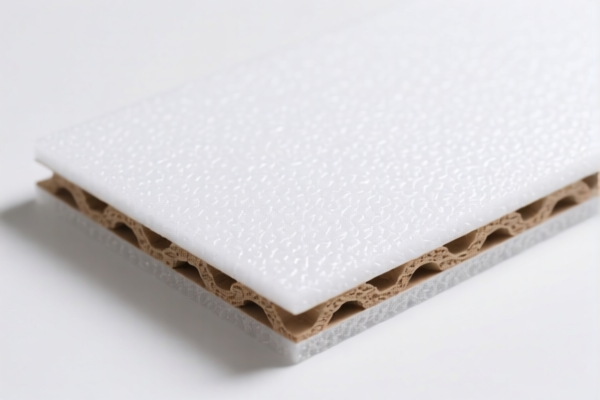

AI Analysis
🛡️ PVC Folding Board (PVC Folded Sheets/Plates)
🌐 HS Code Reference & Customs Clearance Guide | 2026 Latest Tariff Analysis | Professional Entry Strategy
📌 I. Product Definition and Classification: What Exactly is a "PVC Folding Board"?
A PVC Folding Board (often referred to as PVC foam board, expanded PVC sheet, or folding sheet) is a versatile rigid or semi-rigid plastic material widely used in signage, displays, construction, and packaging. In international trade, its classification hinges on its physical form (sheet/plate vs. primary shape), reinforcement status (non-reinforced/non-laminated), and specific usage.
⚠️ Key Classification Distinction:
- If it is a rigid/flexible sheet not reinforced or laminated → Classified under Chapter 39.20 (Plates, sheets, etc.).
- If it is considered a primary form (unworked or semi-worked blocks/sheets) → Classified under Chapter 39.04.
- If it is a packaging article (final shape) → Classified under Chapter 39.23 (Last resort/fallback).
📦 II. HS Code Classification Details (2026 Latest Tariff Authority Comparison)
| HS Code | Product Description | Application Scenario | Classification Logic |
|---|---|---|---|
3920.49.00.00 |
PVC Plates, Sheets, Film, Foil, and Strip (Other) | Standard PVC folded sheets, signage boards, industrial panels | Non-cellular plastic sheet; falls under "Other" plastics not elsewhere specified in 39.20. |
3920.43.50.00 |
PVC Plates, Sheets (Other, Non-Reinforced, Non-Laminated) | Rigid PVC sheets, foam boards, construction panels | Specifically targets non-reinforced/non-laminated PVC sheets/plates. |
3904.21.00.00 |
PVC in Primary Forms | Raw PVC sheets, bulk rolls, or unworked primary shapes | Classifies based on "Primary Form" logic (unworked/semi-worked PVC). |
3920.99.20.00 |
Other Plates, Sheets (Other) | Flexible PVC materials, non-cellular flexible sheets | Categorized as other non-cellular, non-reinforced flexible materials. |
3923.90.00.80 |
Other Articles of Plastics (Packaging) | Final shaped folding boards used for packaging containers | Last-resort classification for plastic articles not fitting specific sheet/plate definitions. |
🔍 Critical Reminder:
- Structure Matters: If the board is a final packaged article, it might fall under3923. If it is a raw material sheet for further processing,3920is more likely.
- Reinforcement: If the PVC contains fiberglass or other reinforcement, it cannot be classified under3920.43or3920.49(which specify non-reinforced). However, standard PVC folding boards are typically non-reinforced.
- Usage: Misclassifying a packaging item as a "sheet" can lead to customs scrutiny.
💰 III. 2026 Latest Tariff Rate Breakdown (Including Surtaxes & Policy Add-ons)
✅ Applicable Country: United States (US)
✅ Country of Origin: China (CN)
✅ Effective Date: 2025年11月10日起 (From Nov 10, 2025 onwards)
🎯 1. 3920.49.00.00 —— PVC Plates, Sheets (Other)
| Item | Content |
|---|---|
| Base Tariff | 5.8% (ad valorem) |
| Section 301 Surtax | +25.0% (USITC Footnote 9903.20.00) |
| Section 122 Tariff | +10.0% (Trade Policy Add-on) |
| Total Tax Rate | 40.8% |
| Tax Calculation | CIF Value × 40.8% |
| De Minimis Exemption | ❌ Not Applicable (deny_de_minimis) |
| Legal Basis Path | USITC:3920.49.00.00 → FOOTNOTE:9903.20.00 → IEEPA:9903.01.24 |
📌 Explanation:
- The 5.8% base rate is the standard MFN rate for "Other" plastic sheets.
- The 25% Section 301 surtax is the major cost driver for Chinese-made PVC sheets.
- The 10% Section 122 tariff is an additional policy layer applied to certain imports.
- Total 40.8% is a very high tariff, significantly impacting profit margins.
🎯 2. 3920.43.50.00 —— PVC Plates, Sheets (Non-Reinforced, Non-Laminated)
| Item | Content |
|---|---|
| Base Tariff | 4.2% (ad valorem) |
| Section 301 Surtax | +25.0% |
| Section 122 Tariff | +10.0% |
| Total Tax Rate | 39.2% |
| Tax Calculation | CIF Value × 39.2% |
| De Minimis Exemption | ❌ Not Applicable |
| Legal Basis Path | USITC:3920.43.50.00 → FOOTNOTE:9903.20.00 → IEEPA:9903.01.24 |
📌 Note:
- This code is cheaper by 1.6% compared to3920.49.00.00due to a lower base rate (4.2% vs 5.8%).
- Suitable for standard, non-reinforced, non-laminated PVC folding sheets.
- Ensure the product does not contain any fiberglass or other reinforcing materials.
🎯 3. 3904.21.00.00 —— PVC in Primary Forms
| Item | Content |
|---|---|
| Base Tariff | 6.5% (ad valorem) |
| Section 301 Surtax | +25.0% |
| Section 122 Tariff | +10.0% |
| Total Tax Rate | 41.5% |
| Tax Calculation | CIF Value × 41.5% |
| De Minimis Exemption | ❌ Not Applicable |
| Legal Basis Path | USITC:3904.21.00.00 → FOOTNOTE:9903.20.00 → IEEPA:9903.01.24 |
📌 Warning:
- This is the highest total rate (41.5%).
- Only applicable if the product is considered a "Primary Form" (e.g., unworked blocks or raw sheets before cutting/shaping).
- Most finished "folding boards" are not primary forms, so this classification is risky and often incorrect for processed sheets.
🎯 4. 3920.99.20.00 —— Other Plates, Sheets (Other)
| Item | Content |
|---|---|
| Base Tariff | 4.2% (ad valorem) |
| Section 301 Surtax | +25.0% |
| > Section 122 Tariff | +10.0% |
| Total Tax Rate | 39.2% |
| Tax Calculation | CIF Value × 39.2% |
| De Minimis Exemption | ❌ Not Applicable |
| Legal Basis Path | USITC:3920.99.20.00 → FOOTNOTE:9903.20.00 → IEEPA:9903.01.24 |
📌 Note:
- Also 39.2%, same as3920.43.50.00.
- Used for flexible PVC materials or those not fitting the "non-reinforced sheet" definition.
- If your board is rigid, prefer3920.43.50.00. If flexible, this code is appropriate.
🎯 5. 3923.90.00.80 —— Other Articles of Plastics (Packaging)
| Item | Content |
|---|---|
| Base Tariff | 3.0% (ad valorem) |
| Section 301 Surtax | +25.0% |
| Section 122 Tariff | +10.0% |
| Total Tax Rate | 38.0% |
| Tax Calculation | CIF Value × 38.0% |
| De Minimis Exemption | ❌ Not Applicable |
| Legal Basis Path | USITC:3923.90.00.80 → FOOTNOTE:9903.20.00 → IEEPA:9903.01.24 |
📌 Special Note:
- Lowest Total Rate (38.0%).
- Risky Classification: Only use if the PVC folding board is a final packaging article (e.g., a box or container).
- If it is a raw sheet for sign-making, this classification may be rejected by customs as "incorrect use."
🛠️ IV. Customs Clearance Practical Advice (Real-World Pitfall Guide)
✅ 1. Required Documentation Checklist (No Exceptions)
| Document | Mandatory | Description |
|---|---|---|
| ✅ Product Specification Sheet | ✔️ | Must include dimensions, thickness, density, flexibility (rigid/flexible), and PVC content %. |
| ✅ Product Photos | ✔️ | Clear images of the board, showing texture, cut edges, and any branding. |
| ✅ Commercial Invoice | ✔️ | Clearly state: "PVC Folding Sheet, Non-Reinforced, Non-Laminated, for [Usage]" |
| ✅ Packing List | ✔️ | Detail gross/net weight, number of sheets, and palletization. |
| ✅ HS Code Pre-Ruling | ✔️ | Highly Recommended to confirm 3920.43.50.00 vs 3920.49.00.00. |
| ✅ Certificate of Origin | ✔️ | Required to verify Chinese origin for surtax application. |
✅ 2. Declaration Tips (Key Mnemonics)
🔥 “Rigid Non-Reinforced: 3920.43; Flexible: 3920.99; Packaged: 3923.90; Primary: 3904.21 (Avoid)!”
| Scenario | Correct Declaration | Wrong Practice |
|---|---|---|
| Rigid PVC Foam Board (e.g., Signage) | 3920.43.50.00 |
Misdeclare as 3904.21 → 41.5% Tax |
| Flexible PVC Sheet | 3920.99.20.00 |
Misdeclare as 3920.43 → 39.2% (Same, but wrong logic) |
| Final Packaging Box (PVC) | 3923.90.00.80 |
Misdeclare as 3920.49 → 40.8% Tax |
| Raw PVC Block/Slab | 3904.21.00.00 |
Misdeclare as 3920 → Risk of reclassification |
✅ 3. Special Handling Cases
| Case | Handling Advice |
|---|---|
| Mixed Shipment | If a shipment contains both rigid sheets and flexible films, split the declaration to avoid confusion. |
| Custom Branding | If the board has custom printing, declare as "Printed PVC Sheet" but keep the HS Code as 3920.43.50.00 (printing does not change HS for sheets). |
| OEM Orders | Provide client design specs to prove it is a "sheet" not a "finished article" (like a sign frame). |
| High-Value Rigid Boards | Consider if 3923.90.00.80 is applicable if it is a final packaging container, saving 1.2% tax. |
🌍 V. Global Market Comparison (2026 Latest)
| Country/Region | Recommended HS Code | Tariff (China Origin) | Certification Required | Notes |
|---|---|---|---|---|
| 🇺🇸 USA | 3920.43.50.00 |
39.2% | None (General) | High surtaxes apply. |
| 🇨🇳 China | 3920.43.50.00 |
5.5% | CCC (if applicable) | No surtaxes. |
| 🇪🇺 EU | 3920.43.50.00 |
6.5% | CE (if electrical) | No surtaxes. |
| 🇦🇺 Australia | 3920.43.50.00 |
5.0% | None | Free Trade Agreement (ACFTA) may apply. |
| 🇯🇵 Japan | 3920.43.50.00 |
5.5% | PSE (if electrical) | No surtaxes. |
📌 Conclusion:
- USA is the most expensive market for PVC folding boards due to Section 301 and Section 122 tariffs.
- Total cost can exceed 40%, making price competitiveness critical.
- Diversification: Consider sourcing from Vietnam or Thailand for US market to avoid surtaxes (subject to origin rules).
📌 VI. Common Errors & Pitfall Guide (Blood Lessons)
❌ Error 1: Classifying rigid PVC foam board as 3904.21 (Primary Form)
👉 Consequence: Higher tax (41.5%) and potential audit for misdeclaration.
👉 Fix: Use 3920.43.50.00 for processed sheets.
❌ Error 2: Declaring "PVC Board" without specifying "Non-Reinforced"
👉 Consequence: Customs may suspect reinforced plastic (higher duty or different code) and delay clearance.
👉 Fix: Explicitly state "Non-Reinforced, Non-Laminated" in description.
❌ Error 3: Using 3923.90.00.80 for raw sheets
👉 Consequence: Customs may reject as "wrong use," leading to penalties.
👉 Fix: Only use 3923 if it is a final packaging article.
❌ Error 4: Ignoring Section 122 Tariff
👉 Consequence: Unexpected additional 10% cost at customs.
👉 Fix: Budget for Base + 301 + 122 in cost models.
✅ Correct Practice:
"PVC Folding Sheet, Non-Reinforced, Non-Laminated, Rigid, White, 2mm Thickness, For Signage Use, Model XYZ"
🎯 VII. Conclusion: Professional Declaration, Cost Savings!
🎯 Remember the Mnemonic:
🔹 "Rigid Non-Reinforced: 3920.43 (39.2%)
🔹 Flexible: 3920.99 (39.2%)
🔹 Packaging: 3923.90 (38.0%)
🔹 Primary: 3904.21 (41.5% - Avoid)"
🔹 "HS Code Determines Fate, Tax Differs by 3.5%, Declaration Step Matters!"
📌 Tip:
If your PVC folding boards are originating from Vietnam, Mexico, Thailand, or Malaysia, you may qualify for IEEPA Exemptions or lower tariffs.
Recommendation: Apply for Advance Ruling with US Customs to confirm the correct HS Code and avoid post-entry audits.
📣 Immediate Action:
📞 Contact Professional Broker + Provide Product Photos + Apply for HS Code Advance Ruling
🚀 Ensure your PVC Folding Boards clear customs smoothly, reduce costs, and maximize profits!
✨ Professional Customs Clearance Starts with Accurate Classification!
💼 Every Cent of Your Cost Deserves Precise Calculation!
Customer Reviews
About HS Code Classification
The Harmonized System (HS) is an internationally standardized nomenclature developed by the World Customs Organization (WCO) to classify traded products. Over 200 countries use the HS system as the basis for customs tariffs, trade statistics, and import/export regulations.
Each HS code follows a hierarchical structure:
- Chapter (2 digits) — Broad category of goods (e.g., Chapter 84: Machinery and Mechanical Appliances)
- Heading (4 digits) — More specific grouping within the chapter
- Subheading (6 digits) — Internationally standardized breakdown, used by all WCO member countries
- National subdivisions (8-10 digits) — Country-specific extensions for further classification, such as US HTSUS 10-digit codes
Correct HS code classification is essential for smooth customs clearance, accurate duty payment, and compliance with trade regulations. Misclassification can lead to customs delays, overpayment of duties, or penalties.
When importing from CN to US, the applicable tariff rates may include:
- Most-Favored-Nation (MFN) rate — The standard duty rate applied to WTO members
- General rate — Applied to countries without trade agreements
- Trade remedy duties — Additional tariffs such as Section 301 (anti-dumping), Section 232 (national security), or countervailing duties
The information provided on this page is for reference purposes only. For official classification, please consult with your local customs authority or a licensed customs broker.