PVC Food Grade Plastic Pipe
CN → US| HS Code | Tariff Rate | Origin | Destination | Doc |
|---|---|---|---|---|
| 3917230000 | 38.1% | CN | US | Official Doc |
| 3917320010 | 38.1% | CN | US | Official Doc |
| 3916200091 | 40.8% | CN | US | Official Doc |
| 3916200020 | 40.8% | CN | US | Official Doc |
| 3926909987 | 22.8% | CN | US | Official Doc |
Product Images
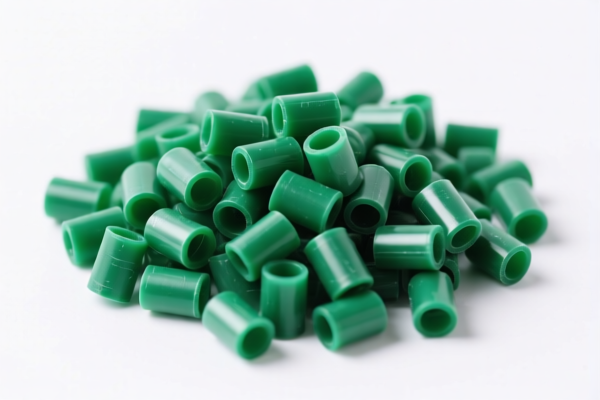
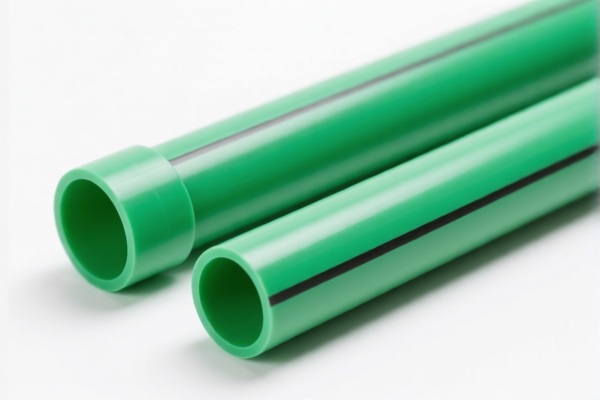

AI Analysis
🏗️ PVC Food Grade Plastic Pipe (聚氯乙烯食品级塑料管道)
🌐 HS Code Classification & Customs Clearance Guide | 2026 Latest Tariff Analysis | Professional Compliance Strategy
📌 I. Product Definition & Classification: Do You Really Understand "PVC Food Grade Pipes"?
PVC (Polyvinyl Chloride) pipes are ubiquitous in industrial, agricultural, and residential plumbing. However, "Food Grade" adds a critical regulatory layer. In international trade, these pipes are not a single monolithic category but are classified based on their chemical composition, physical form, and specific application definitions under the Harmonized System (HS).
⚠️ Key Distinction Point:
- If classified strictly as "Plastic Pipes" under Chapter 39.17 → Lower base duty, but subject to high Section 301/IEEPA surcharges.
- If classified as "Articles of PVC" under Chapter 39.16 (Profiles/Planks) → Higher base duty due to misalignment with "pipe" definitions.
- If classified as "Other Plastic Articles" under Chapter 39.26 → Different tariff treatment, potentially lower overall rate depending on the specific subheading.
📦 II. HS Code Classification Details (2026 Latest Tariff Authoritative Comparison)
Based on the provided data, here are the five potential HS codes for PVC Food Grade Plastic Pipes, along with the rationale for each classification.
| HS Code | Product Description & Rationale | Application Scenario | Tax Rate Summary |
|---|---|---|---|
3917.23.00.00 |
Food Grade PVC Plastic Pipe. Material: Polyvinyl Chloride. Form: Pipe. (Rationale: This is the most direct classification for "pipes" made of plastics, specifically falling under "Other pipes and hoses"). |
Standard potable water pipes, food processing fluid transport pipes. | 38.1% |
3917.32.00.10 |
Food Grade PVC Plastic Pipe. Material and Form meet classification requirements. (Rationale: Specific subheading for "Rigid pipes" within the plastic pipe chapter. Confirms strict compliance with pipe definitions). |
Rigid plumbing systems, industrial fluid conveyance. | 38.1% |
3916.20.00.91 |
Vinyl Chloride Polymer. Form: Pipe. (Rationale: Classified under "Other plastics" and "Profiles/Rods/Strips". This is a misclassification risk if the product is strictly defined as a hollow pipe, but sometimes used for semi-finished profiles shaped like pipes). |
Semi-finished PVC profiles, structural rods resembling pipes. | 40.8% |
3916.20.00.20 |
Vinyl Chloride Polymer (PVC). Form: Pipe. Meets definition of Rods, Bars, and Profiles. (Rationale: Similar to above. If the "pipe" has solid sections or is defined as a profile rather than a hollow conduit, it falls here). |
PVC solid rods, hollow profiles not strictly defined as "pipes" in legal terms. | 40.8% |
3926.90.99.87 |
PVC Plastic Pipe. Classified as Other Plastic Articles. (Rationale: Placed in Chapter 39.26 "Other articles of plastics". This is often used when the product doesn't fit the strict "pipe" definition of 3917, or for specialized plastic fittings/components). |
Specialized plastic components, non-standard pipe fittings, or generic plastic containers/pipes. | 22.8% |
🔍 Critical Analysis:
- 3917 vs. 3916: The main dispute is whether the item is a "Pipe" (3917) or a "Profile/Rod" (3916). Customs often scrutinize if the cross-section is hollow (Pipe) or if it's a solid/semi-solid profile.
- 3917 vs. 3926: Chapter 39.17 is specific to "Plastics Pipes...". Chapter 39.26 is a "catch-all" for other plastic articles. Using 3926 might lower the base duty but risks rejection if the product clearly fits 3917.
- Tax Implication: Despite lower base duties in 3916 and 3926, the total effective rate (including surcharges) makes 3917/3916 highly sensitive. 3926 offers the lowest total tax rate (22.8%) in this dataset.
💰 III. 2026 Latest Tariff Rate Breakdown (Including Surcharges & Policy Add-ons)
✅ Applicable Country: United States (US)
✅ Origin: China (CN)
✅ Effective Time: 2025/2026 (Including subsequent imports)
🎯 1. 3917.23.00.00 & 3917.32.00.10 —— Plastic Pipes (Most Common)
| Item | Content |
|---|---|
| Base Duty | 3.1% (Ad Valorem) |
| Section 301 Surcharge | +25.0% (USITC Footnote related to Chinese goods) |
| IEEPA 122 Clause Surcharge | +10.0% (Specific to certain Chinese industrial goods) |
| Total Effective Rate | 38.1% |
| Tax Calculation | CIF Value × 38.1% |
| De Minimis Exemption? | ❌ No (High value goods excluded) |
| Legal Basis Path | HTSUS:3917.23.00.00 → USITC:301-Action → IEEPA:122-Clause |
📌 Explanation:
- The 3.1% base rate is standard for plastic pipes.
- The 25% Section 301 is the heavy hitter for Chinese-origin goods.
- The 10% IEEPA 122 is an additional layer specific to certain chemical/plastic products.
- Total 38.1% is significant. Profit margins must account for this.
🎯 2. 3916.20.00.91 & 3916.20.00.20 —— PVC Profiles/Rods (Higher Base Duty)
| Item | Content |
|---|---|
| Base Duty | 5.8% (Ad Valorem) |
| Section 301 Surcharge | +25.0% |
| IEEPA 122 Clause Surcharge | +10.0% |
| Total Effective Rate | 40.8% |
| Tax Calculation | CIF Value × 40.8% |
| De Minimis Exemption? | ❌ No |
| Legal Basis Path | HTSUS:3916.20.00.20 → USITC:301-Action → IEEPA:122-Clause |
📌 Note:
- Even though the form might look similar to pipes, misclassification as "Profiles" increases the base duty from 3.1% to 5.8%.
- Since surcharges are flat percentages, the total rate becomes 40.8%, which is 2.7% higher than the correct pipe classification.
- Risk: Customs may reclassify from 3917 to 3916 if documentation is weak, leading to back-taxes.
🎯 3. 3926.90.99.87 —— Other Plastic Articles (Lowest Total Rate)
| Item | Content |
|---|---|
| Base Duty | 5.3% (Ad Valorem) |
| Section 301 Surcharge | +7.5% (Note: Lower surcharge rate for this category) |
| IEEPA 122 Clause Surcharge | +10.0% |
| Total Effective Rate | 22.8% |
| Tax Calculation | CIF Value × 22.8% |
| De Minimis Exemption? | ❌ No |
| Legal Basis Path | HTSUS:3926.90.99.87 → USITC:301-Action → IEEPA:122-Clause |
📌 Strategic Insight:
- This classification offers the lowest total tax burden (22.8%) among the options.
- Why? The Section 301 surcharge is only 7.5% (vs. 25% for pipes/profiles).
- Caution: You must justify why the product is an "Other Plastic Article" and not a "Pipe". This is a high-risk, high-reward strategy. It requires strong technical arguments that the product does not meet the HS definition of a "pipe" (e.g., if it's a complex fitting or non-standard shape).
🛠️ IV. Customs Clearance Practical Advice (Battle-Tested Pitfall Guide)
✅ 1. Preparation Checklist (Missing Items = Delays)
| Document | Mandatory? | Description |
|---|---|---|
| ✅ Product Specification Sheet | ✔️ | Must specify: Material (PVC), Standard (FDA/NSF for Food Grade), Dimensions, Pressure Rating. |
| ✅ Test Reports | ✔️ | FDA 21 CFR 177.1520 or NSF/ANSI 61 certification for "Food Grade". Without this, duty and regulatory hurdles increase. |
| ✅ Commercial Invoice | ✔️ | Clearly state: "PVC Plastic Pipe, Food Grade, Model XYZ". Do not use vague terms like "Plastic Tube". |
| ✅ Bill of Lading | ✔️ | Must match invoice weight and description. |
| ✅ Packaging List | ✔️ | Detail if pipes are cut to length or coiled. |
✅ 2. Declaration Strategy (Key Mnemonic)
🔥 “True Form, True HS, Tax Saves Half!”
| Scenario | Correct HS Code | Mistake | Consequence |
|---|---|---|---|
| Standard Hollow Pipe | 3917.23.00.00 or 3917.32.00.10 |
Misdeclare as 3926 |
Customs audit → Penalty + Back-taxes + Delay |
| PVC Rod/Profile | 3916.20.00.20 |
Misdeclare as 3917 |
Base duty increases from 3.1% to 5.8% → Higher Tax |
| Complex Plastic Fitting | 3926.90.99.87 |
Misdeclare as 3917 |
Potential savings, but high risk of reclassification if clearly a pipe component |
| Non-Food Grade PVC | Same HS, different cert | Claim "Food Grade" without cert | Regulatory Rejection at US Customs (FDA hold) |
✅ 3. Special Handling Cases
| Case | Recommendation |
|---|---|
| OEM Custom Pipes | Provide customer design specs. Ensure the shape clearly fits "Pipe" (hollow, cylindrical) for 3917. |
| Multi-Layer Pipes | If PVC is only a layer, declare based on the dominant material. If PVC is >50% by weight, use PVC classification. |
| Food Grade Certification | Crucial: Attach NSF/FDA certificates. US Customs may request proof that the PVC is compliant with food contact regulations. |
| Mixed Containers | If the container has pipes (3917) and fittings (3926), declare separately. Do not lump them together, or the whole shipment may be audited. |
🌍 V. Global Market Comparison (2026 Latest)
| Country/Region | Recommended HS Code | Duty Rate | Certification | Note |
|---|---|---|---|---|
| 🇺🇸 USA | 3917.23.00.00 |
38.1% (Total) | FDA/NSF 61 | High surcharges due to Section 301/IEEPA. |
| 🇪🇺 EU | 3917.23.00 |
~0-2% | REACH, NSF 61 | No Section 301. Low base duty. |
| 🇨🇳 China | 3917.23.00 |
5-8% | GB 4806 (Food Contact) | Domestic standards differ from FDA. |
| 🇯🇵 Japan | 3917.23.00 |
0-5% | JIS K 6743 | Strict food safety standards. |
📌 Conclusion:
- The USA is the most expensive market for PVC pipes due to 38.1% effective duty (or 40.8% if misclassified).
- EU/Asia are significantly cheaper.
- Strategy: If targeting the US, ensure accurate classification to avoid the 40.8% rate. Consider supplementary protection or duty drawback if re-exporting.
📌 VI. Common Mistakes & Pitfalls (Blood-Lesson Guide)
❌ Mistake 1: Using "Plastic Tube" instead of "Plastic Pipe" in docs
👉 Result: Customs may classify under 3926 (22.8%) if they accept the ambiguity, or 3917 (38.1%) if they enforce strict definitions. Inconsistent terminology leads to audits.
❌ Mistake 2: Missing Food Grade Certification
👉 Result: FDA hold. Goods detained for testing. Clearance delay: 2-4 weeks. Cost: Storage + Testing fees.
❌ Mistake 3: Declaring Solid PVC Rods as Pipes
👉 Result: HS Code changed from 3917 (38.1%) to 3916 (40.8%). Unnecessary tax increase.
❌ Mistake 4: Ignoring IEEPA 122 Clause
👉 Result: Underpaying by 10%. Penalties + Interest upon audit.
✅ Correct Action:
"Food Grade PVC Pipe, ASTM D1785, NSF/ANSI 61 Certified, 4-inch Diameter, Rigid, Made in China"
🎯 VII. Conclusion: Professional Declaration, Cost Savings!
🎯 Remember the Mnemonic:
🔹 “Pipe is 3917, Profile is 3916, Article is 3926.”
🔹 “38.1% is the Pipe Rate, 40.8% is the Profile Trap, 22.8% is the 3926 Gamble.”
🔹 “Food Grade needs FDA/NSF, No Cert = No Entry!”
📌 Pro Tip:
If you are importing large volumes, consider applying for a Binding Ruling (Advance Ruling) from US Customs. This legally locks in the HS Code (e.g., confirming 3917 vs 3926) and protects you from retroactive audits.
📣 Immediate Action:
📞 Contact Your Broker + Provide NSF/FDA Docs + Confirm HS Code 3917 vs 3926 strategy
🚀 Clear Customs Smoothly, Protect Margins, Export Successfully!
✨ Professional Clearance Starts with Precise Classification!
💼 Every Cent Saved is Pure Profit!
Customer Reviews
About HS Code Classification
The Harmonized System (HS) is an internationally standardized nomenclature developed by the World Customs Organization (WCO) to classify traded products. Over 200 countries use the HS system as the basis for customs tariffs, trade statistics, and import/export regulations.
Each HS code follows a hierarchical structure:
- Chapter (2 digits) — Broad category of goods (e.g., Chapter 84: Machinery and Mechanical Appliances)
- Heading (4 digits) — More specific grouping within the chapter
- Subheading (6 digits) — Internationally standardized breakdown, used by all WCO member countries
- National subdivisions (8-10 digits) — Country-specific extensions for further classification, such as US HTSUS 10-digit codes
Correct HS code classification is essential for smooth customs clearance, accurate duty payment, and compliance with trade regulations. Misclassification can lead to customs delays, overpayment of duties, or penalties.
When importing from CN to US, the applicable tariff rates may include:
- Most-Favored-Nation (MFN) rate — The standard duty rate applied to WTO members
- General rate — Applied to countries without trade agreements
- Trade remedy duties — Additional tariffs such as Section 301 (anti-dumping), Section 232 (national security), or countervailing duties
The information provided on this page is for reference purposes only. For official classification, please consult with your local customs authority or a licensed customs broker.