PVC Frosted Profile
CN → US| HS Code | Tariff Rate | Origin | Destination | Doc |
|---|---|---|---|---|
| 3925900000 | 40.3% | CN | US | Official Doc |
| 3925200091 | 22.8% | CN | US | Official Doc |
| 3921905050 | 39.8% | CN | US | Official Doc |
| 3920490000 | 40.8% | CN | US | Official Doc |
| 3920435000 | 39.2% | CN | US | Official Doc |
Product Images
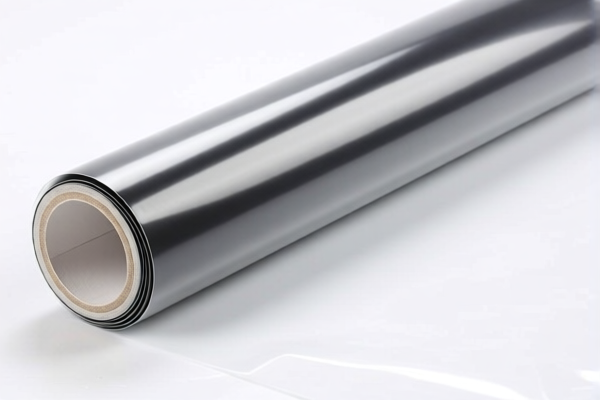
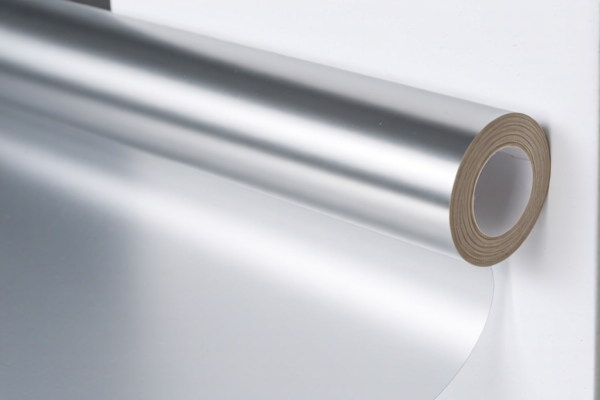

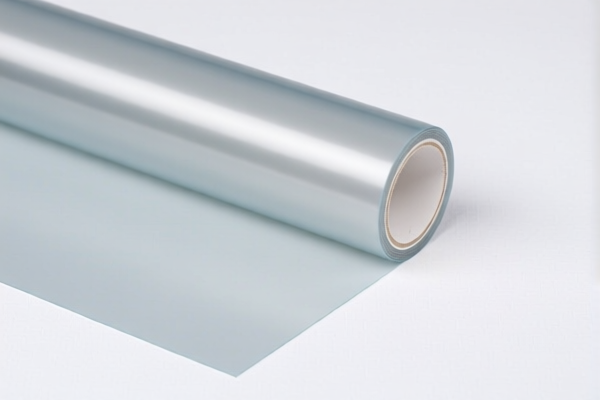
AI Analysis
🏗️ PVC Frosted Profile (PVC磨砂板)
🌐 HS Code Reference & Customs Clearance Guide | 2026 Latest Tariff Analysis | Professional Clearance Strategy
📌 I. Product Definition & Classification: Do You Really Understand "PVC Frosted Profile"?
PVC Frosted Profile, often referred to as PVC Frosted Boards/Plates, is a versatile plastic construction material characterized by a semi-transparent, matte-finish surface. It is widely used in interior decoration, partition walls, windows, doors, and furniture.
In international trade, the classification depends heavily on the physical form and intended application: * As Building Components: If manufactured into specific structural shapes (like window frames, door frames, or fixed partitions) intended for installation in buildings. * As Raw Material/Plastic Sheets: If supplied as flat plates, sheets, or profiles intended for further processing or general industrial use.
⚠️ Key Distinction:
- If the product is pre-formed into specific architectural shapes (e.g., window/door frames) → Classified as Building Components (3925).
- If the product is a flat sheet, plate, or generic profile → Classified as Plastic Plates/Sheets/Profiles (3920or3921).
📦 II. HS Code Classification Details (2026 Latest Tariff Authority Comparison)
| HS Code | Product Description | Application Scenario | Tax Rate Summary |
|---|---|---|---|
3925.90.00.00 |
PVC Frosted Board classified as Plastic Building Components | Architectural parts, partitions, general construction fittings | Total: 40.3% |
3925.20.00.91 |
PVC Frosted Board as Building Components (Windows/Doors) | Specifically shaped window frames, door frames, balconies | Total: 22.8% |
3921.90.50.50 |
PVC Frosted Board fits Plastic Plates/Sheets classification | Generic plastic sheets, plates, non-structural | Total: 39.8% |
3920.49.00.00 |
PVC Frosted Board belongs to Polyvinyl Chloride (PVC) Polymer Articles (Other) | Other PVC polymer products not elsewhere specified | Total: 40.8% |
3920.43.50.00 |
PVC Frosted Board fits Plastic Plates/Sheets of PVC | Specific PVC plastic plates/sheets for industrial/commercial use | Total: 39.2% |
🔍 Key Reminder:
-3925.20.00.91offers the lowest total tax rate (22.8%) but requires proof that the product is specifically window/door frames or similar architectural members.
-3925.90.00.00is the catch-all for other building components, with a higher rate (40.3%).
-3920/3921codes apply if the product is sold as raw material (sheets/plates) rather than finished building fixtures.
💰 III. 2026 Latest Tariff Rate Breakdown (Including Surtaxes & Policy Add-ons)
✅ Applicable Country: United States (US)
✅ Origin: China (CN)
✅ Effective Date: November 10, 2025 (for imports after this date)
🎯 1. 3925.90.00.00 —— Plastic Building Components (Other)
| Item | Details |
|---|---|
| Base Duty | 5.3% (Ad Valorem) |
| Section 301 Surtax | +25.0% (USITC Footnote) |
| Section 122 Tariff | +10.0% (Specific China-related tariff) |
| Total Rate | 40.3% |
| Calculation | CIF Value × 40.3% |
| De Minimis Eligibility | ❌ Not Eligible (High risk of seizure if shipped via small parcels) |
| Legal Reference Path | USITC:3925.90.00.00 → Section 301: +25% → Section 122: +10% |
📌 Explanation:
- This code is used for PVC building parts that do not fit specific window/door categories.
- The 40.3% rate is punitive, combining base duties with heavy US-China trade surcharges.
🎯 2. 3925.20.00.91 —— Building Components (Windows & Door Frames)
| Item | Details |
|---|---|
| Base Duty | 5.3% (Ad Valorem) |
| Section 301 Surtax | +7.5% (Reduced surtax for specific architectural members) |
| Section 122 Tariff | +10.0% |
| Total Rate | 22.8% |
| Calculation | CIF Value × 22.8% |
| De Minimis Eligibility | ❌ Not Eligible |
| Legal Reference Path | USITC:3925.20.00.91 → Section 301: +7.5% → Section 122: +10% |
📌 Strategic Note:
- This is the most cost-effective code IF the product is clearly a window or door frame.
- Evidence Required: Technical drawings showing frame profiles, installation instructions, and product naming (e.g., "PVC Window Frame").
- Risk: Misclassifying a generic "frosted board" as a window frame can lead to audits, penalties, and back-taxes.
🎯 3. 3921.90.50.50 —— Plastic Plates, Sheets, and Film (Other)
| Item | Details |
|---|---|
| Base Duty | 4.8% (Ad Valorem) |
| Section 301 Surtax | +25.0% |
| Section 122 Tariff | +10.0% |
| Total Rate | 39.8% |
| Calculation | CIF Value × 39.8% |
| De Minimis Eligibility | ❌ Not Eligible |
| Legal Reference Path | USITC:3921.90.50.50 → Section 301: +25% → Section 122: +10% |
📌 Explanation:
- Used if the PVC Frosted Profile is sold as a general-purpose plastic sheet.
- Higher base duty and 301 surtax make this more expensive than the window frame code.
🎯 4. 3920.49.00.00 —— Other Plates, Sheets, Film, Foil, and Strip (Of PVC)
| Item | Details |
|---|---|
| Base Duty | 5.8% (Ad Valorem) |
| Section 301 Surtax | +25.0% |
| Section 122 Tariff | +10.0% |
| Total Rate | 40.8% |
| Calculation | CIF Value × 40.8% |
| De Minimis Eligibility | ❌ Not Eligible |
| Legal Reference Path | USITC:3920.49.00.00 → Section 301: +25% → Section 122: +10% |
📌 Explanation:
- A broad category for PVC polymer products.
- Highest total rate (40.8%) among the options. Avoid this unless no other classification fits.
🎯 5. 3920.43.50.00 —— Plastic Plates, Sheets, etc. (Of PVC)
| Item | Details |
|---|---|
| Base Duty | 4.2% (Ad Valorem) |
| Section 301 Surtax | +25.0% |
| Section 122 Tariff | +10.0% |
| Total Rate | 39.2% |
| Calculation | CIF Value × 39.2% |
| De Minimis Eligibility | ❌ Not Eligible |
| Legal Reference Path | USITC:3920.43.50.00 → Section 301: +25% → Section 122: +10% |
📌 Explanation:
- Specific to PVC plates/sheets.
- Slightly lower rate (39.2%) than other3920subcategories, but still significantly higher than3925.20.00.91.
🛠️ IV. Customs Clearance Practical Advice (Avoiding Pitfalls)
✅ 1. Document Checklist (Mandatory)
| Document | Required? | Notes |
|---|---|---|
| ✅ Product Specification Sheet | ✔️ | Must detail dimensions, thickness, material composition (100% PVC), and surface finish ("Frosted"). |
| ✅ Technical Drawings | ✔️ | Critical for 3925.20.00.91. Show profile cross-sections to prove it’s a window/door frame. |
| ✅ Product Photos | ✔️ | Clear images showing the frosted texture and any pre-drilled holes or connectors. |
| ✅ Commercial Invoice | ✔️ | Must state: "PVC Frosted Window Frame/Profile for Building Use" or "PVC Plastic Sheet for Construction". |
| ✅ Packing List | ✔️ | Detail quantities, weights, and package dimensions. |
| ✅ Certification | ✔️ | If applicable: ASTM, CE, or RoHS compliance reports. |
✅ 2. Declaration Strategy (Key Mantras)
🔥 “Frames Get Lower Rates, Sheets Get Higher Taxes! Name It Right!”
| Scenario | Correct HS Code | Risk if Misclassified |
|---|---|---|
| Pre-formed Window/Door Frames | 3925.20.00.91 |
Lowest Risk & Cost (22.8%) |
| Generic PVC Frosted Boards/Sheets | 3921.90.50.50 or 3920.43.50.00 |
Higher taxes (~39-40%) |
| Other Building Parts (e.g., Cornices) | 3925.90.00.00 |
Moderate-High Tax (40.3%) |
| Mislabeling Sheets as Frames | ❌ High Risk | Penalties, Audit, Back Taxes, Possible Seizure |
✅ 3. Special Cases Handling
| Case | Handling Advice |
|---|---|
| Mixed Containers | If a container has both frames and sheets, separate entries are required. Mixing them may trigger an audit of the entire shipment. |
| Custom Extruded Profiles | If the profile is custom-extruded for a specific window brand, provide brand authorization and engineering drawings to support 3925.20.00.91. |
| Small Parcels (De Minimis) | DO NOT use de minimis (Section 321) for PVC profiles. US Customs has cracked down on Chinese plastic goods bypassing tariffs via small packages. Expect seizures. |
| Anti-Dumping/Countervailing Duties | Check if specific PVC products from China are subject to AD/CVD orders. Some PVC profiles may have additional duties. |
🌍 V. Global Market Comparison (2026 Overview)
| Country/Region | Recommended HS Code | Estimated Total Tax | Key Requirement |
|---|---|---|---|
| 🇺🇸 USA | 3925.20.00.91 (Frames) |
22.8% | Proof of Window/Door Use |
| 🇺🇸 USA | 3925.90.00.00 (Other) |
40.3% | General Building Use |
| 🇨🇳 China | 3925.20.00.00 |
5-10% | No Section 301/122 |
| 🇪🇺 EU | 3925.20.00 |
0-6% | CE Marking, REACH Compliance |
| 🇬🇧 UK | 3925.20.00 |
0-6% | UKCA Marking |
📌 Conclusion:
- USA is the most expensive market due to Section 301 and 122 tariffs.
- EU/UK have lower tariffs but stricter environmental/safety certifications (CE/UKCA).
- Strategic Advantage: If your product is truly a window/door frame, use3925.20.00.91to save ~17-18% in duties compared to generic board classifications.
📌 VI. Common Mistakes & Pitfalls (Lessons Learned)
❌ Mistake 1: Calling "Window Frames" generic "PVC Boards"
👉 Result: You pay 40.3% instead of 22.8%. Unnecessary Cost!
❌ Mistake 2: Shipping Frosted Profiles via USPS/Small Parcels
👉 Result: Seizure or Return. US Customs targets Chinese plastic goods over $800 value. Do not try to bypass!
❌ Mistake 3: Missing Technical Drawings for Frame Classification
👉 Result: Customs reclassifies your "frames" as "other building parts" (3925.90.00.00) → Back Taxes + Penalties.
❌ Mistake 4: Ignoring Section 122 Tariffs
👉 Result: Unexpected 10% surcharge on all Chinese-origin PVC goods. Budget accordingly.
✅ Correct Approach:
"PVC Frosted Window Frame, Extruded, for Residential Use, Model XYZ, Technical Drawing Attached, Section 301/122 Applicable"
🎯 VII. Conclusion: Precise Classification Saves Money!
🎯 Remember:
🔹 "Frames = 22.8%, Sheets = ~40%!"
🔹 "Documentation is Key: Drawings, Specs, and Clear Descriptions!"
🔹 "No De Minimis for PVC Profiles: Plan Full Entry!"
📌 Pro Tip:
If you are unsure whether your product qualifies as a "Window/Door Frame," apply for a Binding Ruling from US Customs (CBP) before shipping. This provides legal certainty and protects you from future audits.
📣 Immediate Action:
📞 Consult a Customs Broker
📄 Prepare Technical Drawings
🚀 Optimize Your HS Code for Maximum Savings!
✨ Professional Clearance, Starts with Precise Classification!
💼 Every Percent Saved is Pure Profit!
Customer Reviews
About HS Code Classification
The Harmonized System (HS) is an internationally standardized nomenclature developed by the World Customs Organization (WCO) to classify traded products. Over 200 countries use the HS system as the basis for customs tariffs, trade statistics, and import/export regulations.
Each HS code follows a hierarchical structure:
- Chapter (2 digits) — Broad category of goods (e.g., Chapter 84: Machinery and Mechanical Appliances)
- Heading (4 digits) — More specific grouping within the chapter
- Subheading (6 digits) — Internationally standardized breakdown, used by all WCO member countries
- National subdivisions (8-10 digits) — Country-specific extensions for further classification, such as US HTSUS 10-digit codes
Correct HS code classification is essential for smooth customs clearance, accurate duty payment, and compliance with trade regulations. Misclassification can lead to customs delays, overpayment of duties, or penalties.
When importing from CN to US, the applicable tariff rates may include:
- Most-Favored-Nation (MFN) rate — The standard duty rate applied to WTO members
- General rate — Applied to countries without trade agreements
- Trade remedy duties — Additional tariffs such as Section 301 (anti-dumping), Section 232 (national security), or countervailing duties
The information provided on this page is for reference purposes only. For official classification, please consult with your local customs authority or a licensed customs broker.