PVC Garden Hose
CN → US| HS Code | Tariff Rate | Origin | Destination | Doc |
|---|---|---|---|---|
| 3917390050 | 38.1% | CN | US | Official Doc |
| 3917320050 | 38.1% | CN | US | Official Doc |
| 4009110000 | 37.5% | CN | US | Official Doc |
| 4009120050 | 20.0% | CN | US | Official Doc |
| 5909001000 | 35.0% | CN | US | Official Doc |
Product Images
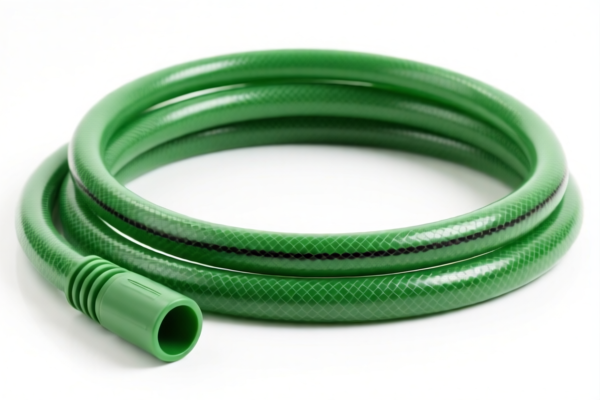
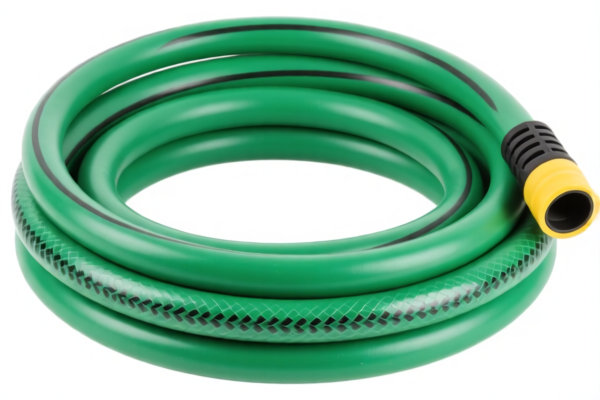
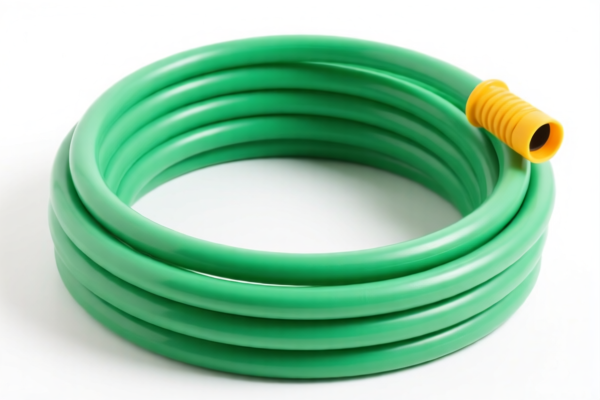
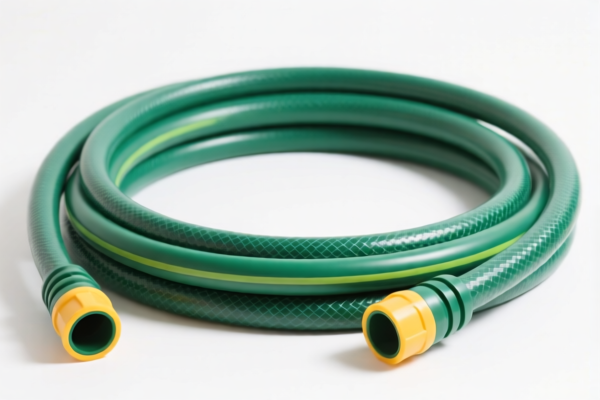
AI Analysis
🌿 PVC Garden Hose (Water Hoses)
🌐 HS Code Reference & Customs Clearance Guide | 2026 Latest Tariff Analysis | Professional通关 Strategy
📌 I. Product Definition & Classification: What Exactly is a "Garden Hose"?
A PVC Garden Hose is a flexible tube used for conveying water in residential, agricultural, or industrial garden settings. In international trade, classification depends heavily on the material composition and structural reinforcement.
Key Material Inferences: * Plastic (e.g., PVC): The most common material for standard garden hoses. * Vulcanized Rubber: Often used for high-pressure or industrial-grade hoses. * Textile/Plant Fibers (e.g., Cotton, Hemp): Less common for modern PVC hoses but possible for vintage or specialty textile hoses.
⚠️ Critical Distinction Points:
- If the hose is made of Plastic (PVC), it falls under Chapter 39.
- If the hose is made of Rubber, it falls under Chapter 40.
- If the hose is made of Textile/Fiber, it falls under Chapter 59.
- Reinforcement matters: Is it reinforced with other materials? This affects the sub-heading.
📦 II. HS Code Classification Details (2026 Latest Tariff Authority Comparison)
| HS Code | Product Description | Material Inference | Suitability for PVC Garden Hose |
|---|---|---|---|
3917.39.00.50 |
Tubes, pipes & hoses, of plastics, other | Plastic (PVC), generic | ✅ High Match - Fits general plastic hoses without specific reinforcement details. |
3917.32.00.50 |
Tubes, pipes & hoses, of plastics, unreinforced | Plastic (PVC), Unreinforced | ✅ High Match - Ideal if the PVC hose has no internal/external reinforcement mesh. |
4009.11.00.00 |
Vulcanized rubber hoses, with external coating, not reinforced or otherwise combined | Rubber/Plastic mix, Garden Use | ⚠️ Partial Match - Possible if material is inferred as rubber-coated plastic; fits "Garden Use" context. |
4009.12.00.50 |
Vulcanized rubber hoses, reinforced or otherwise combined with other materials | Rubber, Reinforced | ⚠️ Lower Match - Applies if the hose is primarily rubber with reinforcement. |
5909.00.10.00 |
Textile hose power transmission & similar textile hoses | Plant Fiber (Cotton, Hemp, etc.) | ❌ Low Match - Only applies if the "PVC" hose is actually a fabric-covered or textile-based hose. |
🔍 Key Reminder:
- Most standard "PVC Garden Hoses" are classified under HS 3917 (Plastic Hoses).
-3917.32.00.50is preferred for unreinforced PVC hoses.
-3917.39.00.50is preferred for reinforced or generic plastic hoses.
- Misclassification as Rubber (4009) or Textile (5909) can lead to duty discrepancies.
💰 III. 2026 Latest Tariff Rate Breakdown (Including Surcharges & Policy Add-ons)
✅ Applicable Country: United States (US)
✅ Country of Origin: China (CN)
✅ Effective Date: November 10, 2025 onwards (for subsequent imports)
🎯 1. 3917.39.00.50 & 3917.32.00.50 —— Plastic Hoses (Most Common for PVC)
| Item | Detail |
|---|---|
| Base Tariff Rate | 3.1% (ad valorem) |
| Section 301 Additional Tariff | +25.0% (USITC Footnote 9903.88.01) |
| Section 122 Tariff | +10.0% (Specific to China-origin goods under Section 122 of the Trade Act) |
| Total Tariff Rate | 38.1% |
| Tax Calculation | CIF Value × 38.1% |
| De Minimis Exemption | ❌ Not Eligible (deny_de_minimis) |
| Legal Authority Path | USITC:3917.39.00.50 / 3917.32.00.50 → FOOTNOTE:301.25% → SECTION:122(10%) |
📌 Explanation:
- "Base 3.1%": Standard Most Favored Nation (MFN) rate for plastic hoses.
- "301 Clause 25%": Additional tariff under Section 301 of the Trade Act for Chinese goods.
- "Section 122 10%": Additional tariff under Section 122 of the Trade Act of 1974, often applied to specific Chinese imports.
- Total 38.1% is a high tariff rate, significantly impacting profit margins.
🎯 2. 4009.11.00.00 & 4009.12.00.50 —— Rubber Hoses (If Material is Inferred as Rubber)
| Item | Detail |
|---|---|
| Base Tariff Rate | 2.5% (ad valorem) |
| Section 301 Additional Tariff | +25.0% (for 4009.11.00.00) or +7.5% (for 4009.12.00.50) |
| Section 122 Tariff | +10.0% |
| Total Tariff Rate | 37.5% (4009.11) or 20.0% (4009.12) |
| Tax Calculation | CIF Value × 37.5% or 20.0% |
| De Minimis Exemption | ❌ Not Eligible (deny_de_minimis) |
| Legal Authority Path | USITC:4009.11.00.00 / 4009.12.00.50 → FOOTNOTE:301 → SECTION:122(10%) |
📌 Note:
- If the hose is classified as Rubber, the total rate could be 37.5% or 20.0%, depending on reinforcement.
-4009.12.00.50offers a lower rate (20.0%) if the hose is rubber and reinforced, which is surprisingly cheaper than plastic hoses in this specific tariff structure.
🎯 3. 5909.00.10.00 —— Textile Hoses (If Material is Plant Fiber)
| Item | Detail |
|---|---|
| Base Tariff Rate | 0.0% |
| Section 301 Additional Tariff | +25.0% |
| Section 122 Tariff | +10.0% |
| Total Tariff Rate | 35.0% |
| Tax Calculation | CIF Value × 35.0% |
| De Minimis Exemption | ❌ Not Eligible (deny_de_minimis) |
📌 Note:
- Even with a 0% base rate, the surcharges bring the total to 35.0%.
- This classification is rare for PVC hoses unless they are textile-reinforced or fabric-based.
🛠️ IV. Customs Clearance Practical Advice (Battle-Tested Pitfall Avoidance)
✅ 1. Required Documentation Checklist (Non-negotiable)
| Document | Mandatory | Description |
|---|---|---|
| ✅ Product Specification Sheet | ✔️ | Must specify: Material (PVC/Rubber/Textile), Inner Diameter, Wall Thickness, Reinforcement Type. |
| ✅ Product Photos | ✔️ | Clear images of the hose cross-section, connectors, and any labels. |
| ✅ Commercial Invoice | ✔️ | Must clearly state "PVC Garden Hose" or "Rubber Hose," not just "Hose." |
| ✅ Packing List | ✔️ | Details coil lengths, packaging type, and gross/net weights. |
| ✅ Country of Origin Certificate | ✔️ | Proof of Chinese origin to assess correct surcharges. |
| ✅ Material Declaration | ✔️ | Explicitly state if the hose is reinforced (e.g., with polyester mesh) to differentiate between 3917.32 and 3917.39. |
✅ 2. Declaration Tips (Key Mantra)
🔥 "Material First, Reinforcement Second, Name Precise, Tax Avoids the Mess!"
| Scenario | Correct Declaration | Incorrect Practice |
|---|---|---|
| Standard PVC Hose (Unreinforced) | HS 3917.32.00.50 |
Misclassifying as Rubber → 37.5% or 20% (Risk of Audit) |
| PVC Hose with Mesh Reinforcement | HS 3917.39.00.50 |
Calling it "Unreinforced" → Potential penalty for misdeclaration |
| Rubber Hose (Reinforced) | HS 4009.12.00.50 |
Calling it "PVC" → 38.1% vs 20% (Missed Savings) |
| Textile Hose | HS 5909.00.10.00 |
Calling it "Plastic" → 35% vs 38.1% (Minor Savings, but Accuracy Matters) |
✅ 3. Special Case Handling
| Situation | Handling Advice |
|---|---|
| Composite Hoses (Plastic Core + Textile Braid) | Declare as Plastic Hose (3917) if plastic is the primary material. Provide cross-section diagrams. |
| OEM Custom Hoses | Provide customer design specs to prove material composition. Avoid generic terms like "Hose." |
| Small Samples (< $800) | ❌ No De Minimis Exemption for China-origin goods under Section 301/122. Full taxes apply regardless of value. |
| Hoses with Metal Fittings | Declare as Hose Assembly under the Hose HS Code. Do not split fittings into separate lines unless explicitly allowed. |
🌍 V. Global Market Clearance Comparison (2026 Latest)
| Country/Region | Recommended HS Code | Tariff Rate (China Origin) | Certification Requirements | Notes |
|---|---|---|---|---|
| 🇺🇸 USA | 3917.39.00.50 / 3917.32.00.50 |
38.1% (Plastic) | NSF/ANSI 61 (if for drinking water) | High surcharges. 4009.12 at 20% if Rubber. |
| 🇨🇳 China | 3917.39 / 3917.32 |
3.1% (Import Tariff) | CCC (if applicable) | No Section 301/122. Much lower cost. |
| 🇪🇺 EU | 3917.39 / 3917.32 |
0% (if under Tariff Quota) | REACH, ROHS | No Section 301. Potentially duty-free. |
| 🇦🇺 Australia | 3917.39 / 3917.32 |
5% (General Rate) | SAA Mark (if applicable) | Lower tariffs than US. |
| 🇯🇵 Japan | 3917.39 / 3917.32 |
0%~3% | PSE (if applicable) | Favorable trade agreement terms. |
📌 Conclusion:
- USA is the most expensive market due to Section 301 (25%) and Section 122 (10%) surcharges.
- EU, Australia, and Japan offer significantly lower tariff burdens.
- Consider supply chain diversification if targeting the US market to avoid high duties.
📌 VI. Common Mistakes & Pitfall Guide (Blood & Tears Lessons)
❌ Mistake 1: Declaring a Reinforced PVC Hose as 3917.32.00.50 (Unreinforced)
👉 Consequence: Customs may audit, impose penalties, or reclassify to 3917.39.00.50 (same rate, but accuracy is key). Risk of seizure if misrepresentation is deemed intentional.
❌ Mistake 2: Declaring a Rubber Hose as 3917 (Plastic)
👉 Consequence: Duty underpayment. If 4009.12 is 20% and 3917 is 38.1%, declaring Plastic instead of Rubber increases cost unnecessarily. Wait, actually, if you declare Plastic (38.1%) when it's Rubber (20%), you overpay. But if you declare Rubber (20%) when it's Plastic (38.1%), you underpay → Penalties!
👉 Correct Approach: Accurately identify material to avoid underpayment penalties.
❌ Mistake 3: Ignoring Section 122 Tariff
👉 Consequence: Failing to account for the additional 10% leads to underpayment by 10% on CIF value.
👉 Impact: Significant cost overrun for high-value shipments.
❌ Mistake 4: Using "Garden Hose" as the only description
👉 Consequence: Ambiguity leads to customs delays, requests for additional info, or incorrect classification.
👉 Correct Practice: "PVC Garden Hose, Unreinforced, 5/8 inch Diameter, Coiled"
🎯 VII. Conclusion: Professional Declaration, Save Time, Reduce Costs!
🎯 Remember the Mantra:
🔹 "Material Determines Chapter, Reinforcement Determines Sub-heading, Surcharges Determine Cost!"
🔹 "PVC Hose = 3917 (38.1%), Rubber Hose = 4009 (20-37.5%), Textile = 5909 (35%)!"
🔹 "Declare Accurately, Avoid Penalties, Maximize Profit!"
📌 Pro Tip:
- If your PVC hose is reusable or heavy-duty, consider if it can be classified as Rubber (4009.12.00.50) for a lower 20% rate. This requires material proof.
- For US imports, factor in the 38.1% total duty when calculating profit margins.
- Pre-ruling (Advance Ruling) is highly recommended for high-volume shipments to confirm HS Code and duty applicability.
📣 Call to Action:
📞 Consult with a licensed customs broker.
📤 Provide detailed product specifications and cross-section images.
🚀 Ensure accurate HS Code declaration to avoid delays, penalties, and unexpected costs!
✨ Professional Customs Clearance Starts with Precise Classification!
💼 Every percent of duty saved is pure profit!
Customer Reviews
About HS Code Classification
The Harmonized System (HS) is an internationally standardized nomenclature developed by the World Customs Organization (WCO) to classify traded products. Over 200 countries use the HS system as the basis for customs tariffs, trade statistics, and import/export regulations.
Each HS code follows a hierarchical structure:
- Chapter (2 digits) — Broad category of goods (e.g., Chapter 84: Machinery and Mechanical Appliances)
- Heading (4 digits) — More specific grouping within the chapter
- Subheading (6 digits) — Internationally standardized breakdown, used by all WCO member countries
- National subdivisions (8-10 digits) — Country-specific extensions for further classification, such as US HTSUS 10-digit codes
Correct HS code classification is essential for smooth customs clearance, accurate duty payment, and compliance with trade regulations. Misclassification can lead to customs delays, overpayment of duties, or penalties.
When importing from CN to US, the applicable tariff rates may include:
- Most-Favored-Nation (MFN) rate — The standard duty rate applied to WTO members
- General rate — Applied to countries without trade agreements
- Trade remedy duties — Additional tariffs such as Section 301 (anti-dumping), Section 232 (national security), or countervailing duties
The information provided on this page is for reference purposes only. For official classification, please consult with your local customs authority or a licensed customs broker.