PVC Glossy Sheet
CN → US| HS Code | Tariff Rate | Origin | Destination | Doc |
|---|---|---|---|---|
| 3925200091 | 22.8% | CN | US | Official Doc |
| 3921125000 | 41.5% | CN | US | Official Doc |
| 3921121100 | 39.2% | CN | US | Official Doc |
| 3916200091 | 40.8% | CN | US | Official Doc |
| 3925900000 | 40.3% | CN | US | Official Doc |
Product Images

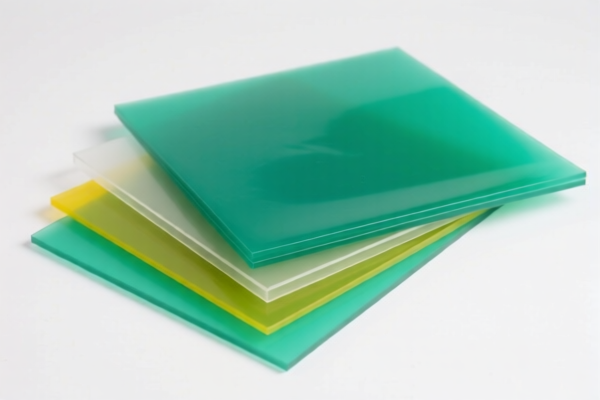
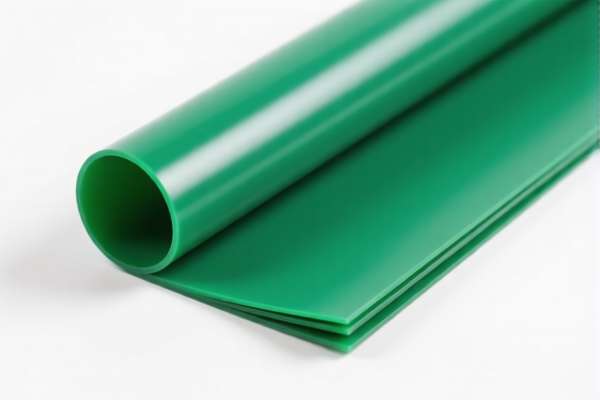
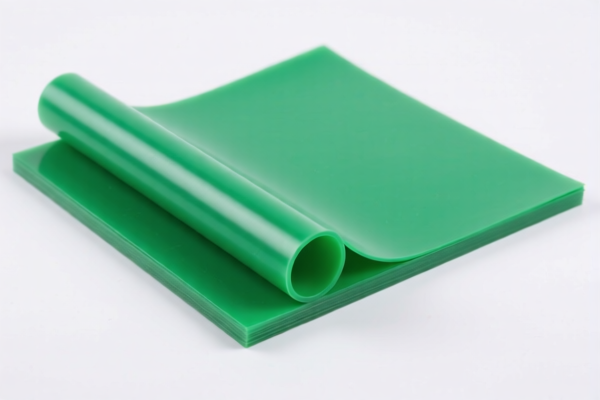
AI Analysis
🏗️ PVC Glossy Sheet (Ceiling Boards/Plank)
🌐 HS Code Reference & Customs Clearance Guide | 2024/2025 Tariff Analysis | Professional Entry Strategy
📌 I. Product Definition: What is a "PVC Glossy Sheet"?
"PVC Glossy Sheet" typically refers to decorative building materials made from Polyvinyl Chloride (PVC), characterized by a shiny surface finish. In the context of the provided data, these are explicitly identified as "PVC Glossy Ceiling Boards" (PVC亮面天花板板).
In international trade, PVC products can fall into two broad categories depending on their form and function: 1. Construction Components: Finished building fixtures (like ceiling panels) installed directly into structures. 2. Plastic Products: Raw or semi-finished plastic plates, sheets, films, strips, or profiles (before installation as a specific component).
⚠️ Critical Distinction:
- If the product is sold as a finished building fixture (e.g., pre-cut ceiling panels ready for installation), it leans towards Chapter 3925.
- If the product is sold as a generic plastic plate/sheet (e.g., general-purpose PVC sheets used for various crafts or industrial lining), it leans towards Chapter 3921.
📦 II. HS Code Classification Details (Based on Provided Data)
| HS Code | Product Description (from Data) | Key Characteristics | Tax Implication |
|---|---|---|---|
| 3925.20.00.91 | PVC Glossy Ceiling Board; Material: PVC; Form: Plate; Category: "Other" Construction Components | Classified under "Other" building components in Chapter 3925. | 22.8% (Lowest Rate) |
| 3921.12.50.00 | PVC Glossy Ceiling Board; Material: PVC; Form: Plate; Matches "Other plates/sheets of vinyl polymer" | Classified under 3921 (Plates, sheets, film, foil, and strip). | 41.5% (Highest Rate) |
| 3921.12.11.00 | PVC Glossy Ceiling Board; Material: PVC; Form: Plate; Matches HS 3921.12 Vinyl Polymer Plate Features | Specific sub-category within 3921.12 for vinyl polymer plates. | 39.2% |
| 3916.20.00.91 | PVC Glossy Ceiling Board; Material: Vinyl Polymer; Form: Profile/Plate; Matches "Other" in Chapter 3916 | Classified under Profiles/Planks (3916), often used for flooring or siding, but applied here to ceiling. | 40.8% |
| 3925.90.00.00 | PVC Glossy Ceiling Board; Material: PVC; Form: Plate; Matches "Plastic Building Components" | General "Other" category for plastic building components in Chapter 3925. | 40.3% |
🔍 Key Insight:
The same physical product ("PVC Glossy Ceiling Board") can result in tax rates ranging from 22.8% to 41.5% depending solely on how it is classified (Construction Component vs. Plastic Sheet vs. Profile).
- 3925.20.00.91 offers the most favorable tariff (22.8%).
- 3921.12.50.00 carries the heaviest burden (41.5%).
💰 III. 2024/2025 Tariff Rate Breakdown (Detailed Analysis)
✅ Applicable Jurisdiction: United States (US)
✅ Origin: China (CN)
✅ Effective Date: Tariffs reflect current Section 301 and IEEPA measures.
🎯 1. 3925.20.00.91 — The "Construction Component" Route (Best Rate)
| Item | Detail |
|---|---|
| Base Tariff | 5.3% |
| Section 301 Tariff (Add-on) | 7.5% |
| Section 122 Tariff | 10% |
| Total Effective Rate | 22.8% |
| Tax Calculation | CIF Value × 22.8% |
| De Minimis Eligibility | ❌ Not Eligible (Section 301 tariffs generally exclude de minimis relief for high-risk categories, though 3925 may vary by specific enforcement; assume No for safety). |
| Legal Basis | Base HTSUS + Section 301 List 3/4 updates + IEEPA/Emergency Powers. |
📌 Explanation:
- This classification treats the PVC sheet as a finished building component.
- The 7.5% Section 301 is significantly lower than the standard 25% often applied to other plastic goods, making this the most cost-effective classification.
- Crucial: To qualify, the product must be clearly defined as a "ceiling board" or "building fixture," not just a raw sheet.
🎯 2. 3921.12.50.00 — The "Plastic Sheet" Route (Highest Rate)
| Item | Detail |
|---|---|
| Base Tariff | 6.5% |
| Section 301 Tariff (Add-on) | 25.0% |
| Section 122 Tariff | 10% |
| Total Effective Rate | 41.5% |
| Tax Calculation | CIF Value × 41.5% |
| De Minimis Eligibility | ❌ Not Eligible |
| Legal Basis | HTSUS 3921 + Section 301 List 4 (25% add-on) + IEEPA. |
📌 Explanation:
- Classification under 3921 triggers the full 25% Section 301 tariff.
- This is the wor-case scenario for costs.
- Avoid this classification unless the product is indisputably a raw PVC sheet not intended specifically as a building fixture.
🎯 3. 3921.12.11.00 — Specific Vinyl Polymer Plate
| Item | Detail |
|---|---|
| Base Tariff | 4.2% |
| Section 301 Tariff (Add-on) | 25.0% |
| Section 122 Tariff | 10% |
| Total Effective Rate | 39.2% |
| Tax Calculation | CIF Value × 39.2% |
📌 Explanation:
- Similar to 3921.12.50.00 but with a slightly lower base rate (4.2% vs 6.5%).
- Still suffers from the 25% Section 301 penalty.
- Savings: ~2.3% lower than 3921.12.50.00, but still significantly higher than 3925.20.00.91.
🎯 4. 3916.20.00.91 — Profile/Plank Classification
| Item | Detail |
|---|---|
| Base Tariff | 5.8% |
| Section 301 Tariff (Add-on) | 25.0% |
| Section 122 Tariff | 10% |
| Total Effective Rate | 40.8% |
| Tax Calculation | CIF Value × 40.8% |
📌 Explanation:
- Chapter 3916 covers "Plastics... in the form of rods, tubes, and profiles."
- If the ceiling board is shaped like a strip, plank, or profile (e.g., interlocking ceiling tiles with edges), this classification might be argued.
- However, it still incurs the 25% Section 301 tariff.
🎯 5. 3925.90.00.00 — General Plastic Building Component
| Item | Detail |
|---|---|
| Base Tariff | 5.3% |
| Section 301 Tariff (Add-on) | 25.0% |
| Section 122 Tariff | 10% |
| Total Effective Rate | 40.3% |
| Tax Calculation | CIF Value × 40.3% |
📌 Explanation:
- A "catch-all" for plastic building components not specifically listed elsewhere in 3925.
- Note: While the base rate is low (5.3%), the Section 301 add-on jumps to 25%, making it nearly as expensive as the 3921 classifications.
- Why is 3925.20.00.91 cheaper? Because it may fall under a different Section 301 sub-list or exemption (e.g., 7.5% vs 25%) due to its specific "Other" status in 3925.20.
🛠️ IV. Customs Clearance Practical Advice (Pitfall Avoidance)
✅ 1. Documentation Checklist (Must-Haves)
| Document | Requirement | Notes |
|---|---|---|
| Product Description | Must specify "PVC Glossy Ceiling Board" or "Building Component" | Avoid generic terms like "Plastic Sheet" or "PVC Plate" to steer away from 3921. |
| Product Photos | Show the installed appearance or finished form | Prove it is a fixture, not a raw sheet. Include edge details if it's a profile. |
| Material Certificate | Confirm PVC (Polyvinyl Chloride) composition | Ensure no other polymers exceed limits for specific sub-codes. |
| Commercial Invoice | Clearly state "For Use in Construction/Ceiling Installation" | Aligns with 3925 classification. |
| Technical Specs | Dimensions, Thickness, Surface Finish (Glossy) | Helps distinguish from standard plastic sheets. |
✅ 2. Classification Strategy (Key Tips)
🔥 "Call it a 'Board', Not a 'Sheet'!"
| Scenario | Recommended HS Code | Reason |
|---|---|---|
| Finished Ceiling Panels (Ready to install) | 3925.20.00.91 | Best Rate (22.8%). Clearly a building component. |
| Raw PVC Sheets (Used for crafts/lining) | 3921.12.50.00 | High Rate (41.5%). Only use if not a building fixture. |
| PVC Planks/Strips (Interlocking edges) | 3916.20.00.91 or 3925.20.00.91 | If shaped as profiles, 3916 might apply, but 3925 is still better if deemed a fixture. |
| General Plastic Plates | 3921.12.11.00 | Avoid unless product is clearly a generic plate. |
⚠️ Warning:
- Do NOT describe the product as "PVC Plastic Sheet" in the invoice if it is a ceiling panel. This invites scrutiny and potential reclassification to 3921 (41.5%).
- DO emphasize "Ceiling Board," "Wall Panel," or "Building Fixture" in all documentation.
✅ 3. Special Cases
| Case | Handling Advice |
|---|---|
| Mixed Shipments | Separate "Raw PVC Sheets" from "Finished Ceiling Boards" to avoid ambiguity. |
| OEM Custom Shapes | Provide design drawings showing the final architectural form to support 3925 classification. |
| Sample Imports | Mark as "Sample for Evaluation of Building Component" to justify 3925. |
🌍 V. Global Market Comparison (2024/2025)
| Country | Recommended HS Code | Tariff (China Origin) | Notes |
|---|---|---|---|
| 🇺🇸 USA | 3925.20.00.91 | 22.8% | Best option. Includes Section 301 (7.5%) + IEEPA (10%). |
| 🇺🇸 USA | 3921.12.50.00 | 41.5% | Avoid if possible. High Section 301 (25%). |
| 🇨🇳 China | 3925.20.00.91 | ~5-8% (Import) | Lower duties for domestic production. |
| 🇪🇺 EU | 3925.20.00 | 0-4% | Generally low tariffs for construction plastics. |
| 🇬🇧 UK | 3925.20.00 | 0-4% | Post-Brexit tariffs similar to EU for many goods. |
📌 Conclusion:
- USA is the most complex market due to Section 301 tariffs.
- Classification is everything: A 18.7% difference (41.5% - 22.8%) exists between 3921 and 3925 classifications for the same product.
- Always aim for 3925.20.00.91 if the product is a ceiling board/building component.
📌 VI. Common Errors & Pitfalls (Lessons Learned)
❌ Error 1: Describing the product as "PVC Sheet" in the commercial invoice.
👉 Result: Customs may classify it under 3921 (41.5%), leading to massive overpayment of duties.
❌ Error 2: Failing to provide photos of the finished product.
👉 Result: Customs cannot confirm it is a "building component," leading to delays or reclassification.
❌ Error 3: Using generic descriptions like "Plastic Plate" without specifying application.
👉 Result: Ambiguity leads to conservative (higher) tariff assessments.
✅ Correct Approach:
"PVC Glossy Ceiling Board, Finished Building Component, 2x4 ft, Interlocking Edges, for Interior Ceiling Installation"
🎯 VII. Conclusion: Save Money with Smart Classification
🎯 Key Takeaway:
🔹 "Building Component = 22.8% | Plastic Sheet = 41.5%"
🔹 One word difference: 'Board' vs. 'Sheet' saves you 18.7% in duties!
📌 Action Plan:
1. Rename: Change "PVC Sheet" to "PVC Ceiling Board" or "Building Component" in all documents.
2. Document: Include photos showing the product as a finished fixture.
3. Declare: Use HS Code 3925.20.00.91 to minimize tariff exposure.
4. Verify: Confirm with a customs broker that the product qualifies as a "building component" under US HTSUS.
📣 Immediate Action:
📞 Contact your customs broker with the corrected product description.
🚀 Update your commercial invoice to reflect "Ceiling Board" instead of "Sheet."
💰 Save thousands in duties on every shipment.
✨ Smart Classification, Lower Costs, Faster Clearance!
💼 Your Bottom Line Depends on the Right HS Code!
Customer Reviews
About HS Code Classification
The Harmonized System (HS) is an internationally standardized nomenclature developed by the World Customs Organization (WCO) to classify traded products. Over 200 countries use the HS system as the basis for customs tariffs, trade statistics, and import/export regulations.
Each HS code follows a hierarchical structure:
- Chapter (2 digits) — Broad category of goods (e.g., Chapter 84: Machinery and Mechanical Appliances)
- Heading (4 digits) — More specific grouping within the chapter
- Subheading (6 digits) — Internationally standardized breakdown, used by all WCO member countries
- National subdivisions (8-10 digits) — Country-specific extensions for further classification, such as US HTSUS 10-digit codes
Correct HS code classification is essential for smooth customs clearance, accurate duty payment, and compliance with trade regulations. Misclassification can lead to customs delays, overpayment of duties, or penalties.
When importing from CN to US, the applicable tariff rates may include:
- Most-Favored-Nation (MFN) rate — The standard duty rate applied to WTO members
- General rate — Applied to countries without trade agreements
- Trade remedy duties — Additional tariffs such as Section 301 (anti-dumping), Section 232 (national security), or countervailing duties
The information provided on this page is for reference purposes only. For official classification, please consult with your local customs authority or a licensed customs broker.