PVC High Plasticization Window Film
CN → US| HS Code | Tariff Rate | Origin | Destination | Doc |
|---|---|---|---|---|
| 3921121950 | 40.3% | CN | US | Official Doc |
| 3921125000 | 41.5% | CN | US | Official Doc |
Product Images
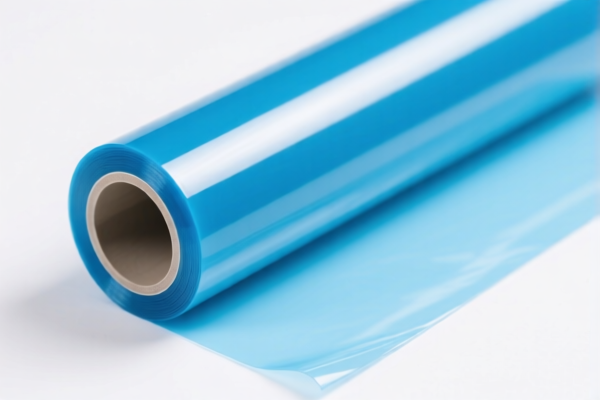
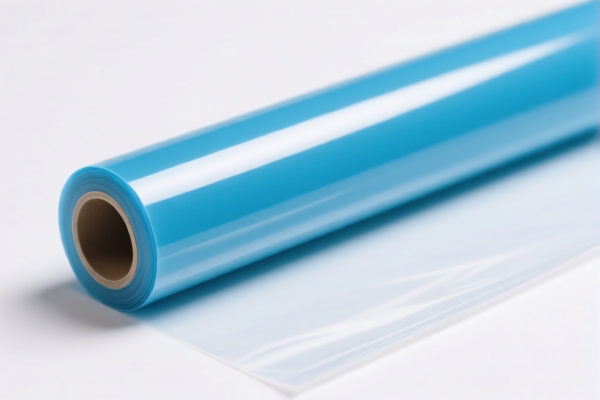
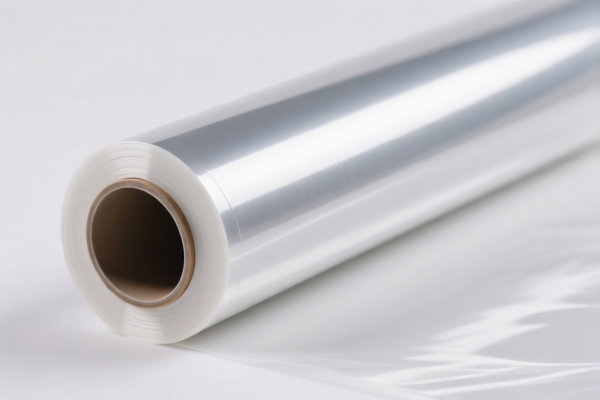
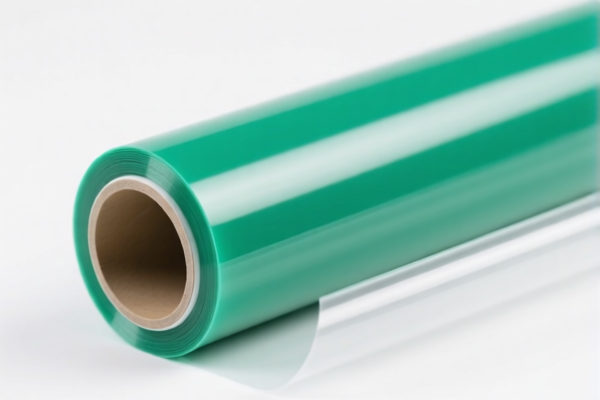
AI Analysis
🪟 PVC High Plasticization Window Film (Cellular Vinyl Chloride Polymers)
🌐 HS Code Reference & Customs Clearance Guide | 2026 Latest Tariff Analysis | Professional Entry Strategies
📌 1. Product Definition & Classification: What is "PVC High Plasticization Window Film"?
PVC High Plasticization Window Film refers to flexible, cellular (foamed) plastic sheets or films made primarily from polymers of vinyl chloride (PVC). The term "High Plasticization" indicates that the material contains significant plasticizers, making it soft, flexible, and durable—ideal for applications like privacy films, protective coverings, or decorative wall coverings.
In international trade, this product is strictly classified under Chapter 39 (Plastics and Articles Thereof), specifically as Cellular Plates, Sheets, Film, Foil, and Strip.
⚠️ Critical Classification Distinction: * Cellular Structure: If the film has a foamed/expanded interior, it falls under
3921.12(Cellular of polymers of vinyl chloride). * Material Composition: * If it is pure PVC (possibly combined with textile backing) → 3921.12.19.50 * If it is pure PVC (no textile backing mentioned) → 3921.12.50.00Note: The presence of textile materials significantly impacts the subheading and potentially the duty rate.
📦 2. HS Code Classification Details (2026 Latest Tariff Authority)
Based on the provided <DATA>, there are two primary HS Codes for this product, depending on whether it is combined with textile materials.
| HS Code | Product Description | Key Characteristics | Application Scenario |
|---|---|---|---|
3921.12.19.50 |
Other Plates, Sheets, Film, Foil and Strip, of Plastics: Cellular: Of polymers of vinyl chloride: Combined with textile materials: Other Other | • Cellular (foamed) PVC • Contains Textile Backing/Lining • "Other Other" implies specific sub-category within textile-combined films |
• Textured wall coverings with fabric backing • Self-adhesive films with fabric reinforcement • Decorative panels for interior design |
3921.12.50.00 |
Other Plates, Sheets, Film, Foil and Strip, of Plastics: Cellular: Of polymers of vinyl chloride: Other | • Cellular (foamed) PVC • No Textile Material (Pure PVC or non-textile composite) • General "Other" category |
• Pure cellular PVC sheets for insulation • Unbacked flexible PVC films • Industrial or protective covers |
🔍 Key Insight: *
3921.12.19.50is for textile-combined PVC films. These often have a higher duty base (5.3%) but still face the 25% additional tariff. *3921.12.50.00is for non-textile PVC films. It has a slightly higher base duty (6.5%) but faces the same 25% additional tariff. * Do NOT classify under3920(Non-cellular) or3919(Self-adhesive, non-cellular) if the product is cellular/foamed.
💰 3. 2026 Latest Tariff Rate Breakdown (US Market)
✅ Applicable Country: United States (US)
✅ Origin: China (CN)
✅ Effective Date: Current rates apply (2025-2026)
🎯 1. 3921.12.19.50 — Cellular PVC Film Combined with Textile Materials
| Item | Details |
|---|---|
| Basic Tariff | 5.3% (Most Favored Nation rate) |
| Additional Tariff (Section 301) | +25.0% |
| Total Tariff Rate | 30.3% |
| Tax Calculation | CIF Value × 30.3% |
| De Minimis Exemption? | ❌ NO (deny_de_minimis) |
| Legal Basis | USITC Section 301 Tariff List (3921.12.19.50) |
📌 Explanation:
The 5.3% is the standard US import duty for cellular PVC products with textile backing.
The +25.0% is the Section 301 tariff imposed on Chinese-origin goods in this category.
Total Cost Impact: For every $10,000 of goods, you pay $3,030* in duties alone.
🎯 2. 3921.12.50.00 — Cellular PVC Film (Other/Non-Textile)
| Item | Details |
|---|---|
| Basic Tariff | 6.5% (Most Favored Nation rate) |
| Additional Tariff (Section 301) | +25.0% |
| Total Tariff Rate | 31.5% |
| Tax Calculation | CIF Value × 31.5% |
| De Minimis Exemption? | ❌ NO (deny_de_minimis) |
| Legal Basis | USITC Section 301 Tariff List (3921.12.50.00) |
📌 Explanation:
The 6.5% base rate is slightly higher than the textile-combined version.
The +25.0% Section 301 tariff remains unchanged.
Total Cost Impact: For every $10,000 of goods, you pay $3,150 in duties alone.
Difference: The non-textile version is $120 more expensive per $10,000 in duties.
🛠️ 4. Customs Clearance Practical Advice (Avoiding Pitfalls)
✅ 1. Documentation Checklist (Essential)
| Document | Required? | Purpose |
|---|---|---|
| Product Specification Sheet | ✔️ | Must explicitly state "Cellular PVC", "Vinyl Chloride Polymer", and "High Plasticization". |
| Composition Analysis | ✔️ | Critical to determine if Textile Material is present. If yes, use 3921.12.19.50. If no, use 3921.12.50.00. |
| Commercial Invoice | ✔️ | Must match HS Code and clearly describe "PVC Window Film, Cellular, Vinyl Chloride". |
| Packing List | ✔️ | Include dimensions and weight. |
| Bill of Lading | ✔️ | Standard shipping document. |
| Certificate of Origin | ✔️ | To prove Chinese origin (triggers the 25% tariff). |
✅ 2. Declaration Tips (Key Mnemonics)
🔥 "Cellular PVC? Check Textile! If Textile → 19.50. If No Textile → 50.00. Both 25% Extra!"
| Scenario | Correct HS Code | Wrong HS Code | Consequence of Error |
|---|---|---|---|
| PVC Film with Fabric Backing | 3921.12.19.50 (30.3%) |
3921.12.50.00 (31.5%) |
Overpayment of duties by ~1.2%. Customs may audit for misclassification. |
| Pure PVC Foam Sheet | 3921.12.50.00 (31.5%) |
3921.12.19.50 (30.3%) |
Underpayment. Risk of penalties, fines, and back-tariffs. |
| Non-Cellular PVC Film | ❌ WRONG CATEGORY | 3921.12.xxxx |
Misclassification. May fall under 3920 or 3919, leading to severe delays and re-inspection. |
| Window Tint (Non-Cellular, Thin) | ❌ WRONG CATEGORY | 3921.12.xxxx |
Thin window tints are often 3920.49 or 3919.10. Cellular films are thicker and foamed. |
✅ 3. Special Circumstances
| Situation | Handling Advice |
|---|---|
| Composite Materials | If the film has a textile backing, you MUST use 3921.12.19.50. Do not ignore the textile layer. |
| Product Name Ambiguity | Avoid vague terms like "Plastic Sheet". Use "Cellular Polyvinyl Chloride (PVC) Film". |
| Small Sample Shipments | Even small shipments are subject to 30.3% or 31.5%. No de minimis exemption. |
| Origin Marking | Ensure products are marked "Made in China" to avoid fraud allegations. |
🌍 5. Global Market Comparison (2026 Latest)
| Country/Region | Recommended HS Code | Tariff Rate | Notes |
|---|---|---|---|
| 🇺🇸 USA | 3921.12.19.50 or 3921.12.50.00 |
30.3% or 31.5% | High Section 301 tariffs. No de minimis. |
| 🇨🇳 China | 3921.12.19.50 or 3921.12.50.00 |
Varies (Import Duty ~6-7%) | Check for VAT (13%). No Section 301. |
| 🇪🇺 EU | 3921.12.10 or 3921.12.90 |
~6.5% | No major anti-dumping on this specific subtype. |
| 🇯🇵 Japan | 3921.12.000 |
~6-8% | Stable rates. |
📌 Conclusion:
The USA is the most expensive market due to the 25% Section 301 tariff.
Total cost in the US is over 30%, which significantly impacts profit margins.
Consider origin diversification* (e.g., Vietnam, Thailand) if eligible for duty-free or lower tariff rates under trade agreements.
📌 6. Common Mistakes & Pitfalls (Lessons Learned)
❌ Mistake 1: Misclassifying Cellular PVC as Non-Cellular PVC (3920).
👉 Consequence: Customs may reject the shipment, audit the company, and impose heavy penalties for tariff evasion.
❌ Mistake 2: Ignoring the Textile Backing.
👉 Consequence: If the film has a fabric layer but is declared as 3921.12.50.00, you underpay duties. Customs will demand back-payment + interest.
❌ Mistake 3: Assuming De Minimis applies.
👉 Consequence: Small shipments (under $800) are NOT exempt from Section 301 tariffs for this HS Code. You must pay duties even on small parcels.
✅ Correct Approach:
"Cellular PVC? Check for Textile. If Yes → 3921.12.19.50. If No → 3921.12.50.00. Pay 30-31.5%. No Exemptions."
🎯 7. Conclusion: Professional Declaration, Cost Optimization
🎯 Key Takeaways:
🔹 HS Code is Critical:
3921.12.19.50vs.3921.12.50.00depends on Textile Backing.
🔹 Tariff is High: 30.3% or 31.5% total. Budget accordingly.
🔹 No De Minimis: Even small shipments are taxed.
🔹 Documentation: Clearly state "Cellular PVC" and "Vinyl Chloride".
📌 Pro Tip:
If you are importing large volumes, consider applying for a Tariff Engineering Study or exploring origin shifts to countries with favorable trade agreements with the US (e.g., USMCA countries, ASEAN nations).
📣 Immediate Action:
📞 Consult a Customs Broker: Confirm the presence of textile materials.
📄 Prepare Accurate Specs: Clearly describe the cellular structure and composition.
💰 Factor in Tariffs: Include 30.3-31.5% in your cost model.
✨ Professional Clearance Starts with Accurate Classification!
💼 Every Dollar Saved in Duties is Profit Added!
Customer Reviews
About HS Code Classification
The Harmonized System (HS) is an internationally standardized nomenclature developed by the World Customs Organization (WCO) to classify traded products. Over 200 countries use the HS system as the basis for customs tariffs, trade statistics, and import/export regulations.
Each HS code follows a hierarchical structure:
- Chapter (2 digits) — Broad category of goods (e.g., Chapter 84: Machinery and Mechanical Appliances)
- Heading (4 digits) — More specific grouping within the chapter
- Subheading (6 digits) — Internationally standardized breakdown, used by all WCO member countries
- National subdivisions (8-10 digits) — Country-specific extensions for further classification, such as US HTSUS 10-digit codes
Correct HS code classification is essential for smooth customs clearance, accurate duty payment, and compliance with trade regulations. Misclassification can lead to customs delays, overpayment of duties, or penalties.
When importing from CN to US, the applicable tariff rates may include:
- Most-Favored-Nation (MFN) rate — The standard duty rate applied to WTO members
- General rate — Applied to countries without trade agreements
- Trade remedy duties — Additional tariffs such as Section 301 (anti-dumping), Section 232 (national security), or countervailing duties
The information provided on this page is for reference purposes only. For official classification, please consult with your local customs authority or a licensed customs broker.