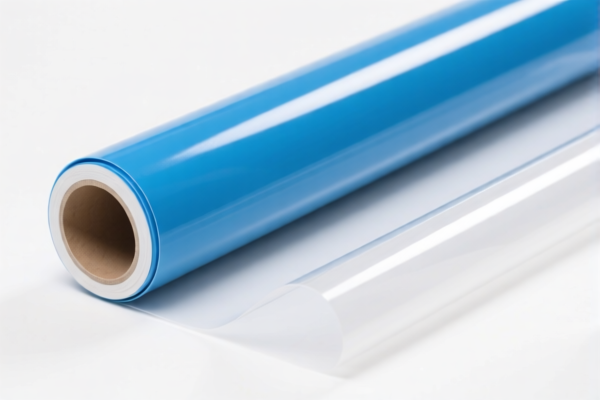
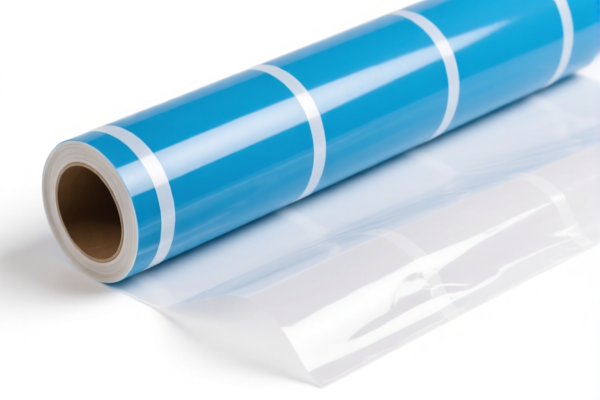
PVC High Plasticized Protective Film
CN → US| HS Code | Tariff Rate | Origin | Destination | Doc |
|---|---|---|---|---|
| 3919102010 | 40.8% | CN | US | Official Doc |
| 3919102055 | 40.8% | CN | US | Official Doc |
Product Images


AI Analysis
🎞️ PVC High Plasticized Protective Film
🌐 HS Code Reference & Clearance Guide | 2026 Latest Tariff Breakdown | Professional Clearance Strategy
📌 I. Product Definition & Classification: Do You Really Understand "Protective Film"?
PVC High Plasticized Protective Film is a versatile adhesive tape or strip made of plastics (Polyvinyl Chloride), widely used in manufacturing, construction, and packaging to protect surfaces during processing, transport, or storage.
In international trade, the classification depends strictly on the physical form (rolls vs. sheets) and width. This product falls under Chapter 39: Plastics and Articles Thereof.
⚠️ Key Distinction Point:
- If the product is supplied in rolls of width > 20 cm → It generally falls under 3919.90 (Other self-adhesive products).
- If the product is supplied in rolls of width ≤ 20 cm → It falls under 3919.10 (Self-adhesive tapes/strips in narrow rolls).
- Crucial Detail: Within 3919.10, we must distinguish between "Filament Reinforced" (high strength, often used for strapping) and "Other" (standard protective films).
📦 II. HS Code Classification Details (2026 Latest Tariff Authority Comparison)
Based on the provided data, this product is classified under Rolls of width not exceeding 20 cm. The critical split is between "Filament Reinforced Tape" and "Other".
| HS Code | Product Description | Applicable Scenario | Reinforcement Type |
|---|---|---|---|
3919.10.20.10 |
Other Filament reinforced tape | Heavy-duty strapping, reinforced protective tapes with embedded fibers for tensile strength | ✅ Yes (Filament Reinforced) |
3919.10.20.55 |
Other Other: Other | Standard PVC protective films, low-tack release films, non-reinforced protective tapes | ❌ No (Standard Plastic) |
🔍 Critical Reminder:
- "High Plasticized" refers to the chemical composition (soft PVC), not the physical reinforcement.
- If your protective film is standard PVC (soft, flexible, no fabric/filament core), it must be classified under3919.10.20.55.
- If your product is reinforced with filament (e.g., fiberglass or plastic filaments woven in), it falls under3919.10.20.10.
- Misclassification Risk: Reporting standard protective film as "Filament Reinforced" (3919.10.20.10) will result in high tariffs. Reporting reinforced tape as "Other" (3919.10.20.55) may lead to customs delays or penalties for incorrect declaration.
💰 III. 2026 Latest Tariff Rate Details (Including Surtaxes, Policy Add-ons)
✅ Applicable Country: United States (US)
✅ Origin: China (CN) (Note: If origin is Vietnam/Malaysia/etc., check for preferential treatments, but data provided implies China-origin rates based on surtax presence)
✅ Effective Date: Current applicable rates as per provided data
🎯 1. 3919.10.20.10 —— Other Filament Reinforced Tape
| Item | Content |
|---|---|
| Base Tariff | 5.8% (ad valorem) |
| Section 301 Surtax | +25.0% (Trade Remedy Tariff on Chinese Goods) |
| Total Tax Rate | 30.8% |
| Tax Calculation | CIF Value × 30.8% |
| De Minimis Exemption | ❌ Not Eligible (Deny de minimis for Section 301 goods if value exceeds threshold, though strictly speaking, 301 goods are generally not eligible for 800/861 exemptions if flagged) |
| Legal Basis Path | HTSUS: 3919.10.20.10 → USITC: Section 301 Footnote 9903.88.01 (Applicable to most plastics) |
📌 Explanation:
- Filament-reinforced tapes are often viewed as industrial materials with strategic importance or higher manufacturing value, attracting the 25% Section 301 surtax.
- Total cost impact is significant: 30.8% of the CIF value.
🎯 2. 3919.10.20.55 —— Other Other: Other (Standard PVC Protective Film)
| Item | Content |
|---|---|
| Base Tariff | 0.0% |
| Section 301 Surtax | 0.0% |
| Total Tax Rate | 0.0% |
| Tax Calculation | CIF Value × 0.0% |
| De Minimis Exemption | ✅ Eligible (If shipped via postal/express courier under $800, though commercial shipments must still declare) |
| Legal Basis Path | HTSUS: 3919.10.20.55 → No 301 Footnote Applicable |
📌 Explanation:
- Standard PVC protective films are considered common consumer/industrial packaging materials.
- Zero Duty advantage is massive.
- Warning: This classification only applies if the product is NOT filament reinforced. If you misdeclare reinforced tape as "Other," you risk back-taxes + penalties.
🛠️ IV. Clearance Practical Advice (Combat Pitfall Guide)
✅ 1. Required Documentation Checklist (Non-Negotiable)
| Document | Mandatory? | Description |
|---|---|---|
| ✅ Product Specification Sheet | ✔️ | Must specify: Material (PVC), Thickness (microns), Adhesive Type (High Plasticized), Width, Roll Length |
| ✅ Composition Declaration | ✔️ | Explicitly state: "Contains NO Filament Reinforcement" for 3919.10.20.55 |
| ✅ Product Photos | ✔️ | Clear shot of the roll end to show cross-section (no visible fabric/filament core) |
| ✅ Commercial Invoice | ✔️ | Description: "PVC Protective Film, Self-Adhesive, Roll Width XX cm, Non-Reinforced" |
| ✅ Packing List | ✔️ | Confirm roll width is ≤ 20 cm. If > 20 cm, HS Code changes to 3919.90 |
✅ 2. Declaration Tactics (Key Mantra)
🔥 "Width Under 20, Reinforcement Zero, Tax Rate Free Zero!"
| Scenario | Correct HS Code | Wrong Declaration | Consequence |
|---|---|---|---|
| Standard PVC Film, ≤20cm wide, NO reinforcement | 3919.10.20.55 |
Declare as 3919.10.20.10 |
30.8% Tax unnecessarily paid |
| Standard PVC Film, ≤20cm wide, NO reinforcement | 3919.10.20.55 |
Declare as 3919.90.10 (Width >20cm) |
Classification Error → Customs Audit |
| Reinforced Tape, ≤20cm wide | 3919.10.20.10 |
Declare as 3919.10.20.55 |
30.8% Tax Evasion → Penalty + Back Taxes |
| Protective Film, Width > 20 cm | 3919.90 (Other) |
Declare as 3919.10 |
Wrong Chapter → Major Clearance Delay |
✅ 3. Special Situations Handling
| Situation | Handling Advice |
|---|---|
| Multiple Rolls in One Carton | Ensure all rolls are ≤ 20 cm width. If mixed widths, split shipment or declare separately. |
| Filament Reinforced but Low Strength? | If it has filaments, it MUST be 3919.10.20.10. Do not argue for "low strength." Physical presence of filaments dictates the code. |
| Roll Width Exactly 20 cm? | Fits under 3919.10 (Not exceeding 20 cm). Safe. |
| Roll Width 20.1 cm? | Moves to 3919.90 (Other). Check base rate for 3919.90 (often 5.7% + 25% surtax). |
🌍 V. Global Market Clearance Comparison (2026 Latest)
| Country/Region | Recommended HS Code | Tariff Rate | Notes |
|---|---|---|---|
| 🇺🇸 USA | 3919.10.20.55 |
0.0% | Standard PVC Film. Avoid 3919.10.20.10 (30.8%) |
| 🇨🇳 China | 3919.10.20.55 |
~0-5% | Import duties may apply depending on origin (MFN vs. FTA) |
| 🇪🇺 EU | 3919.10.20 |
0-6.5% | Varies by member state; generally low for standard plastics |
| 🇬🇧 UK | 3919.10.20 |
0-6.5% | Post-Brexit rules apply; similar to EU |
📌 Conclusion:
- USA Market is Critical: The difference between 0% and 30.8% is huge.
- Standard PVC Protective Film should ALWAYS be declared as3919.10.20.55("Other Other: Other") if it is not reinforced.
- Do NOT let the word "High Plasticized" confuse customs; it describes the plasticizer content, not the reinforcement.
📌 VI. Common Mistakes & Pitfall Guide (Blood & Tears Lessons)
❌ Mistake 1: Declaring standard protective film as 3919.10.20.10 (Filament Reinforced)
👉 Consequence: Paying 30.8% tax unnecessarily. Loss of profit margin.
❌ Mistake 2: Declaring filament-reinforced tape as 3919.10.20.55 (Other)
👉 Consequence: Customs inspection reveals filaments → 30.8% Back Tax + Penalty + Delay.
❌ Mistake 3: Ignoring Roll Width
👉 Consequence: If width is 25cm but declared as ≤20cm, customs will reclassify to 3919.90, potentially changing duty rates and requiring additional documentation.
❌ Mistake 4: Vague Description "Plastic Tape"
👉 Consequence: Customs cannot determine if it's reinforced. Leads to Hold for Inspection.
✅ Correct Description Example:
"PVC Self-Adhesive Protective Film, High Plasticized, Roll Width 15 cm, Non-Reinforced, For Surface Protection, Model XYZ"
🎯 VII. Conclusion: Professional Declaration, Save Cost, Ensure Clearance!
🎯 Remember the Mantra:
🔹 "Width ≤20, No Filament, Zero Tax is Real!"
🔹 "Reinforced Tape? Pay 30.8%. Don't Risk It."
🔹 "Description Must Match Physical Structure."
📌 Pro Tip:
If your PVC film is standard, non-reinforced, and ≤20cm wide, you are in the 0% duty bracket for the US market. This is a highly competitive advantage. Ensure your supplier provides a clear certificate or photo confirming no filament reinforcement.
📣 Immediate Action:
📞 Verify roll width with your supplier.
🔍 Inspect product cross-section for filaments.
📝 Declare as3919.10.20.55for standard PVC films.
🚀 Zero Duty Clearance Achieved!
✨ Professional Clearance Starts with Accurate Classification!
💼 Your Every Cent Counts!
Customer Reviews
About HS Code Classification
The Harmonized System (HS) is an internationally standardized nomenclature developed by the World Customs Organization (WCO) to classify traded products. Over 200 countries use the HS system as the basis for customs tariffs, trade statistics, and import/export regulations.
Each HS code follows a hierarchical structure:
- Chapter (2 digits) — Broad category of goods (e.g., Chapter 84: Machinery and Mechanical Appliances)
- Heading (4 digits) — More specific grouping within the chapter
- Subheading (6 digits) — Internationally standardized breakdown, used by all WCO member countries
- National subdivisions (8-10 digits) — Country-specific extensions for further classification, such as US HTSUS 10-digit codes
Correct HS code classification is essential for smooth customs clearance, accurate duty payment, and compliance with trade regulations. Misclassification can lead to customs delays, overpayment of duties, or penalties.
When importing from CN to US, the applicable tariff rates may include:
- Most-Favored-Nation (MFN) rate — The standard duty rate applied to WTO members
- General rate — Applied to countries without trade agreements
- Trade remedy duties — Additional tariffs such as Section 301 (anti-dumping), Section 232 (national security), or countervailing duties
The information provided on this page is for reference purposes only. For official classification, please consult with your local customs authority or a licensed customs broker.