PVC High Plasticizer Car C Pillar Film
CN → US| HS Code | Tariff Rate | Origin | Destination | Doc |
|---|---|---|---|---|
| 3921125000 | 41.5% | CN | US | Official Doc |
| 3921121950 | 40.3% | CN | US | Official Doc |
| 3919102055 | 40.8% | CN | US | Official Doc |
| 3919905040 | 40.8% | CN | US | Official Doc |
Product Images
AI Analysis
🚗 PVC High Plasticizer Car C Pillar Film (Trim Wrap)
🌐 HS Code Reference & Customs Clearance Guide | 2026 Latest Tariff Analysis | Professional Entry Strategy
📌 Part 1: Product Definition & Classification: Do You Truly Understand "PVC Film"?
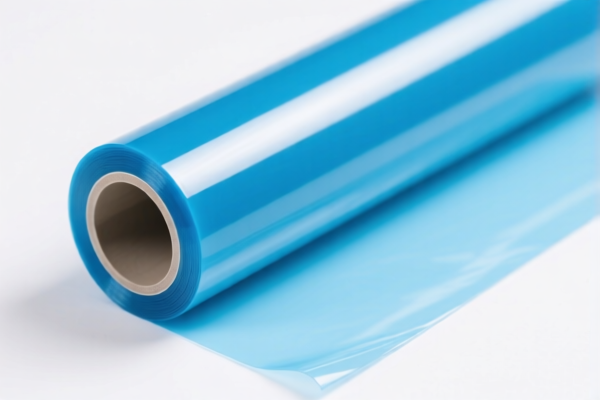
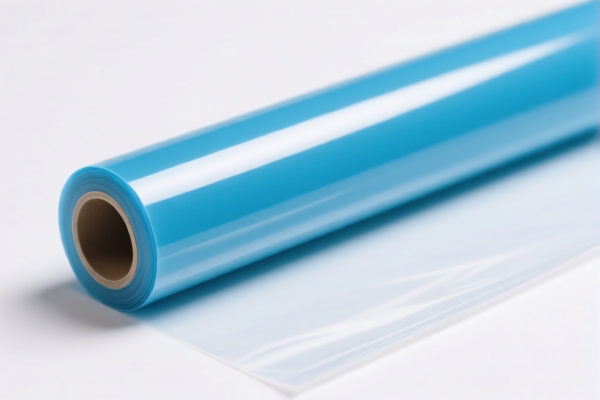
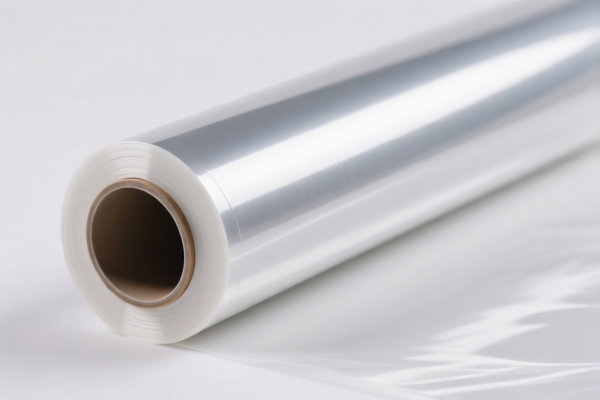
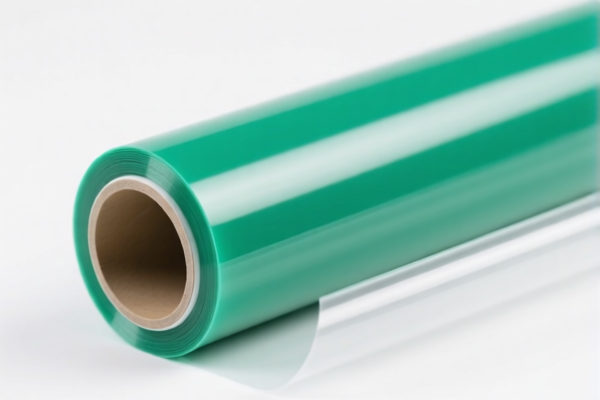
PVC High Plasticizer Car C Pillar Film is an automotive decorative trim product used to cover the C-pillar (the rear vertical support in a vehicle's frame) for aesthetic enhancement or protection.
In international trade, this product is classified based on two critical factors:
1. Material Composition: Polyvinyl Chloride (PVC) – specifically "high plasticized" PVC, which makes the material flexible and suitable for wrapping curved surfaces.
2. Form & Function: It is a film/foil/strip (flat shape) derived from PVC polymers. It is not a rigid board or plate, nor is it a fabric-reinforced composite in the traditional textile sense (though it may have a backing).
⚠️ Key Classification Dilemma:
- Is it a "Plate/Film/Sheet" of plastics (Chapter 39.21)?
- Or is it a "Self-Adhesive Tape/Film" of plastics (Chapter 39.19)?Clarification:
- If the product is primarily valued as a decorative sheet/film that is cut to shape or sold in rolls for application, and lacks significant adhesive backing properties defining it as "tape," it often falls under 3921 (Other plates, sheets, film, foil and strip, of plastics).
- If it is explicitly marketed and used as a self-adhesive decal/wrap with a strong adhesive layer integral to its function as a "tape-like" application, it may fall under 3919 (Self-adhesive plates, sheets, film, foil, tape, strip and other flat shapes).Note: The data provided suggests ambiguity in customs interpretation between these two chapters depending on specific product structure (adhesive vs. non-adhesive application method).
📦 Part 2: HS Code Classification Details (2026 Latest Tariff Authority Mapping)
Based on the provided data, there are four potential HS Codes for this product. The differences lie in the specific subheading interpretation of "PVC Film" vs. "Self-Adhesive PVC Film."
| HS Code | Product Description | Applicability / Rationale | Total Tax Rate |
|---|---|---|---|
3921.12.50.00 |
PVC Film (High Plasticizer) Classified as "Other plates, sheets, film, foil, and strip of plastics" made of PVC. |
Fits the description of "PVC high plasticizer car C pillar film" as a material made of PVC polymer in the form of film. It aligns with the general category of PVC films under Chapter 39.21. | 41.5% |
3921.12.19.50 |
PVC Film (Composite/Other) Classified as other PVC films, potentially implying composite or non-standard PVC film types. |
'PVC' corresponds to 'Polyvinyl Chloride polymer'; 'Film' corresponds to 'film/sheet'. It falls under the "other" or "composite with textile materials" reasonable application scope. | 40.3% |
3919.10.20.55 |
Self-Adhesive PVC Film Classified as "Other self-adhesive plates, sheets, film, etc." of plastics. |
PVC material, film form (flat shape), used for car decoration. Classified as non-reinforced fiber, non-electrical other self-adhesive products. | 40.8% |
3919.90.50.40 |
Other Self-Adhesive PVC Film Classified as other self-adhesive tapes/films of plastics. |
PVC material, film form (flat shape item), used for car C-pillar wrapping. Classified as self-adhesive tape/film, consistent with material and form requirements for transparent tape categories. | 40.8% |
🔍 Critical Observation:
- The tax rates are very close (40.3% – 41.5%).
- The difference lies in whether Customs views the product primarily as a Plastic Film (3921) or a Self-Adhesive Tape/Film (3919).
- 3921.12.19.50 offers the lowest rate (40.3%) but may be narrower in scope ("other" or composite).
- 3921.12.50.00 is the most generic "PVC Film" classification but has the highest rate (41.5%).
💰 Part 3: 2026 Latest Tariff Rate Breakdown (Including Additional Duties & Policy Surcharges)
✅ Applicable Country: United States (US)
✅ Country of Origin: China (CN)
✅ Effective Date: From November 10, 2025 onwards (including subsequent imports)
🎯 1. 3921.12.50.00 — PVC Film (General)
| Item | Content |
|---|---|
| Basic Tariff | 6.5% (ad valorem) |
| Section 301 Surcharge (Additional Duty) | +25.0% |
| 122 Clause Duty (IEEPA-related) | +10.0% |
| Total Tax Rate | 41.5% |
| Tax Calculation | CIF Value × 41.5% |
| De Minimis Exemption | ❌ Not Applicable |
| Legal Basis Path | Base: 6.5% → Section 301: +25% → 122 Clause: +10% |
📌 Explanation:
- 6.5% Base: Standard Most Favored Nation (MFN) rate for PVC films.
- 25% Section 301: USITC Footnote 9903.88.01 applies to most plastic articles from China.
- 10% 122 Clause: Additional surcharge for certain Chinese goods under Executive Orders.
- Total 41.5%: This is a high cost entry. Accurate classification is crucial.
🎯 2. 3921.12.19.50 — PVC Film (Other/Composite)
| Item | Content |
|---|---|
| Basic Tariff | 5.3% |
| Section 301 Surcharge | +25.0% |
| 122 Clause Duty | +10.0% |
| Total Tax Rate | 40.3% |
| Tax Calculation | CIF Value × 40.3% |
| De Minimis Exemption | ❌ Not Applicable |
| Legal Basis Path | Base: 5.3% → Section 301: +25% → 122 Clause: +10% |
📌 Note:
- This is the lowest total tax rate among the options.
- The lower base rate (5.3% vs 6.5%) is the only differentiator.
- Risk: Customs may challenge this code if the product does not fit the specific "other/composite" definition. Requires strong product description support.
🎯 3. 3919.10.20.55 & 3919.90.50.40 — Self-Adhesive PVC Film
| Item | Content |
|---|---|
| Basic Tariff | 5.8% |
| Section 301 Surcharge | +25.0% |
| 122 Clause Duty | +10.0% |
| Total Tax Rate | 40.8% |
| Tax Calculation | CIF Value × 40.8% |
| De Minimis Exemption | ❌ Not Applicable |
| Legal Basis Path | Base: 5.8% → Section 301: +25% → 122 Clause: +10% |
📌 Note:
- Both 3919 codes have the same effective rate (40.8%).
- The base rate (5.8%) is higher than 3921.12.19.50 (5.3%) but lower than 3921.12.50.00 (6.5%).
- These codes are appropriate if the product is self-adhesive (has glue on one side) and sold as a "wrap" or "decal."
🛠️ Part 4: Customs Clearance Practical Advice (Real-World Pitfall Guide)
✅ 1. Required Documentation Checklist (Non-Negotiable)
| Document | Mandatory? | Explanation |
|---|---|---|
| ✅ Product Specification Sheet | ✔️ | Must detail: Material (PVC High Plasticizer), Thickness, Width, Length, Adhesive Type (if any). |
| ✅ Product Photos | ✔️ | Clear images showing the roll, the backing paper (if any), and the adhesive side. Distinguish between "non-adhesive film" and "self-adhesive tape." |
| ✅ Commercial Invoice | ✔️ | Must accurately describe the item as "PVC Car Trim Film" or "Self-Adhesive PVC Film." Avoid vague terms like "Plastic Sheet." |
| ✅ Packing List | ✔️ | Detail the quantity, weight, and dimensions. |
| ✅ Origin Certificate | ✔️ | Proves Chinese origin, which triggers the 301/122 duties. |
| ✅ Third-Party Lab Report | ✔️ | Optional but recommended to confirm PVC content and plasticizer type. |
✅ 2. Declaration Strategy (Key Rules)
🔥 "Adhesive Defines Code, Film Defines Shape, PVC Defines Material!"
| Scenario | Correct Declaration | Incorrect Practice |
|---|---|---|
| Product has NO adhesive (needs separate glue/spray) | 3921.12.50.00 or 3921.12.19.50 |
Misdeclaring as Self-Adhesive → Potential misclassification penalty. |
| Product HAS adhesive (peel-and-stick wrap) | 3919.10.20.55 or 3919.90.50.40 |
Misdeclaring as Non-Adhesive Film → Risk of reclassification to 3919 with different duties. |
| Product is a rigid PVC trim (not film) | Not Applicable (Different HS) | Declaring as Film → 100% Rejection. |
| Product is Fabric-backed PVC | 3921.12.19.50 (if composite) |
Ignoring the textile component → Incomplete declaration. |
✅ 3. Special Case Handling
| Situation | Handling Advice |
|---|---|
| OEM Custom Film | Provide customer order + design specs. Clearly state "Custom Cut PVC Film for Automotive Trim." |
| Rolled vs. Pre-Cut | If sold in rolls, emphasize "Film/Strip." If pre-cut for specific car models, emphasize "Self-Adhesive Decal/Wrap." |
| High Plasticizer Content | Ensure the material is indeed PVC and not PE or TPU. Wrong material = Wrong HS Code. |
| Clearance Delay | If Customs questions the "High Plasticizer" aspect, provide a material safety data sheet (MSDS) or composition certificate. |
🌍 Part 5: Global Market Clearance Comparison (2026 Latest)
| Country/Region | Recommended HS Code | Tariff (China Origin) | Certification Requirements | Notes |
|---|---|---|---|---|
| 🇺🇸 USA | 3921.12.50.00 / 3919.10.20.55 |
40.3% – 41.5% | None specific | High duties due to 301 & 122 clauses. |
| 🇨🇳 China | 3921.12.50.00 |
~6.5% | CCC (if applicable) | Low import duty, no surcharges. |
| 🇪🇺 EU | 3920.62.00 (approx) |
~6.5% | REACH, RoHS | No US-style surcharges. |
| 🇬🇧 UK | 3921.12.50 |
~6.5% | UKCA, REACH | Post-Brexit rules apply. |
| 🇦🇺 Australia | 3921.12.50 |
~5% | SAA Certification | Low tariffs, high regulatory compliance. |
📌 Conclusion:
- USA is the most expensive market for this product due to the 40%+ total duty rate.
- 3921.12.19.50 offers the best rate (40.3%) if applicable to your product structure.
- 3919 codes are suitable for self-adhesive products but come at a slightly higher base rate (40.8%).
📌 Part 6: Common Errors & Pitfall Guide (Blood & Tears Lessons)
❌ Mistake 1: Declaring "PVC Film" as "Plastic Sheet" (general category)
👉 Consequence: Customs may reclassify to a higher-duty code or penalize for misdeclaration.
👉 Fix: Be specific: "Polyvinyl Chloride (PVC) Film."
❌ Mistake 2: Confusing "Non-Adhesive Film" with "Self-Adhesive Tape"
👉 Consequence: Wrong HS Code → Wrong Duty Rate → Customs Hold.
👉 Fix: If it has glue, use 3919. If it needs separate glue, use 3921.
❌ Mistake 3: Ignoring the "High Plasticizer" Aspect
👉 Consequence: PVC with high plasticizers may be subject to different chemical regulations.
👉 Fix: Provide MSDS to prove compliance with environmental standards.
❌ Mistake 4: Not Accounting for 122 Clause Duties
👉 Consequence: Unexpected 10% surcharge at customs.
👉 Fix: Budget for 40%+ total duty from Day 1.
✅ Correct Declaration Example:
"PVC High Plasticizer Self-Adhesive Film for Car C-Pillar Decoration, Roll, 20 Microns Thick, 122cm Width"
🎯 Part 7: Conclusion: Professional Declaration Saves Money!
🎯 Remember the Golden Rule:
🔹 "Adhesive? Use 3919. No Adhesive? Use 3921. PVC? Check Base Rate."
🔹 "US Market? Budget 41%. China Market? Budget 6.5%."
📌 Pro Tip:
If your product is pre-cut for specific car models, emphasize "Self-Adhesive Decal" to fit 3919.
If it is a continuous roll for professional installers, emphasize "PVC Film" to fit 3921.
Apply for an Advance Ruling from CBP to lock in the HS Code and avoid future disputes.
📣 Immediate Action:
📞 Contact a licensed US Customs Broker.
📸 Provide high-res photos of the product (front/back/adhesive side).
📝 Request an Official Advance Ruling for your specific product structure.
🚀 Ensure Smooth Clearance, Minimize Duties, Maximize Profit!
✨ Professional Customs Clearance Starts with Accurate Classification!
💼 Every Percent of Duty Counts!
Customer Reviews
About HS Code Classification
The Harmonized System (HS) is an internationally standardized nomenclature developed by the World Customs Organization (WCO) to classify traded products. Over 200 countries use the HS system as the basis for customs tariffs, trade statistics, and import/export regulations.
Each HS code follows a hierarchical structure:
- Chapter (2 digits) — Broad category of goods (e.g., Chapter 84: Machinery and Mechanical Appliances)
- Heading (4 digits) — More specific grouping within the chapter
- Subheading (6 digits) — Internationally standardized breakdown, used by all WCO member countries
- National subdivisions (8-10 digits) — Country-specific extensions for further classification, such as US HTSUS 10-digit codes
Correct HS code classification is essential for smooth customs clearance, accurate duty payment, and compliance with trade regulations. Misclassification can lead to customs delays, overpayment of duties, or penalties.
When importing from CN to US, the applicable tariff rates may include:
- Most-Favored-Nation (MFN) rate — The standard duty rate applied to WTO members
- General rate — Applied to countries without trade agreements
- Trade remedy duties — Additional tariffs such as Section 301 (anti-dumping), Section 232 (national security), or countervailing duties
The information provided on this page is for reference purposes only. For official classification, please consult with your local customs authority or a licensed customs broker.