PVC High Plasticizer Tablecloth Material
CN → US| HS Code | Tariff Rate | Origin | Destination | Doc |
|---|---|---|---|---|
| 3921125000 | 41.5% | CN | US | Official Doc |
| 3921905050 | 39.8% | CN | US | Official Doc |
| 3919905060 | 40.8% | CN | US | Official Doc |
| 3919102055 | 40.8% | CN | US | Official Doc |
| 3920435000 | 39.2% | CN | US | Official Doc |
Product Images
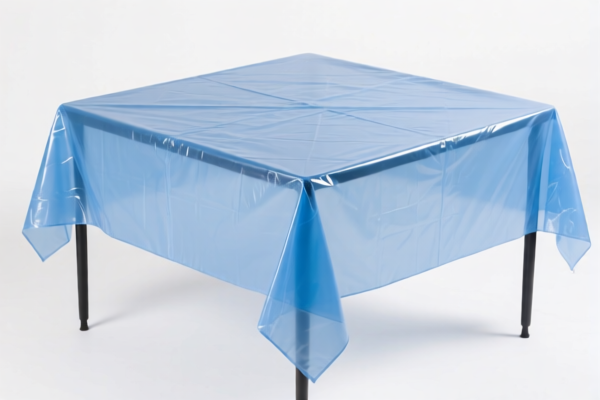
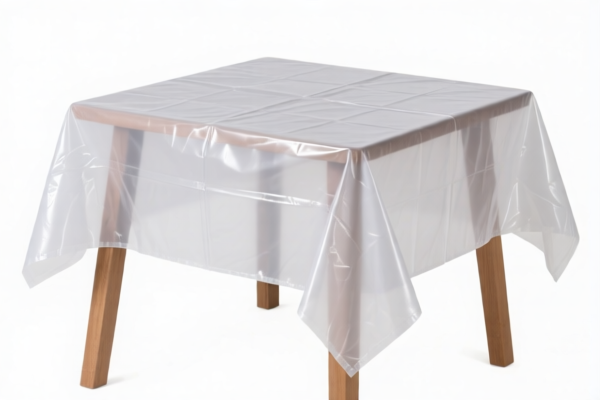
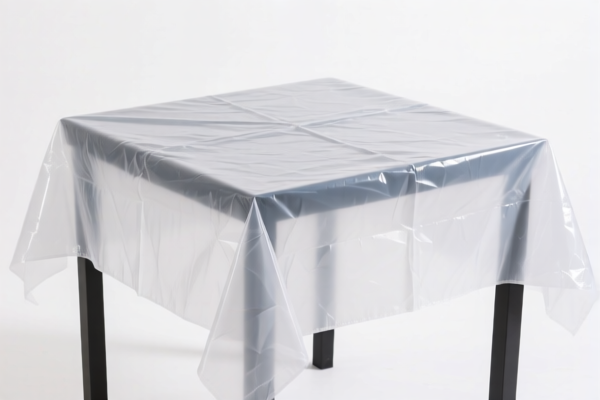
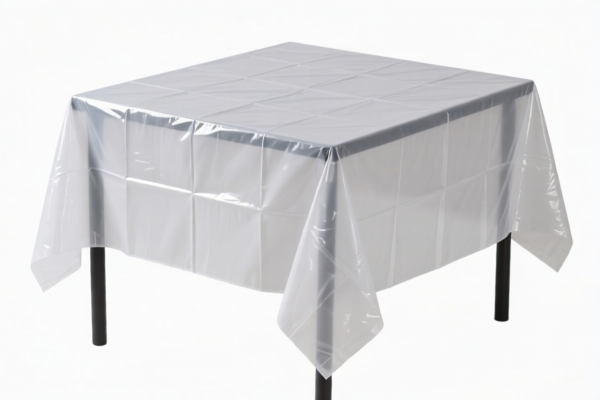
AI Analysis
🍽️ PVC High Plasticizer Tablecloth Material
🌐 HS Code Reference & Customs Clearance Guide | 2026 Latest Tariff Analysis | Professional Clearance Strategy
📌 I. Product Definition & Classification: Is Your Tablecloth "Rigid" or "Self-Adhesive"?
PVC (Polyvinyl Chloride) tablecloth materials are primarily categorized based on their physical form and manufacturing process. In international trade, especially under US Customs regulations, the distinction between a "sheet/film" and a "self-adhesive" product is critical for determining the correct HS Code and corresponding tax liability.
High-Plasticized PVC implies the material is flexible, soft, and durable, often used for vinyl tablecloths. It is generally classified under Chapter 39 (Plastics and Articles Thereof).
⚠️ Key Distinction Point:
- If the material is a plain sheet/film (rolled or cut to size) without backing adhesive → Classified under Headings 3919 or 3920 (Self-adhesive or Other plates/sheets/film).
- If the material has a specific structure like honeycomb/foam → Classified under 3921.
- Crucial Note: Do not confuse "tablecloth material" with "finished tablecloths" (which might be textiles). Pure PVC vinyl falls strictly under plastics.
📦 II. HS Code Classification Details (2026 Latest Tariff Authority Mapping)
Based on the provided data, here are the applicable HS Codes for PVC High Plasticizer Tablecloth Materials. The classification depends on whether the PVC is self-adhesive (3919) or a standard sheet/film (3920/3921).
| HS Code | Product Description | Applicable Scenario | Tax Profile |
|---|---|---|---|
3921.12.50.00 |
Other plates, sheets, film, foil, and strip, of plastics: Cellular (Honeycomb) or similar structure | PVC foam sheets, honeycomb-structured PVC films used as table cover base | Total Tax: 41.5% |
3921.90.50.50 |
Other plates, sheets, film, foil, and strip, of plastics: Other | General PVC tablecloth material (non-cellular, non-adhesive), flexible PVC sheets | Total Tax: 39.8% |
3919.90.50.60 |
Self-adhesive plates, sheets, film, foil, tape, strip and other flat shapes, of plastics: Other | PVC sheets with a pressure-sensitive adhesive backing (e.g., sticky tablecloths or labels) | Total Tax: 40.8% |
3919.10.20.55 |
Self-adhesive plates, sheets, film, foil, tape, strip and other flat shapes, of plastics: In rolls of a width > 20cm, other | Large roll PVC adhesive sheets for industrial table cover manufacturing | Total Tax: 40.8% |
3920.43.50.00 |
Other plates, sheets, film, foil and strip, of polymers of vinyl chloride: Other | Pure PVC vinyl film/sheet (high plasticizer content implied by flexibility), non-adhesive, non-cellular | Total Tax: 39.2% |
🔍 Critical Insight:
- 3920.43.50.00 is often the most direct classification for standard PVC vinyl tablecloth material (flexible sheet, no adhesive, no foam).
- 3921.12.50.00 applies only if the PVC has a cellular/honeycomb structure (insulating or cushioning properties).
- 3919.xxxx codes apply only if the material is self-adhesive. Plain vinyl does not belong here.
💰 III. 2026 Latest Tariff Rate Breakdown (Including Surtaxes & Policy Add-ons)
✅ Applicable Country: United States (US)
✅ Country of Origin: China (CN)
✅ Effective Date: From November 10, 2025 onwards (for subsequent imports)
🎯 1. 3920.43.50.00 —— Pure PVC Vinyl Sheet (Most Common for Tablecloths)
| Item | Content |
|---|---|
| Base Duty Rate | 4.2% (ad valorem) |
| USITC Surtax (Section 301) | +25.0% |
| IEEPA Surtax (Section 122/China) | +10.0% |
| Total Tax Rate | 39.2% |
| Tax Calculation | CIF Value × 39.2% |
| De Minimis Exemption | ❌ Not Eligible (deny_de_minimis) |
| Legal Basis Path | IEEPA:9903.01.25 → USITC:3920.43.50.00 → FOOTNOTE:301 |
📌 Explanation:
- This is the standard classification for flexible, high-plasticizer PVC sheets used in tablecloths.
- The 39.2% rate includes the base tariff plus the mandatory US surcharges.
- This rate is lower than the self-adhesive options (40.8%) and the foam option (41.5%).
🎯 2. 3921.12.50.00 —— Cellular PVC (Honeycomb Structure)
| Item | Content |
|---|---|
| Base Duty Rate | 6.5% |
| USITC Surtax | +25.0% |
| IEEPA Surtax | +10.0% |
| Total Tax Rate | 41.5% |
| Tax Calculation | CIF Value × 41.5% |
| De Minimis Exemption | ❌ Not Eligible |
| Legal Basis Path | IEEPA:9903.01.25 → USITC:3921.12.50.00 → FOOTNOTE:301 |
📌 Note:
- Only applies if the PVC has a foamed/honeycomb core.
- Higher base duty (6.5%) leads to a higher total tax compared to standard PVC.
🎯 3. 3921.90.50.50 —— Other PVC Sheets (Non-Cellular, Non-Adhesive)
| Item | Content |
|---|---|
| Base Duty Rate | 4.8% |
| USITC Surtax | +25.0% |
| IEEPA Surtax | +10.0% |
| Total Tax Rate | 39.8% |
| Tax Calculation | CIF Value × 39.8% |
| De Minimis Exemption | ❌ Not Eligible |
| Legal Basis Path | IEEPA:9903.01.25 → USITC:3921.90.50.50 → FOOTNOTE:301 |
📌 Note:
- A fallback category for PVC sheets that don’t fit3920precisely (e.g., specific blends or treatments).
- Slightly higher than3920.43.50.00due to a higher base rate (4.8% vs 4.2%).
🎯 4. 3919.90.50.60 & 3919.10.20.55 —— Self-Adhesive PVC
| Item | Content |
|---|---|
| Base Duty Rate | 5.8% |
| USITC Surtax | +25.0% |
| IEEPA Surtax | +10.0% |
| Total Tax Rate | 40.8% |
| Tax Calculation | CIF Value × 40.8% |
| De Minimis Exemption | ❌ Not Eligible |
| Legal Basis Path | IEEPA:9903.01.25 → USITC:3919.xxxx.xxxx → FOOTNOTE:301 |
📌 Warning:
- Do NOT use these codes unless your tablecloth material has an adhesive backing.
- Misclassification here can lead to customs audits, as "tablecloth material" is rarely self-adhesive.
- Total tax (40.8%) is higher than standard PVC sheets.
🛠️ IV. Customs Clearance Practical Advice (Real-World Pitfall Avoidance)
✅ 1. Documentation Checklist (Non-Negotiable)
| Document | Must Provide | Description |
|---|---|---|
| ✅ Product Specification Sheet | ✔️ | Detail: PVC composition, plasticizer type, thickness, width, roll length. |
| ✅ Material Safety Data Sheet (MSDS) | ✔️ | Proof of chemical composition (especially plasticizer content). |
| ✅ Product Photos | ✔️ | Show texture, flexibility, cross-section (if foam), and packaging. |
| ✅ Commercial Invoice | ✔️ | Must state: "PVC Vinyl Tablecloth Material, High Plasticizer, No Adhesive" |
| ✅ Packing List | ✔️ | Specify roll dimensions and weight. |
| ✅ Declaration of Non-Adhesive | ✔️ | If using 3920, explicitly state "Non-Adhesive" to avoid 3919 misclassification. |
✅ 2. Declaration Tips (Key Mantra)
🔥 “No Adhesive? Go 3920. Foamed? Go 3921. Sticky? Go 3919. Wrong Code = Penalty!”
| Scenario | Correct HS Code | Incorrect Code | Consequence |
|---|---|---|---|
| Standard PVC Vinyl Roll | 3920.43.50.00 |
3921.90.50.50 |
Overpayment (39.2% vs 39.8%) |
| Honeycomb PVC Foam | 3921.12.50.00 |
3920.43.50.00 |
Underpayment + Penalty |
| Self-Adhesive Vinyl | 3919.90.50.60 |
3920.43.50.00 |
Underpayment + Penalty |
| Finished Textile Tablecloth | Wrong Chapter | 3920... |
Major Classification Error |
⚠️ Critical Reminder:
- If your product is a finished tablecloth made of fabric with PVC coating, it may fall under Textiles (Chapter 63) or Other Made-Up Articles (3926.90).
- The codes above ONLY apply to raw PVC sheet/film material, not finished textile tablecloths.
✅ 3. Special Cases
| Case | Handling Advice |
|---|---|
| Mixed Material (PVC + Fabric) | If PVC is coated on fabric, consult HS Code 3926.90 or 6302.53. Do NOT use 3920. |
| Biodegradable PVC | Still classified under Chapter 39, but provide biodegradability certificate for marketing (no tax benefit). |
| Imported in Small Rolls | Same classification, but ensure roll dimensions match the HS subheading (e.g., width > 20cm for 3919). |
🌍 V. Global Market Comparison (2026 Latest)
| Country/Region | Recommended HS Code | Tariff (China Origin) | Certification | Note |
|---|---|---|---|---|
| 🇺🇸 USA | 3920.43.50.00 |
39.2% | No specific PVC cert | Highest tax due to Section 301 + IEEPA |
| 🇨🇳 China | 3920.43.50.00 |
6.5% | CCC (if applicable) | No surtaxes |
| 🇪🇺 EU | 3920.43.00.00 |
6.5% | REACH (Phthalates) | Strict phthalate limits for PVC |
| 🇬🇧 UK | 3920.43.00.00 |
6.5% | UKCA | Post-Brexit alignment with EU |
| 🇦🇺 Australia | 3920.43.00.00 |
5.0% | NMI | No surtaxes |
📌 Conclusion:
- USA is the most expensive market for PVC tablecloth material due to 39.2% total tax.
- EU/UK/Australia have significantly lower tariffs but strict environmental regulations (REACH) on plasticizers (e.g., DEHP, DBP). Ensure compliance!
📌 VI. Common Errors & Pitfalls (Blood Lessons)
❌ Error 1: Classifying PVC-coated fabric tablecloths under 3920
👉 Consequence: Customs may reclassify under Chapter 63 (Textiles) or 3926, leading to delays or different tax rates.
❌ Error 2: Assuming all PVC sheets are 3920.43.50.00
👉 Consequence: If the sheet is foamed, it must be 3921.12.50.00 (41.5%). Misclassification leads to underpayment penalties.
❌ Error 3: Using De Minimis (Section 321) for PVC imports
👉 Consequence: PVC from China is explicitly excluded from de minimis exemptions. Small shipments will still be taxed at 39.2%.
❌ Error 4: Ignoring Phthalate Regulations in the EU/UK
👉 Consequence: While not a tariff issue, non-compliance with REACH can lead to product seizure and fines.
✅ Correct Practice:
“PVC Vinyl Film, High Plasticizer, Non-Adhesive, Roll Width 120cm, Thickness 0.5mm, For Tablecloth Manufacturing, HS Code 3920.43.50.00”
🎯 VII. Conclusion: Precise Classification, Profit Protection!
🎯 Remember the Mantra:
🔹 “PVC Sheet? 3920. Foamed? 3921. Sticky? 3919. Textile? Not Chapter 39!”
🔹 “USA Tax: 39.2% for standard PVC. Don’t risk it with wrong codes!”
📌 Pro Tip:
- For EU/UK markets, ensure your PVC is REACH-compliant (low phthalates).
- For USA, calculate your landed cost carefully: CIF × 1.392.
- Always request a Pre-Ruling (Advance Ruling) from US CBP if the product structure is complex (e.g., multi-layered PVC).
📣 Act Now:
📞 Consult a licensed customs broker + Provide MSDS + Apply for Pre-Ruling
🚀 Clear your PVC tablecloth materials smoothly, avoid 40% tax shocks, and maximize profits!
✨ Professional Clearance Starts with Accurate Classification!
💼 Every percent of tax saved is pure profit!
Customer Reviews
About HS Code Classification
The Harmonized System (HS) is an internationally standardized nomenclature developed by the World Customs Organization (WCO) to classify traded products. Over 200 countries use the HS system as the basis for customs tariffs, trade statistics, and import/export regulations.
Each HS code follows a hierarchical structure:
- Chapter (2 digits) — Broad category of goods (e.g., Chapter 84: Machinery and Mechanical Appliances)
- Heading (4 digits) — More specific grouping within the chapter
- Subheading (6 digits) — Internationally standardized breakdown, used by all WCO member countries
- National subdivisions (8-10 digits) — Country-specific extensions for further classification, such as US HTSUS 10-digit codes
Correct HS code classification is essential for smooth customs clearance, accurate duty payment, and compliance with trade regulations. Misclassification can lead to customs delays, overpayment of duties, or penalties.
When importing from CN to US, the applicable tariff rates may include:
- Most-Favored-Nation (MFN) rate — The standard duty rate applied to WTO members
- General rate — Applied to countries without trade agreements
- Trade remedy duties — Additional tariffs such as Section 301 (anti-dumping), Section 232 (national security), or countervailing duties
The information provided on this page is for reference purposes only. For official classification, please consult with your local customs authority or a licensed customs broker.