PVC High Pressure Pipe
CN → US| HS Code | Tariff Rate | Origin | Destination | Doc |
|---|---|---|---|---|
| 3917390020 | 38.1% | CN | US | Official Doc |
| 3917320010 | 38.1% | CN | US | Official Doc |
| 5909002000 | 38.3% | CN | US | Official Doc |
| 3917230000 | 38.1% | CN | US | Official Doc |
| 3926909987 | 22.8% | CN | US | Official Doc |
Product Images
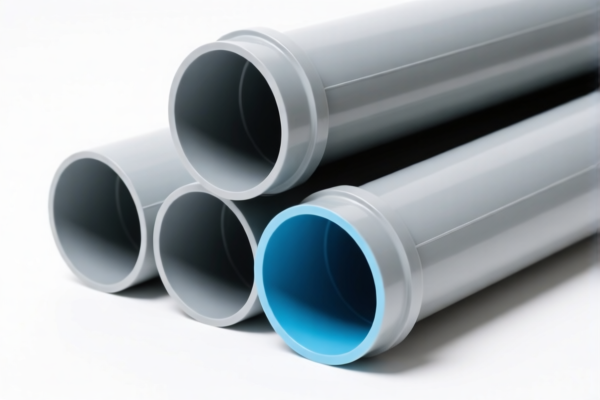
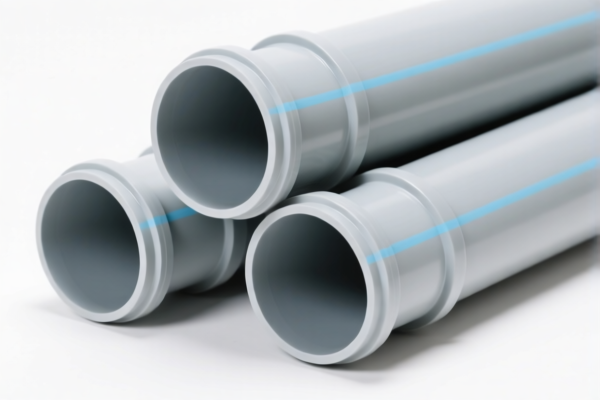
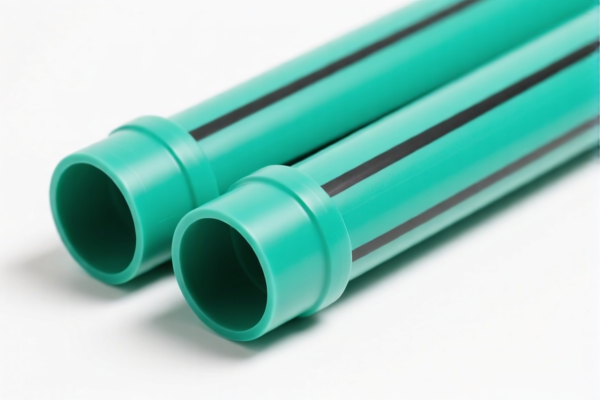
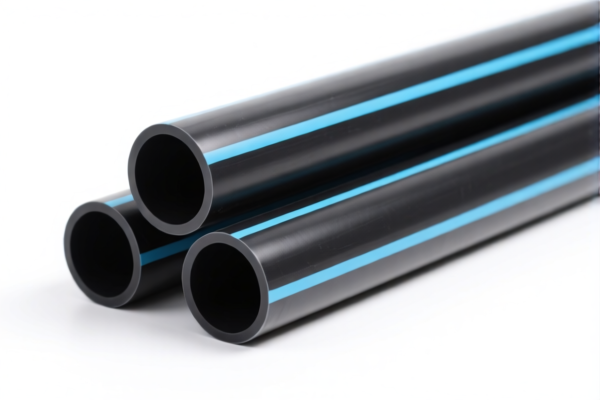
AI Analysis
🚰 PVC High Pressure Pipe (PVC高压软管/管材)
🌐 HS Code Reference & Customs Clearance Guide | 2026 Latest Tariff Analysis | Professional Clearance Strategy
📌 I. Product Definition & Classification: Understanding "PVC High Pressure Pipe"
PVC High Pressure Pipes are critical components in fluid transport systems, widely used in industrial, agricultural, and municipal applications. In international trade, their classification depends heavily on the material composition, physical form, and intended use. The data provided identifies four primary HS Code classifications for PVC high-pressure products, ranging from general plastic pipes to textile-reinforced hoses.
⚠️ Key Distinction Points:
- General Plastic Pipes: If the product is a standard rigid or semi-rigid PVC tube/pipeline, it typically falls under Chapter 39 (Plastics). Specifically, 3917 covers tubes, pipes, and hoses of plastics.
- Textile Reinforced Hoses: If the PVC hose is reinforced with textile materials (e.g., for high-pressure flexibility), it may be classified under 5909 (Textile hose covers, tubular or flattened textile fabric, or similar combinations).
- Catch-all Category: If the product does not fit specific descriptions, it may fall under 3926.90 (Other articles of plastics), though this usually carries different duty structures.
📦 II. HS Code Classification Details (2026 Latest Tariff Reference)
| HS Code | Product Description | Application Scenario | Material/Form |
|---|---|---|---|
3917.39.00.20 |
PVC High-Pressure Hose, PVC material, hose form | General industrial fluid transfer, high-pressure applications | PVC / Hose |
3917.32.00.10 |
PVC High-Pressure Hose/Pipe, PVC material, tube or hose form | Standard PVC pipelines, flexible high-pressure conduits | PVC / Tube or Hose |
5909.00.20.00 |
PVC High-Pressure Hose, Textile Hose Category | High-pressure applications requiring textile reinforcement (e.g., hydraulic lines) | PVC + Textile / Hose |
3917.23.00.00 |
PVC Pipe, Vinyl Chloride Polymer, Pipe form | Rigid or semi-rigid PVC pipes for construction or industrial use | Vinyl Chloride Polymer / Pipe |
3926.90.99.87 |
PVC Pipe, PVC Material, Other Plastic Articles (Catch-all) | Non-specific PVC articles that do not fit 3917 descriptions | PVC / Pipe (General) |
🔍 Important Note:
- 3917 Series: Generally applies to plastics-based tubes, pipes, and hoses. The specific subheadings (3917.23 vs. 3917.32/39) depend on whether the pipe is rigid or flexible and its outer diameter.
- 5909.00.20.00: Specifically targets textile-reinforced PVC hoses. If your product has a visible textile layer for pressure resistance, this code is more accurate than 3917.
- 3926.90.99.87: This is a "catch-all" category. Using this code may be risky if the product clearly fits 3917 or 5909, as customs may reclassify it, leading to delays or penalties.
💰 III. 2026 Latest Tariff Rate Breakdown (Including Surtaxes & Policy Add-ons)
✅ Applicable Country: United States (US)
✅ Origin: China (CN)
✅ Effective Date: 2025/2026 (Current Trade Environment)
🎯 1. Standard PVC Pipes/Hoses (Codes: 3917.39.00.20, 3917.32.00.10, 3917.23.00.00)
These codes fall under Section XI or XVII (Plastics) and are subject to significant trade barriers.
| Item | Detail |
|---|---|
| Base Tariff Rate | 3.1% (Ad Valorem) |
| Section 301 Surtax | +25.0% (Specific to Chinese-origin plastic pipes/hoses) |
| Section 122 Tariff | +10.0% (Additional tariff on specific Chinese imports) |
| Total Tariff Rate | 38.1% |
| Calculation | CIF Value × 38.1% |
| De Minimis Exemption | ❌ Not Eligible (Denied) |
| Legal Basis | USITC:3917.xx.xx.xx → Section 301: Footnote 9903.xx → Section 122 |
📌 Explanation:
- The 3.1% is the standard Most Favored Nation (MFN) duty for PVC pipes/hoses.
- The 25% is the prominent Section 301 tariff targeting Chinese plastics products.
- The 10% is an additional levy under Section 122, often applied to specific industrial goods from China.
- Total 38.1% is a substantial cost burden. Accurate classification is crucial to avoid overpayment or underpayment penalties.
🎯 2. Textile-Reinforced PVC Hoses (Code: 5909.00.20.00)
This code falls under Chapter 59 (Impregnated, Coated, Covered or Layered Textile Fabrics).
| Item | Detail |
|---|---|
| Base Tariff Rate | 3.3% (Ad Valorem) |
| Section 301 Surtax | +25.0% (Applies to textile products from China) |
| Section 122 Tariff | +10.0% |
| Total Tariff Rate | 38.3% |
| Calculation | CIF Value × 38.3% |
| De Minimis Exemption | ❌ Not Eligible |
| Legal Basis | USITC:5909.00.20.00 → Section 301: Footnote 9903.xx → Section 122 |
📌 Note:
- Although the base rate is slightly higher (3.3% vs. 3.1%), the total impact is nearly identical (38.3%).
- Ensure the product is indeed textile-reinforced. If it is pure PVC without textile layers, using this code may be considered misclassification.
🎯 3. Other Plastic Articles (Code: 3926.90.99.87)
This is a broader category for plastic articles.
| Item | Detail |
|---|---|
| Base Tariff Rate | 5.3% (Ad Valorem) |
| Section 301 Surtax | +7.5% (Note: Lower surtax rate for this specific subheading) |
| Section 122 Tariff | +10.0% |
| Total Tariff Rate | 22.8% |
| Calculation | CIF Value × 22.8% |
| De Minimis Exemption | ❌ Not Eligible |
| Legal Basis | USITC:3926.90.99.87 → Section 301: Footnote 9903.xx → Section 122 |
📌 Critical Insight:
- This code offers a significantly lower total tariff (22.8%) compared to the 3917/5909 codes (38.1%/38.3%).
- Risk: Customs may challenge this classification if the product is clearly a pipe/hose (which belongs in 3917). Misclassification can lead to back taxes, fines, and shipment delays. Only use this code if the product truly does not fit the definition of "tube, pipe, or hose" under 3917 (e.g., a complex molded plastic part with a hollow shape but not primarily a conduit).
🛠️ IV. Customs Clearance Practical Advice (Expert Pitfall Avoidance)
✅ 1. Documentation Checklist (Essential)
| Document | Required | Description |
|---|---|---|
| ✅ Product Specification Sheet | ✔️ | Must specify: Material (PVC/Vinyl Chloride), Form (Hose/Pipe), Diameter, Pressure Rating, Reinforcement (if any). |
| ✅ Technical Drawings | ✔️ | Show cross-section to prove if textile reinforcement is present (for 5909 vs. 3917). |
| ✅ Photos (Clear Labeling) | ✔️ | Show the product, including any printed markings indicating "PVC," "High Pressure," or "Reinforced." |
| ✅ Commercial Invoice | ✔️ | Must clearly state: "PVC High Pressure Pipe/Hose," HS Code, and Country of Origin. |
| ✅ Packing List | ✔️ | Detail contents to ensure no mixed shipments that complicate classification. |
| ✅ Certificate of Origin (CO) | ✔️ | Mandatory for proving Chinese origin to apply surtaxes correctly. |
✅ 2. Declaration Strategy (Key Tips)
🔥 "Clarify Form, Reinforcement, and Function!"
| Scenario | Correct Declaration Approach | Incorrect Action |
|---|---|---|
| Standard PVC Hose/Pipe | Use 3917.39.00.20 or 3917.32.00.10. Clearly state "Plastic Hose." |
Misclassifying as 3926 to save 15% tax → High Audit Risk. |
| Textile-Reinforced Hose | Use 5909.00.20.00. Explicitly mention "Textile Reinforced." |
Hiding reinforcement → Customs may reclassify to 5909 (higher base rate) or penalize. |
| Rigid PVC Pipe | Use 3917.23.00.00. Specify "Rigid Pipe." |
Declaring as "Hose" → Incorrect form factor. |
| Complex Plastic Part (Not Conduit) | Use 3926.90.99.87. Prove it's not a pipe/hose. |
Using 3917 for a non-conduit item → Overpayment of 38.1%. |
✅ 3. Special Considerations
| Situation | Advice |
|---|---|
| High-Pressure Rating | Ensure the invoice specifies "High Pressure" to justify the need for specific reinforcement (if using 5909). |
| Mixed Materials | If the hose has a PVC lining but textile outer, 5909.00.20.00 is likely the correct classification. |
| Pre-Ruling Application | Due to the significant tax difference between 38.3% and 22.8%, consider applying for an Advance Ruling from U.S. Customs if you believe your product fits the 3926 category. |
| Origin Marking | All products must be clearly marked "Made in China" to comply with U.S. import regulations. |
🌍 V. Global Market Comparison (2026 Perspective)
| Market | Recommended HS Code | Est. Total Duty (China Origin) | Key Certifications | Notes |
|---|---|---|---|---|
| 🇺🇸 USA | 3917.39.00.20 / 5909.00.20.00 |
38.1% - 38.3% | None required for PVC, but CE/RoHS helpful | High tariffs due to Section 301 & 122. |
| 🇨🇳 China | 3917.39.00 / 5909.00.20 |
~3-5% (Import Duty) | CCC (if applicable) | Low import barriers for domestic use. |
| 🇪🇺 EU | 3917.39 / 5909.00 |
~4-5% | REACH, RoHS | No Section 301 surtax. |
| 🇨🇦 Canada | 3917.39 / 5909.00 |
~0-5% (FTA eligible) | CSA | Check CUSMA eligibility for duty-free access. |
📌 Conclusion:
- The US market is the most challenging due to the 38%+ effective tariff rate.
- EU and Canada offer more favorable duty structures, though CE/REACH compliance is critical for Europe.
- Cost Optimization: If your product qualifies for3926.90.99.87(22.8%), consult a customs broker to ensure it doesn't violate the "pipe/hose" definition under 3917.
📌 VI. Common Mistakes & Pitfall Avoidance (Lessons Learned)
❌ Mistake 1: Using 3926.90.99.87 (22.8%) for a standard PVC pipe without justification.
👉 Consequence: Customs reclassification to 3917.39.00.20 (38.1%) → Back taxes + penalties + shipment hold.
❌ Mistake 2: Ignoring textile reinforcement when declaring 3917.
👉 Consequence: If the product is actually textile-reinforced, it should be 5909.00.20.00 (38.3%). While the rate is similar, misclassification can lead to data integrity issues and future audits.
❌ Mistake 3: Failing to specify "High Pressure" in the description.
👉 Consequence: Customs may question the product's intended use, leading to delays in verification.
❌ Mistake 4: Assuming De Minimis exemption applies.
👉 Consequence: PVC pipes/hoses from China are explicitly excluded from De Minimis. Attempting to ship under $800 will result in seizure or return.
✅ Correct Approach:
"PVC High-Pressure Hose, 2-inch Diameter, Textile Reinforced, Rated for 150 PSI, Model XYZ, Made in China."
🎯 VII. Conclusion: Precision Classification for Cost Efficiency
🎯 Remember:
🔹 "Form and Reinforcement Define the Code!"
🔹 "3917/5909 = 38%+, 3926 = 22.8% (but risky)."
🔹 "No De Minimis for Chinese PVC Pipes!"
📌 Pro Tip:
If your product is flexible PVC hose with textile reinforcement, do not hesitate to use 5909.00.20.00. If it is a rigid pipe, use 3917.23.00.00. If it is a standard flexible hose, use 3917.39.00.20.
When in doubt, especially regarding the 22.8% rate for 3926, seek a Professional Customs Broker's Advice or apply for an Advance Ruling.
📣 Immediate Action Required:
📞 Contact your Customs Broker → Provide Technical Specs → Confirm HS Code → Prepare Documents.
🚀 Ensure Smooth Clearance, Minimize Costs, and Avoid Delays!
✨ Professional Clearance Starts with Accurate Classification!
💼 Every Percent of Tariff Counts in Your Bottom Line!
Customer Reviews
About HS Code Classification
The Harmonized System (HS) is an internationally standardized nomenclature developed by the World Customs Organization (WCO) to classify traded products. Over 200 countries use the HS system as the basis for customs tariffs, trade statistics, and import/export regulations.
Each HS code follows a hierarchical structure:
- Chapter (2 digits) — Broad category of goods (e.g., Chapter 84: Machinery and Mechanical Appliances)
- Heading (4 digits) — More specific grouping within the chapter
- Subheading (6 digits) — Internationally standardized breakdown, used by all WCO member countries
- National subdivisions (8-10 digits) — Country-specific extensions for further classification, such as US HTSUS 10-digit codes
Correct HS code classification is essential for smooth customs clearance, accurate duty payment, and compliance with trade regulations. Misclassification can lead to customs delays, overpayment of duties, or penalties.
When importing from CN to US, the applicable tariff rates may include:
- Most-Favored-Nation (MFN) rate — The standard duty rate applied to WTO members
- General rate — Applied to countries without trade agreements
- Trade remedy duties — Additional tariffs such as Section 301 (anti-dumping), Section 232 (national security), or countervailing duties
The information provided on this page is for reference purposes only. For official classification, please consult with your local customs authority or a licensed customs broker.