PVC Home Floor Covering Rolls
CN → US| HS Code | Tariff Rate | Origin | Destination | Doc |
|---|---|---|---|---|
| 5904901000 | 35.0% | CN | US | Official Doc |
| 3918102000 | 40.3% | CN | US | Official Doc |
| 3918101040 | 40.3% | CN | US | Official Doc |
| 5904909000 | 35.0% | CN | US | Official Doc |
| 3918101040 | 40.3% | CN | US | Official Doc |
Product Images
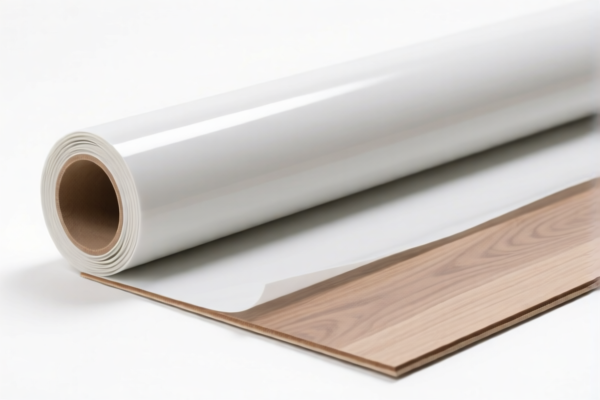
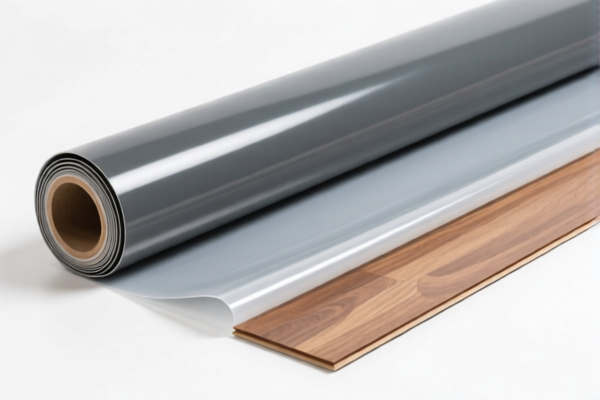
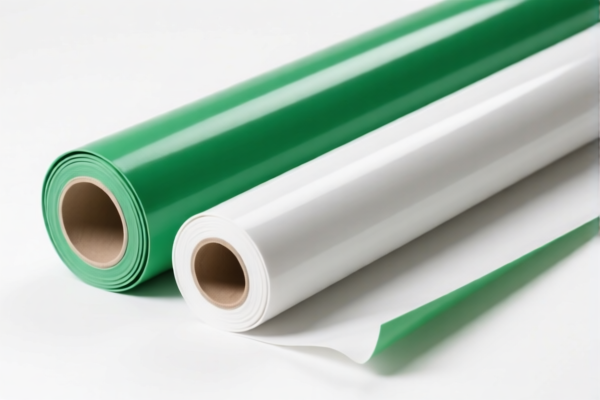
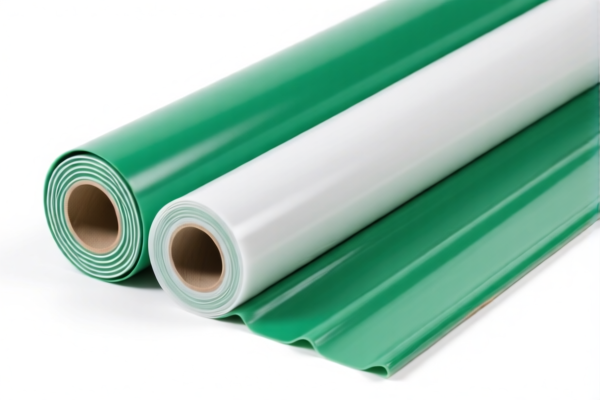
AI Analysis
🏠 PVC Home Floor Covering Rolls: The Ultimate Customs Classification & Tariff Breakdown (2026 Edition)
🌐 HS Code Reference & Customs Clearance Guide | 2026 Latest Tariff Rates | Professional Strategy
📌 I. Product Definition: Are You Selling "Flooring" or "Textile Mats"?
PVC Home Floor Covering Rolls are the backbone of residential interior design, offering durability, water resistance, and aesthetic versatility. However, in international trade, appearance is deceptive. These rolls are generally categorized into two distinct legal families based on their manufacturing process:
-
Textile-Based PVC Flooring (Section XI):
- Structure: A textile backing (felt, jute, polyester) coated or covered with a PVC layer.
- Key Characteristic: The textile substrate is essential to the structure.
- Typical HS: Chapter 59 (Impregnated/Covered Textiles).
-
Solid PVC/Vinyl Flooring (Chapter 39):
- Structure: Made entirely of polymers (PVC), often rigid or semi-rigid core, without a textile base.
- Key Characteristic: Pure plastic composition, extruded or calendered into rolls.
- Typical HS: Chapter 39 (Plastics and Articles Thereof).
⚠️ Critical Distinction:
- If it has a fabric/felt backing → Look to HS 5904.
- If it is 100% PVC/Plastic (no textile) → Look to HS 3918.
Misclassification here leads to severe penalties, as the tax burden differs significantly.
📦 II. HS Code Classification Details (2026 Authoritative Mapping)
Based on your product data, here are the four specific HS Codes applicable to PVC Floor Covering Rolls, categorized by their technical definition:
| HS Code | Product Description | Application Scenario | Key Identifying Feature |
|---|---|---|---|
| 5904.90.10.00 | Floor coverings of the kind used for the lining of floors or walls, consisting of a textile base coated or covered with plastics. | Textile-backed vinyl rolls, carpet-like vinyl. | ✅ Textile Base + PVC Coating |
| 3918.10.20.00 | Other floor coverings of plastics, whether or not self-adhesive. | Pure PVC卷材 (Pure Plastic), non-rigid. | ❌ No Textile, Pure PVC material, strictly for floors. |
| 3918.10.10.40 | Vinyl tiles of a kind used for the lining of floors or walls, whether or not self-adhesive. | PVC rolls that fit the technical definition of "Vinyl Tiles" in roll form. | ❌ No Textile, classified technically as "tiles" but in roll format. |
| 5904.90.90.00 | Other floor coverings of the kind used for the lining of floors or walls. | Catch-all for textile-based floor coverings not specified elsewhere. | ✅ Textile Base, general category. |
🔍 Key Reminder:
- HS 3918 codes attract a 5.3% Base Duty but are subject to Section 301/122 tariffs.
- HS 5904 codes attract a 0% Base Duty but are also subject to Section 301/122 tariffs.
- Why the difference? Customs views textile-based products (5904) as having lower inherent plastic value, hence the 0% base, but the total tariff impact is similar due to additional levies.
💰 III. 2026 Latest Tariff Rate Breakdown (US Market Focus)
✅ Applicable Country: United States (US)
✅ Origin: China (CN)
✅ Effective Date: Rates applicable for imports after Nov 10, 2025
🎯 1. HS Code 5904.90.10.00 & 5904.90.90.00
Product Type: Textile-Backed PVC Floor Coverings
Total Tax Rate: 35.0%
| Item | Content |
|---|---|
| Base Duty (MFN) | 0.0% (ad valorem) |
| Section 301 / Additional Duty | +25.0% (USITC Footnote: China-specific retaliation) |
| Section 122 / IEEPA Tariff | +10.0% (Targeted Chinese Goods) |
| Total Effective Rate | 35.0% |
| De Minimis Exemption | ❌ NO (Cannot use $800 de minimis; high tariffs block it) |
| Legal Path | USITC:5904.90.10.00 → FOOTNOTE:301 (+25%) → IEEPA:122 (+10%) |
📌 Explanation:
- Although the Base Duty is 0%, the Additional Duties (35%) make this expensive.
- Many importers mistakenly think "0% base" means "cheap," but the 25% + 10% surcharge eliminates this benefit.
- Note: Both5904.90.10.00and5904.90.90.00share this 35% total rate in the provided dataset.
🎯 2. HS Code 3918.10.20.00 & 3918.10.10.40
Product Type: Pure PVC/Vinyl Floor Coverings (No Textile Base)
Total Tax Rate: 40.3%
| Item | Content |
|---|---|
| Base Duty (MFN) | 5.3% (ad valorem) |
| Section 301 / Additional Duty | +25.0% (USITC Footnote: China-specific retaliation) |
| Section 122 / IEEPA Tariff | +10.0% (Targeted Chinese Goods) |
| Total Effective Rate | 40.3% |
| De Minimis Exemption | ❌ NO (Cannot use $800 de minimis) |
| Legal Path | USITC:3918.10.xx.xx → FOOTNOTE:301 (+25%) → IEEPA:122 (+10%) |
📌 Explanation:
- Base Duty is higher (5.3%) because these are classified as pure plastic articles.
- Additional Duties are identical (35%) as the 5904 codes.
- Result: 40.3% Total, which is 5.3% HIGHER than the textile-backed alternative.
- Strategic Insight: If your product can be technically argued to have a textile backing (even a minimal one), HS 5904 (35%) is more tax-efficient than HS 3918 (40.3%).
🛠️ IV. Customs Clearance Practical Advice (Real-World Pitfalls)
✅ 1. Preparation Checklist (Non-Negotiable)
| Document | Required? | Purpose |
|---|---|---|
| ✅ Product Specifications | ✔️ | Must explicitly state: "PVC Coated on Textile Backing" OR "100% PVC Plastics." |
| ✅ Cross-Section Photo | ✔️ | Crucial! Proves whether a textile layer exists between the PVC and the underside. |
| ✅ Commercial Invoice | ✔️ | Clear description: "PVC Floor Roll, Textile Backed, Model XYZ." Avoid vague terms like "Vinyl." |
| ✅ Packing List | ✔️ | Weight and dimensions must match HS code valuation. |
| ✅ Certificate of Origin | ✔️ | To prove Chinese origin (triggers the 35-40% tariffs). |
| ✅ FCC/CE/RoHS Reports | ✔️ | Sometimes requested for plastic products to ensure compliance with chemical standards. |
✅ 2. Classification Strategy (The "5.3% Savings" Trick)
🔥 “Textile Backing = 5% Savings! Pure PVC = Higher Tax!”
| Scenario | Recommended HS Code | Total Tax | Why? |
|---|---|---|---|
| Product has felt/jute/polyester backing | 5904.90.10.00 or 5904.90.90.00 |
35.0% | Base duty is 0%. Saves 5.3% vs. pure PVC. |
| Product is 100% PVC (no fabric) | 3918.10.20.00 |
40.3% | Base duty is 5.3%. No textile to qualify for Ch. 59. |
| Product is PVC "Tile" in Roll form | 3918.10.10.40 |
40.3% | Treated as plastic tiles, not textiles. High tax. |
📌 Warning:
- Do NOT misdeclare pure PVC as "Textile-Backed" if there is no textile.
- Customs may conduct a physical inspection. If a cross-section shows 100% plastic, they will reclassify to3918, charge the higher duty, and potentially impose penalties for misdeclaration.
- If your product is borderline (e.g., very thin backing), provide a detailed technical sheet explaining the textile component's role in the structure.
✅ 3. Special Handling Notes
| Situation | Advice |
|---|---|
| Small Samples (De Minimis) | ❌ Avoid using $800 de minimis. With 35-40% tariffs, customs will likely seize or force payment for shipments under $800 if flagged. |
| Roll Dimensions | Ensure length/width is declared. Rolls over certain widths may fall into different subheadings. |
| Self-Adhesive vs. Non-Adhesive | Both 3918 codes cover adhesive and non-adhesive. Do not create a separate HS code for "Self-Adhesive PVC" unless specified in your local tariff schedule. |
| Origin Marking | All products must be marked "Made in China" to trigger the correct tariff footnotes. |
🌍 V. Global Market Comparison (2026 Outlook)
| Market | Recommended HS Code | Base Duty | Additional Tariffs (China) | Total Effective Rate | Notes |
|---|---|---|---|---|---|
| 🇺🇸 USA | 5904.90.10.00 / 3918.10.20.00 |
0% / 5.3% | +25% (301) +10% (122) | 35.0% / 40.3% | High Tariff Zone. Critical to choose correct HS. |
| 🇨🇳 China | 5904.90.10.00 / 3918.10.20.00 |
0% / 5.3% | None | 0% / 5.3% | Low duty for imports into China. |
| 🇪🇺 EU | 5904.90.10.00 / 3918.10.20.00 |
0% / 6.5% | None (usually) | ~0-7% | No Section 301 equivalent. Much cheaper. |
| 🇬🇧 UK | 5904.90.10.00 / 3918.10.20.00 |
0% / 6.5% | None (usually) | ~0-7% | Post-Brexit tariff structure similar to EU. |
| 🇦🇺 Australia | 5904.90.10.00 / 3918.10.20.00 |
0% / 5.0% | None | ~0-5% | Low duty, no punitive tariffs. |
📌 Conclusion:
- USA is the only major market with punitive tariffs on these goods.
- EU/UK/AU offer significantly lower costs.
- If exporting to the US, supply chain diversification (e.g., manufacturing in Vietnam/Mexico) may be required to avoid the 25-40% US tariffs, as there are currently no general exemptions for PVC flooring.
📌 VI. Common Mistakes & Pitfalls (Learn from Others' Errors)
❌ Mistake 1: Declaring "PVC Flooring" without specifying the backing material.
👉 Consequence: Customs assigns the highest possible duty (3918 @ 40.3%) by default.
👉 Fix: Always specify "Textile-Backed" or "Pure PVC" in the commercial invoice.
❌ Mistake 2: Using De Minimis ($800) for high-volume samples.
👉 Consequence: Shipments held at port, fines issued, or forced payment of 35-40% duty.
👉 Fix: Use formal entry even for samples if value is high or frequent.
❌ Mistake 3: Confusing "Vinyl Tiles" (LVT Planks) with "Rolls."
👉 Consequence: Rolls are classified under 3918.10 (Other floor coverings), not tile-specific codes.
👉 Fix: Ensure HS code matches the form factor (Roll vs. Plank).
✅ Best Practice Declaration:
"PVC Floor Covering Rolls, Textile Backed, 2mm Thickness, Width 2m, Model XYZ, Made in China. HS: 5904.90.10.00."
🎯 VII. Conclusion: Precision Saves Money!
🎯 Key Takeaways:
🔹 Textile Backing = 35% Total Tax (
5904)
🔹 Pure PVC = 40.3% Total Tax (3918)
🔹 Always provide a cross-section photo to prove the backing material.
🔹 No De Minimis Exemption for these goods from China to the US.
📌 Pro Tip:
If you are exporting Pure PVC products, consider if a thin textile backing can be added during manufacturing to qualify for 5904, saving you 5.3% on every shipment. Consult your manufacturer and customs broker before changing product design.
📣 Immediate Action:
📞 Contact a licensed customs broker to verify your specific product's backing material.
📄 Request a Pre-Ruling (APA) from US CBP if your volume is high.
🚀 Optimize your HS Code to avoid overpaying 5.3% unnecessarily.
✨ Smart Customs, Smarter Business!
💼 Every percentage point matters in 2026.
Customer Reviews
About HS Code Classification
The Harmonized System (HS) is an internationally standardized nomenclature developed by the World Customs Organization (WCO) to classify traded products. Over 200 countries use the HS system as the basis for customs tariffs, trade statistics, and import/export regulations.
Each HS code follows a hierarchical structure:
- Chapter (2 digits) — Broad category of goods (e.g., Chapter 84: Machinery and Mechanical Appliances)
- Heading (4 digits) — More specific grouping within the chapter
- Subheading (6 digits) — Internationally standardized breakdown, used by all WCO member countries
- National subdivisions (8-10 digits) — Country-specific extensions for further classification, such as US HTSUS 10-digit codes
Correct HS code classification is essential for smooth customs clearance, accurate duty payment, and compliance with trade regulations. Misclassification can lead to customs delays, overpayment of duties, or penalties.
When importing from CN to US, the applicable tariff rates may include:
- Most-Favored-Nation (MFN) rate — The standard duty rate applied to WTO members
- General rate — Applied to countries without trade agreements
- Trade remedy duties — Additional tariffs such as Section 301 (anti-dumping), Section 232 (national security), or countervailing duties
The information provided on this page is for reference purposes only. For official classification, please consult with your local customs authority or a licensed customs broker.