PVC Insulation Board
CN → US| HS Code | Tariff Rate | Origin | Destination | Doc |
|---|---|---|---|---|
| 3921125000 | 41.5% | CN | US | Official Doc |
| 3921121950 | 40.3% | CN | US | Official Doc |
Product Images
AI Analysis
🛡️ PVC Insulation Board (Polymer of Vinyl Chloride Sheets)
🌐 HS Code Reference & Customs Clearance Guide | 2026 Latest Tariff Analysis | Professional Entry Strategy
📌 I. Product Definition & Classification: Do You Really Know "PVC Insulation Board"?
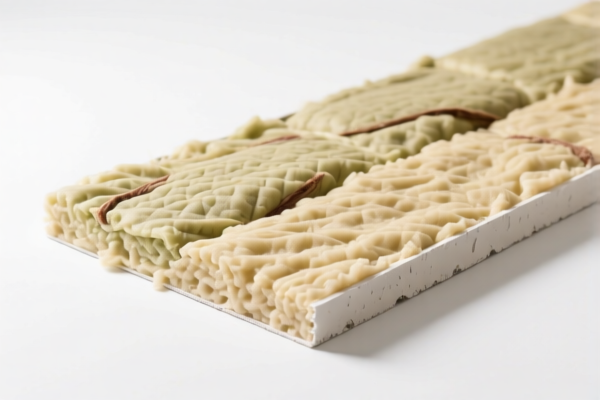
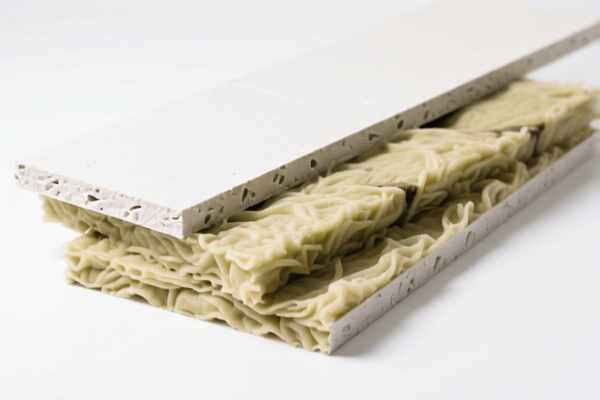
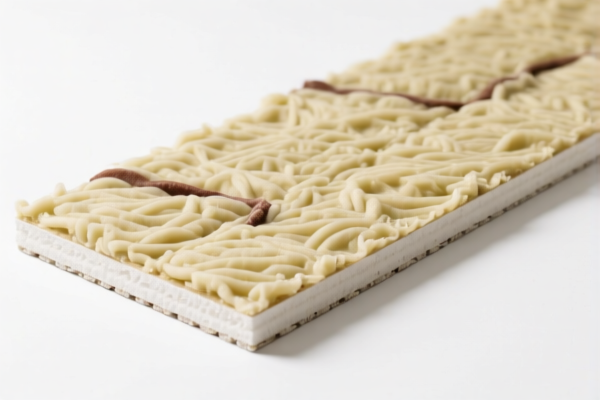
PVC Insulation Boards, in international trade, are primarily classified under Chapter 39 (Plastics and Articles Thereof). Specifically, they fall under Cellular Plastics (foamed PVC) or Non-cellular Sheets depending on their density and internal structure. The key distinction lies in whether the polymer is Cellular (containing air cells/foam) or Non-cellular (solid/dense).
Cellular PVC (Foamed PVC):
- Lightweight, rigid foam sheets used for electrical insulation, signage, or construction.
- HS Code Range: Usually starts with 3921.12 (Cellular polymers of vinyl chloride).
Combined with Textile Materials:
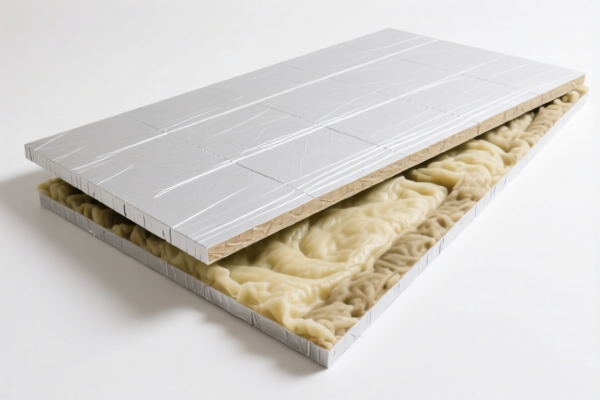
- If the PVC sheet is laminated or combined with a textile backing for reinforcement, it falls under a different sub-category.
- HS Code Range: Usually starts with 3921.12 but with a specific sub-heading for "Combined with textile materials."
⚠️ Key Distinction Point:
- If it is a pure foam PVC sheet (no textile backing) → Go to 3921.12.50.00
- If it is a PVC sheet combined with textile materials (e.g., fabric-backed PVC for insulation or durability) → Go to 3921.12.19.50
📦 II. HS Code Classification Details (2026 Latest Tariff Authority Comparison)
| HS Code | Product Description | Applicable Scenario | Tax Structure (China-US Trade) |
|---|---|---|---|
3921.12.50.00 |
Other plates, sheets, film, foil and strip, of plastics: Cellular: Of polymers of vinyl chloride: Other | Pure foamed PVC insulation boards, rigid foam sheets, non-textile backed | Base: 6.5% + Additional: 25.0% = 31.5% |
3921.12.19.50 |
Other plates, sheets, film, foil and strip, of plastics: Cellular: Of polymers of vinyl chloride: Combined with textile materials: Other Other | PVC sheets laminated with fabric/textile for enhanced insulation or strength | Base: 5.3% + Additional: 25.0% = 30.3% |
🔍 Key Reminder:
- 3921.12.50.00 is for standard cellular PVC (foam only).
- 3921.12.19.50 is specifically for PVC + Textile combinations.
- Do not misclassify a textile-backed board as pure foam; the tax rate differs slightly, but more importantly, the customs description must match.
💰 III. 2026 Latest Tariff Rate Details (Including Surtaxes)
✅ Applicable Country: United States (US)
✅ Origin: China (CN)
✅ Effective Time: 2025-11-10 onwards (for subsequent imports)
🎯 1. 3921.12.50.00 —— Cellular Polymers of Vinyl Chloride (Other/Non-Textile)
| Item | Details |
|---|---|
| Base Tariff Rate | 6.5% (Ad Valorem) |
| Section 301 Additional Tariff | +25.0% (From USITC Footnote) |
| Total Tariff Rate | 31.5% |
| Tax Calculation | CIF Value × 31.5% |
| De Minimis Exemption | ❌ Not Applicable (Denied under Section 301) |
| Legal Basis Path | USITC:3921.12.50.00 → FOOTNOTE:301 |
📌 Explanation:
- The 6.5% is the standard Most Favored Nation (MFN) rate for cellular PVC sheets.
- The 25% is the additional duty under Section 301 of the Trade Act of 1974, targeting specific Chinese goods including plastic sheets.
- Total 31.5% is a significant cost factor; accurate classification is crucial.
🎯 2. 3921.12.19.50 —— Cellular Polymers of Vinyl Chloride (Combined with Textile)
| Item | Details |
|---|---|
| Base Tariff Rate | 5.3% (Ad Valorem) |
| Section 301 Additional Tariff | +25.0% (From USITC Footnote) |
| Total Tariff Rate | 30.3% |
| Tax Calculation | CIF Value × 30.3% |
| De Minimis Exemption | ❌ Not Applicable (Denied under Section 301) |
| Legal Basis Path | USITC:3921.12.19.50 → FOOTNOTE:301 |
📌 Note:
- The base rate is slightly lower (5.3% vs 6.5%) due to the "combined with textile materials" classification.
- However, the 25% additional tariff still applies.
- Total 30.3% is marginally lower than the non-textile version, but the difference is small. The main risk is misclassification.
🛠️ IV. Customs Clearance Practical Advice (Battle-Tested Pitfall Avoidance Guide)
✅ 1. Required Document Checklist (All Mandatory)
| Document | Must Provide | Notes |
|---|---|---|
| ✅ Product Specification Sheet | ✔️ | Include material composition (PVC%), cellular status (foam/solid), density, dimensions. |
| ✅ Product Photos (Clear) | ✔️ | Show cross-section to prove if it is cellular (foam) or solid. Show any textile backing clearly. |
| ✅ Commercial Invoice | ✔️ | Clearly state: "PVC Insulation Board" and specify "Cellular" or "Combined with Textile." |
| ✅ Packing List | ✔️ | List weight and dimensions accurately. |
| ✅ Material Safety Data Sheet (MSDS) | ✔️ | Required for plastic products to verify chemical composition. |
| ✅ Certificate of Origin (CO) | ✔️ | If applicable for any preferential treatment (though unlikely for US-China Section 301). |
✅ 2. Declaration Tips (Key Mantra)
🔥 “Foam or Textile? Declare Clearly! Section 301 Applies to All!”
| Scenario | Correct Declaration | Wrong Practice |
|---|---|---|
| Pure Foamed PVC Sheet | HS 3921.12.50.00 Desc: "Cellular PVC Sheet, Non-Textile" |
Misclassify as solid PVC → Higher risk of audit |
| PVC Sheet with Fabric Backing | HS 3921.12.19.50 Desc: "Cellular PVC Combined with Textile" |
Declare as pure PVC → Tax discrepancy + Penalty |
| Solid (Non-Cellular) PVC Sheet | HS 3921.11/3921.19 (Not in scope of this data) | Do not use 3921.12 for non-cellular products |
✅ 3. Special Case Handling
| Situation | Handling Advice |
|---|---|
| OEM Custom Boards | Provide customer order + design specs. Prove if textile is integral to the product. |
| Mixed Shipments | Separate pure PVC boards from textile-backed boards in the invoice. Do not blend. |
| Sample Imports | Even samples are subject to Section 301 duties. No exemption for de minimis under current US rules. |
| Renewable/Recycled PVC | Still classified under 3921.12 unless significantly processed into a different chemical form. |
🌍 V. Global Market Customs Comparison (2026 Latest)
| Country/Region | Recommended HS Code | Tariff (China Origin) | Certification | Notes |
|---|---|---|---|---|
| 🇺🇸 USA | 3921.12.50.00 / 3921.12.19.50 |
31.5% / 30.3% | No specific FCC/UL required for pure plastic | Section 301 applies heavily |
| 🇨🇳 China | 3921.12.50.00 |
6.5% (Import Duty) | CCC (if electrical) | No Section 301 |
| 🇪🇺 EU | 3921.12.00 |
6.5% | REACH, RoHS | No additional surtax |
| 🇯🇵 Japan | 3921.12.00 |
6.0% | PSE (if electrical) | No additional surtax |
📌 Conclusion:
- USA is the most costly market due to Section 301 tariffs.
- EU and Japan have standard MFN rates (~6-6.5%) without additional surtaxes.
- Cost Difference: US importers pay ~25% more than EU/Japan importers for the same product.
📌 VI. Common Mistakes & Pitfall Guide (Blood-Tested Lessons)
❌ Mistake 1: Declaring "PVC Board" without specifying "Cellular"
👉 Consequence: Customs may classify as non-cellular (different HS code), leading to delays or penalties.
👉 Fix: Always specify "Cellular" or "Foamed" in the description.
❌ Mistake 2: Ignoring the textile component
👉 Consequence: If the board has a fabric backing, declaring it as pure PVC (3921.12.50.00) is incorrect.
👉 Fix: Use 3921.12.19.50 if textile is present.
❌ Mistake 3: Assuming De Minimis Exemption
👉 Consequence: Small shipments (under $800) still face 31.5% duty due to Section 301.
👉 Fix: Budget for full tariff, even for samples.
❌ Mistake 4: Using "Insulation Material" without HS Code specificity
👉 Consequence: Customs may classify under electrical insulation (Chapter 85) or other plastic chapters, causing confusion.
👉 Fix: Use Chapter 39 and specify "Plastic Sheet, Cellular, PVC".
✅ Correct Practice:
"PVC Insulation Board, Cellular, Polyvinyl Chloride, 10mm Thickness, Non-Textile Backing, Model XYZ"
OR
"PVC Insulation Board, Cellular, Polyvinyl Chloride, 10mm Thickness, Fabric-Backed, Model XYZ"
🎯 VII. Conclusion: Precise Classification Saves Money!
🎯 Remember the Mantra:
🔹 "Cellular PVC? Check Chapter 39. Textile? Check Sub-Heading 19. Section 301? Pay 25% Extra!"
🔹 "HS Code 3921.12.50.00 = 31.5%. HS Code 3921.12.19.50 = 30.3%. Small difference, big risk."
📌 Pro Tip:
If your PVC insulation board is sourced from Vietnam, Malaysia, or Thailand, you may be eligible for lower Section 301 rates or exemptions.
Recommendation: Request Advance Ruling from US Customs if unsure about cellular vs. non-cellular or textile combination status.
📣 Immediate Action:
📞 Contact a professional customs broker + Provide product photos + Apply for HS Code Advance Ruling
🚀 Ensure your PVC insulation boards pass US customs smoothly, avoid delays, and protect your margins!
✨ Professional Clearance Starts with Accurate Classification!
💼 Every percent of tariff saved is pure profit!
Customer Reviews
About HS Code Classification
The Harmonized System (HS) is an internationally standardized nomenclature developed by the World Customs Organization (WCO) to classify traded products. Over 200 countries use the HS system as the basis for customs tariffs, trade statistics, and import/export regulations.
Each HS code follows a hierarchical structure:
- Chapter (2 digits) — Broad category of goods (e.g., Chapter 84: Machinery and Mechanical Appliances)
- Heading (4 digits) — More specific grouping within the chapter
- Subheading (6 digits) — Internationally standardized breakdown, used by all WCO member countries
- National subdivisions (8-10 digits) — Country-specific extensions for further classification, such as US HTSUS 10-digit codes
Correct HS code classification is essential for smooth customs clearance, accurate duty payment, and compliance with trade regulations. Misclassification can lead to customs delays, overpayment of duties, or penalties.
When importing from CN to US, the applicable tariff rates may include:
- Most-Favored-Nation (MFN) rate — The standard duty rate applied to WTO members
- General rate — Applied to countries without trade agreements
- Trade remedy duties — Additional tariffs such as Section 301 (anti-dumping), Section 232 (national security), or countervailing duties
The information provided on this page is for reference purposes only. For official classification, please consult with your local customs authority or a licensed customs broker.