PVC Irrigation Pipe
CN → US| HS Code | Tariff Rate | Origin | Destination | Doc |
|---|---|---|---|---|
| 3917230000 | 38.1% | CN | US | Official Doc |
| 3917320010 | 38.1% | CN | US | Official Doc |
| 3926909987 | 22.8% | CN | US | Official Doc |
| 3926909989 | 22.8% | CN | US | Official Doc |
| 3917400020 | 40.3% | CN | US | Official Doc |
Product Images
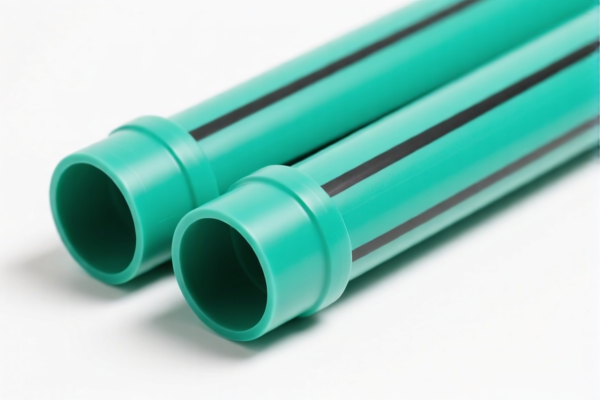
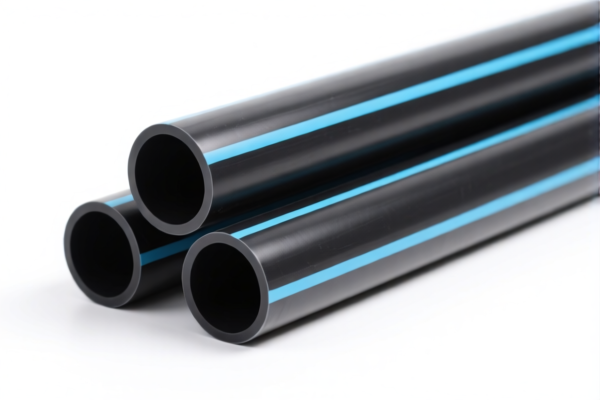
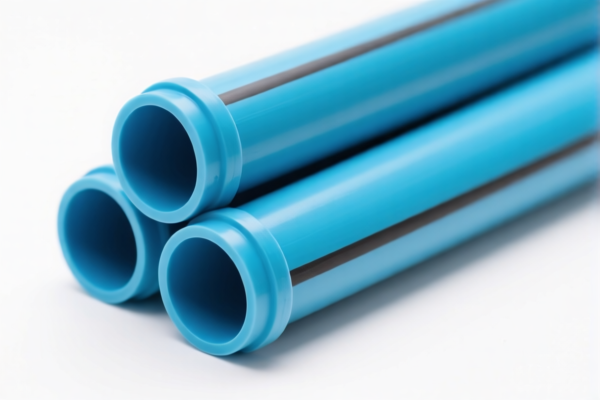
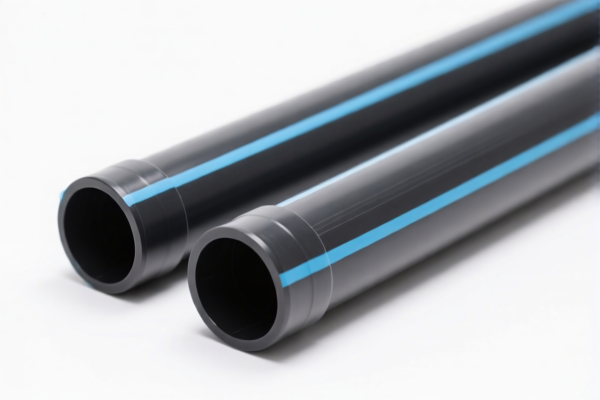
AI Analysis
🚿 PVC Irrigation Pipes: HS Code Classification & US Import Strategy (2026)
🌐 HS Code Reference & Customs Clearance Guide | Latest Tariff Analysis | Professional Clearance Strategy
📌 I. Product Definition & Classification: What Exactly Is an "Irrigation Pipe"?
PVC Irrigation Pipes are rigid or semi-rigid tubular conduits made from polyvinyl chloride (PVC) polymers, primarily used for water conveyance in agricultural, landscaping, and industrial irrigation systems. In international trade, they are not a single unified category but are split based on material specificity, structural details (joints/accessories), and specific use cases.
Two Main Categories in Customs Data:
- Specific PVC Pipes (HS Chapter 3917):
- Made explicitly of chloride polymers (PVC).
- Classified as "tubes, pipes, and hoses" with joints or fittings.
-
High scrutiny due to specific material declaration.
-
General Plastic Pipes/Accessories (HS Chapter 3926):
- Made of plastic but not specifically classified under 3917 (e.g., generic plastic tubes, unclassified fittings, or non-PVC-specific plastic pipes).
- Often used when the product is a generic accessory or non-standard shape.
⚠️ Key Distinction Point:
- If the product is a standard PVC tube with specified chloride content → Chapter 3917.
- If the product is a generic plastic pipe, PVC air vent pipe, or uncategorized plastic accessory → Chapter 3926.
📦 II. HS Code Classification Details (2026 Latest Tariff Concordance)
| HS Code | Product Description | Applicable Scenario | Material Specificity |
|--------|--------------------------|-----------------------------|
| 3917.23.00.00 | PVC Pipes, Material: Chloride Polymers, Form: Tubes/Pipelines | Standard rigid PVC irrigation pipes, pressure-rated | ✅ Explicitly "Chloride Polymers" |
| 3917.32.00.10 | PVC Pipes, Material: Polyvinyl Chloride, Form: Tubes | Standard PVC pipes, common in agricultural use | ✅ Explicitly "Polyvinyl Chloride" |
| 3926.90.99.87 | PVC Pipes, Material: Plastic, Form: Tubes, Use: Unclear, Classified as Other Plastic Goods | Generic plastic pipes, non-standard, or unclear PVC composition | ❌ Generic "Plastic" |
| 3926.90.99.89 | PVC Pipes, Material: Polyvinyl Chloride, Classified as Other Plastic Goods | PVC pipes not meeting 3917 criteria (e.g., accessories, non-standard shapes) | ❌ "Other Plastic Goods" |
| 3917.40.00.20 | PVC Ventilation Pipes, Material: Polyvinyl Chloride, Use: Ventilation | NOT standard irrigation; used for air/ventilation systems | ✅ Specific "Ventilation" Use |
🔍 Critical Reminder:
- Standard Irrigation Pipes should ideally be classified under3917.23.00.00or3917.32.00.10if they meet the "chloride polymer" definition.
- If the pipe is for ventilation (even if PVC), it must be declared as3917.40.00.20, which carries a higher tax burden.
- Generic plastic pipes or PVC fittings that don’t fit 3917 fall under3926.90.99.87/89but are less common for standard irrigation tubes.
💰 III. 2026 Latest Tariff Rate Breakdown (Including Surcharges & Policy Add-ons)
✅ Applicable Country: United States (US)
✅ Origin: China (CN)
✅ Effective Date: November 10, 2025 onwards (for subsequent imports)
🎯 1. 3917.23.00.00 & 3917.32.00.10 — Standard PVC Irrigation Pipes (Chloride Polymers)
| Item | Detail |
|---|---|
| Base Duty Rate | 3.1% |
| Section 301 Surcharge | +25.0% |
| Section 122 Tariff (IEEPA) | +10.0% |
| Total Effective Rate | 38.1% |
| Tax Calculation | CIF Value × 38.1% |
| De Minimis Exemption Eligibility | ❌ NOT ELIGIBLE (deny_de_minimis) |
| Legal Basis Path | USITC:3917.23.00.00 → FOOTNOTE:301 → IEEPA:9903.01.25 |
📌 Explanation:
- These HS codes are classified under Section 301 (USITC Footnote 9903.88.01), triggering a 25% additional tariff.
- The 10% IEEPA tariff applies to Chinese-origin PVC products.
- Total 38.1% is a high tariff, requiring careful cost planning.
🎯 2. 3917.40.00.20 — PVC Ventilation Pipes
| Item | Detail |
|---|---|
| Base Duty Rate | 5.3% |
| Section 301 Surcharge | +25.0% |
| Section 122 Tariff (IEEPA) | +10.0% |
| Total Effective Rate | 40.3% |
| Tax Calculation | CIF Value × 40.3% |
| De Minimis Exemption Eligibility | ❌ NOT ELIGIBLE |
| Legal Basis Path | USITC:3917.40.00.20 → FOOTNOTE:301 → IEEPA:9903.01.25 |
📌 Warning:
- Do NOT misdeclare irrigation pipes as "ventilation pipes" to avoid classification errors.
- If the pipe is used for air/ventilation, it must be declared under3917.40.00.20, even if made of PVC.
- Higher base rate (5.3%) makes this category even more expensive.
🎯 3. 3926.90.99.87 & 3926.90.99.89 — Generic/Other Plastic Pipes
| Item | Detail |
|---|---|
| Base Duty Rate | 5.3% |
| Section 301 Surcharge | +7.5% |
| Section 122 Tariff (IEEPA) | +10.0% |
| Total Effective Rate | 22.8% |
| Tax Calculation | CIF Value × 22.8% |
| De Minimis Exemption Eligibility | ❌ NOT ELIGIBLE |
| Legal Basis Path | USITC:3926.90.99.87/89 → FOOTNOTE:301 → IEEPA:9903.01.25 |
📌 Note:
- These codes apply to generic plastic pipes or PVC pipes not meeting 3917 criteria.
- Lower total rate (22.8%) but higher risk of classification audit if misdeclared.
- Only use if the product is not a standard PVC irrigation pipe.
🛠️ IV. Customs Clearance Practical Advice (Pitfall Avoidance Guide)
✅ 1. Required Documentation Checklist (All Mandatory)
| Document | Mandatory? | Description |
|---|---|---|
| ✅ Product Specification Sheet | ✔️ | Include material composition (PVC/%), dimensions, pressure rating, use case |
| ✅ Product Photos (Labeled) | ✔️ | Clear images of pipes, joints, and labels |
| ✅ Commercial Invoice | ✔️ | Clearly state "PVC Irrigation Pipe," HS Code, and CIF value |
| ✅ Packing List | ✔️ | Detail quantity, weight, and packaging type |
| ✅ Certificate of Origin (CO) | ✔️ | Required for US import; verify origin to avoid misclassification |
| ✅ Third-Party Test Report | ✔️ | If applicable (e.g., NSF/ANSI 14 for drinking water compatibility) |
✅ 2. Declaration Tips (Key Mantras)
🔥 "Material Specificity, Use Clarity, HS Accuracy!"
| Scenario | Correct Declaration | Incorrect Declaration |
|---|---|---|
| Standard PVC Irrigation Pipe | 3917.23.00.00 or 3917.32.00.10 |
Misdeclare as "Plastic Fitting" → 22.8% (Risk of Audit) |
| PVC Air/Ventilation Pipe | 3917.40.00.20 |
Misdeclare as "Irrigation Pipe" → 38.1% (Underpayment Penalty) |
| Generic Plastic Pipe (Non-PVC) | 3926.90.99.87/89 |
Misdeclare as "PVC Pipe" → Classification Error |
✅ 3. Special Cases Handling
| Scenario | Handling Advice |
|---|---|
| OEM Custom Pipes | Provide client PO + technical drawings to prove material/use |
| Pipe + Fittings Set | Declare as "Complete Set" under 3917.23.00.00 (main component rule) |
| Used/Recycled PVC Pipes | Must declare as "Reprocessed"; may require additional environmental compliance |
| Multi-Material Pipes (e.g., PVC-Aluminum) | Declare based on primary material; if PVC >50%, use 3917 codes |
🌍 V. Global Market Comparison (2026 Latest)
| Country/Region | Recommended HS Code | Tariff (China Origin) | Certification Requirements | Notes |
|---|---|---|---|---|
| 🇺🇸 USA | 3917.23.00.00 |
38.1% (China) | NSF/ANSI 14 (if for drinking water) | High tariff due to Section 301 + IEEPA |
| 🇨🇳 China | 3917.23.00.00 |
5.3% | CCC (if applicable) | No additional surcharges |
| 🇪🇺 EU | 3917.23.00.00 |
6.5% | CE + REACH | No Section 301 equivalent |
| 🇦🇺 Australia | 3917.23.00.00 |
5.0% | SAA Certification | Moderate tariff |
| 🇯🇵 Japan | 3917.23.00.00 |
6.0% | JIS Standards | No additional surcharges |
📌 Conclusion:
- The US imposes the highest effective tariff (38.1%) for PVC irrigation pipes from China.
- EU, Japan, and Australia have significantly lower tariffs and no Section 301 equivalents.
- US importers must factor in 38.1% cost or explore alternatives (e.g., Vietnam/Mexico origin).
📌 VI. Common Mistakes & Pitfall Guide (Lessons Learned)
❌ Mistake 1: Declaring PVC irrigation pipes as "Plastic Fittings" (3926)
👉 Consequence: 22.8% rate might seem lower, but customs audit may reclassify to 38.1% + penalties!
❌ Mistake 2: Using "Ventilation Pipe" (3917.40.00.20) for irrigation pipes
👉 Consequence: 40.3% rate (higher!) + misdeclaration penalty.
❌ Mistake 3: Not specifying material composition
👉 Consequence: Customs may classify as generic plastic (3926) but demand proof, causing delays.
❌ Mistake 4: Ignoring Section 122 (IEEPA) 10% surcharge
👉 Consequence: Underpayment of 10% → Back taxes + Interest.
✅ Correct Declaration Example:
"PVC Irrigation Pipe, Rigid, Chloride Polymer, 2-inch Diameter, Pressure Rated 150 PSI, Model XYZ, NSF/ANSI 14 Certified"
🎯 VII. Conclusion: Precise Classification, Cost Efficiency!
🎯 Remember the Mantra:
🔹 "Material First, Use Second, HS Code Final!"
🔹 "PVC Irrigation = 3917, Ventilation = 3917.40, Generic = 3926!"
🔹 "38.1% in US, 22.8% in Generic, 40.3% in Ventilation!"
📌 Pro Tip:
If your PVC pipes are originally from Vietnam, Mexico, or Thailand, you may qualify for IEEPA Exemption, reducing the total tariff to ~5%~10%.
Recommendation: Apply for Advance Ruling with US Customs to confirm HS Code and tariff applicability before shipment.
📣 Immediate Action:
📞 Contact a Licensed Customs Broker + Provide Product Specs + Apply for HS Code Advance Ruling
🚀 Ensure Smooth Clearance, Minimize Tariffs, Maximize Profits!
✨ Professional Clearance Starts with Accurate Classification!
💼 Every Penny Saved is a Penny Earned!
Customer Reviews
About HS Code Classification
The Harmonized System (HS) is an internationally standardized nomenclature developed by the World Customs Organization (WCO) to classify traded products. Over 200 countries use the HS system as the basis for customs tariffs, trade statistics, and import/export regulations.
Each HS code follows a hierarchical structure:
- Chapter (2 digits) — Broad category of goods (e.g., Chapter 84: Machinery and Mechanical Appliances)
- Heading (4 digits) — More specific grouping within the chapter
- Subheading (6 digits) — Internationally standardized breakdown, used by all WCO member countries
- National subdivisions (8-10 digits) — Country-specific extensions for further classification, such as US HTSUS 10-digit codes
Correct HS code classification is essential for smooth customs clearance, accurate duty payment, and compliance with trade regulations. Misclassification can lead to customs delays, overpayment of duties, or penalties.
When importing from CN to US, the applicable tariff rates may include:
- Most-Favored-Nation (MFN) rate — The standard duty rate applied to WTO members
- General rate — Applied to countries without trade agreements
- Trade remedy duties — Additional tariffs such as Section 301 (anti-dumping), Section 232 (national security), or countervailing duties
The information provided on this page is for reference purposes only. For official classification, please consult with your local customs authority or a licensed customs broker.