PVC Leather
CN → US| HS Code | Tariff Rate | Origin | Destination | Doc |
|---|---|---|---|---|
| 5903102090 | 35.0% | CN | US | Official Doc |
| 5903102010 | 35.0% | CN | US | Official Doc |
Product Images
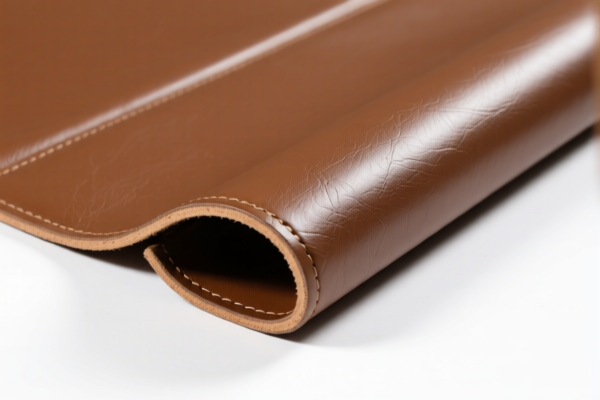
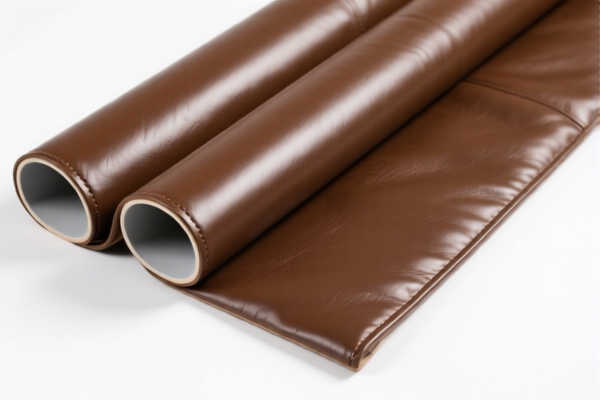
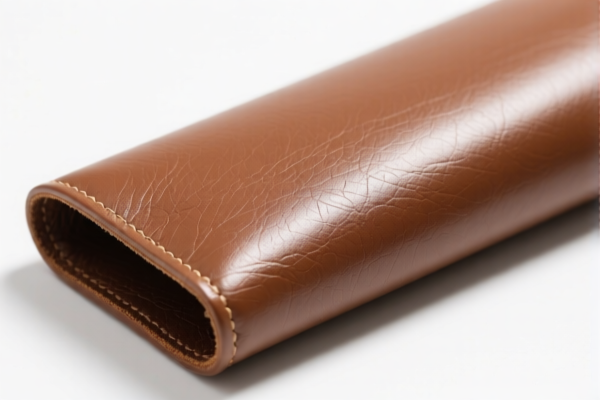

AI Analysis
🌟 PVC Leather (PVC-Coated Fabric) – HS Code & Tariff Guide 2026 | Full Compliance & Customs Clearance Strategy
🌐 HS Code Reference & Customs Clearance Blueprint | 2026 Updated Tariff Rules | Pro-Level Trade Intelligence
📌 One-Stop Guide for Exporters, Importers & Logistics Professionals
📦 1. Product Definition & Classification: What Exactly Is PVC Leather?
PVC Leather, also known as PVC-coated fabric, is a synthetic material made by applying a layer of polyvinyl chloride (PVC) onto a base fabric (usually polyester or cotton). It mimics the look and feel of genuine leather but is more durable, water-resistant, and cost-effective.
⚠️ Key Distinction in Trade: - If the outer surface is PVC and the base is fabric, it's PVC-coated → HS Code: 6402.99.31.77 or 6402.99.27.90 - If it's used in footwear → 6402.99.31.77 / 6402.99.27.90 - If used in toys, accessories, or other products → 3926.90.99.89 / 9503.00.00.71 / 9503.00.00.73
✅ Critical Note:
- PVC Leather ≠ Real Leather → Not eligible for leather tariff exemptions
- Must be declared based on end-use (footwear vs. toys vs. general goods)
- Material composition matters: PVC coating + fabric base = synthetic material
🧩 2. HS Code Breakdown (2026 Updated Tariff Matrix)
| HS Code | Product Description | Use Case | Key Features |
|---|---|---|---|
6402.99.31.77 |
PVC shoes, with rubber or plastic outer sole and upper | Footwear | PVC upper + rubber/plastic sole |
6402.99.27.90 |
PVC shoes, material and form comply with subheading | Footwear | Fully compliant PVC footwear |
9503.00.00.73 |
PVC toys, plastic material, intended for play | Toys | Non-functional, child-safe, plastic-based |
3926.90.99.89 |
Other plastic articles, not specified elsewhere | Toys, accessories, crafts | Includes PVC-based non-toy items |
9503.00.00.71 |
PVC toys, plastic material, used as toys/models | Toys | Model kits, figurines, play sets |
🔍 Why This Matters: - Same material (PVC), different HS Codes based on end-use. - Misclassifying a PVC shoe as a PVC toy can lead to severe penalties.
💰 3. 2026 U.S. Tariff Analysis (China-Origin Goods)
✅ Applicable to: United States (US)
✅ Origin: China (CN)
✅ Effective Date: November 10, 2025 (inclusive)
✅ Tariff Regime: Section 301 + IEEPA + Section 122
🎯 1. 6402.99.31.77 – PVC Shoes (Rubber/Plastic Sole & Upper)
| Component | Detail |
|---|---|
| Base Tariff | 6.0% (ad valorem) |
| Section 301 (USITC) | 0.0% |
| Section 122 (IEEPA) | 10.0% |
| Total Effective Tariff | 16.0% |
| Tax Calculation | CIF × 16.0% |
| De Minimis Exemption? | ❌ No (denied under 19 CFR §159.10) |
| Legal Path | IEEPA:9903.01.25 → Section 122: 10% → Base: 6.0% → Total: 16.0% |
📌 Explanation: - No Section 301 tariff on this code → lower than most China-origin goods - 10% IEEPA (Section 122) applies due to China origin - 6% base tariff applies under Harmonized Tariff Schedule (HTS)
🎯 2. 6402.99.27.90 – PVC Shoes (Material & Form Compliant)
| Component | Detail |
|---|---|
| Base Tariff | 3.0% |
| Section 301 (USITC) | 7.5% |
| Section 122 (IEEPA) | 10.0% |
| Total Effective Tariff | 20.5% |
| Tax Calculation | CIF × 20.5% |
| De Minimis Exemption? | ❌ No |
| Legal Path | IEEPA:9903.01.24 → Section 301: 7.5% → Base: 3.0% → Total: 20.5% |
📌 Why Higher? - Section 301 tariff (7.5%) applies due to product form compliance under U.S. trade law - IEEPA 10% still applies - Lower base tariff (3%), but higher add-on makes total higher
🎯 3. 9503.00.00.73 – PVC Toys (Plastic, Intended for Play)
| Component | Detail |
|---|---|
| Base Tariff | 0.0% |
| Section 301 (USITC) | 0.0% |
| Section 122 (IEEPA) | 10.0% |
| Total Effective Tariff | 10.0% |
| Tax Calculation | CIF × 10.0% |
| De Minimis Exemption? | ❌ No |
| Legal Path | IEEPA:9903.01.25 → Section 122: 10% → Base: 0% → Total: 10.0% |
📌 Note: - No base or Section 301 tariff → only 10% IEEPA - Still high due to China origin - Child safety certifications (CPSC, ASTM F963) mandatory
🎯 4. 3926.90.99.89 – Other Plastic Articles (Non-Toy, Non-Footwear)
| Component | Detail |
|---|---|
| Base Tariff | 5.3% |
| Section 301 (USITC) | 7.5% |
| Section 122 (IEEPA) | 10.0% |
| Total Effective Tariff | 22.8% |
| Tax Calculation | CIF × 22.8% |
| De Minimis Exemption? | ❌ No |
| Legal Path | IEEPA:9903.01.24 → Section 301: 7.5% → Base: 5.3% → Total: 22.8% |
📌 High-Risk Category: - Highest tariff among all listed - Applies to PVC leather used in bags, wallets, belts, crafts, etc. - Must prove non-toy, non-footwear use to avoid misclassification
🎯 5. 9503.00.00.71 – PVC Toys (Plastic, for Toys/Models)
| Component | Detail |
|---|---|
| Base Tariff | 0.0% |
| Section 301 (USITC) | 0.0% |
| Section 122 (IEEPA) | 10.0% |
| Total Effective Tariff | 10.0% |
| Tax Calculation | CIF × 10.0% |
| De Minimis Exemption? | ❌ No |
| Legal Path | IEEPA:9903.01.25 → Section 122: 10% → Base: 0% → Total: 10.0% |
📌 Same as 9503.00.00.73, but specifically for models (e.g., LEGO-style kits, scale models)
🛠️ 4. Customs Clearance Best Practices (Pro Tips)
✅ 1. Essential Documentation (MUST-HAVE)
| Document | Required? | Why It Matters |
|---|---|---|
| ✅ Commercial Invoice | ✔️ | Must clearly state end-use (e.g., "PVC Shoes", "PVC Toy Model") |
| ✅ Packing List | ✔️ | Show item count, weight, packaging type |
| ✅ Product Photos (with labels) | ✔️ | Prove material, construction, and intended use |
| ✅ Material Safety Data Sheet (MSDS) | ✔️ | For PVC content, phthalate compliance |
| ✅ Certificates (CPSC, ASTM F963, RoHS) | ✔️ | Critical for toys |
| ✅ Certificate of Origin (CO) | ✔️ | Prove China origin → triggers IEEPA/Section 122 |
| ✅ Technical Specifications | ✔️ | Include fabric base, PVC thickness, coating method |
✅ 2.申报技巧(Key Rules)
🔥 "Use Case Defines HS Code – Not Material!"
| Scenario | Correct HS Code | Wrong Approach |
|---|---|---|
| PVC shoe with rubber sole | 6402.99.31.77 |
3926.90.99.89 → higher tax |
| PVC toy model | 9503.00.00.71 |
6402.99.27.90 → misclassified |
| PVC bag (non-toy) | 3926.90.99.89 |
9503.00.00.73 → 10% vs 22.8% |
| PVC-coated fabric (raw) | 3926.90.99.89 |
6402.99.31.77 → invalid |
📌 Golden Rule:
Do NOT declare PVC leather as “leather” → No tariff benefit and risk of penalties.
✅ 3. Special Cases & Risk Mitigation
| Situation | Recommended Action |
|---|---|
| PVC shoes with mixed materials | Provide material breakdown; avoid "PVC" only |
| PVC toys with electronic parts | Declare as 9503.00.00.71 + include safety certs |
| PVC leather for industrial use | Use 3926.90.99.89 + proof of non-toy, non-footwear use |
| Products from Vietnam/Mexico | Check for IEEPA exemption – may reduce to 0% |
| High-value shipments | Apply for Advance Ruling (Pre-Decision) to lock in HS Code |
🌍 5. Global Market Tariff Comparison (2026)
| Country | Recommended HS Code | Base Tariff | IEEPA/301? | Key Notes |
|---|---|---|---|---|
| 🇺🇸 USA | 6402.99.31.77 |
6.0% | ✅ 10% | 16% total |
| 🇨🇳 China | 6402.99.31.77 |
5.0% | ❌ No | No extra tariffs |
| 🇪🇺 EU | 6402.99.31.77 |
0% (if CE) | ❌ No | Requires CE marking |
| 🇦🇺 Australia | 6402.99.31.77 |
5% | ❌ No | RCM required |
| 🇯🇵 Japan | 6402.99.31.77 |
0% | ❌ No | PSE certification |
📌 Insight:
- USA has the highest effective tariff on PVC leather goods from China - China, EU, Australia, Japan are more favorable - Vietnam/Mexico origin can avoid IEEPA 10%
🚨 6. Common Mistakes & Penalties (Avoid These!)
❌ Mistake 1: Declaring PVC shoes as "PVC fabric" → 3926.90.99.89
👉 Result: 22.8% vs 16% → Extra $2,000+ on $100K shipment
❌ Mistake 2: Calling PVC toy a "wallet" → 3926.90.99.89
👉 Result: 22.8% vs 10% → Double the tax
❌ Mistake 3: No CPSC or ASTM F963 for toys
👉 Result: Seizure, recall, fines up to $1M
❌ Mistake 4: Using "leather" in description
👉 Result: Misclassification, penalties, rejection
✅ Correct Labeling Example:
“PVC-Coated Fabric Shoe, Model XYZ, PVC Upper, Rubber Sole, for Adult Use, Not a Toy”
🎯 7. Final Verdict: How to Win at PVC Leather Trade
🔹 HS Code is King – Use it based on end-use, not material
🔹 China origin = IEEPA 10% – Always apply
🔹 Section 301 applies only to specific codes – Check carefully
🔹 Never declare PVC as “leather” – No benefit, high risk
🔹 Get pre-ruling for high-value goods – Avoid surprises
📌 Summary Table: Quick Reference
| HS Code | Product | Total Tariff | Key Risk | Best Practice |
|---|---|---|---|---|
6402.99.31.77 |
PVC Shoes (Rubber Sole) | 16.0% | Misclassifying as fabric | Declare by use |
6402.99.27.90 |
PVC Shoes (Compliant Form) | 20.5% | High Section 301 | Prove compliance |
9503.00.00.73 |
PVC Toys | 10.0% | No safety certs → seizure | Get CPSC/ASTM |
3926.90.99.89 |
PVC Accessories | 22.8% | Highest tax | Prove non-toy use |
9503.00.00.71 |
PVC Toy Models | 10.0% | Same as above | Clear labeling |
📣 Action Now:
📞 Contact a U.S.-licensed customs broker
📄 Submit product photos, specs, and invoice
🚀 Apply for HS Code Pre-Ruling (Advance Decision)
✨ Your PVC Leather Shipment Deserves Precision, Not Guesswork!
💼 One wrong HS Code = Thousands in extra tax.
✅ Get it right the first time – save time, money, and stress!
📌 Pro Tip:
If your PVC leather is produced in Vietnam, Mexico, or Thailand, you may qualify for IEEPA exemption → 0% tariff on Section 122.
Check your CO and supply chain before shipment!
🔐 Compliance Starts with Accurate Classification.
📦 Your Profit Margin Depends on It.
Customer Reviews
About HS Code Classification
The Harmonized System (HS) is an internationally standardized nomenclature developed by the World Customs Organization (WCO) to classify traded products. Over 200 countries use the HS system as the basis for customs tariffs, trade statistics, and import/export regulations.
Each HS code follows a hierarchical structure:
- Chapter (2 digits) — Broad category of goods (e.g., Chapter 84: Machinery and Mechanical Appliances)
- Heading (4 digits) — More specific grouping within the chapter
- Subheading (6 digits) — Internationally standardized breakdown, used by all WCO member countries
- National subdivisions (8-10 digits) — Country-specific extensions for further classification, such as US HTSUS 10-digit codes
Correct HS code classification is essential for smooth customs clearance, accurate duty payment, and compliance with trade regulations. Misclassification can lead to customs delays, overpayment of duties, or penalties.
When importing from CN to US, the applicable tariff rates may include:
- Most-Favored-Nation (MFN) rate — The standard duty rate applied to WTO members
- General rate — Applied to countries without trade agreements
- Trade remedy duties — Additional tariffs such as Section 301 (anti-dumping), Section 232 (national security), or countervailing duties
The information provided on this page is for reference purposes only. For official classification, please consult with your local customs authority or a licensed customs broker.